
Keep More of the Interest You Currently Pay Out to Other Financial Institutions
Your path to Infinite Financial Sovereignty® begins with The Infinite Banking Concept®. Redirect the interest leaving your pocket and build a tax-advantaged warehouse of wealth for your family, backed by specially designed participating whole life insurance.

- Learn how to finance your own purchases and keep the interest working for you
- Follow a step-by-step process built around your situation, not a template
- Build cash value backed by contractual guarantees, not by market timing
Does This Sound Familiar?
If any of this sounds familiar, you are not alone.
- You watch the markets swing and wonder where your retirement savings actually belong
- You have paid interest to lenders for years and have nothing to show for it
- You have tried the usual savings and investment vehicles, and the fees and volatility never sat right
- You want to lower your tax burden legally, and nobody has shown you how
- You want to leave something to your children without handing a large share of it to the CRA
- You are looking for control and stability, not another product to worry about
The Infinite Banking Concept® was designed for people asking exactly these questions. Whether it fits your situation depends on your income, your cash flow and your timeline, which is what a first conversation is for.

Meet Jose Salloum
Jose Salloum is a Financial Security Advisor (conseiller en sécurité financière) certified by the Autorité des marchés financiers in Quebec; a Life and Accident and Sickness Insurance Agent licensed by FSRA in Ontario; and a Life Insurance Agent licensed by the Insurance Council of British Columbia. Licensed since 2001, he has worked with this particular approach since 2015 and has held the Infinite Banking Concepts® Authorized Practitioner certification from the Nelson Nash Institute since February 2020, having passed the Institute's examination in 2019.
He has designed personalized plans for Canadian families and business owners, from first-time savers to professionals and entrepreneurs building multi-generational wealth. His approach is straightforward: understand your financial reality, design a plan that fits, and walk beside you as you build it. Michael Salloum works on the same files, so a household has two people who know it rather than one.

Infinite Banking seminars in Canada, led by Jose Salloum
Photographs from sessions already held. Dates and locations for the next ones are confirmed as they are scheduled.
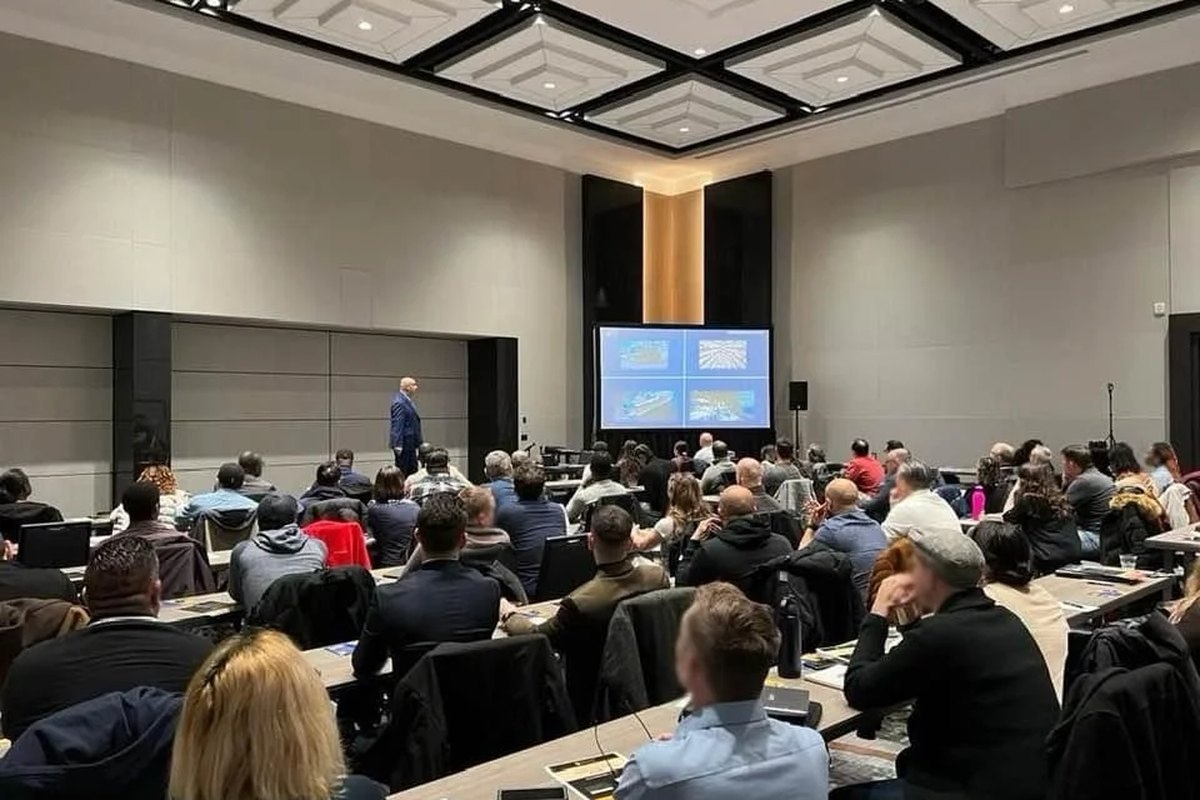
Laval
Infinite Banking seminar
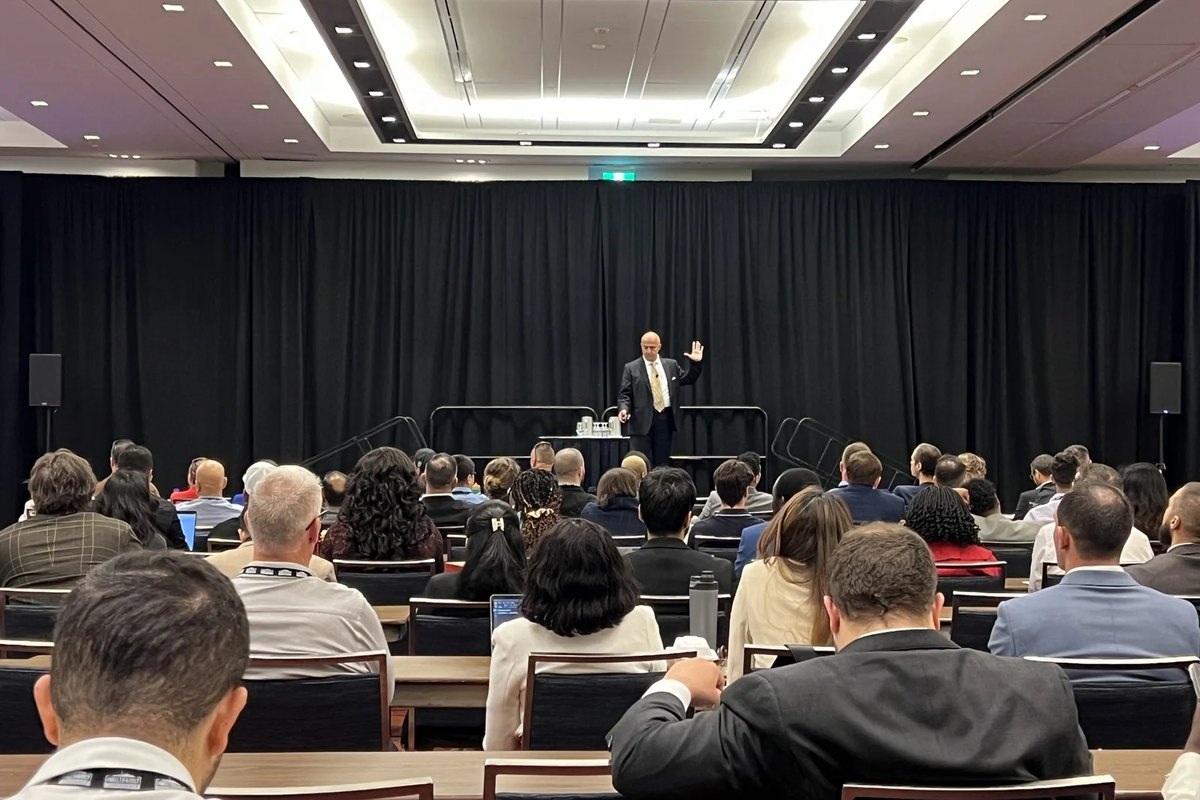
Toronto
Infinite Banking seminar
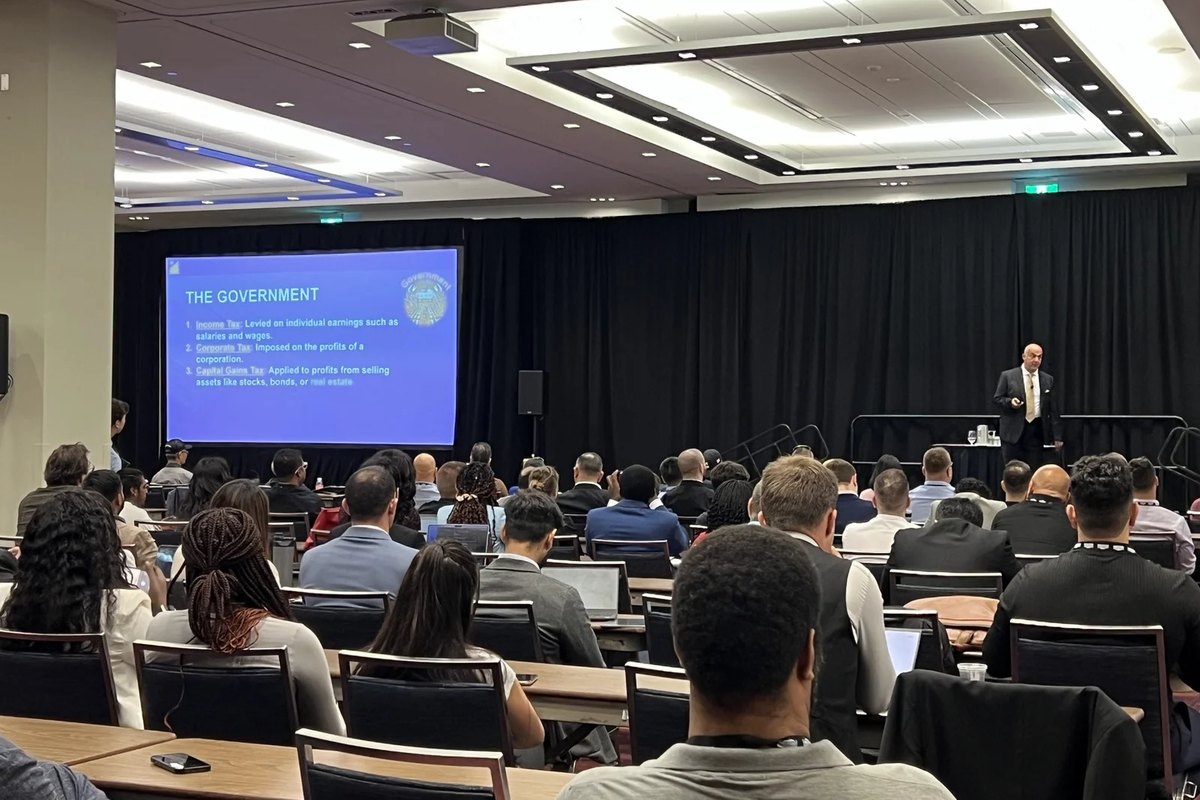
Toronto
Infinite Banking seminar
What Canadian Wealth Creation Centre Inc. does
Insurance-based strategies that help Canadian families take control of their financial security and build toward Infinite Financial Sovereignty®, using participating whole life insurance designed for the purpose.
1. The Infinite Banking Concept®
The approach R. Nelson Nash described, in which a participating whole life contract becomes a source of financing for personal and business needs over a lifetime. This practice explains how it works and where it does not fit.
2. Life Insurance
Protection first, with a contract structured to do more than pay a death benefit. The death benefit remains its primary purpose and the reason it is insurance rather than anything else.
The Infinite Banking Concept® and Becoming Your Own Banker® are registered marks of Infinite Banking Concepts, LLC. IBC Financial is not affiliated with, sponsored by, or endorsed by Infinite Banking Concepts, LLC or the Nelson Nash Institute.
3. How it fits the rest of your plan
Registered accounts come first for most households. This explains how RRSP, TFSA and other room should be considered before a contract is arranged, and why that ordering matters.
Infinite Financial Sovereignty®
What this strategy does for your family
Tax-advantaged growth
Cash value inside a participating whole life contract accumulates without being taxed each year, for as long as the contract stays exempt under the Income Tax Act. An advance against the policy is generally not a taxable event in the year it is taken, provided the contract stays in force and the amount stays within the adjusted cost basis. Growth without annual taxation, and access without a taxable event, is what makes the contract useful as a place to hold long-term capital.
Protection that comes first
The death benefit is the primary purpose of the contract and the reason it is insurance rather than anything else. It is generally received free of income tax by a named beneficiary. The guaranteed cash value schedule is written into the contract at issue and does not move with markets. Those guarantees depend on the continued solvency of the issuing insurer and are not backed by any government.
Generational wealth
A death benefit paid to a named beneficiary passes outside the estate where provincial law allows, which usually means it arrives without probate delay, probate cost or the public record that goes with it. It can also supply the liquidity an executor needs on the second death, at the moment the final tax bill falls due, so the rest of the estate does not have to be sold to pay it.
Cash value takes several years to build and early surrender can return less than was paid. Dividends are not guaranteed. Creditor protection and the treatment of a death benefit outside the estate depend on provincial law and on individual circumstances, and neither is automatic.
How this works, in five steps
- 1
The discovery meeting
Thirty minutes, online, no products. You describe your situation and get answers in plain language. If this does not fit, you are told so in that meeting rather than sent a proposal.
- 2
Your Financial DNA
The one piece of work asked of you: the suitability record a licensed advisor must complete before recommending anything. Not a sales form, and you decide what you share.
- 3
The design meeting
More than one route, walked through in plain language, with what the contract guarantees shown separately from what it does not. Deciding not to proceed is a complete answer.
- 4
Application and underwriting
The insurer decides, not the advisor. An application can be accepted, rated, excluded, postponed or declined. Nobody can promise you approval before underwriting.
- 5
After the policy is in force
Reviewed with you every year, and available between reviews. Policy loans, repayment, a change in the participation scale, a house, a business, a child's education.
What our clients say
★★★★★
Real control over my money
Working with Jose and the team at Canadian Wealth Creation Centre changed how I think about my money. I have kept interest that used to go to lenders, and for the first time I understand exactly where my money is and what it is doing. The step-by-step guidance made it easy to follow.
Individual results vary. This reflects one client's experience and is not a guarantee of similar results.
★★★★★
Stability without market swings
After losing money in the market crashes, I needed something stable. The strategy gave me predictable growth without the stress of market volatility.
Individual results vary. This reflects one client's experience and is not a guarantee of similar results. Participating whole life insurance is an insurance product, not an investment. Guaranteed values are contractual and dividends are not guaranteed.
★★★★★
Greater control over my financing
Financing my own purchases through my policy has let me keep interest working for me instead of paying it out, while the cash value continues to build.
Individual results vary. This reflects one client's experience and is not a guarantee of similar results. An advance against a policy accrues interest, reduces the death benefit and cash surrender value while outstanding, and may become taxable if the policy lapses or is surrendered.
Participating whole life insurance and bank savings: how they differ
Two different tools, built for different jobs. Neither replaces the other.
| Features | Participating whole life policy | Bank savings and GICs |
|---|---|---|
| Contractual guarantees | ✓Guaranteed cash value schedule | ✓GICs and savings accounts |
| Growth without annual taxation | ✓Within an exempt policy | ✗Interest taxable annually |
| Death benefit | ✓Generally received free of income tax by the beneficiary | ✗ |
| Access by advance | ✓Interest accrues and the death benefit is reduced while outstanding | ✗ |
| Creditor protection | ✓May apply with a qualifying beneficiary designation. Varies by province and circumstance and is not automatic | ✗ |
| Deposit insurance | ✗Not a deposit. Assuris protection applies within published limits | ✓CDIC, to published limits |
| Immediate liquidity | ✗Cash value typically takes several years to build | ✓Savings immediate, GICs at term |
| No long-term commitment | ✗Premiums are ongoing and early surrender can return less than was paid | ✓ |
| Cost of insurance | ✗Part of every premium funds the death benefit | ✓No insurance cost |
Resources for you to learn more about IBC Financial

Taxes on Death Benefits
How death benefits are taxed in Canada: life insurance proceeds, the CPP death benefit, employer death benefits, survivor benefits, and who reports…
Read more
What Are the Fees for a Wealth Manager?
How wealth management is charged in Canada: percentage of assets, hourly, flat and retainer structures, management expense ratios, and embedded costs.
Read more
The Money Multiplier
What the money multiplier is, how it is calculated, what the reserve ratio does, and why the textbook version does not describe Canadian banking.
Read more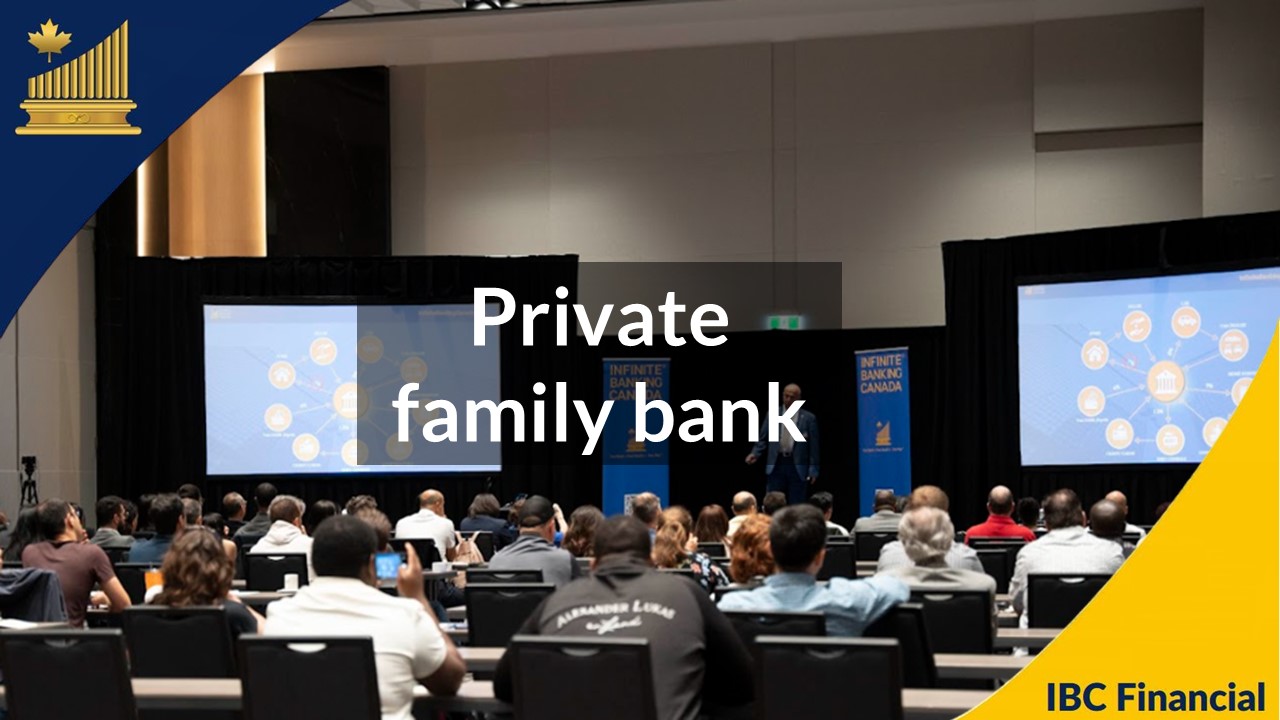
Capital Held Within a Family
What practitioners call a private family bank: how capital is held and lent within a family, where it fails, and what the vocabulary overstates.
Read more
What Is a Policyholder?
Who owns a life insurance contract, how the owner differs from the insured and the beneficiary, and why the distinction matters at the time of a…
Read more
Family Finance
Household decisions in the order they matter: protecting income, emergency liquidity, education funding, a first home, and where coverage on children…
Read more
Term Insurance
What term insurance is, the four common types, how underwriting works, what drives the premium, how much coverage to hold, and when term is the right…
Read more
Claims That Should Never Be Made About This Approach
Ten claims commonly made about this approach that are inaccurate, each with the technically correct version, so a reader can tell a description from…
Read more
The Honest Case Against, and What It Gets Right
The arguments made against using participating whole life insurance as a place to hold capital, set out in full, including the ones that are correct.
Read more
Participating Life Insurance
What participating life insurance is, how the participating account works, how dividends are declared and used, what it costs, and who it does not…
Read more
Contingent Beneficiary
What a contingent beneficiary is, when the designation takes effect, how it differs from a primary designation, and the errors that send proceeds to…
Read more
Money Principles
Opportunity cost, compound growth, capital recovery, liquidity and the cost of waiting, explained without reference to any product.
Read moreClick here : important to read. Everything this site explains, in full, below.
The full explanation, in detail
Most Canadian households pay more interest over a lifetime than they ever receive. That is arithmetic rather than a grievance, and it is the observation this site is built around.
What follows is an explanation of one response to it: holding capital inside a participating whole life insurance contract and drawing on it when capital is needed. The approach is known as The Infinite Banking Concept®, and it is neither a secret nor a product. It is a way of using an insurance contract that has existed in Canada for well over a century.
It suits fewer people than are shown it. This site tries to be clear about which.
What this site is
An educational resource attached to a licensed insurance practice, written by Jose Salloum, a Financial Security Advisor (conseiller en sécurité financière) certified by the Autorité des marchés financiers in Quebec. Licensed since 2001.
That description is deliberately narrow. The site explains contracts, mechanics, tax treatment and strategy. It does not extend to investment or securities advice, and it does not extend to tax or legal advice. Where a question belongs to an accountant or a lawyer, the pages here say so and stop.
It is also a marketing asset, and pretending otherwise would undermine everything else on it. The author receives commissions from insurers when a client purchases a policy, which is set out in full on the author page. Read what follows knowing that.
This page is the entry point. The sections that follow explain the contract, the mechanics, the tax treatment and the strategy, and each one links to the pages that set it out in full.
The idea, in plain terms
A participating whole life contract does two things at once.
It pays a death benefit, which is its primary purpose and the reason it is insurance rather than anything else. And it accumulates a cash value, contractual and set out in the policy schedule at issue, which grows over the life of the contract and may be increased by dividends the insurer declares.
That accumulated value can be accessed. The owner may request an advance from the insurer, secured against the contract. The money is used for whatever the owner needs it for, and repaid on a schedule the owner sets rather than one a lender imposes.
The argument made for this arrangement is that capital which would otherwise sit in a savings account, doing one job, sits instead inside a contract doing two: providing coverage and remaining available.
That argument has a serious weakness, and it is dealt with directly rather than buried: the comparison usually offered is against the wrong alternative. If you were never going to borrow for a purchase, the honest comparison is drawing on your own savings, and measured that way the advantage is considerably smaller than most presentations suggest.
What the approach actually requires
Four things. If any of them is missing, the answer is no, and it is better to establish that now than after a contract exists.
Surplus cash flow that is durable. Not a good year. A normal year, sustained. The structure punishes interruption, and interruption is what happens to people whose income is not stable.
A long horizon. The costs fall heaviest in the first years. A contract entered and abandoned inside a few years returns materially less than was paid into it, and that loss is permanent.
Registered room already considered. For most Canadian households, unused TFSA or RRSP contribution room is the better home for surplus money and should be used first. A presentation that skips this ordering is incomplete.
A clear purpose. A contract designed for maximum death benefit behaves differently from one designed to build accessible value early. Both are legitimate. Neither performs well at the other's job, and the decision is made at issue and cannot be revisited later without cost.
Who this suits
Households with reliable surplus income and a horizon measured in decades, who want permanent coverage and would rather the capital behind it stay available than sit idle.
Incorporated business owners, where the analysis genuinely differs because it involves how corporate surplus is taxed while held and how a death benefit is credited to the Capital Dividend Account. That is a separate question with different inputs, not the personal case with a company attached.
Incorporated professionals with irregular income across a long career, for whom the flexibility of an unscheduled repayment matters more than it does to someone on a salary.
Families thinking across generations rather than across a decade, where the death benefit is the point rather than an incidental feature.
Who this does not suit
Anyone whose income is variable enough that a missed year is plausible.
Anyone who may need the capital within the first several years.
Anyone with unused registered contribution room who has not used it.
Anyone who cannot say what the contract is for. If the purpose is not clear, no design can be correct, because there is nothing to design against.
Anyone being told it suits everybody. That is the clearest signal available that the person explaining it has stopped explaining and started selling.
How the contract works
The mechanics are set out in detail rather than summarised into a slogan.
The guaranteed values are written into the policy schedule at issue. They do not depend on the insurer's later performance and they do not depend on any assumption. They are the floor.
Dividends are not guaranteed. They are declared annually at the discretion of the insurer's board, based on the performance of the participating account. Some years more, some years less, and nobody can promise what next year brings. Where declared, they are commonly used to purchase additional paid-up coverage, which increases both the death benefit and the cash value.
Access is through the contract. An advance is made by the insurer, secured against the cash value. Interest accrues. The outstanding balance reduces the death benefit until repaid. It is a disposition for Canadian tax purposes, which is not the same as being taxed on receipt but is not nothing either. How a policy loan actually works covers the mechanism in full, including the questions to establish before relying on it.
The tax treatment is conditional. Growth inside the contract is not taxed annually provided the contract remains exempt under the Canadian rules. That is a condition, administered by the insurer, and not an automatic property.
The early years are the most expensive. Guaranteed cash surrender value in those years is a fraction of what has been paid in, and a contract abandoned then returns materially less than its premiums. That is a property of the structure, not a defect in it.
The exempt test is what allows value to accumulate without annual taxation. A policy that ceases to be exempt loses that treatment, which is why design at issue matters more than adjustment later.
The arguments against
They are given their own section of this site, at length, because a reader who has only seen the case in favour cannot evaluate it.
The objections and risks section sets out nine arguments made against this approach. Five are conceded outright. Three are partly correct and the limit is stated. One is rejected, and only because it reasons from American tax rules that do not govern a Canadian contract.
Among the conceded ones: the costs are not itemised the way a fund's are, the cost is front-loaded and the buyer carries the risk of an early exit, most people should use registered room first, and interest paid on a policy loan goes to the insurer rather than returning to the owner.
A presentation that concedes none of these points was not written to be assessed.
That is an unusual thing for a practice to publish. It is here because the arguments will reach you anyway, and meeting them stated fairly is better than meeting a weaker version later and wondering what else was left out.
None of the concessions above is offered as a minor objection to be defused afterwards. They are accurate, and they remain accurate whether or not a contract is arranged.
Where to start reading
Not with a product page.
If the subject is new, start with the arguments against. What the critics say is the fastest route to understanding what this actually is.
If you want the mechanics, start with how a participating policy works.
If you want to know who is writing this, start with the author page, which sets out the licensing, the five dates that get confused in this field, and how the author is paid.
If you are incorporated, the corporate analysis differs enough that the personal case will mislead you, and it is treated separately.
What happens if you get in touch
A conversation, and no obligation created by having it.
The first question asked is what the money is for, because a contract cannot be designed without an answer. The second is about cash flow, honestly rather than optimistically, because a contract sized to a good year fails in a normal one. The third is whether registered room has been used, because if it has not, that is usually the better conversation.
Frequently the answer is that this is not the right structure. That is a real outcome and not a failed meeting.
Reading this site creates no professional relationship, and neither does a first conversation. Nothing here is personalised advice, because personalised advice requires facts about you that a website does not have.
No illustration is produced before those three questions have been answered, because an illustration prepared without them is arithmetic about somebody else.
The five dates, kept separate
Tenure claims in this field are frequently assembled from whichever date sounds longest. Five separate dates apply here and they are not interchangeable.
Jose Salloum has held an insurance licence since 2001. The approach known as The Infinite Banking Concept®, a term originated by Nelson Nash, entered the practice in 2015, worked alone at first. Canadian Wealth Creation Centre Inc. was incorporated in 2016. The Nelson Nash Institute examination was passed in 2019, and the Infinite Banking Concepts® Authorized Practitioner certification followed in February 2020.
A licence is not a company. A company is not a certification. Anyone quoting a single figure for all five is compressing them, and the compression always runs in the same direction.
2016 is the year Canadian Wealth Creation Centre Inc. was incorporated.
2019 is the year the Nelson Nash Institute examination was passed, and February 2020 the year the certification was awarded.
Those are five different things. Adding them together, or taking the earliest to describe the whole, would produce a larger number and a less true one.
What licensing actually means, and what it does not
Insurance is licensed provincially in Canada, and the titles differ by province. That is why three appear on this site rather than one.
In Quebec the title is Financial Security Advisor, certified by the Autorité des marchés financiers. In Ontario, Life and Accident & Sickness Insurance Agent, licensed by the Financial Services Regulatory Authority of Ontario. In British Columbia, Life Insurance Agent, licensed by the Insurance Council of British Columbia. The Quebec title belongs to Quebec alone and applying it elsewhere is an inaccuracy rather than a shorthand.
A licence permits the sale of insurance and advice about it. It does not permit investment or securities advice, tax advice, or legal advice, and no amount of private certification changes that. Private certifications describe study completed. They are not regulatory licences and confer no government authority.
Every one of these can be checked. Each province publishes a register, the register is the authority, and a certificate displayed on a website is not.
Some titles are protected by statute. In Quebec, Ontario and New Brunswick certain titles require a specific accreditation. This practice does not use them and does not hold them.
All of it is verifiable free of charge, in your own province's public register, in a few minutes.
The professional team, and why one person is not enough
A contract of this kind touches three professions, and the strongest outcome comes from all three working together.
The insurance side designs the contract, services it and coordinates the rest. That is the work described on this site.
The accountant deals with how a contract interacts with the Canadian tax framework: the exempt test, the adjusted cost basis, and in a corporate file the Capital Dividend Account. This is specialised knowledge. Many capable accountants have never had reason to acquire it, which is not a criticism, and the right response is to establish whether yours has rather than to assume it.
The legal advisor deals with ownership structure, beneficiary designation, creditor considerations that vary by province, and how insurance proceeds interact with an estate. Also specialised, also frequently assumed.
What matters is that you know to ask. A structure built with one profession involved and two assumed is a structure with two unexamined halves.
Those three do not work in sequence but together. An ownership structure chosen without the accountant, or a beneficiary designation set without the lawyer, is the commonest way a sound arrangement produces an unintended result.
A practice offering to do all of it itself is describing a smaller team than the work requires.
What ongoing service involves
The sale is the beginning of the work rather than the end of it, and a contract that nobody attends to underperforms its own illustration.
An annual review of what the contract actually did against what was expected, read from the statement rather than from memory.
Decisions about access. Whether to request an advance, how much, and how to repay it. There is no schedule, so each of those is a decision taken deliberately or a decision taken by default.
Funding adjustments as circumstances change. Options exist short of terminating a contract, and they narrow as time passes.
Coordination with the accountant and the legal advisor at the points where the contract touches their work.
A record of what was decided and why. A structure running for decades outlives memories, and an unexplained decision from year three is indistinguishable in year fifteen from an oversight.
Ask any practice who will be servicing a contract in ten years. It is a fair question with a definite answer, and it is not usually asked.
A contract left unattended for twenty years does not fail dramatically. It simply returns less than it could have, and nobody notices until the difference is permanent.
Two properties, and why they are separate
This site is the English property. The French counterpart is Financière CBI, at financierecbi.com, and it is a separate site rather than a translated section of this one.
That separation is deliberate. Insurance titles are provincial, French regulatory language in Quebec is not a translation of the English, and a bilingual site that merges the two eventually applies the wrong title to the wrong reader. Keeping them apart means each is written for its own jurisdiction rather than adapted from the other.
The language link in the navigation goes to the French property directly.
Each site links to the other where that is useful, and neither claims to be the exact translation of the other. Regulatory obligations differ between the two readerships, and each page is written for the reader in front of it.
Common questions before a first conversation
Does reading this site commit me to anything? No, and neither does a first conversation. Nothing here is personalised advice and no professional relationship is created by reading or by meeting.
Will I be shown an illustration at the first meeting? Not usually, and not before the purpose is established. An illustration produced before anyone knows what the contract is for is a document answering a question nobody asked.
What if the answer is that this does not suit me? Then that is the answer, and it arrives in the first conversation rather than the third. It is a frequent outcome.
Can I get a second opinion on a contract I already own? Yes. An existing contract can be reviewed against what it was bought to do, which is a different exercise from being sold a new one and is treated as such.
How long does any of this take to matter? Years. Anyone suggesting otherwise is describing a different product.
Words used carefully on this site, and why
Several terms in this field carry more meaning than their everyday use suggests, and a few are constrained by law. The usage here is deliberate.
"Guaranteed" refers to the contractual guarantees of the issuing insurer, written into the policy schedule. They depend on the insurer's continued solvency and they are not backed by any government. Policyholder protection in Canada comes from Assuris, within its published limits, which is meaningful and is not the same thing as deposit protection at a chartered institution.
"Dividend" in an insurance contract is not a share dividend. It is an amount declared annually at the discretion of the insurer's board based on the performance of the participating account. It is not guaranteed, it is not interest, and past declarations do not indicate future ones.
"Cash value" is the contractual value accumulated inside the contract. It is not a balance in an account you hold, and it is not the same figure as the amount available to secure an advance.
"Advance" or "policy loan" describes money lent by the insurer, secured against the contract. The insurer lends it, the insurer charges interest, and the interest is paid to the insurer. Descriptions implying a circular arrangement in which the owner is both lender and borrower do not survive examination.
Titles. "Financial Planner" and "Financial Advisor" are protected titles in Ontario, and "planificateur financier" is protected in Quebec. They are not held here and they are not used anywhere on this site, other than in a sentence like this one saying so.
The marks. "The Infinite Banking Concept®" is a mark of Infinite Banking Concepts, LLC, and neither this practice nor its author is affiliated with, sponsored by, or endorsed by that company or the Nelson Nash Institute. The full trademark acknowledgment appears in the disclosures at the foot of every page. "Infinite Financial Sovereignty®" is a registered trademark of Jose Salloum personally, not of the company, and it names an approach rather than describing an outcome.
A note on the vocabulary of this field generally. A good deal of the language in circulation implies operating an institution or standing outside the financial system. What is owned is a contract with an insurer, administered by the insurer under its terms. That is a narrower thing than the language suggests, and the narrower description is the accurate one.
Precision about vocabulary is not pedantry here. Most of the confusion in this field, and a fair share of the disappointment, begins with a word doing more work than it should.
"My own bank." This phrasing is not used to describe this practice, its services or this contract. Canadian Wealth Creation Centre Inc. is not a bank, does not accept deposits, and does not carry on banking business.
"Return." An insurance contract does not produce a return in the investment sense. It accumulates contractual value and may receive dividends.
How this site is organised
Nine sections, each with a page at its root explaining what the section covers and linking everything inside it.
The strategy covers the approach itself: what it requires, how capital is accessed and repaid, who it suits, and where the idea came from.
Whole life insurance covers the products: participating, permanent, term, universal, and how they compare with one another.
Policy basics covers the contract mechanics: cash value, dividends, policy loans, the exempt test, the adjusted cost basis, underwriting and beneficiary designation. This is the reference section, and most other pages link back into it.
Retirement planning covers how permanent coverage sits alongside registered accounts, and what it does and does not replace.
Estate planning covers what happens to capital at death: deemed disposition, probate, creditor considerations, and transfer between generations.
Business owners covers corporate ownership, the Capital Dividend Account, retained earnings, succession, and the professions with their own specifics.
Money principles covers the concepts underneath all of it, explained without reference to any product.
Objections and risks covers the case against, at the same length as the case for.
Family finance covers decisions across a household: education funding, a first home, coverage for children, and ownership across generations.
No page on this site currently sits behind a form, an email address or a download. If a page exists, it can be read.
No page on this site sits behind a form, an email address or a download. If a page exists, it can be read.
Each section has a pillar page setting out the subject as a whole, then articles going deeper on specific questions. The pillar reads alone; the articles assume it.
Cross-references between sections are explicit rather than decorative. Where a page links to another, it is because the question belongs to that other page and not to the one you are reading.
Nothing is hidden behind a sign-up, and no page requires an email address in order to be read.
What this site will not do
It will not size a problem and then present a product as the answer. Pages here that describe a financial obligation name the obligation and stop. That pattern, describing a problem until it is felt and then arriving with the solution, is the most common technique in this field and it is deliberately absent.
It will not show projections as expectations. An illustration is arithmetic under assumptions. Dividend scales move. Any figures discussed here carry the assumptions and the date they were current.
It will not claim results it cannot verify. No client counts, no success rates, no testimonials with dollar figures attached. Those are the easiest numbers to publish and the hardest to substantiate, which is why they are everywhere and not here.
It will not use urgency. A decision measured in decades does not improve for being made this week.
Participating whole life insurance is an insurance product and it is not an investment. Judged as an investment against a market portfolio it usually compares poorly. Judged as permanent coverage that also holds accessible capital and grows without annual taxation, it is a different proposition with its own costs, and whether that trade is worth making depends on facts about you that this page does not have.
A thirty-minute discovery meeting
A first conversation establishes whether this fits. No illustration is prepared and nothing is arranged.
Often the answer is no, and you will hear it during the call rather than in a proposal afterwards.
This form reaches Canadian Wealth Creation Centre Inc. Any meeting, any advice and any insurance product is provided by Canadian Wealth Creation Centre Inc., through its representatives certified by the Autorité des marchés financiers. IBC Financial is the company's education platform: it distributes no product and no financial service, and it gives no individualised advice.