
Learning Centre
This is the index to everything on the site, arranged in nine sections. Each section has a page at its root explaining what it covers and linking everything inside it. Nothing here sits behind a form, an email address or a download.

Infinite Banking
The Infinite Banking Concept® is a strategy that uses a specially designed participating whole life insurance contract as a place to hold and access capital, so the policyowner controls the financing of their own purchases rather than routing every dollar through an outside lender.
The Infinite Banking Concept® in Canada
Mostly a way of thinking about who finances your life, and only partly a contract. What it is for, what it requires, and who it does not suit.
Read more
Capital Held Within a Family
What practitioners call a private family bank: how capital is held and lent within a family, where it fails, and what the vocabulary overstates.
Read more
Claims That Should Never Be Made About This Approach
Ten claims commonly made about this approach that are inaccurate, each with the technically correct version, so a reader can tell a description from a pitch.
Read more
How a Household Finances Its Own Life, Step by Step
Infinite banking in practice: where the capital sits, how it is drawn, how it is put back, and what the method asks of a Canadian household.
Read more
Life Insurance Is Not an Investment
Why participating whole life is an insurance product rather than an investment, why people describe it as one anyway, and what the distinction protects.
Read moreWhole Life Insurance
Participating whole life insurance is permanent coverage combining a guaranteed death benefit with a guaranteed cash value, and it may receive dividends declared annually at the discretion of the insurer's board based on the performance of the participating account.
Whole Life Insurance in Canada
The permanent insurance landscape in Canada: participating whole life, non-participating, universal life, term, and how they compare with one another.
Read more
Life Annuities
What a life annuity is, the main types, how Canadian taxation differs between prescribed and accrual treatment, and what is irreversible about it.
Read more
Participating Life Insurance
What participating life insurance is, how the participating account works, how dividends are declared and used, what it costs, and who it does not suit.
Read more
Term Insurance
What term insurance is, the four common types, how underwriting works, what drives the premium, how much coverage to hold, and when term is the right answer.
Read morePolicy Basics
A participating policy accumulates a contractually guaranteed cash value, while any declared dividends may buy additional paid-up coverage, and the owner may request a policy loan from the insurer against that value under the terms of the contract.

How a Participating Policy Works, Year by Year
What happens inside a Canadian participating whole life contract: where the premium goes, how cash value accumulates, and how dividends are declared and taxed.
Read more
Cash Surrender Value
What cash surrender value is, how it differs from cash value, what surrender charges do, how a surrender is taxed, and what to weigh before ending a contract.
Read more
Contingent Beneficiary
What a contingent beneficiary is, when the designation takes effect, how it differs from a primary designation, and the errors that send proceeds to an estate.
Read more
Dividend-Paying Life Insurance
What a life insurance dividend actually is, how the insurer determines it, the five ways it can be used, why it is not a return, and why it is never guaranteed.
Read more
How Many Life Insurance Policies Can You Have?
There is no legal limit on how many life insurance policies you can own in Canada. What limits you is financial underwriting, and how insurers assess coverage.
Read more
Insurance Premium
What a premium actually buys, the components inside it, what drives the price, payment modes and what they cost, and what happens when a payment is missed.
Read more
Is Life Insurance Taxable in Canada?
How life insurance is taxed in Canada: the death benefit, premiums, policy loans, dividends, ownership transfers, corporate ownership and how Quebec differs.
Read more
Paid-Up Additions
What paid-up additions are, how a PUA rider works, what they do to cash value and death benefit, what they cost, and where they stop being useful.
Read more
Policy Loans in Canada
A policy loan is an advance from the insurer secured against the cash value. How the amount is set, how interest accrues, and how it is taxed in Canada.
Read more
Tax-Deferred Growth
What tax deferral actually is, where it exists in Canada, the difference between deferred, exempt and tax-free, and why deferral is not forgiveness.
Read more
Waiver of Premium Rider
What a waiver of premium rider does, how the definition of disability decides whether it ever pays, the waiting period, exclusions, cost and who it suits.
Read more
What Is a Policyholder?
Who owns a life insurance contract, how the owner differs from the insured and the beneficiary, and why the distinction matters at the time of a claim.
Read moreRetirement Planning
Permanent life insurance can sit alongside registered accounts in a retirement plan, holding capital that is not subject to contribution limits, though it serves a different purpose from an RRSP or a TFSA and is not a replacement for either.

Retirement Planning in Canada
How Canadian retirement income is assembled, the order withdrawals should be considered in, and where permanent insurance does and does not fit.
Read more
Business Owners Retirement Plan
How retirement planning differs when the wealth is in the business: the vehicles available, why the exit is the funding event, and what happens if it fails.
Read more
Doctor Retirement Plan
Why retirement planning differs for a Canadian physician: the late start, no employer pension, incorporation, and what each vehicle actually does.
Read more
Insured Retirement Plan
What an insured retirement plan is, why the loan comes from a lender rather than the insurer, what the structure depends on, and how it fails in practice.
Read more
Real Estate Investor Retirement Planning
Retirement when the wealth is in property: the illiquidity problem, the tax bill at death, concentration, and the exit that has to be planned years ahead.
Read moreEstate Planning
At death a Canadian estate faces a deemed disposition of most capital property, and a life insurance death benefit paid to a named beneficiary passes outside the estate, which affects both the tax owing and the liquidity available to pay it.

Estate Planning in Canada: What It Is, How It Works, Importance, Costs
A Canadian guide to estate planning: what it is, the documents required, when to start, what it costs, how trusts work, and how insurance fits inside it.
Read more
Asset Protection
What asset protection means in Canada, which protections exist by statute, what structures do and do not achieve, and the timing rule that governs all of it.
Read more
Generation Wealth Building
How wealth is built and transferred across generations in Canada: what passes outside the estate, the deemed disposition, liquidity, and where insurance fits.
Read more
Taxes on Death Benefits
How death benefits are taxed in Canada: life insurance proceeds, the CPP death benefit, employer death benefits, survivor benefits, and who reports what.
Read moreBusiness Owners
A corporation may own a life insurance policy on a shareholder or key person, which changes who pays the premium, how the cash value is reported, and how the death benefit is credited to the Capital Dividend Account for distribution to shareholders.

Insurance and Capital for Canadian Business Owners
Why the corporate analysis differs from the personal one: how surplus is taxed while held, what a death benefit does inside a corporation, and where it fails.
Read more
Corporate-Owned Life Insurance (COLI)
How corporate-owned life insurance works in Canada: who owns it, who is named, how the Capital Dividend Account operates, and where structuring goes wrong.
Read more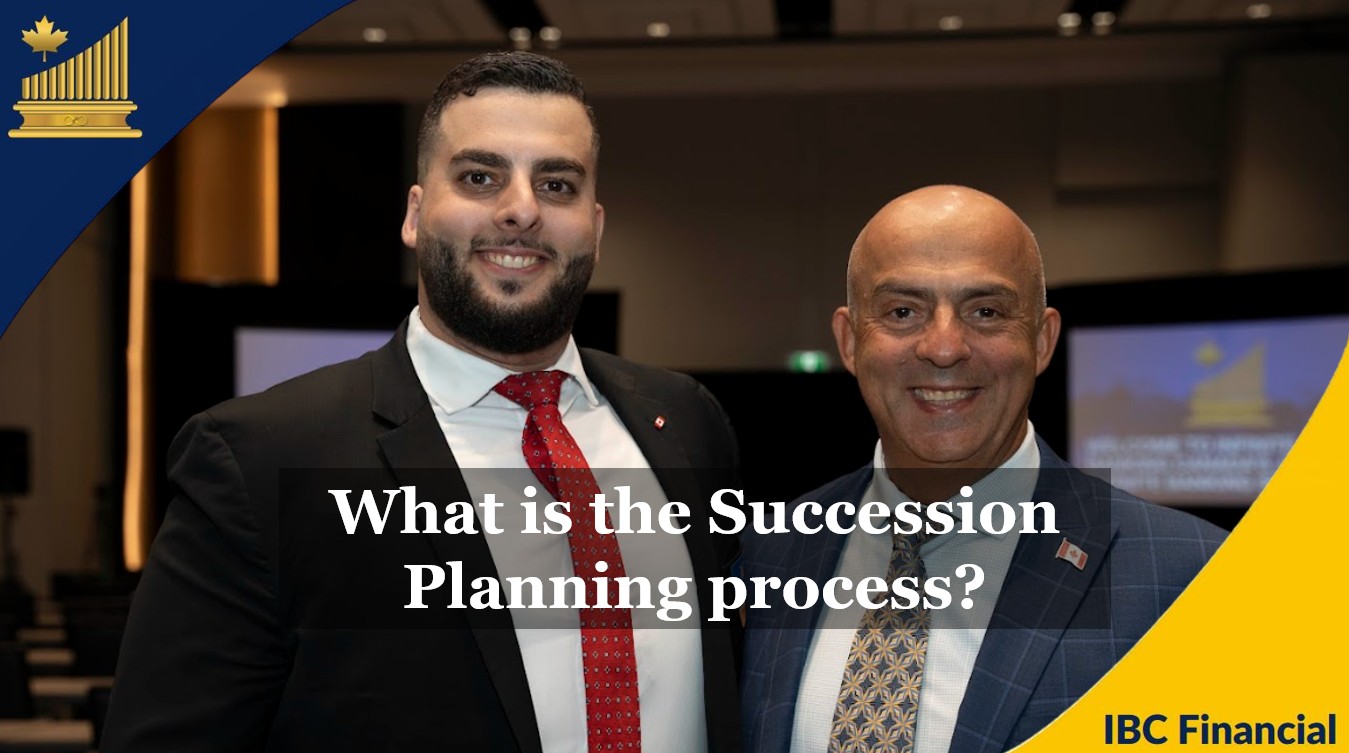
What Is the Succession Planning Process?
Succession planning covers two questions: who leads the business next, and who owns it next. Most plans answer the first and leave the second undecided.
Read moreMoney Principles
Opportunity cost, compound growth, capital recovery and liquidity are the ideas a reader needs before any product conversation makes sense, because they describe what money does over time regardless of where it is held.

Money Principles
Opportunity cost, compound growth, capital recovery, liquidity and the cost of waiting, explained without reference to any product.
Read more
Capital Recovery
What capital recovery means, the capital recovery factor, and how depreciation and the Canadian capital cost allowance relate to it.
Read more
Compound Interest
How compound interest works, the formula and what each term means, why frequency matters, the rule of 72, and the three ways the arithmetic is overstated.
Read more
Opportunity Cost
What opportunity cost means, how it is calculated, explicit and implicit costs, how it differs from sunk cost, and why the alternative must be named.
Read more
The Money Multiplier
What the money multiplier is, how it is calculated, what the reserve ratio does, and why the textbook version does not describe Canadian banking.
Read more
What Are the Fees for a Wealth Manager?
How wealth management is charged in Canada: percentage of assets, hourly, flat and retainer structures, management expense ratios, and embedded costs.
Read more
Why Is Personal Finance Important?
What personal finance covers, where the field came from, the five areas it spans, the order they matter in, and what changes when someone understands it.
Read moreObjections and Risks
Critics of this strategy raise arguments about cost, opportunity cost, comparison framing and the rate at which policies are surrendered, and several of those arguments are correct and are addressed directly here rather than dismissed.

The Honest Case Against, and What It Gets Right
The arguments made against using participating whole life insurance as a place to hold capital, set out in full, including the ones that are correct.
Read more
Is It Legitimate?
Readers asking whether infinite banking is legit are asking three questions at once. The contract is regulated insurance; the selling is what is criticised.
Read more
Risks and Failure Modes
The ways a participating contract goes wrong in practice: early surrender, lapse with a loan outstanding, overfunding, wrong design, and loss of exempt status.
Read more
The Comparison Question
The case for what practitioners call becoming your own banker rests on a comparison against an outside lender. For most people the honest comparison is savings.
Read more
The Real Costs
What a participating whole life contract costs, why the costs are not itemised the way a fund's fees are, and how to measure them anyway.
Read more
What Critics Get Right
Nine arguments made against using participating whole life insurance to hold capital, each stated at its strongest, and each given a plain verdict.
Read moreFamily Finance
Families face funding decisions across a lifetime, including education, a first home and emergency liquidity, and permanent insurance is one of several ways to hold capital for them, suited to some circumstances and not others.
Family Finance
Household decisions in the order they matter: protecting income, emergency liquidity, education funding, a first home, and where coverage on children fits.
Read moreLocations
Insurance is regulated provincially in Canada. What an advisor may call themselves, which regulator supervises them, and what happens to an estate all differ by province. These pages set out what is different where you live.

Life Insurance by Province and City in Canada
Insurance is regulated provincially in Canada. Which regulator supervises your advisor, which titles they may use, and what an estate costs all differ.
Read more
Life Insurance in Alberta: Rules, Probate and Who May Advise You
What differs for an Alberta household: the Alberta Insurance Council, a probate fee structure unlike Ontario's, and no provincial title protection statute.
Read more
Life Insurance in Manitoba: The Province That Abolished Probate Fees
Manitoba abolished probate fees, which removes the estate-cost argument entirely. What that changes about naming a beneficiary when the fee is nil.
Read more
Life Insurance in New Brunswick: Title Protection and Two Official Languages
New Brunswick is Canada's only officially bilingual province and one of three with title protection legislation. What both mean for a household here.
Read more
Life Insurance in Quebec: A Different Legal System Entirely
Quebec operates under a different legal system, not merely different rules. What that changes for insurance: the AMF, spousal designations and notarial wills.
Read more
Life Insurance in Toronto: What Is Different in Ontario
What differs for a Toronto household: the Ontario regulator, the titles an advisor may use, Estate Administration Tax, and what a named beneficiary changes.
Read more
Life Insurance in Vancouver: What Is Different in British Columbia
What differs for a Vancouver household: the Insurance Council of British Columbia, probate fees rather than an estate tax, and wills variation.
Read more
Ottawa and Gatineau: Living in One Province, Working in Another
Thousands in the National Capital Region live on one side of the Ottawa River and work on the other. Which province governs insurance, pensions and an estate.
Read more
Provinces Where This Practice Is Not Licensed
The provinces and territories where neither Jose Salloum nor the firm holds a licence, what that means for you, and how to find an advisor who is licensed.
Read moreThe book
Both editions are in final production. There is nothing to download yet, and these pages are where you ask to be told once there is.
The Book, and Why There Is Nothing to Download Yet
The book is in final production in English and French. No release date, publisher or ISBN has been announced. Ask to be told when it is ready.
Read moreThe Real Estate Edition, and How to Ask for It
A second edition for property investors, in final production in English and French. Nothing to download yet. Ask to be told once it exists.
Read moreNine sections. Each has a page at its root that explains what the section covers and links everything inside it, so you can start from a subject rather than from a list.
No page on this site is currently gated. If a page exists, it can be read.
Where to start
If the subject is new to you, start with the arguments against. That is an unusual recommendation for a practice to make, and it is the right one. What the critics say is the fastest route to understanding what this actually is, and a reader who has only seen the case in favour cannot evaluate it.
If you want the contract itself, start with how a participating policy works. That section is the reference layer, and most other pages on the site link back into it.
If you want to know who is writing this, start with the author page, which sets out the licensing, the five dates that get confused in this field, and how the author is paid.
The strategy
The approach known as The Infinite Banking Concept®, a term originated by Nelson Nash. This section covers the approach itself: what it requires of the person using it, how a contract is funded, how capital is accessed and repaid, who it suits, who it does not, and where the idea came from. This section covers the strategy layer only. Anything true of the contract regardless of whether a strategy is being run belongs in policy basics instead, which is a boundary applied deliberately so two pages do not answer the same question.
If any page here is difficult to use, the accessibility statement sets out what has been done and how to report a barrier.
The conditions under which this material is published are in the terms and conditions.
How this material may be used is set out in the terms of use.
The products
Participating whole life, permanent coverage generally, term insurance, universal life and annuities, and how they compare with one another. Comparisons between insurance products live here. Comparisons between insurance and something that is not insurance live in objections, because a versus-alternative page is an argument rather than a description and carries a heavier disclosure.
The contract mechanics
The reference section. Cash value, surrender value, dividends and how they are declared, paid-up additions, policy loans, the adjusted cost basis, the exempt test, underwriting, beneficiary designation and the personal tax treatment.
If a page elsewhere on this site mentions a mechanism in passing, it links here for the full explanation. That is a rule rather than a habit: one page owns each concept, and the others refer to it.
Retirement
How permanent coverage sits alongside registered accounts, what it does not replace, income sequencing, and the specific cases: the real estate investor, the incorporated professional, the business owner.
For most Canadian households, unused registered contribution room is the better home for surplus money and should be used first. This section says so rather than working around it.
Estate
What happens to capital at death. Deemed disposition, probate, what a beneficiary actually receives and when, estate liquidity, equalisation between children, creditor considerations that vary by province, and transfer between generations.
Provincial variation matters more here than anywhere else on the site, and Quebec differs from the rest of the country in ways that a national summary would obscure.

Business owners
Corporate ownership, the Capital Dividend Account, retained earnings, key person coverage, succession and buy-sell funding, and the professions with specifics of their own.
The corporate analysis is genuinely different rather than the personal case with a company attached. Importing a conclusion reached about a personal contract into a corporate file is a common error and an expensive one.
A definition you need while reading is likely in the glossary, which defines the recurring technical terms in Canadian rather than American form.
The underlying ideas
Opportunity cost, compound growth, capital recovery, liquidity, the cost of waiting, and tax deferral, explained without reference to any product.
These pages exist to be useful to a reader who never buys anything. A section that turned every general financial concept into an argument for a product would be a sales funnel wearing an education label.
The case against
Nine arguments made against this approach, each stated at its strongest before being answered, and where an argument holds it is not answered at all. Five are conceded outright, three are partly correct with the limit stated, and one is rejected because it reasons from American tax rules that do not govern a Canadian contract.
The individual pages: the comparison question, which deals with the strongest criticism in the field; is it legitimate; the real costs; risks and failure modes; and what critics get right.
Families
Decisions across a household rather than across a product: education funding, a first home, coverage for children, emergency liquidity, and ownership between parents and grandparents.
Beyond the sections
Three pages sit outside the nine sections because they are not subject matter.
About the practice explains what the practice does, how it is licensed and how it is paid. Becoming a client sets out what actually happens after a first conversation, step by step, including the points at which nothing is decided. Contact has the address, the phone number and the email, with no form standing between you and any of them.
A note on reading order
The sections are listed above in the order they were built rather than the order most readers need them.
A reader with no prior exposure is well served by moving from the case against, to the contract mechanics, to the strategy, and only then to whichever of retirement, estate, business or family matches their situation. Reversing that order, which is how most sites in this field are arranged, produces a reader who is enthusiastic before they are informed.
A reader who already owns a contract usually wants policy basics first, specifically the pages on dividends, cash value and policy loans, because the common question is not whether to buy but what the contract they have is actually doing.
A reader sent here by an advisor should read the case against first, without exception. If the arguments on those pages were not raised in the conversation they had, that absence is itself information.
Why the sections are separated the way they are
The boundaries are not arbitrary and they are worth knowing, because they explain why a subject you expect in one place appears in another.
Form before substance. A question asked adversarially belongs in objections even when the answer is mechanical. "Do policy loans really reduce my death benefit" is a challenge and it is answered where challenges are answered. "How does a policy loan affect the death benefit" is a mechanics question and it is answered in policy basics. Same underlying fact, two reader states, two pages.
Contract before strategy. If a statement remains true for someone who has never heard of the strategy, it belongs with the contract. If it only holds for someone running the strategy, it belongs with the strategy.
Mechanism before audience. A page about who the reader is never becomes the canonical explanation of how something works. The business owners section holds what is specific to a corporation, and links to policy basics for the mechanism itself, rather than repeating it in a slightly different form.
Taxpayer decides tax. Personal tax treatment sits in policy basics. Corporate tax treatment sits in business owners. Treatment at death sits in estate, which is assigned explicitly rather than by rule, because death is the point at which the personal and corporate questions stop being separable and a default would send the page to the wrong section.
Those four rules exist so that one page owns each concept and the others refer to it. The alternative is two pages answering the same question slightly differently, which is how a site of this size becomes its own competitor and how a reader ends up unsure which answer is current.
What is not here
Stated because an index that quietly omits things is not an index.
No projections presented as expectations. Where figures appear, they carry the assumptions behind them and the date they were current.
No client counts, success rates or testimonials with dollar figures. Those are the easiest numbers to publish and the hardest to substantiate.
No calculators yet. Interactive tools that produce figures require insurer and distributor review before publication, and that review has not been completed.
No downloadable guide in exchange for an email address. If a page is worth reading it is on the site.
How to use the sections together
A question usually touches more than one.
Someone asking whether to use capital held in a contract for a property purchase is asking a mechanics question, a strategy question and a comparison question at once. The mechanics page explains what a policy loan is and costs. The strategy section covers how repayment is sequenced. The objections section asks whether the comparison being made is the right one.
Reading only the section that agrees with you produces a confident answer to the wrong question. That is the reason the case against has its own section rather than a paragraph, and the reason this page recommends starting there.
A thirty-minute discovery meeting
A first conversation establishes whether this fits. No illustration is prepared and nothing is arranged.
Often the answer is no, and you will hear it during the call rather than in a proposal afterwards.
This form reaches Canadian Wealth Creation Centre Inc. Any meeting, any advice and any insurance product is provided by Canadian Wealth Creation Centre Inc., through its representatives certified by the Autorité des marchés financiers. IBC Financial is the company's education platform: it distributes no product and no financial service, and it gives no individualised advice.
Important disclosure
Common questions
Do I have to give an email address to read anything here?
In what order should I read the site?
I already own a policy. Which pages are worth reading?
An advisor sent me here. What should I read first?
Are there calculators or a downloadable guide?
Why are there no testimonials, client numbers or success rates?
Why is the same question answered in two different sections?
Where do I find out about the practice rather than the subject?
Last reviewed 2026-08-21.