

Somebody Else's Calendar: The Refit, the Lease and the Guarantee
A restaurant or a franchised location does not choose when it spends money. A franchisor mandates a refresh, a landlord sets a renewal date, and a fit-out becomes due on somebody else's calendar and to somebody else's specification. The margins that must absorb it are thin, most of what was built cannot be moved or resold because it belongs to the premises rather than to the operator, and the lease behind all of it has usually been guaranteed personally, so a household and a dining room are joined whether or not anyone intended that. This page sets out the timing problem, what a household can do to understand its own exposure, and what capital under the operator's own control changes about a date he did not set. Tax questions belong to an accountant and the guarantee belongs to a lawyer. Canadian Wealth Creation Centre Inc. publishes this as education.
A restaurant owner opens an envelope. The brand is being refreshed, the specification is attached, and the dining room has a date by which it must comply.
Nothing has gone wrong. The franchisor is protecting the brand the operator bought into, which is most of what brings people through the door, and the agreement he signed says it may do exactly this.
The lease comes up in the same window. The landlord wants a longer term and an improved space, and the renewal and the refit arrive together at a cost neither party proposes to split.
The one thing the operator does not control is when. That is the subject of this page, and it is a question about the timing of capital and not a question about a product.
What a restaurant actually finances
The room itself, and almost none of it belongs to the restaurant. Kitchen ventilation, grease interception, refrigeration, gas and electrical capacity, seating, millwork and washrooms built to code are installed into premises the operator does not own.
The equipment, which wears faster here than in most trades. Ranges, fryers, combination ovens, dishwashers and walk-in units run at volume through every service, and they are replaced on a schedule set by use and not by preference.
The brand standard, where there is a franchisor. Signage, uniforms, packaging, a point of sale platform chosen centrally, and a design specification that changes when head office decides it changes.
And the float underneath all of it. Inventory, a payroll on a short cycle, and rent that arrives on the first of the month whatever the previous month did.
The capital calendar belongs to somebody else
Take this one slowly. A dental practice replaces a chair when the chair is finished. A restaurant refits when the franchise agreement or the lease says so, and both documents were drafted by other parties for other reasons.
A franchisor's refresh cycle is a legitimate thing. Brand consistency is most of what a franchisee purchased, and a system that lets one tired location decay is failing every other operator in it. The cost of it lands on one location on a date it did not choose.
A lease renewal is the second calendar and it rarely aligns with the first. A landlord negotiating a new term commonly wants an improved space and a longer commitment, and the leverage there belongs to whoever can walk away, which is almost never the operator whose kitchen is bolted to the floor.
So the question is never whether the money will be needed. It is that the date belongs to somebody else, and a business that cannot choose its own timing has to be ready earlier than a business that can. A specialist buying into a partnership meets the same problem in a single concentrated moment and not on a recurring cycle, financed on terms he rarely has leverage to move, set out in buying into a partnership at the point of highest debt.
The asset that cannot leave the building
where the structure usually goes wrong
Corporate-owned life insurance
- 01The company owns the contract and pays the premium
- 02Premiums are generally not deductible
- 03Corporate funding is not, by itself, a tax saving
- 04A death benefit it receives may credit the Capital Dividend Account
- 05Ownership and beneficiary structure is where it fails
Most of what a restaurant spends its capital on stays behind. Hood systems, plumbing, upgraded electrical service and the dining room fit-out are attached to somebody else's premises, and they are not carried out at the end of a term.
That makes the asset base very different from a fleet or a set of dental equipment. A truck can be sold and a scanner has a used market. A grease interceptor and a poured bar do not. Their value exists while a restaurant continues to trade in that room and largely disappears when it stops.
It also changes what a lender can lend against. Security over improvements that cannot be removed is worth whatever the location is worth to the next operator, which is why the promise behind the lease is so often a personal one instead.
Thin margins, and what a bad quarter means here
Food cost, labour and rent consume most of every dollar through the till before anything reaches the operator, and each of the three moves independently of the other two.
So a bad quarter here is not a smaller profit. It is a shortfall against fixed costs that continue at full weight, with no cushion behind it because the surplus of a good quarter went on the last piece of equipment that failed.
Which is why the timing problem and the margin problem are one problem. A thin margin can absorb a scheduled cost or an unscheduled one. Being handed both in the same year by two different parties is what closes locations that were otherwise trading perfectly well.
The personal guarantee, and where the household sits
Most commercial leases signed by an independent operator are guaranteed personally, and so are many equipment finance agreements and supplier indemnities. This is ordinary. A landlord letting premises to a corporation with few movable assets asks for a person behind the promise, and that request is not unreasonable.
What it means is worth stating plainly and without alarm. Where a guarantee is personal, an obligation of the business is also an obligation of a person, so the separation that incorporation appeared to create does not hold at that point. The household and the restaurant are joined by a signature.
The scope varies enormously between documents. Some guarantees are capped at a number of months. Some fall away after a period of good standing. Some name one individual and some a spouse who signed alongside. Some are supported by a charge on a family home and many are not.
None of that can be read off a page like this one. It is read off the documents, by a lawyer, and the exercise is calm and finite: assemble the lease with every amendment, the franchise agreement, each finance agreement and any indemnity, note who signed each and in what capacity, and order a title search on the home.
Do it in a quiet month. A household that knows what it has guaranteed can make decisions about it. One that has never looked carries the same exposure without the ability to plan around it, and a lease renewal often carries an old guarantee forward without saying so.
What the party financing a refit is paid for
frequently the same person, not always
Three roles inside one contract
- 01One contractAll three can differ. Only the policyholder changes it, subject to any irrevocable beneficiary.
- 02The policyholderOwns the contract and holds its rights, subject to any assignment.
- 03The insuredThe person whose life is covered.
- 04The beneficiaryReceives the death benefit.
Three things, and only two of them are services.
Capital the business did not have on the date the specification arrived. That is real and worth paying for, because a location that completes a refit on time keeps trading and one that does not may lose the agreement.
The risk that the business does not pay. Also real, also priced, and priced higher here than in most trades because the security is improvements that cannot be repossessed and a lease that may not be assignable.
And the financing function itself. The arranging, the holding and the recovery of the money. That is the recurring margin, charged on every refit and every equipment replacement, and it is the only one of the three an operator holding capital could perform without outside help.
Infinite Financial Sovereignty®, and whose idea the underlying one was
The underlying idea is not this practice's. The method Nelson Nash named The Infinite Banking Concept® is a mark of Infinite Banking Concepts, LLC, described in his own writing, and neither Canadian Wealth Creation Centre Inc. nor Jose Salloum is affiliated with that organisation or endorsed by it.
Infinite Financial Sovereignty® is a registered trademark of Jose Salloum, and it names one narrow discipline carried out over a lifetime: that a business should hold, so far as it can, the capital for the things it will certainly have to buy again.
In the doing, it means capital held inside a participating whole life contract issued by a federally regulated insurer. The contract accumulates a contractual value. When capital is needed, an advance is taken against the contract and not arranged with an outside lender, and it is repaid on a schedule the owner sets.
None of that is free, fast, or a way of avoiding interest. The insurer charges interest on an advance, the costs of a contract fall heaviest in the early years, and nothing about it moves the date a franchisor or a landlord has chosen. What can change is who was ready for it.
What it would look like on a restaurant's file
The first refit is financed the way it always was. Capital takes years to accumulate, so an operator beginning this does not stop dealing with lenders in year one, and any presentation implying otherwise should be set down.
By a later cycle there is a second option. An equipment replacement or a share of a mandated refresh can be funded from capital the corporation controls, and not approved by somebody reading a statement from a difficult quarter.
The repayment is the part that matters and the part most often skipped. An operator who takes an advance and does not repay it has simply borrowed on different paper. The discipline is the strategy; the contract is only where the capital sits.
And the death benefit is doing its own work the whole time. This is life insurance. For an operator whose household stands behind a lease, what it pays on a death is not a secondary consideration, and on many files it is the whole reason.
The corporation, and who owns what
a notional account, not a bank balance
The Capital Dividend Account
- A notional tax account of a private Canadian corporation
- It records amounts the corporation received without tax
- A death benefit it receives, less the adjusted cost basis, may credit it
- Available balances may be paid out as capital dividends
- The credit depends entirely on the ownership structure
Most operators past the first location are incorporated, often with one company per site and a holding company above them, so the ownership question arrives immediately.
Three decisions have to be made together: who owns the contract, who pays the premium, and who is named as beneficiary. Deciding them separately, or letting whoever completes the application decide them, is the commonest expensive error in this area and it is set out at length under corporate-owned life insurance.
A mismatch does not announce itself. Where one entity pays a premium and another is advantaged by the payment, a taxable benefit can arise for whoever was advantaged, and it is typically found years later on an audit or during a sale, covering several years at once.
Where there are partners, the shareholders agreement usually speaks first. Buy-sell terms and the treatment of a departure are often older than anybody remembers, and they are read before an application and not after one.
What the corporate tax treatment depends on
On facts about your corporation, and it must be confirmed with your own accountant before anything is applied for. That sentence is not a disclaimer attached to the end of an argument. It is the argument's load-bearing condition.
Premiums are generally not deductible, which surprises operators because so much else running through the business is. A narrow exception can apply where a policy is assigned as collateral for a loan used to earn income, subject to conditions that must be met and not assumed.
Growth inside the contract is not taxed annually while the contract remains exempt under Regulation 306, Income Tax Regulations. Exempt status is maintained and not inherent, and a contract altered carelessly later can lose it.
On death, the amount by which the benefit exceeds the policy's adjusted cost basis is credited to the Capital Dividend Account under ITA s.89(1), from which a capital dividend may be elected. The credit is the excess and not the whole benefit, the adjusted cost basis moves across the life of the contract, and the election is a filing that has to be made correctly. Your accountant calculates this and nobody else should.
What this does not do
It does not move the date. A franchisor's programme and a landlord's renewal run on their own timetable, and nothing here alters either.
It does not remove a personal guarantee. A guarantee is discharged by performance, by release, or by the terms of the document, and by nothing bought from an insurer.
It does not eliminate interest, because the insurer charges interest on an advance, and a presentation leaving that out has misdescribed the arrangement and not simplified it.
It does not replace an operating line or an equipment facility, and a restaurant should keep committed external credit for the failure that outruns any accumulated capital, and because a relationship built in a good year is the one that survives a bad one.
And it does not outperform a market portfolio measured as a return. Participating whole life insurance is an insurance product and not an investment, which is a difference in purpose and not a difference in marketing.
Who this does not suit
two columns, two different documents
How to read an illustration honestly
- 01Read the guaranteed column on its own, first
- 02Treat the other column as an assumption
- 03Ask which dividend scale the projection uses
- 04Ask what changes if that scale is reduced
- 05A projection is not a promise
A restaurant whose margins leave no durable surplus in a normal year. That describes a great many good restaurants, and it is the commonest correct answer on this page. Surplus appearing only in the strongest year is not the raw material this requires.
An operator facing a mandated refit or a renewal inside the next few years. The money is needed sooner than any contract could produce it, and the honest response is to say so and not to illustrate around it.
An operator carrying expensive debt, a merchant advance or a supplier arrangement that should be cleared first. Clearing costly debt is a certain outcome, and certainty beats anything projected.
And an operator who may need the money back within a few years. Early exit is a permanent loss and not a delay, and there is no version of this in which that is untrue. A no delivered in the first half hour is worth more than a yes delivered by somebody who wanted the sale.
What stands behind the contract
The contractual obligations of the issuing insurer, and nothing else. They depend on that insurer's continued financial strength and they are not backed by any government, which is a materially different position from a deposit at a chartered bank.
Assuris protects Canadian policyholders within its published limits where an insurer fails. That is meaningful and it is not the same thing as deposit protection, and the difference is worth understanding beforehand rather than afterwards.
Dividends are not guaranteed. They are declared annually at the discretion of the insurer's board based on the performance of the participating account, and past dividend performance does not indicate future results. The guaranteed schedule in a contract and the projected values above it are two different columns on the same page and should be read separately.
The order to do it in
Read the guarantees first. The lease, the amendments, the franchise agreement, the finance agreements and the title on the home. That step costs a modest legal fee, earns nobody a commission, and is the most valuable thing on this page.
Then write down the next two mandated dates. The refresh horizon under the agreement and the lease renewal. Almost every operator knows both approximately and almost none has written them down beside each other.
Then add up what the last decade of refits and equipment cost in financing. The documents are in the office. Nobody has totalled them, and the number is a fact and not a projection.
Then take all three to your accountant, before any insurance conversation. The questions are whether the corporation is the right owner, what the surplus is in a normal year, and whether a sale is contemplated.
Then, and only then, consider whether a contract belongs in the picture at all. Purpose first, structure second, product last. That order is reversed often, precisely because only the last step pays a commission.
Where the rest of this sits
The corporate structuring underneath all of it is in business owners, the mechanism of the contract itself is in how a participating policy works, and the seasonal version of the same timing problem, where the calendar is set by weather rather than by a franchisor, is set out for landscaping and snow removal. Take from this only what applies to you.
A thirty-minute discovery meeting
A first conversation establishes whether this fits. No illustration is prepared and nothing is arranged.
Often the answer is no, and you will hear it during the call rather than in a proposal afterwards.
This form reaches Canadian Wealth Creation Centre Inc. Any meeting, any advice and any insurance product is provided by Canadian Wealth Creation Centre Inc., through its representatives who are licensed in the client's province. IBC Financial is the company's educational website: it distributes no product and no financial service, and it gives no individualised advice.
Common questions
Why does a restaurant refit on a schedule it did not choose?
Is a franchisor's mandated refresh unreasonable?
Why can a restaurant be worth so little when it closes?
What does a personal guarantee on a lease actually mean?
How does a household find out what it has actually guaranteed?
Can insurance solve a personal guarantee?
Can a restaurant corporation own a life insurance policy?
Are premiums paid by my restaurant company deductible?
How would money come out of the contract for a mandated refit?
How long before a contract could fund anything useful here?
What happens to a corporate contract if I sell the restaurant?
When is the honest answer no for a restaurant?
Sources
- Income Tax Regulations, Regulation 306, Justice Laws Canada, verified 2026-08-30
- Income Tax Act s.89(1), Capital Dividend Account, Justice Laws Canada, verified 2026-08-30
About the author
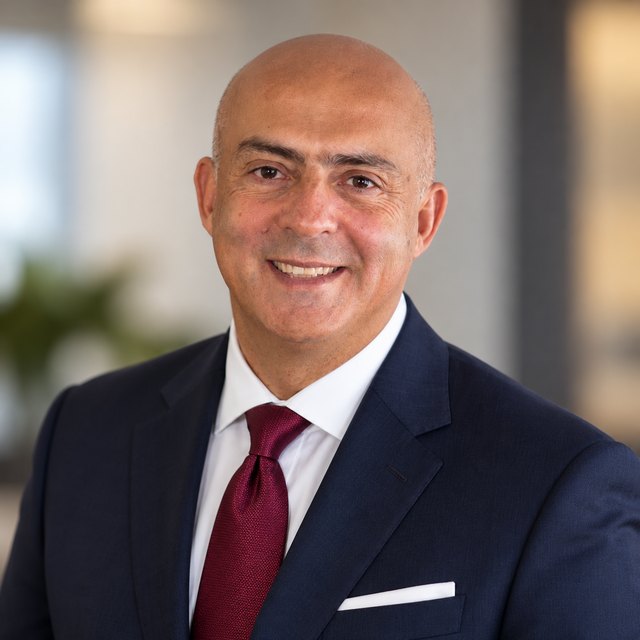
Jose Salloum is a Financial Security Advisor (conseiller en sécurité financière) certified by the Autorité des marchés financiers in Quebec, a Life and Accident & Sickness Insurance Agent licensed by the Financial Services Regulatory Authority of Ontario, and a Life Insurance Agent licensed by the Insurance Council of British Columbia. Licensed since 2001.
He has practised Infinite Banking since 2015 and founded Canadian Wealth Creation Centre Inc. in 2016. From 2020 to 2024 he was an IBC (Infinite Banking Concepts™) Authorized Practitioner of the Nelson Nash Institute, a private certification rather than a regulatory licence.
IBC Financial is the educational website of Canadian Wealth Creation Centre Inc., open to all Canadians. Services come only from Canadian Wealth Creation Centre Inc. Its representatives hold a licence in each province served: Quebec, Ontario, Alberta, British Columbia, Manitoba and New Brunswick. Jose Salloum's own licences cover Quebec, Ontario and British Columbia. This page is general education and not advice on any individual file.
Last reviewed 2026-08-31. By Jose Salloum, Financial Security Advisor in Quebec. In Ontario, Life and Accident & Sickness Insurance Agent. In British Columbia, Life Insurance Agent.