
Financing a Medical Career: From Medical School to an Established Practice
Finance each stage with the tool built for it: government student loans first, a professional line of credit only for the gap, a repayment plan in residency, then protection and a reserve in practice. A participating policy fits later, once a surplus is steady. Its loans come from the insurer, bear interest it sets and can be taxable.
A medical career is financed long before it pays. Tuition, living costs, licensing exams, a move for residency, protection fees, the first months of billing, a share of a clinic, sometimes equipment: each one arrives before the income that will pay for it. By the time a physician is established, the habits formed around those early loans are hard to change.
So the useful question is not only how to pay for medical school. It is how to handle financing across thirty or forty years, so that each loan has a purpose, a source of repayment and an end date. The answer below goes stage by stage, from the first year of medical school to an established practice. It names the tools that fit each stage, the Canadian rules that change their cost, and the place, later and narrower than some people expect, where a participating whole life policy can play a part.
A word on how I am paid, before anything else. I am paid by commissions from insurers when a policy is bought. Reading this costs you nothing, and much of what follows has nothing to do with insurance.
The other articles for physicians are gathered in the physicians collection, part of the wider business owners section. Several of them take one stage of this career map and go deeper.
What does financing a medical career involve, from first year to established practice?
It involves a chain of borrowing decisions spread over decades: student debt during school, carried debt through residency, start-up costs in the first years of practice, then larger purchases such as a clinic share, equipment or premises. Each stage has its own tools, and a life insurance policy fits only the later ones, once protection and debt payments are settled.
The map below lists the stages a physician can pass through. Not every career follows it. A family physician who joins an established group may never buy equipment; a specialist opening a private clinic may face several large purchases in one decade. Read across the row that matches where you are.
| Stage | The financing event | Tools that fit it | Where a policy can and cannot help |
|---|---|---|---|
| Medical school | Tuition, living costs, exam and application fees | Government student loans, grants, a professional student line of credit, family help | It cannot help; there is no surplus to fund one |
| Residency | Carrying the debt on a salary, moving, protection fees | Interest-only payments, a repayment plan, loan forgiveness where eligible | A small policy is possible only if surplus exists after essentials |
| First years of practice | The gap before billing income arrives, office costs, a home, a car | An operating line, a mortgage, cash reserves | Too early to rely on; cash value builds slowly |
| Joining or buying into a clinic | A buy-in price, a share of overhead, leasehold costs | A term loan from a lender, vendor terms, savings | Cash value built over earlier years may supply part, with interest paid to the insurer |
| Specialist equipment or a private clinic | Equipment, fit-out, a second site | Leases, equipment loans, a lender's term loan | A policy loan may supply part of a planned purchase if the value is there |
| Established practice | Recurring purchases, the household's larger needs | Retained cash, a line of credit, a policy loan where suitable | The stage where a well-funded policy can do the most |
| Closing or leaving a practice | Transition costs, uneven income | Cash, sale or closing proceeds | Possible liquidity, with its tax and death benefit effects |
Two patterns run through the table. The early stages are financed by others, because at that point the capital simply does not exist yet. The later stages can be financed partly from capital you built, if you built it. The years between the two are where the habits form.
How do physicians pay for medical school in Canada?
The money comes mainly from three places: government student loans and grants, a professional student line of credit from a private lender, and family help. Government loans cost less and forgive more. The federal portion of Canada Student Loans has been interest-free since 1 April 2023, while Quebec runs its own program.
The federal change came in a Government of Canada announcement dated 31 March 2023: interest on Canada Student Loans and Canada Apprentice Loans ended permanently on 1 April 2023, and borrowers remain responsible for interest that accrued before that date. The same announcement explains that Quebec, the Northwest Territories and Nunavut do not take part in the federal program; they receive alternative payments and run their own student financial assistance. In Quebec that is the Aide financière aux études program. Where a province adds its own loan to the federal one, the provincial portion follows that province's rules, so read your loan agreement for each part.
Government loans have limits, and a medical degree can cost more than they cover. That gap is where a professional student line of credit comes in. These lines are offered by private lenders to students in medicine and some other professions, with a higher limit than an ordinary student line. They are useful. They are also a different kind of debt, and the next section compares the two. The first steps after graduation, and the order in which to tackle residency debt, are covered in depth in new physicians, residency debt and what to do first.
Two tax rules matter while you are a student, and both reward keeping receipts.
- Tuition and examination fees. The Canada Revenue Agency's page on eligible tuition fees (modified 15 May 2026) says that fees paid to take a professional examination required to obtain a professional status recognized by federal or provincial statute may be eligible for the tuition tax credit. The fees paid to each institution must be more than $100. Ask whether your licensing examinations qualify before you file.
- Interest on student loans. The CRA's page on line 31900 (modified 20 January 2026) allows a credit for interest paid on loans received under the Canada Student Loans Act, the Canada Student Financial Assistance Act, the Apprentice Loans Act or similar provincial laws. It does not allow interest on loans that are not government student loans, or on student loans combined or renegotiated with other loans. Unused amounts can be carried forward five years.
That last rule decides more than people expect. Interest on a professional student line of credit does not earn the student loan interest credit, because the line is not a government student loan. And if you fold a government loan into a private consolidation loan, its interest stops qualifying as well.
Is a professional student line of credit different from a government student loan?
a notional account, not a bank balance
The Capital Dividend Account
- 01A notional tax account of a private Canadian corporation
- 02It records amounts the corporation received without tax
- 03A death benefit it receives, less the adjusted cost basis, may credit it
- 04Available balances may be paid out as capital dividends
- 05The credit depends entirely on the ownership structure
Yes, in cost, in tax treatment and in what happens if your plans change. A government student loan is governed by statute and can carry forgiveness or repayment assistance. A professional student line of credit is a private contract: the lender sets the rate, can change it, and decides the repayment terms that follow graduation.
Read the two side by side before you draw on either. The rows describe features, not rates, because rates change and differ by lender and province.
| Feature | Government student loan | Professional student line of credit |
|---|---|---|
| Who lends | The federal government, a province, or both | A private lender |
| Interest | Federal portion interest-free since 1 April 2023; provincial portion by province | A variable rate the lender sets and may change |
| Credit for interest paid | Federal and Quebec credits can apply to qualifying government loans | No student loan interest credit |
| Repayment after studies | Begins six months after studies end, under the program's rules | Set by the line's agreement, which may allow a period of interest-only payments; read yours |
| Help if income falls | The Repayment Assistance Plan and, for some physicians, loan forgiveness | No Repayment Assistance Plan; whatever the lender agrees to |
| Effect of merging it with other debt | Interest stops qualifying for the credit | Not applicable |
The federal page Repay a student loan (modified 3 June 2026) states the six-month rule: repayment starts six months after the end of your studies. Residency is paid training, so ask the National Student Loans Service Centre how your loan treats the residency years before you assume any pause. The Financial Consumer Agency of Canada's page Student lines of credit (modified 14 October 2025) adds two points: you must pay at least the interest on a student line of credit, even while you are studying, and a line of credit gives no access to the Repayment Assistance Plan open to Canada Student Loan borrowers.
A practical order follows from the table. Use the government loan room you qualify for first, because it costs less and forgives more. Draw the line of credit for the gap, and only for the gap. When you start repaying, the line of credit is the debt whose cost the lender controls, which is one reason to reduce it before the government loan.
What changes during residency?
Residency brings a salary, and with it the first real financing decisions. You start paying protection fees, may move more than once, and carry school debt on a resident's pay. Some residents can qualify for federal loan forgiveness, and the choices made now about interest-only payments set the size of the debt that practice will inherit.
Residents are paid a salary under provincial agreements. In Quebec, the Fédération des médecins résidents du Québec (FMRQ) negotiates the residents' collective agreement with the ministère de la Santé et des Services sociaux; its site, read on 2 October 2026, shows an agreement covering 2021 to 2028. Other provinces have their own resident associations and agreements. Your agreement, not an average, tells you what you will earn in each year of training.
Protection costs begin too. The Canadian Medical Protective Association (CMPA) sets its membership fees by type of work and by region, and they are payable each year; its fee page lists separate types of work for residents and fellows with and without moonlighting. Ask your provincial medical association whether any part of the fee is reimbursed for your type of work, and budget for the rest.
Then there is loan forgiveness, which matters to anyone considering family medicine outside a large city. The federal page Canada Student Loan Forgiveness (modified 3 June 2026) lists family doctors and family medicine residents among eligible occupations, with forgiveness of up to $8,000 in the first year rising to $16,000 in the fifth, and up to $60,000 over a maximum of five years. The conditions it states include a full year of work, at least 400 hours of in-person services, work in a rural area or a population centre of no more than 30,000 people, a loan in good standing, and an application within 90 days after the year of service. It forgives Canada Student Loans, so it does not reach a private line of credit, and a province may run its own program as well.
The decision a resident with a line of credit faces is whether to pay only interest on the line of credit or to start reducing the balance. Interest-only payments keep cash free during a demanding period. They also mean the full balance is still there on the first day of practice.
What does carrying a line of credit through residency cost?
At an assumed rate of 6% on an assumed balance of $120,000, interest alone is $600 a month and $7,200 a year, or $21,600 over three years of interest-only payments. None of it earns the student loan interest credit. Every $10,000 repaid early saves $600 a year at that rate.
Illustrative example. The figures are assumptions chosen to show the arithmetic, not a quote from any lender.
- Balance owed on a professional student line of credit at graduation: $120,000.
- Interest rate: 6% a year, charged monthly on the balance. The lender sets the real rate and can change it.
- Residency: three years, with interest-only payments.
- Combined marginal tax rate during residency: 30%, assumed for illustration.
| Measure | Amount |
|---|---|
| Interest each month ($120,000 × 6% ÷ 12) | $600 |
| Interest each year | $7,200 |
| Interest over three years of residency | $21,600 |
| Pre-tax salary needed each year to pay $7,200 of interest at a 30% marginal rate | about $10,286 |
| Interest saved each year for every $10,000 repaid early, at 6% | $600 |
Three things stand out. The interest is paid from after-tax income, because no credit applies to it. The balance at the end of residency is the same $120,000 it was at graduation. And if the lender raises its rate, the monthly figure rises with it. None of this says interest-only payments are wrong; in a lean year they can be the right call. It says the cost is real, and that whatever you can repay during residency reduces the debt your first years of practice must carry.
What financing decisions arrive in the first years of practice?
Several at once: a gap between the first day of work and the first billing payments, office and clinic costs, protection to put in place, and household purchases such as a home and a car. The order matters more than the amounts. Protection, a cash reserve and a plan for the remaining school debt come before any long commitment.
The first year out of residency can look like a sudden rise in income. In cash terms it is more uneven than that. If you bill a provincial plan, such as the Régie de l'assurance maladie du Québec (RAMQ) in Quebec, OHIP in Ontario or the Medical Services Plan in British Columbia, payments arrive after you bill, on the plan's schedule, and the first ones can take time to come in. A clinic may ask for your share of overhead from the first month. How fee-for-service income behaves, and how to carry the months when it dips, is the subject of fee-for-service billing and the physician's irregular income.
The same months bring decisions that are easy to make in the wrong order. Here is one order that holds up, with the reason for each step:
- A cash reserve outside any policy. Billing income can arrive late, and a reserve keeps a delay from becoming card debt. A policy is not an emergency fund.
- Disability coverage that matches your specialty and your new income. Your ability to practise is the asset every later plan depends on. The questions it raises are set out in physicians, disability and the capital plan.
- Life insurance for the people who depend on your income, and for any lender that requires it. Term coverage can meet a large need at a low early cost.
- A repayment plan for the professional student line of credit, since its rate is the one the lender controls.
- Household purchases at a size the first years can carry, tested against a weak billing month rather than a strong one.
- Only then, any long-term premium commitment, sized to a surplus you have seen for a full year.
A home deserves a separate word. A Canadian mortgage is amortised over many years but renewed at the end of each term, when the rate resets to whatever the lender offers then. A payment that fits at a low rate may not fit at the renewal. Leave room for it.
If you are joining a group or buying a share of a clinic, the buy-in is its own decision with its own documents; joining or buying into a clinic or group practice walks through it. Where two physicians share one household, the timing of two careers adds another layer, covered in the physician's spouse and the two-physician household.
How should a physician think like a lender before any loan?
where the structure usually goes wrong
Corporate-owned life insurance
- The company owns the contract and pays the premium
- Premiums are generally not deductible
- Corporate funding is not, by itself, a tax saving
- A death benefit it receives may credit the Capital Dividend Account
- Ownership and beneficiary structure is where it fails
By asking the questions an outside lender would ask, even when nobody asks them: what the money is for, which income repays it, what it costs in full, what happens if income stops, and when the capacity used will be rebuilt. The same test applies to a clinic loan, a lease, a line of credit or a policy loan.
Thinking like a lender does not mean distrusting yourself. It means giving every loan the same scrutiny, whoever is lending. A lender who approves a loan has studied the purpose, the repayment source and the security. When you finance from capital you control, no one does that for you unless you do it. The idea is developed in thinking like a lender.
Work through these eight questions on paper before any borrowing decision:
- Purpose. What exactly will the money pay for, and does it need to happen this year?
- Repayment source. Which income repays it, and what else already depends on that income?
- Full cost. What are the rate, the fees, the security and the term? Who sets the rate, and can it change?
- Monthly fit. Does the payment still fit in your weakest billing month of the past year?
- Interruption. If you could not practise for six months, how would the payment be met?
- Tax. Is the interest deductible, given how the money will be used? Your accountant answers that from the facts.
- Security and consents. What is pledged, and does anyone else's consent stand in the way, such as a lender holding an assignment of a policy?
- Rebuilding. When will the capacity you used be available again, and is that date realistic?
If an answer is unclear, wait or choose a simpler route. The written answers also let you compare a policy loan and an outside offer on equal terms: cost against cost, flexibility against flexibility, risk against risk.
Where can participating whole life insurance fit in a medical career, and when is it too early?
It fits once protection is in place, expensive debt is under control and a surplus has been steady for a year. It is life insurance first, with guaranteed cash values that build slowly and dividends that are not guaranteed. Bought too early, or to fund a purchase planned for the next few years, it adds a commitment without the capacity.
Here is the idea, stated plainly. A participating whole life policy pays a death benefit when the person insured dies, whenever that is, as long as the policy stays in force. Alongside that protection, it builds a cash value according to a guaranteed schedule in the contract. Because the policy is participating, the insurer's board may also declare dividends each year; they are not guaranteed, and the insurer decides what it pays. A policy is life insurance; it is not an investment, and it is not a savings account.
Some physicians use such a policy for a second purpose. Over the years, its cash value becomes security the insurer will lend against. The financing approach R. Nelson Nash called The Infinite Banking Concept® builds on that: finance planned purchases through loans from the insurer against your own policy, then repay them on a schedule as demanding as an outside lender would set, so the capacity is there for the next purchase. The firm I work with, Canadian Wealth Creation Centre Inc., describes the long-term aim of that discipline as Infinite Financial Sovereignty®. It is a direction to work toward, not a promised outcome, and none of it removes interest or risk.
The catch is time. Capitalization comes before use: in the early years, a policy's cash value can be well below the premiums paid, and a policy given up early can return less than went in. That is why a policy does not belong in the medical school or residency rows of the map, and why it is the wrong tool for a purchase you expect to make within a few years. For that, a lender's loan or savings is the honest answer.
Three conditions make a policy worth examining, all three together:
- protection is in place, including disability coverage that fits your practice;
- the remaining debt has a plan, and the costliest debt is shrinking;
- a surplus has been there month after month for at least a year, after the reserve.
If you meet them, the policy can grow alongside the career, so that by the time the larger purchases of the middle years arrive, some of the capital for them may already exist. If you do not meet them yet, waiting is a sound decision. The full costs of a participating policy, year by year, are worth reading before any application.
How does a policy loan work, and who is the lender?
The insurer is the lender. It advances money to the policy owner, secured by the policy's cash surrender value, at a rate the insurer sets and may change. The interest is owed to and paid to the insurer. A loan can create taxable income above the adjusted cost basis, and anything unpaid at death comes off the death benefit.
The Autorité des marchés financiers explains the mechanism in How to access the cash surrender value without cancelling your insurance: you use the cash surrender value as security, you repay the amounts borrowed with interest, and if you die before the loan is repaid, the insurer subtracts the amounts owed and the accrued interest from the insurance payable. The full mechanics are in the guide to policy loans.
Each part of the transaction has a name, and keeping them apart prevents misunderstandings.
- Who lends: the insurer, under the loan provision of the contract.
- Who owes: the owner of the policy. If your professional corporation owns it, the corporation owes, and getting money from the corporation to you is a second transaction with its own tax.
- Who receives the interest: the insurer, at a rate it sets and may change. Depending on the contract, interest you do not pay is added to the loan and then bears interest itself.
- What secures it: the cash surrender value, which stays in the contract while the loan is outstanding.
- What it does to the death benefit: until the loan is repaid, the balance and accrued interest are subtracted from what is paid when the person insured dies.
- What it does for tax: under section 148 of the Income Tax Act, a policy loan is a disposition. Only the part of the loan above the policy's adjusted cost basis immediately before the loan is included in income, and the loan reduces that basis. Repayments restore it within limits, and repaying an amount that was taxed can give a deduction under paragraph 60(s) in the year you repay. Quebec residents also deal with Revenu Québec.
- What happens if it is neglected: if the loan and interest overtake the value securing them, the policy can end after the notice the contract provides. That ending can produce taxable income to the extent the proceeds exceed the adjusted cost basis, at a time when money may already be short.
A second route exists: a loan from another lender that takes the policy as collateral, through an assignment. That lender sets its own rate and receives its own interest. The assignment is not a disposition of the policy for tax purposes, the policy stays the owner's, and the assignment is released when the loan is repaid. Ask the lender what it requires and what it will let you do with the policy while the assignment is in place.
What does a policy loan for a practice purchase look like in numbers?
five situations it tends to suit
Who this method suits
- 01Households with durable surplus income, not one good year
- 02People who already think about money in decades
- 03People who want the permanent coverage in its own right
- 04Owners and professionals who can fund premiums through uneven years
- 05Families arranging capital across more than one generation
On an assumed $40,000 loan at an assumed 6.5%, repaid at $1,200 a month, the loan clears in 37 payments and costs about $4,234 in interest, paid to the insurer. With an assumed adjusted cost basis of $52,000, the loan creates no taxable income, but it lowers the basis to $12,000 until repayments restore it.
Illustrative example. Every figure here is an assumption chosen to show the mechanics; none is a quote, a rate or a value from any insurer.
- You have owned a participating policy for some years, and the insurer has confirmed in writing that at least $40,000 is available as a loan.
- The purchase: a $40,000 share of a clinic fit-out, or a piece of equipment.
- Policy loan rate: 6.5% a year, charged monthly on the balance. The insurer sets the actual rate and method and can change them.
- Repayment: $1,200 a month to the insurer, starting the month after the loan.
- Adjusted cost basis immediately before the loan: $52,000. A second case uses $25,000.
- For comparison, a term loan from an outside lender at an assumed 7.25%, with the same $1,200 payments.
| Measure | Policy loan at 6.5% | Outside term loan at 7.25% |
|---|---|---|
| Amount borrowed | $40,000 | $40,000 |
| Monthly payment | $1,200 | $1,200 |
| Number of payments to clear the loan | 37 | 38 |
| Total interest | about $4,234, paid to the insurer | about $4,802, paid to the lender |
| Balance after 12 payments | about $27,842 | not shown |
The tax side of the policy loan depends on the adjusted cost basis, which is a different figure from the cash value and from the premiums paid.
| Assumed adjusted cost basis before the loan | Income included in that year | Basis after the loan |
|---|---|---|
| $52,000 | $0, because the $40,000 loan is below the basis | $12,000 |
| $25,000 | $15,000, the part of the loan above the basis | $0 |
In the second case, repaying the loan later can give a deduction under paragraph 60(s), up to the $15,000 that was included, in the year you repay. It is a deduction in that year, not a refund of the earlier tax.
Now the death benefit. Suppose the person insured died just after the twelfth payment, with an assumed death benefit of $500,000. The insurer would subtract the balance of about $27,842, leaving about $472,158 for the beneficiary.
Read the comparison fairly. The policy loan costs less here only because its assumed rate is lower. If your lender offers a lower rate than the insurer, the lender's loan costs less in interest. What the policy route changes is who decides the schedule and whether a credit application is involved; whether that is worth anything to you depends on whether you repay as steadily as the table assumes.
What changes once the practice is incorporated?
The corporation becomes a separate borrower, payer and owner. Before any talk of corporate surplus, four tax regimes and the college's rules apply. Who should own, pay for and be named on a policy has no general answer; your accountant and lawyer settle it before an application is signed.
In Quebec, the Collège des médecins du Québec requires a physician to obtain its authorization before practising within a joint-stock company or a limited liability partnership set up mainly for the practice of medicine, under its regulation on practising the profession in a company. Other provinces have their own rules on who may own the shares of a medical professional corporation; ask your college and a lawyer before choosing a structure.
Money left in the corporation is shaped by rules that apply before any policy enters the picture: the small business deduction and its business limit, the passive income rule that can reduce that limit, the personal services business rules, and in Quebec a condition on hours paid to employees that can reduce the provincial small business deduction. Your accountant applies them to your own figures. What happens to retained earnings, and how an exempt policy is measured against those rules, is set out in the incorporated physician's corporation.
Three points from the earlier sections change when a corporation is involved.
- The borrower. A policy loan on a policy the corporation owns is an advance from the insurer to the corporation. It never settles a debt you owe personally. Moving the money to you is a salary, a dividend or the repayment of a shareholder loan, each with its own tax.
- The payer. If the corporation pays the premium on a policy you own personally, or one that benefits you, the Canada Revenue Agency can assess a shareholder benefit. Review the arrangement with your accountant before the first premium.
- The interest. Interest on money used to earn income from a business may be deductible under paragraph 20(1)(c) of the Income Tax Act, depending on the use of the money. For a policy loan, the insurer must also verify the interest on CRA Form T2210, Verification of Policy Loan Interest by the Insurer. The accountant tests the actual use before you count on a deduction.
The ownership options, you personally, the practice corporation or a holding company, are compared in the policyholder decision for an incorporated owner. Read it with your accountant; the choice stays yours and theirs.
How does the financing plan change near the end of a career?
The financing needs shrink while the income question grows. Closing or leaving a practice brings transition costs and uneven months, and retirement replaces billing with income you built. A policy that funded purchases may now serve a different purpose, and each loan still taken carries its tax and death benefit effects.
Closing a practice can bring lease obligations, record-keeping duties, staff costs and a period before final amounts are settled. Closing or leaving a medical practice covers those money questions. A policy loan can bridge part of that period, with interest paid to the insurer; compare it with cash and with the actual timing of any proceeds.
Retirement is a different question again: without an employer pension, the income you retire on is the income you chose to build. Retirement planning for a physician sets out what each vehicle does. Policy loans taken for retirement income remain loans: the balance grows if unpaid, it reduces the death benefit, and income can arise above the adjusted cost basis. Plan them with your accountant, year by year, rather than assume they are tax-free.
How is the picture different in Quebec?
Quebec has its own institutions at each stage: Aide financière aux études for student assistance, the FMRQ for residents, the RAMQ as payer, the FMOQ and FMSQ for family physicians and specialists, the Collège des médecins for practice in a company, and Revenu Québec alongside the CRA for tax.
Each one changes a practical detail.
- Student assistance. Quebec runs its own loans and bursaries outside the federal program, so the federal interest change of 2023 and federal loan forgiveness do not apply to a Quebec loan. Revenu Québec's page on interest paid on a student loan allows a non-refundable credit for interest on loans under the Act respecting financial assistance for education expenses and the federal acts, and excludes interest on lines of credit. Complete Schedule M each year to keep track of interest you may carry forward.
- Residency. The FMRQ's collective agreement with the ministère de la Santé et des Services sociaux sets resident pay and conditions.
- Practice income. Physicians who bill the RAMQ are paid under agreements their federation negotiates with the government. The Fédération des médecins omnipraticiens du Québec (FMOQ) represents family physicians, and its site refers to a framework agreement for 2023 to 2028. The Fédération des médecins spécialistes du Québec (FMSQ) represents specialists. Read your federation's current terms before you plan cash flow on last year's pattern.
- Practice in a company. The Collège's authorization comes before practising in a joint-stock company or a limited liability partnership.
- Tax and law. Federal tax rules apply, and Quebec residents and corporations also file with Revenu Québec. Contracts, designations and family property questions follow the Civil Code of Québec, so the professional to consult is a lawyer or a notary.
What are the drawbacks and risks?
the number that decides what is taxable
The adjusted cost basis
- 01The tax cost of the contract to its owner
- 02It rises with the premiums that are paid
- 03It falls as the net cost of pure insurance is deducted
- 04It decides how much of an amount taken out is taxable
- 05On a long held contract it declines toward nothing
A policy demands steady premiums for many years and builds value slowly. Its loans cost interest at a rate the insurer can change, reduce the death benefit, and can create taxable income. Dividends are not guaranteed. The largest risk you control is repayment; the others you can plan for but not remove.
- The premium outlasts a bad year. A disability, a billing dispute, a change in remuneration or a second household budget can make premiums hard to pay. Ask what the contract allows if you cannot pay, and treat those options as an emergency exit.
- Early surrender is costly. A policy given up in its first years can return less than was paid in.
- Loans that are not repaid grow. Interest added to the balance bears interest. If the balance overtakes the value securing it, the policy can end, and that can create taxable income.
- Rates move. The insurer sets the loan rate and can change it. A plan built on one rate needs a margin.
- Dividends can be lower than illustrated. A plan that works only at the illustrated dividend scale is fragile.
- The death benefit shrinks while a loan is outstanding. Every dollar owed comes off what your family would receive.
- The habit is the hard part. No one schedules your repayments. That freedom is the point, and also the risk.
If Assuris is part of your thinking, know its limits. Its whole life page states protection of up to $1,000,000 or 90% of the death benefit, whichever is higher, and up to $100,000 or 90% of the cash value, whichever is higher, calculated on the values net of policy loans. Solvency supervision depends on the insurer's charter: the Office of the Superintendent of Financial Institutions for a federally incorporated insurer, the home province for a provincially incorporated one, and in Quebec the AMF.
What should you ask before acting?
Ask the lender for the full terms, the accountant for the tax result and the insurer for the guaranteed values, the loan provision and the adjusted cost basis, all in writing. Then ask yourself whether you will repay a loan that no one schedules for you.
For any lender, including the one holding your student line:
- What is the rate, how is it set, and when can it change?
- What happens to payments after residency ends, and is there an interest-only period?
- What security or life insurance do you require, and for how long?
For your accountant (and in Quebec, a lawyer or notary for the legal side):
- Which of my debts costs the most after tax, and which earns a credit?
- If I incorporate, who should own, pay for and be named on any policy, and what does each choice change?
- Would the interest on this loan be deductible, given how the money will be used?
For the insurer, through a licensed representative:
- Show me the guaranteed cash values in their own column, apart from the values that depend on dividends, and a version at a lower dividend scale.
- How is the loan rate set, how is interest charged, and what happens to unpaid interest?
- What is the adjusted cost basis today, and what income would a loan of the size I have in mind create?
- What does the contract allow if I cannot pay a premium?
- How are you paid on this policy, and by whom?
How should you read these figures?
As two kinds of number. The rates, balances, cash values and tax rates in the examples are assumptions chosen to show how the pieces move, not figures from any lender or insurer. The figures with a source and a date, such as the loan forgiveness amounts and the Assuris limits, are rules that can change.
Check the page named beside a sourced figure before relying on it. To test your own case, replace each assumption with the figure from your loan agreement, your policy statement and the insurer's written answers, and redo the arithmetic. If the result depends on one rate staying where it is, build in a margin.
Who does this not suit?
A policy-based financing plan does not suit you while your income leaves no steady surplus after protection, debt payments and a reserve, or while the money is needed for a purchase within a few years. It does not suit you if you would not repay a loan that no one schedules.
It also does not suit you if your disability coverage is not yet in place, if your costliest debt is still growing, or if you are content to finance each stage with a lender and savings. That is a sound way to finance a medical career, and the steps above serve it equally well.
It can suit you if your surplus has been steady for a year or more, you need permanent life insurance, and you want capital you can borrow against for the larger purchases of your career, on a schedule you keep. If that describes you, the self-check on the Becoming a Client page is the place to start.
A thirty-minute discovery meeting
A first conversation establishes whether this fits. No illustration is prepared and nothing is arranged.
Often the answer is no, and you will hear it during the call rather than in a proposal afterwards.
This form reaches Canadian Wealth Creation Centre Inc. Any meeting, any advice and any insurance product is provided by Canadian Wealth Creation Centre Inc., through its representatives who are licensed in the client's province. IBC Financial is the company's educational website: it distributes no product and no financial service, and it gives no individualised advice.
Common questions
How should I finance medical school in Canada?
Is the interest on a professional student line of credit tax deductible?
Are Canada Student Loans interest-free for medical students?
Can family medicine residents get their student loans forgiven?
Do I have to start repaying student loans during residency?
Should a medical resident buy whole life insurance?
Can I use a policy loan to buy into a medical clinic?
Who receives the interest on a policy loan?
Is a policy loan taxable for a physician?
Can my medical professional corporation borrow against a policy it owns?
Are medical licensing exam fees eligible for a tax credit?
How is financing a medical career different in Quebec?
Sources
- Employment and Social Development Canada, news release of 31 March 2023. Canada Student Loans stopped charging interest on 1 April 2023. Quebec, the Northwest Territories and Nunavut run their own programs., verified 2026-10-02
- Government of Canada, Canada Student Loan Forgiveness, modified 3 June 2026. Family doctors and family medicine residents can receive up to $60,000 over five years, under stated conditions., verified 2026-10-02
- Government of Canada, Repay a student loan, modified 3 June 2026. Repayment starts six months after the end of studies., verified 2026-10-02
- Financial Consumer Agency of Canada, Student lines of credit, modified 14 October 2025. At least the interest is payable while studying. No access to the Repayment Assistance Plan., verified 2026-10-02
- Canada Revenue Agency, Line 31900, interest paid on your student loans, modified 20 January 2026. Only government student loans qualify. Unused amounts carry forward five years., verified 2026-10-02
- Canada Revenue Agency, Eligible tuition fees, modified 15 May 2026. Some professional examination fees may qualify. Fees to each institution must be over $100., verified 2026-10-02
- Revenu Québec, Interest paid on a student loan. The credit covers government student loans. Lines of credit do not qualify., verified 2026-10-02
- Fédération des médecins résidents du Québec, collective agreement page. The agreement with the health ministry covers 2021 to 2028., verified 2026-10-02
- Fédération des médecins omnipraticiens du Québec and Fédération des médecins spécialistes du Québec, home pages. Who each federation represents., verified 2026-10-02
- Canadian Medical Protective Association, Fees and payment methods. Fees depend on type of work and region and are payable each year., verified 2026-10-02
- Collège des médecins du Québec, Votre société doit-elle être autorisée par le Collège? Authorization is needed before practising in a company., verified 2026-10-02
- Autorité des marchés financiers, How to access the cash surrender value without cancelling your insurance. A loan still owed at death is subtracted from the insurance payable., verified 2026-10-02
- Assuris, Whole Life. Protection limits are calculated on values net of policy loans., verified 2026-10-02
- Canada Revenue Agency, Form T2210, Verification of Policy Loan Interest by the Insurer, modified 4 December 2023., verified 2026-10-02
- Income Tax Act, section 148 and paragraphs 60(s) and 20(1)(c), Justice Laws Canada, as recorded on this site; Justice Laws refused an automated request on 2 October 2026., verified 2026-09-30
About the author
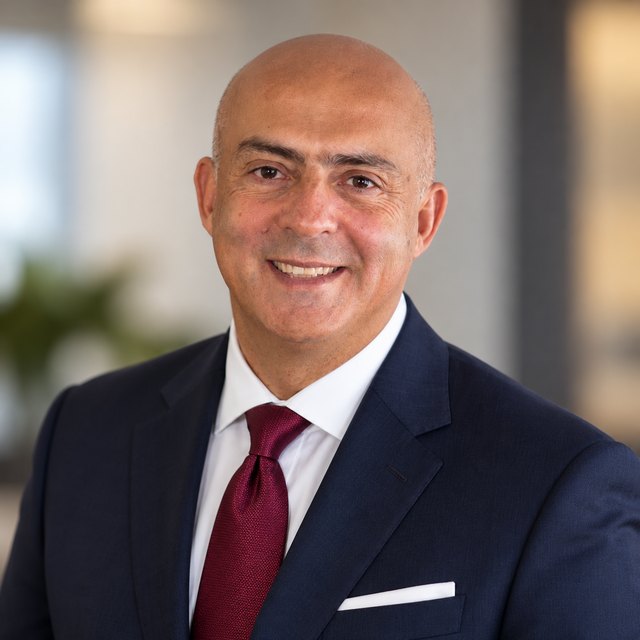
Jose Salloum is a Financial Security Advisor (conseiller en sécurité financière) certified by the Autorité des marchés financiers in Quebec, a Life and Accident & Sickness Insurance Agent licensed by the Financial Services Regulatory Authority of Ontario, and a Life Insurance Agent licensed by the Insurance Council of British Columbia. Licensed since 2001.
He has practised Infinite Banking since 2015 and founded Canadian Wealth Creation Centre Inc. in 2016. From 2020 to 2024 he was an IBC (Infinite Banking Concepts™) Authorized Practitioner of the Nelson Nash Institute, a private certification rather than a regulatory licence.
IBC Financial is the educational website of Canadian Wealth Creation Centre Inc., open to all Canadians. Services come only from Canadian Wealth Creation Centre Inc. Its representatives hold a licence in each province served: Quebec, Ontario, Alberta, British Columbia, Manitoba and New Brunswick. Jose Salloum's own licences cover Quebec, Ontario and British Columbia. This page is general education and not advice on any individual file.
Last reviewed 2026-10-02. By Jose Salloum, Financial Security Advisor in Quebec. In Ontario, Life and Accident & Sickness Insurance Agent. In British Columbia, Life Insurance Agent.