

Why Lenders Prefer Property to New Businesses, and What Owners Can Do
Lenders prefer property because it is collateral they can value, register and sell if a borrower stops paying. A lender earns only interest, not a share of success, so it favours predictable repayment over growth stories. A young business offers less of both, which is why owners often need equity, programs or capital of their own first.
Picture two requests landing on the same lender's desk in the same week. This is a hypothetical, not a real file. One owner wants to buy a small commercial building with a long rental history. The other wants to open a new practice with a strong plan, a skilled team and no track record at all. The first request is often approved quickly. The second can wait for weeks and still come back declined. If you have ever been the second owner, you have probably asked a question many owners ask: why does a lender trust bricks more than people?
The answer matters more than it seems. It shapes who gets credit in Canada, at what price and on what terms. It explains why a family with property can often borrow easily while a family with a promising business cannot. And it explains why so many owners, once they understand the lender's point of view, stop waiting for permission and start building capital of their own, slowly, over years.
This is not a criticism of lenders. Lenders are doing exactly what their structure asks them to do. Once you see that structure clearly, you stop taking a refusal personally, and you start planning around it.
Let me walk you through how a lender thinks.
Why do lenders prefer lending against property?
Lenders prefer property because a building or a home can be valued, registered as security and sold if the borrower stops paying. That gives the lender a second way out of the loan. A young business usually offers neither a long repayment record nor assets that hold their value when they have to be sold quickly.
Every lender thinks about two exits. The first exit is cash flow: the borrower earns money and repays the loan from those earnings, month after month. The second exit is collateral: if the cash flow stops, the lender takes the security and sells it to recover what it is owed. A good loan, from a lender's point of view, has a strong first exit and a reliable second one.
Property is attractive because it gives the second exit unusual strength. A building does not move. Its ownership is recorded in a public registry. A charge against it can be registered so that everyone knows the lender comes first. There is usually a market of buyers for it, and professional appraisers can estimate what it is worth. Even when prices fall, a property rarely becomes worthless.
Compare that with the assets of a young business. Specialized equipment may be worth a fraction of its cost to anyone else. Inventory can spoil, go out of style or become obsolete. Software, a brand and goodwill can be valuable while the business is running and almost worthless the day it closes. The value of a new business lives mostly in its future, and the future is exactly what a lender cannot register.
A lender is not betting on your dream. It is pricing its exit.
What does a lender actually earn when a business succeeds?
Step by step
Building a capital reserve over time
- 01Decide to set aside part of every good year
- 02Hold the reserve where it stays available
- 03If a policy fits, insure first and fund it for years
- 04Let dividends stay in the policy; none are guaranteed
- 05Borrow only with a written repayment plan
- 06Review with your accountant and legal advisor
A lender earns the interest and fees agreed in the loan contract, and nothing more. If the business triples in value, the lender still receives only its principal and interest. If the business fails, the lender can lose principal. Limited upside combined with real downside is why lenders focus on avoiding losses rather than on finding winners.
This asymmetry is the heart of the matter, and it is worth slowing down for. Consider a hypothetical lender that advances $100,000 to a business at an illustrative rate of 7% a year. If everything goes well, the lender earns roughly $7,000 a year before its own costs, and then gets its $100,000 back. If the business fails and the lender recovers only $40,000 from selling its assets, the lender loses $60,000. That single loss wipes out the interest from many good years, and from many good loans.
An equity investor stands in a different place. The investor buys a share of the business. If the business fails, the investor may lose everything. If the business succeeds beyond all expectations, the investor shares in that success with no ceiling. Because the investor can win big, the investor can afford to back unproven ideas. Because the lender cannot win big, the lender cannot afford to.
| Attribute | Lender | Equity investor |
|---|---|---|
| What they receive | Interest, fees and return of principal | A share of profits and of the business value |
| Upside if the business soars | Fixed by contract | Shares in the growth |
| Downside if the business fails | Can lose principal not covered by security | Can lose the whole investment |
| What they look for first | Repayment ability and collateral | Growth potential and the team |
| Typical stance on a new idea | Cautious | Willing, at a price in ownership |
Neither stance is right or wrong. They are two different jobs. The mistake many owners make is asking a lender to do an investor's job, then feeling rejected when the lender says no. A lender's "no" to a new venture is often simply the answer to a question that should have been put to someone else.
What does a lender look for before approving a loan?
Most lenders look at three things above all: the cash flow that will repay the loan, the collateral that protects them if cash flow fails, and the borrower's repayment history. Many also weigh the owners' own stake and the economy around the business. Established property usually scores well on several at once.
Credit analysts sometimes summarize this as the "five Cs of credit": character, capacity, capital, collateral and conditions. Character is your record of keeping promises, often seen through a credit history. Capacity is your ability to make the payments from income. Capital is your own stake in the project. Collateral is the security. Conditions are the economy, the industry and the terms of the loan itself.
| What the lender weighs | The question behind it | Established rental property | New business |
|---|---|---|---|
| Capacity | Is there income to repay? | Rents with a history | Projections without a history |
| Collateral | What can be sold if payments stop? | A registered building | Equipment, inventory, goodwill |
| Character | Has this borrower repaid before? | Often years of records | Often only the owner's personal file |
| Capital | How much of their own money is at risk? | Usually a meaningful down payment | Varies widely |
| Conditions | How exposed is it to the economy? | Exposed to rents and rates | Exposed to sales, costs and competition |
Notice what this table does not contain: a column for how good the idea is. Lenders do care whether a business makes sense, but they cannot price enthusiasm. When the business itself cannot supply the evidence, the lender looks elsewhere for it.
That is where the personal guarantee comes in. When a young corporation applies for credit, many lenders ask the owner to guarantee the loan personally. In plain terms, the owner promises to repay the debt if the corporation cannot. Very often the owner's home ends up standing behind the business loan. The lender has quietly turned a business loan into something closer to a property loan, because property is what it trusts.
Before you sign a guarantee, I suggest you ask your legal advisor what it covers, whether it can be limited in amount or in time, and what happens to it when the loan is repaid.
How do capital rules make property loans cheaper for a lender to hold?
Two different jobs
What a lender sees and what an investor sees
- 01What they receiveLender: Interest, fees, principal back. Equity investor: A share of profits and value.
- 02If the business soarsLender: Return fixed by contract. Equity investor: Shares in the growth.
- 03If the business failsLender: Can lose principal not secured. Equity investor: Can lose the whole stake.
- 04First thing they checkLender: Repayment ability and collateral. Equity investor: Growth potential and team.
Federally regulated deposit-taking institutions must hold capital, which is money of their own, against the risks in their loans. Loans the rules treat as safer, such as well-secured residential mortgages, generally require less capital than unsecured business loans. Less capital for each dollar lent makes secured property lending cheaper for a lender to hold and easier to price.
Capital is the lender's cushion. If loans go bad, the losses are absorbed first by the owners of the lender, through their capital, before depositors are touched. The more capital a lender holds, the larger the losses it can absorb and still remain solvent. I explain the difference between this cushion and the cash a lender keeps on hand in short of cash is not the same as broke.
In Canada, the Office of the Superintendent of Financial Institutions (OSFI) sets capital expectations for federally regulated deposit takers. As read on 5 November 2026, OSFI expects the largest domestic institutions, the ones it calls systemically important, to hold Common Equity Tier 1 capital equal to 11% of their risk-weighted assets. That 11% is built from a 4.5% minimum, a 2.5% conservation buffer, a 1% surcharge for systemic importance and a 3.0% Domestic Stability Buffer, the last one in effect since 19 June 2026. Credit unions and caisses are supervised under provincial rules, which follow their own frameworks.
The key words are "risk-weighted". Under these rules, assets are not all counted the same way. A loan the rules consider riskier counts more heavily, so the lender must hold more capital against it. A loan the rules consider safer counts less heavily. I will not list precise weights here, because they depend on the type of loan, the security, the borrower and the method the institution uses. The general direction is enough to understand the incentive: well-secured residential lending typically uses less capital per dollar than lending to a small, unproven business without strong security. Some residential mortgages also carry mortgage default insurance, which moves part of the risk away from the lender altogether.
Put yourself in the lender's chair. Capital is scarce and owners expect a return on it. If one dollar of capital can support more mortgage lending than business lending, the mortgage is the more efficient use of that dollar. The business loan must charge a higher rate, demand stronger security, or both, to be worth the capital it consumes. Nobody designed the rules to punish small businesses. The rules aim to keep deposit takers sound. The effect on a young business is still real.
Why do rising property prices lead to larger loans?
When property prices rise, the same building supports a larger loan, because lenders lend a share of appraised value. Larger loans create larger deposits for sellers, and those deposits can help other buyers bid prices higher again. The loop can run for years. It can also turn, because falling prices shrink the collateral behind many loans at the same time.
To see why, it helps to remember where most money comes from. The Library of Parliament explains that the majority of money in the Canadian economy is created when lenders extend new loans, each loan creating a matching deposit. The Bank of England described the same mechanism in 2014: loans create deposits. I walk through this step by step in how money is created in Canada.
Now connect that to property. A buyer borrows to purchase a home. The lender credits the seller's account, and new deposit money exists. The seller may buy another property with it, often with another loan. If prices are rising, each appraisal comes in higher, each loan can be larger, and each new deposit can support the next purchase. Credit and prices lift each other.
The same loop works in reverse. When prices fall, appraisals fall, borrowers can carry less debt against the same property, and lenders become more careful. Loans are repaid faster than new ones are made, and as loans are repaid, the deposit money they created disappears. Owners who borrowed heavily against rising values can find themselves holding more debt than their property is worth. I explore that side of borrowing in leverage explained.
For a young business, the lesson is uncomfortable but useful. When credit flows easily toward property, it can feel as though the door for unsecured business lending is narrower. That feeling is not imagined. Lenders are drawn to the loans their structure rewards. A business that understands this stops asking why the door is narrow, and starts asking what it can bring that a lender values.
What can a new or growing business do when a lender says no?
One question, two paths
Secured or unsecured: how a lender sorts a request
- 01Is there collateral the lender can register and sell?
- 02Lower capital cost, often easier termsYes, such as a building.
- 03Higher rate, guarantees or a refusalNo, mostly future earnings.
A new business can raise equity from owners or partners, look at government-supported programs, negotiate supplier terms, lease equipment, reinvest retained earnings and build a track record with smaller credit first. Each option has a cost. Equity shares ownership, programs have conditions, and retained earnings take time. Your accountant can help you compare them honestly.
Here are the main paths, described plainly.
Equity. Owners, partners, family or outside investors put money in exchange for ownership. Equity does not have to be repaid on a schedule, which is why it suits early, uncertain years. The cost is a share of every future success, and sometimes a share of control.
Government-supported financing. The federal government supports small business lending in several ways. The Canada Small Business Financing Program shares part of the risk on certain loans made by participating lenders, and BDC, a federal Crown corporation, lends to Canadian businesses. I name them only as examples to look into. Eligibility, limits and rates change, so check the current terms directly with the official sources.
Supplier credit and leasing. Suppliers may give payment terms, and equipment can often be leased instead of bought. Both spread costs over time and leave cash in the business. Both also carry a price, sometimes hidden in the terms.
Retained earnings. Profits kept in the business instead of being paid out become the cheapest capital the business will ever have, because no one else needs to be paid for it. The catch is time. Retained earnings grow only as fast as profits and discipline allow.
A track record built in small steps. A modest line of credit or a small equipment loan, repaid exactly as agreed, starts a history that makes the next request easier.
| Option | What you give up | What it usually requires | Time to arrange |
|---|---|---|---|
| Equity | A share of ownership and future profits | A willing investor and agreed terms | Weeks to months |
| Government-supported loan | Interest, fees, program conditions | Meeting eligibility rules | Weeks |
| Supplier credit or leasing | Higher total cost in some cases | A supplier or lessor's approval | Days to weeks |
| Retained earnings | Spending today | Profits and discipline | Years |
| Small credit first | Interest on the small loan | A clean repayment record | Months to years |
None of these is free. The question is which cost fits your business at this stage. That is a conversation for your accountant, and for your legal advisor whenever ownership or guarantees are involved.
How can an owner build a capital reserve over time?
An owner builds a capital reserve by setting aside part of every good year before spending it, and by holding that money where it stays available. Some owners use retained earnings inside the corporation, some use personal savings, and some use the cash value of a participating whole life policy funded steadily over many years.
The philosophy comes before any product. Most owners spend years asking for capital. Fewer spend years building it. The difference is not intelligence. It is a habit: paying into your own reserve with the same seriousness you would bring to a lender's payment schedule. I call this thinking like a lender, because the person who owns capital gets to set terms, while the person who needs it has to accept them.
Nelson Nash, who wrote Becoming Your Own Banker® and described The Infinite Banking Concept®, returned often to one central idea: capital should be built before you need to use it. A reserve built in advance changes the conversation with every lender you meet afterward, because you are no longer desperate.
For some owners, part of that reserve sits in a participating whole life insurance policy, owned personally or by the corporation. I want to be careful and complete about what that means.
Insurance comes first. The primary purpose of the policy is the death benefit, which protects your family or your business if you die. Any cash value is a feature of an insurance contract. It is not an investment, not a deposit and not insured by CDIC.
It takes years. In the early years, the cash value is below the premiums you have paid. A policy only becomes a useful reserve after steady funding over many years. That requires reliable cash flow, which is exactly what a struggling young business may not have.
Growth depends on the insurer. Cash value already credited to a participating policy does not go down with markets. Future growth depends on the contract's guaranteed values and on dividends, and dividends are not guaranteed. In the way I design these plans, dividends stay in the policy and buy paid-up additions, and many contracts allow an extra deposit option within the limits the contract and the tax rules permit.
Ownership has tax consequences. A policy owned by your corporation is treated differently from one you own personally, in how premiums are paid, how loans work and how the death benefit flows. I explain the broader picture for owners on the business owners page, and any decision belongs with your accountant and legal advisor.
If you want the deeper idea behind owning capital rather than only borrowing it, the page I point to at the end of this article explains it.
Can a policy loan replace proper business financing?
The lender's checklist
What makes a loan easier to approve
- Steady income with a repayment history
- Collateral that can be valued and sold
- A clean record of repaying past credit
- A meaningful stake of the owner's own money
- Conditions in the economy and industry
No. A policy loan can give an owner access to capital on the insurer's terms, but it does not replace a business plan, a lender relationship or proper financing for large projects. It is a debt to the insurer, it accrues interest, and an unpaid balance reduces the net cash value and the death benefit.
Here is how a policy loan works, in plain terms. The insurer lends you money and uses your policy's cash value as collateral. You do not withdraw your cash value. You pay interest to the insurer at the rate the insurer sets under the contract, and that rate can change. You choose your repayment schedule, which is both the freedom and the danger. I explain the mechanics fully in policy loans.
Used well, a policy loan can complement business financing. An owner might use it to bridge a short gap, to fund a down payment that makes a conventional loan possible, or to move quickly on an opportunity while other financing is arranged. In each case the owner should already know how the loan will be repaid.
Used poorly, it can harm both the business and the family. If the loan balance and its interest grow until they exceed the cash value, the policy can terminate, and the protection your family counted on can disappear. In some cases a policy loan can also have tax consequences. And money borrowed against a policy and lost in a failing venture is still owed.
A policy is not a replacement for a lender. It is a reserve that can make you a stronger borrower and a calmer owner.
What this page will not tell you
This page will not tell you whether a particular lender will approve your loan, what rate you will pay, or which financing fits your business. Terms depend on the lender, your industry, your credit, your security, the economy and the date. Capital rules and government programs change, so verify anything that matters with official sources.
It also will not tell you how to structure a policy, who should own it, or how much to fund. Those answers depend on your age, health, income, corporation, family, existing coverage and plans. The capital figures quoted from OSFI apply to the largest federally regulated deposit takers, as read on 5 November 2026. Every dollar amount in the examples is illustrative, chosen to make the reasoning visible, not to predict anything.
Who this does not suit
The capital-building approach described here does not suit an owner who needs financing now and has no reliable surplus to set aside. It does not suit a business whose cash flow is uneven or shrinking, an owner who would struggle to fund premiums for many years, or anyone hoping a policy will rescue a business that is already in trouble.
It also does not suit an owner who wants a high-risk, high-reward investment. A participating whole life policy is an insurance contract with long time horizons. If you need life insurance only for a fixed period at the lowest cost, term insurance may serve you better. If you have no need for life insurance at all, the death benefit you would be paying for may not be worth the cost to you. And if you are not prepared to repay loans with discipline, borrowing against a policy can do more harm than good.
There is no shame in any of these answers. The right financing decision is the one that fits your real situation, not someone else's story.
Important Disclosure: This page provides general information and education only and does not constitute personalized financial, insurance, investment, tax or legal advice. Participating whole life insurance is an insurance product, not an investment, and its primary purpose is the death benefit. Guarantees are contractual guarantees of the issuing insurer, dependent on its financial strength and claims-paying ability, and are not government guarantees. Dividends are not guaranteed; they are declared by the insurer's board based on the performance of the participating account, and past dividends do not indicate future dividends. A policy loan is a debt to the insurer that accrues interest and reduces the net cash value and the death benefit until repaid. Corporate and personal ownership have different tax consequences. Rules, programs and rates change; verify current terms with official sources. The author is a licensed insurance professional who may earn a commission if a policy is purchased.
Here is what that means in plain language. I wrote this page to help you understand why lenders behave the way they do, not to tell you what to do with your business. A policy is insurance first. The guarantees in it come from the insurer, not from any government. Dividends are not guaranteed: a lower dividend slows future growth without reducing cash value already credited, and nobody can promise you next year's. A policy loan is real debt that costs real interest. And because I am licensed and can be paid a commission when a policy is placed, you should weigh my perspective alongside an accountant and a legal advisor who understand how these contracts work for business owners.
If you want to apply these ideas to your own family and business, start with owning your own pool of capital, which shows how a reserve is built over time.
When you are ready to talk it through, I invite you to book a free 30-minute discovery meeting.
A thirty-minute discovery meeting
A first conversation establishes whether this fits. No illustration is prepared and nothing is arranged.
Often the answer is no, and you will hear it during the call rather than in a proposal afterwards.
This form reaches Canadian Wealth Creation Centre Inc. Any meeting, any advice and any insurance product is provided by Canadian Wealth Creation Centre Inc., through its representatives who are licensed in the client's province. IBC Financial is the company's educational website: it distributes no product and no financial service, and it gives no individualised advice.
Common questions
Why is it easier to get a mortgage than a business loan in Canada?
Why does my lender want a personal guarantee for my company's loan?
Does a lender share in my profits if my business does well?
What options does a new Canadian business have besides a conventional loan?
Can I use my whole life insurance policy to finance my business?
Is it better for my corporation or for me personally to own the policy?
Why did lenders approve larger loans when property prices rose?
How long does it take to build a capital reserve for a business?
Sources
- Office of the Superintendent of Financial Institutions (OSFI), Domestic Stability Buffer page: the largest federally regulated deposit takers are expected to hold Common Equity Tier 1 of 11% of risk-weighted assets, including a 3.0% Domestic Stability Buffer effective 19 June 2026; modified 2026-06-19, verified 2026-11-05
- Library of Parliament, publication 2015-51-E, How money is created: the majority of money in the Canadian economy is created when lenders extend new loans, each creating a matching deposit; 19 May 2021, verified 2026-11-05
- Bank of England, Money creation in the modern economy, Quarterly Bulletin 2014 Q1: loans create deposits and repaying loans destroys money, verified 2026-11-05
- Assuris, whole life insurance page: protection of death benefit and cash value if a member insurer fails; modified 2025-07-05, verified 2026-11-05
About the author
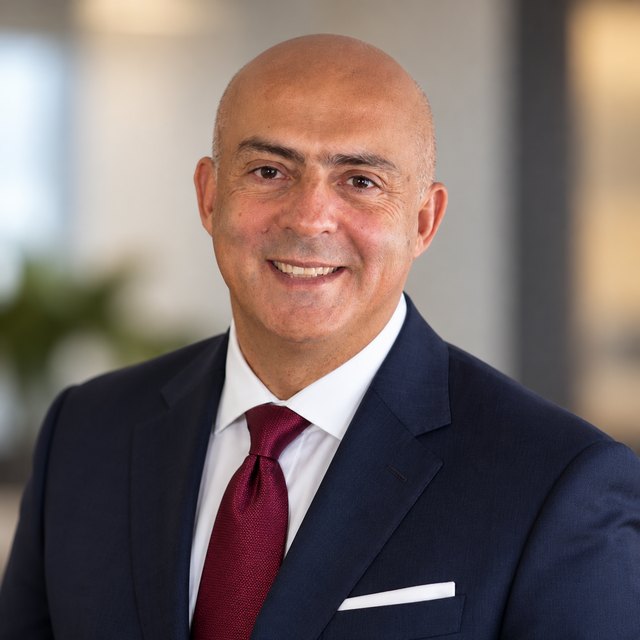
Jose Salloum is a Financial Security Advisor (conseiller en sécurité financière) certified by the Autorité des marchés financiers in Quebec, a Life and Accident & Sickness Insurance Agent licensed by the Financial Services Regulatory Authority of Ontario, and a Life Insurance Agent licensed by the Insurance Council of British Columbia. Licensed since 2001.
He has practised Infinite Banking since 2015 and founded Canadian Wealth Creation Centre Inc. in 2016. From 2020 to 2024 he was an IBC (Infinite Banking Concepts™) Authorized Practitioner of the Nelson Nash Institute, a private certification rather than a regulatory licence.
IBC Financial is the educational website of Canadian Wealth Creation Centre Inc., open to all Canadians. Services come only from Canadian Wealth Creation Centre Inc. Its representatives hold a licence in each province served: Quebec, Ontario, Alberta, British Columbia, Manitoba and New Brunswick. Jose Salloum's own licences cover Quebec, Ontario and British Columbia. This page is general education and not advice on any individual file.
Last reviewed 2026-11-05. By Jose Salloum, Financial Security Advisor in Quebec. In Ontario, Life and Accident & Sickness Insurance Agent. In British Columbia, Life Insurance Agent.