
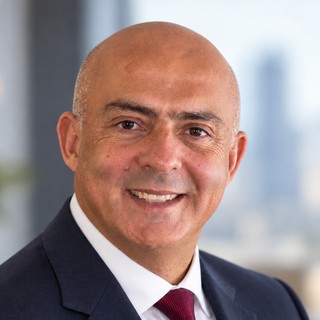
Who Was Nelson Nash? His Life, His Book, and What Changes When His Idea Crosses into Canada
R. Nelson Nash was an American life insurance agent and author, born in Georgia on 15 March 1931, who died in Birmingham, Alabama, on 27 March 2019, aged 88. After a forestry degree and military service, he sold life insurance for more than three decades and set out his ideas on financing in a book he published in 2000. His examples follow American rules, so Canadian law changes how they apply.
Many people meet Nelson Nash through a slide, a video or a sentence in a sales conversation. His name arrives attached to a promise, and the man behind it stays out of view. Who he was, what he did for a living, and why he started thinking the way he did are rarely explained. Yet those facts tell you a great deal about how to read the book he left, Becoming Your Own Banker®, published in 2000.
They matter for a second reason too. Nash lived and worked in the United States. The tax rules, the insurance rules and even the words he used were American. A Canadian reader who takes his examples as they stand can end up expecting results that Canadian law does not allow. Knowing his story is the first step in knowing where his ideas fit here and where they need to be translated.
This page tells his life from the sources that can be checked, separates what is established from what is only reported, and then sets out what changes when his idea is applied in Canada. It is general information from a licensed insurance professional, not tax, legal or investment advice. Every date on it comes from a source listed at the foot of the page, read on the day it was written.
Begin with the short answer.
Who was Nelson Nash, in a few lines?
He was an American life insurance agent and author. Robert Nelson Nash was born on 15 March 1931 in Georgia and died on 27 March 2019 in Birmingham, Alabama, at the age of 88. Before he sold insurance, he studied forestry and served in the military. He then spent more than three decades as a life insurance agent.
His lasting work is an idea about financing. He came to believe that a family's need for financing is greater than its need for life insurance protection, and that a family could organize its borrowing around a dividend-paying whole life policy instead of around outside lenders. He gave that idea a name, the strategy known as The Infinite Banking Concept®, and he spent the last part of his life teaching it.
That is the summary. The details explain why his idea took the shape it did.
What did he do before life insurance?
read one illustration as two documents
What is guaranteed, and what is not
- 01Cash valueGuaranteed: Set out in the schedule at issue. Not guaranteed: Projected totals, which assume the current scale holds.
- 02Death benefitGuaranteed: Guaranteed, subject to the contract terms. Not guaranteed: Anything the declared dividends add to it.
- 03The annual decisionGuaranteed: A level premium, fixed by the contract. Not guaranteed: Dividends, declared annually and never guaranteed.
He worked in the woods and in the air. Nash grew up in Athens, Georgia, and graduated from the University of Georgia in 1952 with a Bachelor of Science in forestry. One published biography adds that he then worked for about nine years as a forestry consultant in North Carolina.
His military service ran alongside that career. He served in the United States Air Force from 1952 to 1954 as an aerial photo interpreter. Later he joined the National Guard as a pilot and flew for roughly thirty years, earning the designation of master army aviator.
It is easy to read too much into a résumé. Still, one habit of forestry echoes in his later teaching. A forester thinks in decades, because a tree planted today is often harvested by another generation. The first of the rules drawn from his teaching asks the reader to think long range, which is the same habit applied to money.
How did he come to life insurance?
He moved to Birmingham, Alabama, in 1963 and began working in life insurance in 1964. He stayed in the business for more than three decades. His biographies describe him as an agent who sold whole life policies and who represented more than one company over his career.
That background matters when you read his book. Nash was not an economist writing from a university or a banker writing from inside a bank. He was a salesman of life insurance contracts who knew their mechanics from the inside. His explanations of how a policy builds cash value and how a policy loan works came from that daily experience.
It also means his perspective was not neutral. An agent is paid when policies are sold. That does not make his ideas wrong. It does mean that a reader should test them, as with any author who earns a living from the product he writes about. In Canada, the licensed person who arranges a policy is usually paid a commission by the insurer, and the same test applies.
Why did he start thinking about financing in the early 1980s?
Because borrowing had become painful. Nash said he formulated his idea in the early 1980s, in response to high interest rates on bank loans. In those years, ordinary loans in North America carried rates that are hard to imagine today, and families and businesses with debt felt it in every payment.
The idea that came out of those years rests on a feature of the contract he already sold. Interest paid to an outside lender is set by that lender. A policy loan, by contrast, is a contractual right under a whole life policy: the insurer advances money against the cash value, on terms written into the contract, with no application to approve and no fixed repayment schedule.
From there the idea grows larger. If a family's purchases are financed one way or another, the family should think carefully about who does the financing and on what terms. The plan he described builds enough cash value, over many years, that much of a family's borrowing can go through its policies instead of through outside lenders.
What the idea does not do, and what careful readers should not do, is pretend the interest disappears. A policy loan carries interest, paid to the insurer. The idea was about where financing is directed and who sets the terms, not about borrowing for free.
What did his book set out?
one payment doing three jobs
Where a permanent premium goes
- 01Part meets the cost of the insurance itself
- 02Part covers the insurer's expense and the premium tax
- 03Part builds the contractual value of the policy
- 04The split is not itemised on an illustration
- 05Base premiums follow the contract's own terms
It set out a way of thinking more than a product. Nash self-published his book in 2000, after years of teaching its ideas in seminars. Google's book listing today shows a fifth edition dated 2008 and a sixth dated 2012, and a French translation is sold in Canada under the title Devenir votre propre banquier.
The book asks readers to see financing as a larger part of their financial life than they usually do, to build cash value patiently before relying on it, and to repay policy loans as seriously as they would repay a lender. The site's page on the eight rules sets out five habits drawn from his teaching: think long range, do not be afraid to capitalize, repay what you borrow, use your own capital before an outside lender, and rethink your thinking. None of them is a guarantee.
He also wrote or co-wrote later books. One was called Building Your Warehouse of Wealth. Another, The Case for IBC, appeared in 2018, written with L. Carlos Lara and Robert P. Murphy. Both carry his ideas forward.
What the book did not do was change what a policy is. Every mechanism he described rests on an ordinary life insurance contract: premiums, guaranteed values, dividends that the insurer's board may declare and does not guarantee, a death benefit, and the right to a policy loan. His contribution was a way of using those features, not a new kind of contract. How a policy built for this purpose is designed is explained on the policy behind the concept.
What did he mean by a family's need for financing?
He meant that most families pay for large purchases over time, whether they notice it or not. A car bought with a loan is financed by the lender. A car bought with cash is financed too, in a quieter way: the money spent on it can no longer earn interest elsewhere or sit ready for the next need. Either way, someone provides the money and someone bears a cost.
That observation sits at the centre of the idea. It invites readers to think about what they pay, over a working life, for the use of money: interest on mortgages, car loans, credit cards and business lines of credit, plus what they give up when they pay cash. His premise was that this need is usually larger than the family's need for life insurance protection, and that it deserves the same careful planning.
A Canadian reader can test that premise without buying anything. List the loans the household carried over the last ten years, the rate on each and the interest paid. Then list the purchases paid in cash and where that money came from. The exercise does not prove that a policy is the answer. It shows how much of the family's money has gone to financing, which is the question the idea asks first.
How did his idea spread after the book?
five situations it tends to suit
Who this method suits
- Households with durable surplus income, not one good year
- People who already think about money in decades
- People who want the permanent coverage in its own right
- Owners and professionals who can fund premiums through uneven years
- Families arranging capital across more than one generation
Through seminars, an institute and the people it trained. After the book appeared, Nash gave seminars in the United States and in Canada, and his later books carried the same ideas to new readers.
In 2013 he took part in establishing the Nelson Nash Institute. The Institute describes itself as an educational body that teaches the public and financial professionals about his ideas. It administers the IBC Practitioner's Program and says it does not sell a marketing or sales system. It does not issue insurance policies.
Recognition came late in his life. In 2018, shortly before his death, the Foundation for Economic Education gave him its Blinking Lights Award for his work promoting free-market ideas. Since he died, the Institute has published a film about him, and podcasts and videos about his life have followed.
A note on this site's own connection, so that you can weigh what you read here. Jose Salloum, who writes this site, passed the Institute's IBC Practitioner's Program examination in 2019, received its certificate in 2020, and was a member of the Institute from 2020 to 2024. He has no affiliation with it today, and neither he nor the firm he works with is sponsored or endorsed by it.
What is said about him that cannot be confirmed?
Some of what circulates about Nash is reported, not established. The most quoted example is the number of policies he owned. One biography published online says he owned 49 life insurance policies at one point in his career. This page could not find that figure in a primary source, so it is repeated here only as a report.
Other descriptions are simply labels. He is often called the father of the method, which is a fair way of saying the idea was his, but it is a title others give him, not an official one. Some sites call him an economist. His formal training, according to his biography, was in forestry, and his career was in life insurance. His interest in economics was real: the Institute that carries his name says he described his concept as Austrian economics in action.
And some claims attached to his name are not his at all. Pages that promise effortless riches, tax-free income in every case or a way to stop paying interest are describing what someone else built on his idea. When a claim attributed to him matters to a decision, read the book itself, or ask the person quoting it to show you the page.
What changes when his idea crosses into Canada?
The rules underneath it. Nash wrote for an American reader, and the policies, taxes and words he described were American. Canada has its own insurance law, its own tax law and its own restrictions on the word bank. The idea can be applied here, but only with Canadian rules in place.
Start with tax. In Canada, a policy loan is defined in subsection 148(9) of the Income Tax Act as an amount advanced by an insurer to a policyholder under the terms of the policy. It is also a disposition for tax purposes. Where the amount advanced exceeds the contract's adjusted cost basis, the difference is income in the year it is received. An American example that treats every policy loan as free of tax does not transfer as it stands.
The design of the policy is tested differently too. Canadian contracts must meet an exempt test written into Canadian tax rules, which limits how much can be built inside a policy relative to its insurance. American limits work in a different way. The site's page on American videos and Canadian law sets out the main differences one by one.
Then there is the vocabulary. Subsection 983(2.1) of the Bank Act makes it an offence for a person other than a bank to use the word bank, banker or banking to describe a business in Canada, its products or services. A Canadian practice can explain Nash's idea and name his book, but it cannot describe its own services with those words. That is why careful Canadian material speaks of a policy, an insurer and a policy loan, and why the plainest summary of his idea in Canada is this: a contract with an insurer, administered by the insurer under its terms. The phrase in his book's title overstates what any Canadian contract confers.
Finally, licensing. In Canada a policy is arranged by a person licensed in the reader's province, under that province's rules. A Canadian reader of Nash's book needs a licensed professional who knows both his ideas and the Canadian contract, along with an accountant who understands how life insurance is taxed here. The cornerstone guide, how the method works in Canada, brings the pieces together.
How should a Canadian read his book today?
the security is the contract itself
What an advance does to the death benefit
- 01The balance owing is deducted while it stands
- 02Unpaid interest capitalises and the balance grows
- 03The reduction follows the balance, not the original advance
- 04A death benefit is not fixed while the contract is drawn on
- 05Repayment restores the amount reaching a beneficiary
As a way of thinking, checked against Canadian facts. Read it for its questions: who finances your purchases, on what terms, and what habits keep a long plan on track. Those questions travel well. Then check every number, every tax statement and every product description against Canadian rules before you rely on it.
Read it with the guaranteed values in front of you. Dividends are not guaranteed, and a policy takes years to build. A reader who looks only at projected values, or at a presenter's favourite example, misses the patience the rules drawn from his teaching ask for.
Bring three things to a first conversation with a licensed professional: the book's questions, your own list of loans, and your household budget. Ask to see the guaranteed values of a proposed design, what the first ten years cost, and what happens if premiums stop. Those answers are the quickest way to see whether the idea fits.
And read it with your own situation in view. His idea asks a family to pay premiums for many years before the cash value is large enough to use. It suits households with steady income, a real need for life insurance and a long horizon. It does not suit everyone.
Who does this approach not suit?
It does not suit a household that cannot keep paying premiums for many years, because the early years carry the heaviest costs and stopping then can lose a large part of what was paid. It does not suit someone looking for a quick result, since the first of the rules drawn from his teaching is to think long range.
It does not suit anyone who expects borrowing from an insurer to be free. Interest is paid to the insurer, and unpaid interest grows. And it does not suit a reader who would rather not read a contract, because the loan provisions and the guaranteed values decide what the policy can actually do.
It can suit a family that needs life insurance, has steady income and wants to organize its borrowing patiently, with professionals who know Canadian law. For that family, Nash's story is useful context. It shows an idea that grew from a real problem, high interest rates, and from a practical man's knowledge of the contracts he sold. The wider guide to the method in Canada is on the hub page.
What this page will not tell you
It will not tell you whether a policy suits your family, because that depends on your income, your health, your need for coverage and your other choices. It will not summarize every chapter of his book, because the book is his work and deserves to be read in full. And it will not repeat claims about him that could not be checked, except to mark them as reported.
What it can leave you with is a way to read him. Treat Nelson Nash as an experienced American agent with a serious idea about financing, test his examples against Canadian rules, and keep the guaranteed column in view. Read that way, his book raises useful questions. Read as a promise, it says more than any Canadian contract can deliver.
A thirty-minute discovery meeting
A first conversation establishes whether this fits. No illustration is prepared and nothing is arranged.
Often the answer is no, and you will hear it during the call rather than in a proposal afterwards.
This form reaches Canadian Wealth Creation Centre Inc. Any meeting, any advice and any insurance product is provided by Canadian Wealth Creation Centre Inc., through its representatives who are licensed in the client's province. IBC Financial is the company's educational website: it distributes no product and no financial service, and it gives no individualised advice.
Common questions
Who was Nelson Nash?
Why is Nelson Nash called the father of infinite banking?
When did Nelson Nash die?
How many life insurance policies did Nelson Nash own?
Did Nelson Nash ever teach in Canada?
Is the Nelson Nash Institute the same as an insurance company?
Sources
- Wikipedia, R. Nelson Nash: born 15 March 1931 in Georgia, died 27 March 2019 in Birmingham, Alabama, aged 88; forestry degree from the University of Georgia, 1952; United States Air Force 1952 to 1954 as an aerial photo interpreter; about 30 years as a National Guard pilot; Birmingham from 1963; life insurance agent from 1964 for more than three decades; concept formulated in the early 1980s in response to high interest rates on bank loans; self-published book, 2000; seminars in the United States and Canada; the Institute established in 2013; The Case for IBC, 2018, with L. Carlos Lara and Robert P. Murphy., verified 2026-10-19
- Nelson Nash Institute, What is the Nelson Nash Institute: an institute named after him that educates the public and financial professionals, administers the IBC Practitioner's Program, and states that it does not sell a marketing or sales system., verified 2026-10-19
- Nelson Nash Institute, This is Nelson Nash: Remembering R. Nelson Nash (1931 to 2019); in 2018 the Foundation for Economic Education presented him with its Blinking Lights Award., verified 2026-10-19
- insuranceandestates.com, Nelson Nash: Life, Philosophy and Legacy, 9 December 2024: nine years as a forestry consultant in North Carolina; a report that he owned 49 life insurance policies at one point. A secondary source; the policy count is reported, not verified., verified 2026-10-19
- Income Tax Act, subsection 148(9), definition of policy loan: an amount advanced by an insurer to a policyholder in accordance with the terms and conditions of the life insurance policy. Justice Laws Canada, current to 30 September 2026., verified 2026-10-19
About the author

Jose Salloum is a Financial Security Advisor (conseiller en sécurité financière) certified by the Autorité des marchés financiers in Quebec, a Life and Accident & Sickness Insurance Agent licensed by the Financial Services Regulatory Authority of Ontario, and a Life Insurance Agent licensed by the Insurance Council of British Columbia. Licensed since 2001.
He has practised Infinite Banking since 2015 and founded Canadian Wealth Creation Centre Inc. in 2016. From 2020 to 2024 he was an IBC (Infinite Banking Concepts™) Authorized Practitioner of the Nelson Nash Institute, a private certification rather than a regulatory licence.
IBC Financial is the educational website of Canadian Wealth Creation Centre Inc., open to all Canadians. Services come only from Canadian Wealth Creation Centre Inc. Its representatives hold a licence in each province served: Quebec, Ontario, Alberta, British Columbia, Manitoba and New Brunswick. Jose Salloum's own licences cover Quebec, Ontario and British Columbia. This page is general education and not advice on any individual file.
Last reviewed 2026-10-19. By Jose Salloum, Financial Security Advisor in Quebec. In Ontario, Life and Accident & Sickness Insurance Agent. In British Columbia, Life Insurance Agent.