

Life Insurance in Langley: The Business That Ends With You
A Langley trades, retail or service firm is very often one person's reputation, licence and relationships operating under a company name. There is no buyer for any of that. Unlike a professional practice with a roster or a farm with ground under it, the worth of such a company does not pass to a successor at all: it stops existing on the day its owner stops working, and the sons and daughters generally want careers of their own instead. That changes the entire question, because a household in this position cannot plan on selling the company to pay for a retirement or to leave anything behind, and has to build something outside the company while the company is still earning. Questions about corporate structure, about what a share is worth and about how an estate is taxed belong with your own accountant and your own legal counsel. No part of this page is individualised advice to any reader. Participations on a participating contract are declared annually at the insurer's discretion and carry no guarantee whatsoever. The licence is held by Canadian Wealth Creation Centre Inc., acting through its duly certified representatives, and IBC Financial is an educational website licensed for nothing. Where the honest answer is no, it is given as no.
Some businesses are sold and some are simply switched off. A firm that is really one person's reputation, licence and relationships belongs firmly in the second group, and its owner is usually the last to be told.
This page is written for the owner operator, in trades, retail, transport or service, whose company earns a good living every year and would earn nothing at all for anybody else.
Every client relationship, every piece of advice and every insurance product comes through Canadian Wealth Creation Centre Inc. and its duly certified representatives. IBC Financial is the educational website and learning platform. It holds no licence, distributes nothing, and gives no individualised advice.
Where the money goes when the business is one person
An owner operated household finances what every household finances, and one or two things more. Vehicles, tools, equipment, a shop, a line of credit that smooths a slow quarter.
What differs is where the repayments come from. A single stream of earnings produced by one person's time, reputation and physical presence, with nothing behind it if that presence is interrupted.
The monthly payment is the only figure anybody is shown, by design, and it is the smallest of the questions attached to a commitment that runs for years.
Our mission is to help Canadians be wealthy, starting with money already passing through the business and not money nobody has earned yet.
The question an owner operator is never asked
What is this company worth to somebody who is not you, and what is the plan if the answer is very little?
With that settled, the next question follows. Nobody is engaged to ask it. A lender is interested in security and in recent statements. A bookkeeper records what happened. A supplier wants the account paid on time and nothing further.
So it goes unasked for thirty years, while the owner quietly assumes that a working life spent building something will end with somebody buying it.
The answer arrives late and it arrives once. Usually at the point of retirement, occasionally at a funeral, and in both cases far too late for anything to be done differently.
Infinite Financial Sovereignty®, in plain words
the designation exists to avoid the estate
Why a contingent beneficiary matters
- 01What happens to the proceeds if the primary beneficiary cannot receive them?
- 02They receive the proceedsA contingent is named. The designation carries the proceeds past the estate.
- 03The proceeds generally fall into the estateNo contingent is named. An estate exposes them to delay and cost, and creditors of the estate may then reach them.
Infinite Financial Sovereignty® is a registered trademark of Jose Salloum, and it is this practice's name for one idea pursued with discipline over a lifetime: that a household should be its own source of capital rather than a borrower of somebody else's.
The underlying approach is the one Nelson Nash set out in his book and named The Infinite Banking Concept®, a registered trademark of Infinite Banking Concepts, LLC. Naming the author is not decoration. It records whose idea this is.
On the ground, it means holding capital where it keeps working while it is being used. A participating whole life contract issued by a federally regulated insurer accumulates a contractual value, and when money is needed an advance is taken against the contract and not sought from a lender.
Repayment follows a schedule the owner sets and not one imposed as a condition of approval, and the contract carries on working while the advance is outstanding.
None of it is free or quick. The insurer charges interest on an advance, costs fall heaviest in the early years, and participations are declared at the insurer's discretion and are never guaranteed. It rewards decades and punishes impatience.
A business with a buyer, and a business without one
Two firms can produce the same income for a family and be worth entirely different amounts at the end.
One has systems, contracts and staff. The work is documented, the customers belong to the company and not to a person, and somebody else can walk in on Monday and keep it running.
The other has an owner. Customers call because of who answers. Pricing lives in one head. The quality that built the reputation is the quality of one pair of hands, and no manual reproduces it.
A purchaser buys what continues. In the second firm what continues is the trucks, the tools and the money owed, which is a fraction of what the family believed the business was worth.
That is not a failure of management. It is the ordinary shape of a company built on somebody's competence, and it is far more common here than the general material about business succession admits.
What actually changes hands when a firm like this is sold
Strip out the person and look at what remains on the list.
Equipment, at used prices and not at what it cost, discounted again because a buyer knows the seller has a date in mind and the machinery has done its years.
Receivables and work in progress, which are worth what they collect and not what they invoice, and which frequently need the departing owner to help collect them.
And a customer list that may not follow. Relationships built over decades belong to a person, and the letter announcing new ownership is the moment those customers start taking other calls.
The children who do not want it
The general succession material assumes a child is waiting, and in these households that assumption fails more often than it holds.
They watched the hours. Early starts, weekend callouts, the invoice that goes ninety days, the employee who does not turn up, and a parent doing paperwork at the kitchen table on a Sunday night.
They chose otherwise deliberately. Salaried work, an employer with a benefits plan, and a career that does not phone at six on a Saturday morning, which is a reasonable decision and not a rejection of anybody.
And even a willing child inherits less than it appears. The equipment transfers. The reputation does not, so a child taking over is starting a business with a familiar name rather than continuing an established one.
Ask them directly, early, and believe the answer. A plan built on a child who has never actually agreed is not a plan, and finding out at seventy is the expensive way to learn it.
What it looks like in a Langley household
the cycle a contract is used through
Funding, drawing and repaying
- 01Premium funds the contract on the agreed schedule
- 02Value accumulates under the terms of the contract
- 03The insurer advances against the cash value
- 04Interest accrues to the insurer while a balance stands
- 05Repayment restores the capacity that was used
An electrical contractor in Willoughby has run steadily for twenty five years, employs three people, and has never been told that the company as a saleable object is worth roughly what the vans would fetch.
A shop owner in Fort Langley is the reason people come in. The lease, the fixtures and the stock are transferable. The reason for the visit is not.
An owner operator in Aldergrove has a trade certification held personally, bonding built on his own record, and a bidding position that ends the week he does.
A couple in Brookswood have put everything back into the business for two decades, on the understanding that the business would eventually be the retirement, and have never had that understanding tested by anybody.
None of these people made a mistake. They built a company that supports a family very well, and nobody was ever paid to tell them what it becomes when they put the keys down.
The retirement that no sale is going to fund
Take the sale out of the plan and look at what is left standing.
A household in this position has been funding a business and not accumulating outside it, which is a rational choice while the business is growing and a serious exposure by the time it is mature. A household that reached the far side of that arithmetic, with a completed sale already behind it, is the reader described for Kelowna.
The arithmetic is unforgiving in one direction only. Every year the sale is assumed to be the answer is a year in which surplus went back into equipment and not into anything the household will still hold afterwards.
So the work is to build outside the company while the company is still earning, which is a sentence better heard at forty than at sixty two, and which costs progressively more the later it is said.
It is also why the honest answer here is frequently no. A firm with no durable surplus should fix that before committing to anything long, and hearing so in half an hour costs nothing.
The day the licence stops being yours
A great deal of what makes these firms work is personal and not corporate, and personal things end with the person.
Certification, tickets and qualifications belong to the individual who earned them. They do not transfer with the assets, and where a company can only bid because a qualified person is involved, the bidding position ends with that involvement.
Bonding and insurance capacity rest on a record, and a record belongs to whoever built it. A successor generally starts again on terms that reflect having no history at all. The framing, excavation and mechanical trades carry that same dependence on one person's standing, which is the ground the page for Vaughan covers.
Confirm with your own issuing body what happens on retirement or death, in writing, because that answer decides how much of the firm is genuinely transferable and how much simply stops.
Who it suits here, and who it does not
residence decides almost everything
Living in one province, working in another
- Your advisor must be licensed where you live
- Your estate is settled under your province of residence
- Residence on the last day of the year decides your return
- Where you work decides which pension plan applies
It suits an owner with durable surplus, meaning a normal year that produces more than the business and the household together spend, sustained and not exceptional.
It does not suit a business without that surplus, and it does not suit an owner who might need the money back within a few years, because an early exit is a permanent loss and not a disappointing return.
It does not suit a firm that has not sorted out its immediate exposures. Key person cover, a personal guarantee and a partner agreement come first, in that order, and reversing them would be selling and not advising.
It does not suit somebody shopping on rate of return. Judged that way it compares poorly against a market portfolio, and the objections and the risks say so here in our own words.
We will tell you which one you are in the opening conversation, at no charge. Often the answer is no, and a no in half an hour beats a yes from somebody who wanted the sale.
What does not differ, whatever you have been told
The contract itself. A specially designed, high-cash-value, participating whole life insurance policy from a federally regulated insurer works the same in Langley as in Halifax. The guaranteed schedule, the advance provisions and the non-forfeiture options are not local.
The Income Tax Act is federal. The exempt test, the adjusted cost basis and the treatment of a death benefit received by a named beneficiary are the same across the country. How a contract works is set out on policy basics.
Who owns a contract, who pays for it and who receives the proceeds are three separate decisions with tax consequences, they are federal and not local, they are discussed on the business owners pages, and they belong with an accountant before an application is signed.
So be sceptical of anybody offering a Langley product. There is none, and the offer tells you what kind of firm is making it.
The British Columbia rules are on the Vancouver page, not this one
Langley is in British Columbia, and the provincial layer is answered in full elsewhere and not repeated here in a shorter and less useful form.
The Insurance Council of British Columbia licenses life insurance agents in this province, publishes a free register, and is not the body an Ontario or a Quebec advisor answers to. A licence does not cross a boundary.
Probate is charged as a fee on the value of an estate under provincial legislation and not as a tax, and a will here can be varied by a court on the application of a spouse or a child, which reaches an owner leaving shares unevenly.
The Vancouver page carries all three, and the locations index lists every city where this practice can act. Read it once and come back.
Langley specifically, rather than British Columbia generally
The difference is the reader, and not the law.
This is a place of small owner operated firms spread across suburban and semi-rural ground, in trades, transport, retail and personal services, most of them employing a handful of people and all of them carrying one name that matters.
That single fact reorders every question. A practice or a farm has succession problems because something valuable has to pass to somebody. Here nothing passes, so the problem is not division. It is replacement.
It also changes what a good answer sounds like. For many readers here the right answer is to find out what the firm is genuinely worth to a buyer, tell the household the truth about it, and change nothing else this year.
A neighbouring city page with the name swapped would be worthless, which is why the page for a family whose asset is ground that cannot be divided is Abbotsford, the page for a household several generations deep is Surrey, and the page for a parental contribution nobody wrote down is Coquitlam.
The order to do it in
planning one leaves the other open
Two halves of an owner's retirement
- 01No pension and no employer match
- 02Most of the wealth sits in one illiquid asset
- 03Building assets outside the business
- 04Arranging an exit that turns the business into money
- 05Planning only one half leaves the harder one open
Find out what the business would actually sell for. Not a multiple from an article, but an opinion from somebody who values firms of this kind for a living, given in writing.
Then separate the personal from the corporate. Which certifications, licences and bonding arrangements are yours and not the company's, confirmed by the issuing body and not assumed.
Then read every personal guarantee you have signed. Leases, credit lines and supplier accounts. A guarantee follows the person and is usually broader than the signer remembers.
Then check who is named on every contract you already hold, primary and contingent, including anything arranged through the company. The insurer pays whoever is named, and not whoever was intended.
Only then consider whether anything should be arranged. Three of those five steps cost nothing and earn nobody a commission, which is worth knowing about the order in which they are usually suggested.
Questions worth asking in a Langley meeting
What would a purchaser actually pay for my company, and what are they paying for?
How much of what makes this business work is attached to me personally?
If nothing sells at the end, what is the household living on?
What have I personally guaranteed, and what happens to it if I die first?
What would you tell me to do if you were paid nothing either way?
Five questions, none of them technical, and the first three are about your own company and not about any product at all. An owner who can answer them has already done the difficult part.
The summary, if you read nothing else
A business that is really one person does not change hands. It stops. That is the fact this page exists to state plainly, because almost nobody in the ordinary course of business is paid to say it.
The question is not which product to buy. It is whether a household whose entire net worth is inside a company with no purchaser has anything at all outside it.
Retirement and the estate both depend on that answer. A sale that will not happen cannot fund either, and what happens at death generally is set out on estate planning.
Two things can be settled this quarter for nothing. Get an honest opinion on what the firm would fetch, and read the guarantees you have signed.
Then find out whether this belongs in your situation. Half an hour, no cost, and an honest answer either way.
What happens in the thirty minutes
We ask what the business would be without you in it. Not the revenue, but what a purchaser could rely on receiving once you have gone.
We ask what is being funded and on whose terms. Vehicles, equipment, a shop, a line of credit, and where the interest goes.
We look at whether there is durable surplus. A normal year and not a strong one, because a commitment sized against a good year fails in an ordinary one.
We tell you plainly whether this belongs in your situation. Where the answer is to get the business valued honestly and do nothing else this year, the matter ends there and you have an answer nobody was paid to give you. A decision this size can wait a week.
It costs nothing. Book a conversation, or read the cornerstone guide first if you would rather arrive already knowing the subject.
A thirty-minute discovery meeting
A first conversation establishes whether this fits. No illustration is prepared and nothing is arranged.
Often the answer is no, and you will hear it during the call rather than in a proposal afterwards.
This form reaches Canadian Wealth Creation Centre Inc. Any meeting, any advice and any insurance product is provided by Canadian Wealth Creation Centre Inc., through its representatives who are licensed in the client's province. IBC Financial is the company's educational website: it distributes no product and no financial service, and it gives no individualised advice.
Common questions
My business does well every year. Why would it be worth nothing once I stop?
What is goodwill, and why does mine not transfer?
Could I not sell to an employee or to a competitor?
My children help in the business sometimes. Should they take it over?
If the business will not fund my retirement, what does?
Does incorporating change whether the value transfers?
What happens to my licence, my bonding or my certification when I stop?
Should I keep money in the corporation or take it out?
My spouse would inherit the company. Is that a good outcome?
Is life insurance a substitute for a succession plan?
Does British Columbia law change any of this?
Who am I dealing with, and who gets paid?
Sources
- Business Corporations Act, S.B.C. 2002, c. 57, verified 2026-09-03
- Income Tax Act, R.S.C. 1985, c. 1 (5th Supp.), verified 2026-09-03
- Insurance Council of British Columbia, licensee register, verified 2026-09-03
About the author
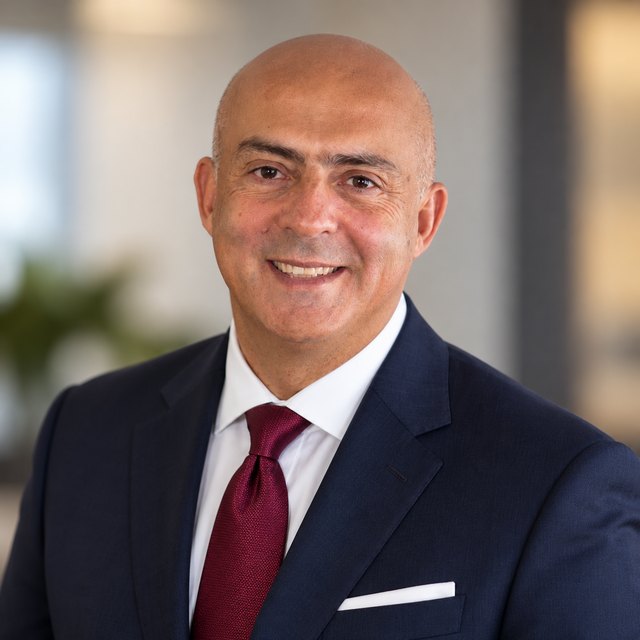
Jose Salloum is a Financial Security Advisor (conseiller en sécurité financière) certified by the Autorité des marchés financiers in Quebec, a Life and Accident & Sickness Insurance Agent licensed by the Financial Services Regulatory Authority of Ontario, and a Life Insurance Agent licensed by the Insurance Council of British Columbia. Licensed since 2001.
He has practised Infinite Banking since 2015 and founded Canadian Wealth Creation Centre Inc. in 2016. From 2020 to 2024 he was an IBC (Infinite Banking Concepts™) Authorized Practitioner of the Nelson Nash Institute, a private certification rather than a regulatory licence.
IBC Financial is the educational website of Canadian Wealth Creation Centre Inc., open to all Canadians. Services come only from Canadian Wealth Creation Centre Inc. Its representatives hold a licence in each province served: Quebec, Ontario, Alberta, British Columbia, Manitoba and New Brunswick. Jose Salloum's own licences cover Quebec, Ontario and British Columbia. This page is general education and not advice on any individual file.
Last reviewed 2026-09-03. By Jose Salloum, Financial Security Advisor in Quebec. In Ontario, Life and Accident & Sickness Insurance Agent. In British Columbia, Life Insurance Agent.