

Lethbridge: The Water Travels With the Land
Irrigated ground in a dry county is worth what it can drink. The productive value of a parcel here rests on an allocation of water attached to that parcel under provincial licensing, not on soil alone, and food processing nearby lives on whatever those fields yield. Divide the acres and access can be divided with them, stranding a portion that a map still shows as farmland. Succession therefore means settling with the child who never farmed while the unit stays whole. Nothing written here is individualised advice and no approval or outcome is promised, participating dividends being declared at the discretion of the insurer year by year and never guaranteed. Every relationship, every recommendation and every contract belongs to Canadian Wealth Creation Centre Inc. together with its duly certified representatives, while IBC Financial is an educational website holding no licence at all. An Alberta family is served through Michael Salloum. Where the answer is no, this practice says so.
In a dry county the value of a field is not in the soil, it is in whether the soil can drink. Ground that produces here does so because an allocation of water is attached to it, and that is a different asset from acres.
This page is written for a family whose principal asset is irrigated land, and for the households whose wages come from processing what that land grows, in an area where both stand on the same ground.
Every client relationship, every piece of advice and every insurance product comes through Canadian Wealth Creation Centre Inc. and its duly certified representatives. IBC Financial is the educational website and learning platform. It holds no licence, distributes nothing, and gives no individualised advice.
Where the money goes when the asset is land that must drink
A farm here finances what every farm finances, and pays somebody else for the privilege. Equipment, a bin yard, works on the land, inputs bought before a crop exists, and land itself.
What differs is what secures it. Not simply acres, but acres with access, and a lender values the second and not the first because the second is what produces.
The payment schedule is the only figure anybody is shown, by design, and it is the smallest question attached to an asset held for a generation.
Our mission is to help Canadians be wealthy, starting with money already passing through the household and not money nobody has earned yet.
The question an irrigation family is never asked
What happens to the unit if the family has to settle with somebody in cash, and the only thing it holds is land that cannot be reduced without harm?
To be accurate about it. Nobody is engaged to ask it. A lender lends against the operation. An equipment dealer sells equipment. An agronomist advises on the crop and not on what happens to the farm at a death.
So it gets postponed, usually until the generation that could answer it is no longer there to be asked, and then a deadline settles it.
Families that do ask it decide differently. Not because a cleverer product appeared, but because they discovered early that fair and equal are two different arrangements on this kind of ground.
Infinite Financial Sovereignty®, in plain words
read one illustration as two documents
What is guaranteed, and what is not
- 01Cash valueGuaranteed: Set out in the schedule at issue. Not guaranteed: Projected totals, which assume the current scale holds.
- 02Death benefitGuaranteed: Guaranteed, subject to the contract terms. Not guaranteed: Anything the declared dividends add to it.
- 03The annual decisionGuaranteed: A level premium, fixed by the contract. Not guaranteed: Dividends, declared annually and never guaranteed.
Infinite Financial Sovereignty® is a registered trademark of Jose Salloum, and it is this practice's name for one idea pursued with discipline over a lifetime: that a household should be its own source of capital rather than a borrower of somebody else's.
The underlying approach is the one Nelson Nash set out in his book and named The Infinite Banking Concept®, a registered trademark of Infinite Banking Concepts, LLC. Naming the author is not decoration. It is whose idea this is.
In the doing, it means holding capital where it keeps working while it is used. A participating whole life contract issued by a federally regulated insurer accumulates a contractual value. When capital is needed, an advance is taken against the contract and not from a lender.
Repayment runs on a schedule the owner sets and not one imposed as a condition of approval, and the contract continues to work while the advance is outstanding.
None of it is free or quick. The insurer charges interest on an advance. Costs fall heaviest in the early years. Participating dividends are declared annually at the insurer's discretion and are never guaranteed. It rewards decades and punishes impatience.
What it looks like around Lethbridge
A family farms several parcels acquired over forty years, and they were not acquired in a pattern that divides neatly into three.
A row crop operation carries the works it built across ground that only functions as one system.
A feedlot family has one child in the business and two who left, and no formula proposed so far has left all four content.
A couple who retired lease their land to a neighbour and hold a value on paper they cannot convert without ending an arrangement that supports two families. A household that has already converted a working life into one realised sum, and not a value still tied up in ground, is the reader described for Kelowna.
Only some of those are candidates for anything on this page, and saying which is the point of a first conversation and not the product of one.
The entitlement that travels with the land
Alberta licenses the diversion and use of water under the Water Act, and irrigation districts are constituted under the Irrigation Districts Act. Those regimes exist and this page names them.
The consequence for a family is that access is not a general right. It is an entitlement connected to land, administered through records that a lawyer reads and not through an understanding passed down at a kitchen table.
So the asset is ground and access together, and it is worth what it is worth because the two are joined. Separate them in a plan and the plan is describing an asset the family does not hold.
What may be done with any of it, and whether anything can move, is a question for the provincial records, the district and your own legal counsel. This page states no conditions and no quantities.
The practical instruction is short. Find out what your titles and your district records actually say, in writing, before anybody discusses a figure with you.
Why dividing land can divide access
A map suggests that acres are interchangeable, and here they are not.
Works, delivery arrangements and the way a district serves a parcel follow the layout of the ground, so a line drawn for the convenience of an estate can leave a portion cut off from what made it productive.
That portion does not become smaller. It becomes different. It is ground somebody pays taxes on and cannot farm as before.
Which is why indivisibility here is stricter than it is on dry land. Elsewhere splitting a farm makes the operation less efficient. Here it can remove capacity from one piece entirely while leaving the other whole.
A family that has not established this before drawing lines is guessing, and a guess made in an estate is settled by whoever is left to argue about it.
When two equal parcels are not equal
a licence is provincial, and so is advice
Where this practice is not licensed
- 01No advice is offered to residents of those places
- 02The explanatory pages remain open to anyone reading
- 03A licence is provincial, and so is permission to advise
- 04Checking a licence is a public register search
This is the arithmetic that catches families who genuinely intended to be fair.
Two parcels of the same size can be valued identically by anybody working from a plan, and can behave completely differently once somebody tries to farm them separately.
So an equal division on paper produces an unequal result in fact, and the child who receives the piece without capacity discovers it after the documents have been signed and not before.
The correction is not a cleverer split. It is deciding that the unit stays whole and that the child who does not farm is made whole in something other than acres.
Capital paid at a death is one ordinary way of doing that, and the amount can be known in advance by every person it concerns.
The estate that is short of cash at the worst moment
An estate does not choose when it needs money.
Obligations arrive on a schedule set by law and by the other beneficiaries, and they do not wait for a good season, a good price or a convenient time of year.
Meanwhile the family's wealth is in ground, in works and in equipment, because decades of surplus went back into all three, which was the correct decision in each of those years and leaves nothing liquid at the end. A household whose wealth sits instead in a mortgage-free house, with the estate around it thin, faces the reverse version of that shortage, described for Winnipeg.
Land sold under time pressure sells on somebody else's terms, and every family here has watched a dispersal.
Capital contracted to arrive at a death arrives on the day the obligation does. That is the whole argument for it, it is a funding role and not an investment one, and our estate planning material sets out the mechanism and not the drafting.
The plant job that is not a second income
A great many households here run a farm and a wage together, and the wage is frequently in processing.
That looks like diversification and is largely not. Processing employment in this area exists because of what the surrounding fields produce, so the wage and the crop rest on the same ground.
A season that damages what the land yields reaches the plant as well, usually later and more quietly, and a household discovers the connection at the worst moment.
None of that argues against the job. It argues for counting it honestly, as one income arriving through two doors and not two incomes.
And it leaves the succession question exactly where it was. Employer coverage was sized by somebody else, it was never measured against the value of the land, and it ends on the day the job does.
The limits of this page, and whose work the rest is
the designation exists to avoid the estate
Why a contingent beneficiary matters
- 01What happens to the proceeds if the primary beneficiary cannot receive them?
- 02They receive the proceedsA contingent is named. The designation carries the proceeds past the estate.
- 03The proceeds generally fall into the estateNo contingent is named. An estate exposes them to delay and cost, and creditors of the estate may then reach them.
It does not give tax advice and will not pretend to. Federal provisions permitting qualified farm property to pass to a child exist, their conditions are statutory, and they are settled with your own accountant against your own records.
It does not give legal advice. How title is held, what a will says, what any agreement between family members provides, and anything at all about a water entitlement are legal work, and getting them wrong is expensive.
It does not value your operation. That figure comes from somebody qualified to produce it, and until it exists every conversation about amounts is a guess.
It does not promise an outcome. No approval is certain, participating dividends are declared annually at the insurer's discretion and are not guaranteed, and any presentation suggesting otherwise should be set aside with whoever prepared it.
What it does is name the mechanism, which is a defined sum arriving at a known event so that a unit does not have to be broken to settle with somebody.
Who it suits here, and who it does not
It suits a family with durable surplus in a normal season, meaning an operation that produces more than it consumes when the year is unremarkable and not excellent.
It does not suit a family without that surplus, and it does not suit one that might need the money back within a few years, because an early exit is a permanent loss and not a poor return.
It does not suit a family that has not yet had the succession conversation. That comes first, and a contract arranged before the decision is a decision made by default.
It does not suit somebody shopping on rate of return. Judged that way it usually compares poorly against a market portfolio, and the objections and the risks say so here in our own words.
We will tell you which one you are in the first conversation, at no charge. Often the answer is no, and a no in half an hour beats a yes from somebody who wanted the sale.
What does not differ, whatever you have been told
The contract itself. A specially designed, high-cash-value, participating whole life insurance policy from a federally regulated insurer works the same in Lethbridge as in Halifax. The guaranteed schedule, the advance provisions and the non-forfeiture options are not local.
The Income Tax Act is federal. The exempt test, the adjusted cost basis and the treatment of proceeds received by a named beneficiary are the same across the country, and the general mechanics of a designation sit on policy basics.
Assuris covers Canadian policyholders within published limits. It is not a government guarantee. The guarantees in a contract are the obligations of the issuing insurer first and depend on that insurer's financial strength.
So be sceptical of anybody offering a Lethbridge product. There is none, and the offer tells you what kind of firm is making it.
What is genuinely local is the asset, which is ground joined to an entitlement and cannot be understood as acres alone.
The Alberta rules are on the Alberta page, not this one
Lethbridge is in Alberta, and the provincial layer is answered in full elsewhere and not repeated here in a thinner form.
The regulator, the probate structure and the absence of a title protection statute of the Ontario kind are provincial, so they read identically in Lethbridge, in Coaldale and in Fort Macleod.
The Alberta page carries them, including the Alberta Insurance Council and its free public register, and why the probate fee is described there by its structure and not by figures that would date.
Read it once and come back. Nothing on it changes because a family farms north or south of the river.
Lethbridge specifically, rather than Alberta generally
the cycle a contract is used through
Funding, drawing and repaying
- Premium funds the contract on the agreed schedule
- Value accumulates under the terms of the contract
- The insurer advances against the cash value
- Interest accrues to the insurer while a balance stands
- Repayment restores the capacity that was used
The difference is the asset, and not the law.
This is an irrigated district in a dry region with food processing beside it, so the land, the wage and the family wealth rest on the same access to water.
That single fact reorders every question. For most households the succession problem is how to divide an estate. Here the problem is that the principal asset resists division in a way that is not obvious until somebody tries it.
It also changes what a good answer sounds like. For many readers here the right answer is to get the titles read, hold the family conversation and do nothing else this year, which is not a sentence this industry is paid to say.
A neighbouring page with the name swapped would be worthless. Anyone searching life insurance Lethbridge deserves this point and not a general farm page: variable pay belongs to Calgary, ownership structures sit with farm families and the land that cannot be divided, and the locations hub says which page answers which question.
The order to do it in
Get your titles and your district records read, in writing, by legal counsel who works in this area. Not summarised by a neighbour and not remembered.
Then have somebody qualified value the operation. Until that figure exists, every discussion about what is fair is a discussion about nothing.
Then hold the family conversation while everybody is present. What fair means here, who intends to farm, and what the child who does not farm should receive.
Then check who is named on every contract you hold, primary and contingent, including anything owned by a farm corporation. The insurer pays whoever is named and not whoever was intended.
Three of those four cost nothing that earns anybody a commission, which is worth knowing given the order in which they are usually suggested.
The summary, if you read nothing else
The asset is ground and access together, licensed under provincial regimes this page names and does not interpret.
Dividing the acres can divide the access, which is why a fair split on paper can strand a portion in fact and why the unit is better kept whole.
The succession question is therefore not how to divide. It is how to make the child who does not farm whole in something other than land, and that requires a sum and not a share.
Two things can be established this month for nothing that earns a commission. Have the titles and district records read, and have the operation valued, and do both before anybody prepares anything for you.
Then find out whether this belongs in your situation. Half an hour, no cost, and an honest answer either way.
What happens in the thirty minutes
We ask what the family holds and how it is held. Parcels, works, equipment, whether a corporation is involved, and who is on title.
We ask what the succession intention actually is. Not the amount, but who farms, who does not, and whether the family has said so out loud.
We look at whether there is durable surplus. Not a strong season. An unremarkable one, because a commitment sized against a good year is a commitment that fails in an ordinary one.
We tell you plainly whether this belongs in your situation. Where the answer is to get the records read and stop there, the matter ends there and you have gained an answer nobody was paid to give you. Slow decisions age better than fast ones.
It costs nothing. Book a conversation, or read the cornerstone guide first if you would rather arrive already knowing the subject.
A thirty-minute discovery meeting
A first conversation establishes whether this fits. No illustration is prepared and nothing is arranged.
Often the answer is no, and you will hear it during the call rather than in a proposal afterwards.
This form reaches Canadian Wealth Creation Centre Inc. Any meeting, any advice and any insurance product is provided by Canadian Wealth Creation Centre Inc., through its representatives who are licensed in the client's province. IBC Financial is the company's educational website: it distributes no product and no financial service, and it gives no individualised advice.
Common questions
Why does water change the succession question around Lethbridge?
Can I simply leave one child the land and another the water?
What does it mean to say a division can strand part of the farm?
How do we treat the child who does not farm fairly?
Our farm is worth a great deal on paper. Why is the estate short of cash?
Does an off farm job at a processing plant diversify the family?
Is farmland not covered by a rollover to a child?
The land is in a corporation. Does that change anything?
Our income moves with the season. Can we commit to premiums for decades?
Are the Alberta rules different in Lethbridge?
We farm on both sides of a boundary. Which licence governs our file?
Who am I actually dealing with, and who is paid?
Sources
- Water Act, R.S.A. 2000, c. W-3, verified 2026-09-03
- Irrigation Districts Act, R.S.A. 2000, c. I-11, verified 2026-09-03
- Alberta Insurance Council, public register of licensees, verified 2026-09-03
About the author
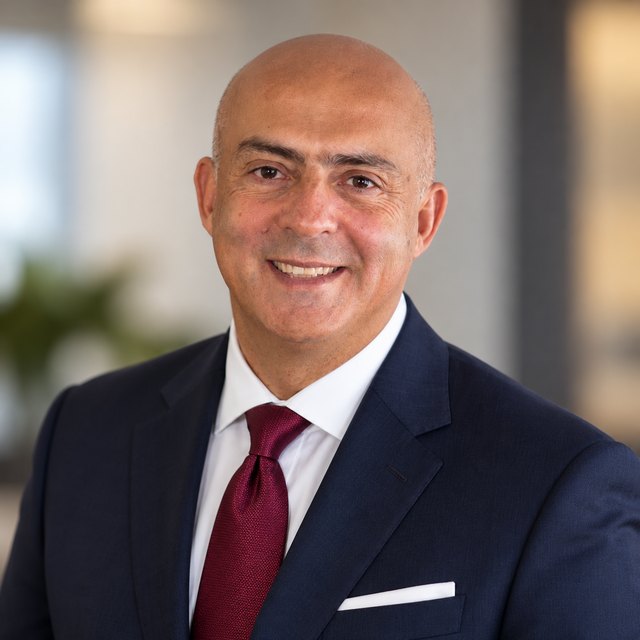
Jose Salloum is a Financial Security Advisor (conseiller en sécurité financière) certified by the Autorité des marchés financiers in Quebec, a Life and Accident & Sickness Insurance Agent licensed by the Financial Services Regulatory Authority of Ontario, and a Life Insurance Agent licensed by the Insurance Council of British Columbia. Licensed since 2001.
He has practised Infinite Banking since 2015 and founded Canadian Wealth Creation Centre Inc. in 2016. From 2020 to 2024 he was an IBC (Infinite Banking Concepts™) Authorized Practitioner of the Nelson Nash Institute, a private certification rather than a regulatory licence.
IBC Financial is the educational website of Canadian Wealth Creation Centre Inc., open to all Canadians. Services come only from Canadian Wealth Creation Centre Inc. Its representatives hold a licence in each province served: Quebec, Ontario, Alberta, British Columbia, Manitoba and New Brunswick. Jose Salloum's own licences cover Quebec, Ontario and British Columbia. This page is general education and not advice on any individual file.
Last reviewed 2026-09-03. By Jose Salloum, Financial Security Advisor in Quebec. In Ontario, Life and Accident & Sickness Insurance Agent. In British Columbia, Life Insurance Agent.