
Farm Families and the Land That Cannot Be Divided
When a farm's value sits in land that is also the workplace, the security for its credit and the family home, treating children fairly without breaking up the operation is hard. At death, capital property is generally treated as sold at fair market value, but a spouse, and qualifying farm property left to a child, can defer that tax on conditions the Income Tax Act sets. A death benefit can bring cash at a death; it settles nothing about fairness. Your accountant and agricultural lawyer confirm what applies.
When most of what a family owns is farmland, that land does three jobs at once. It is the production asset, the security behind the farm's credit, and the place the family lives. That is what makes a farm succession hard. Treating the children who farm and the children who do not as equals pulls against keeping the operation whole, and the tax rules that apply at a death are measured against land nobody intends to sell.
The short answer has three parts. At death, capital property is generally treated as sold at fair market value immediately before death, but property passing to a spouse, and qualifying farm property passing to a child, can move at a lower amount on conditions the Income Tax Act sets. Fairness between children is settled by documents and conversations, not by a product. And a death benefit is one way among several to have cash in the right hands when the person insured dies.
What does a farm balance sheet look like?
Land, and then everything else some way behind. Statistics Canada's release on the 2021 Census of Agriculture, published 11 May 2022, reported a total market value of $603.8 billion for the land and buildings Canadian farms used, owned and rented, against $64.4 billion for all farm vehicles, machinery and equipment. Those are national totals, not a picture of your farm. A supply managed dairy, poultry or egg operation also holds quota, which can be worth a great deal, and a grain operation can carry machinery worth more than some of its land.
On the other side sits the operating credit. Seed, fertiliser, fuel, custom work and repairs are paid long before the crop is sold or the milk cheque arrives, so the farm carries debt through the season by design. Cash on hand can be small next to a year's input costs while net worth on paper is large.
The same release reported a median farm operator age of 58.0 years in 2021, and that 12.0% of farms reported a succession plan, up from 8.4% in 2016. Read those figures as the national picture the census measured, not as a forecast for any one family.
What a land-heavy balance sheet lacks is anything that turns into money quickly without shrinking the operation. That gap between value and cash sits under every question that follows.
Why is farmland so hard to divide?
Because one title does three jobs. The home quarter is the production asset, the security behind the operating credit, and the place the family sleeps. In a company built on receivables, inventory and goodwill, those can be valued and dealt with one at a time. On a farm, one signature on one title touches all three.
Because acres are units of an operation, not units of value. The yard, the shop and the bins on the home place are not equivalent to a rented parcel twenty minutes away, even where an appraiser gives them the same price. An operation is sized around the machinery it owns and the acres that machinery must cover. Take a share of the acres away and the machinery is too large for what remains.
Because the credit is secured against the whole. A lender holding a mortgage, or a hypothec in Quebec, on the land generally has to agree before title is split, so a division agreed at the kitchen table still has to pass a review by someone outside the family.
And because selling a parcel to raise cash is not a portfolio adjustment. It is a smaller farm, and sometimes a neighbour's field where the family's own used to be. Advice that treats land as an interchangeable asset class has misread the problem, and a farmer hears that in the first sentence. In Quebec, a further statute governs dividing farmland itself; it is set out in the Quebec section below.
What happens when one child farms and the others do not?
This shape is hard for a reason. A child stayed, worked for years for less than the work was worth, and built the operation alongside the parents. The others built lives elsewhere. Treating them equally and keeping the farm whole are in direct conflict, not mild tension. Equal shares of land give the farming child partners who cannot help, and give the others an asset they cannot turn into money without forcing a sale.
Equal is a number; fair is a judgment. Some families decide that the farming child's years of low wages count toward that child's share. Some decide that the non-farming children receive less in value but more in cash, which is easier to use. Some keep land in shared ownership with a lease to the child who farms. None of these is right for every family. What matters is that the parents decide, write it down, and explain it while they can, because a decision explained during a lifetime lands differently from one discovered afterwards.
The years of low pay deserve their own note. They are real, they may never have been written down, and the farming child and the siblings value them very differently. Promises made to a child who worked on the strength of them ("this will all be yours one day") can, in some circumstances, give that child a legal claim against the estate if the will says otherwise. Ask your lawyer whether anything said over the years needs to be put in writing, either as a promise kept or as a promise withdrawn.
Neither the resolution nor the arithmetic belongs to an insurance advisor. It belongs to the family, guided by an agricultural lawyer who has drafted these arrangements and an accountant who has costed them.
What would strictly equal shares cost? An illustrative example
where the structure usually goes wrong
Corporate-owned life insurance
- The company owns the contract and pays the premium
- Premiums are generally not deductible
- Corporate funding is not, by itself, a tax saving
- A death benefit it receives may credit the Capital Dividend Account
- Ownership and beneficiary structure is where it fails
Illustrative example. The figures are invented to show the arithmetic; they are not any farm's values, a tax result or a recommendation. Assumptions: land, buildings, quota and machinery appraised together at $3,000,000; farm debt of $600,000; non-farm assets of $300,000; three children, one of whom farms; the farming child receives the whole operation with its debt; the two other children share the non-farm assets; tax at death is left out so the arithmetic stays visible.
| Step | Amount |
|---|---|
| Farm assets of $3,000,000 less farm debt of $600,000 | $2,400,000 |
| Net estate: $2,400,000 plus $300,000 of non-farm assets | $2,700,000 |
| One third of the net estate | $900,000 |
| What the farming child receives (the operation, net of its debt) | $2,400,000 |
| What each other child receives (half the non-farm assets) | $150,000 |
| Extra cash each other child would need to match the farming child | $2,250,000 |
| Extra cash needed for strictly equal value, two children | $4,500,000 |
| Or: what the farming child would owe the siblings to bring everyone to one third | $1,500,000 |
Two things stand out. Strict equality by value would take cash far larger than the non-farm assets, from somewhere, or a debt the farm may not be able to carry. And if the farm passes to the child at its tax cost, the gain is deferred, not cancelled: the child takes over the low cost and the tax arises when that child later sells or dies. A dollar of land is then not worth a dollar of cash after tax. That is one reason families talk about fair rather than equal, and why the accountant runs the after-tax numbers before anyone settles on an amount.
What happens for tax when a farm owner dies?
The starting point is subsection 70(5) of the Income Tax Act: a person who dies is generally treated as having disposed of each capital property at fair market value immediately before death. Nothing has to be sold, and the gain is reported on the final return. Several rules change that starting point for a farm family, and each one has conditions.
| Rule | What it does where its conditions are met | What it depends on |
|---|---|---|
| Property passing to a spouse or common-law partner (subsection 70(6)) | Capital property passing to a spouse, a common-law partner or a qualifying spousal trust can move at its tax cost, so the gain is deferred to the survivor | The survivor's residence in Canada, the property vesting in the survivor within the time the Act allows, and the executor's choices |
| Farm property passing to a child (section 70, as the CRA describes it) | The executor can elect a transfer amount anywhere between the property's adjusted cost base and its fair market value, which can reduce the gain on the final return | The CRA lists: the child resident in Canada immediately before the death; the property used principally in farming or fishing in Canada, on a regular and ongoing basis, by the deceased or certain family members; the property vesting in the child within 36 months; the election made in the final return |
| Shares of a family farm corporation or an interest in a family farm partnership passing to a child | The CRA says an amount can also be elected when these pass to a child | Whether the corporation or partnership meets the Act's definition, which the accountant tests |
| Lifetime capital gains exemption on qualified farm or fishing property (section 110.6) | A deduction against capital gains up to a lifetime limit. The CRA gives the exemption for 2025 as $1,250,000 for dispositions of qualifying property, under proposed changes, indexed to inflation | Whether the property meets the definition of qualified farm or fishing property, and how much of the exemption has already been used |
The CRA's guide Capital Gains 2025 lists what can count as qualified farm or fishing property: real property such as land and buildings; a share of a family farm or fishing corporation, or an interest in a family farm or fishing partnership, that you or your spouse or common-law partner owns; and property in capital cost allowance Class 14.1, such as milk and egg quotas. Whether yours qualifies depends on tests of ownership history and use that the Act sets and your accountant applies to your records.
Two cautions belong here. A rollover defers a gain; it does not erase it. And property can fail a condition in ways a family does not see: a child who is not resident in Canada at the death, land that has been rented to someone outside the family, or title held in a way the will did not expect. Each of those is a question to put to the accountant before the will is signed, not after.
These are federal rules and apply in every province. A Quebec resident also files a Quebec return, and Revenu Québec applies its own provisions to the same death, so have the accountant confirm both sides.
So the exposure is real but narrower than a flat statement suggests. What remains taxable depends on which assets fail a condition, who receives them, what the executor elects, and how much exemption is left. Only a calculation on your records gives the number. The deemed disposition at death and an estate with assets and no cash are explained in more depth in the estate planning section.
Can the farm move to a child during life instead?
Yes, and a transfer can happen in stages long before a death. Subsection 73(3) of the Income Tax Act, read on 1 October 2026, covers land in Canada, or depreciable property in Canada of a prescribed class, that a parent transfers to a child who was resident in Canada immediately before the transfer, where the property has been used principally in a farming or fishing business in which the parent, the parent's spouse or common-law partner, a child or a parent of the parent was actively engaged on a regular and continuous basis. Subsection 73(3.1) then measures the parent's proceeds within a range bounded by the property's tax cost and its fair market value. Subsections 73(4) and 73(4.1) apply similar rules to shares of a family farm or fishing corporation and to interests in a family farm or fishing partnership.
A lifetime transfer raises questions a death does not. Is it a gift, a sale, or part of each? If the child pays over time, who holds security for the unpaid balance? Does the parent need income from the farm in retirement, and from where? A sale to a child paid over several years can let the tax on the gain be spread out under reserve rules your accountant checks. And every one of those payments is a lifetime obligation that a death benefit does not fund, because a death benefit pays only when the person insured dies.
Which ways of being fair to the children do not involve insurance?
Several, and an agricultural lawyer drafts them. None is free and none suits every family, but each one moves value without breaking up the land.
| Tool | How it works | Who owes whom |
|---|---|---|
| A lease to the farming child | Land passes to all the children, or stays with some of them, and the farming child leases it on written terms | The farming child owes rent to the owners of the land |
| A mortgage or vendor note in favour of the siblings | The farming child receives the land and owes the siblings an amount secured on it, paid over time | The farming child owes the siblings; the land secures the debt |
| An option to purchase | The farming child holds a right to buy the siblings' share of the land later, at a price or formula the agreement sets | No debt until the option is used; then the child owes the price |
| A right of first refusal | If a sibling decides to sell, the farming child has the first chance to buy | No debt unless the right is used |
| Non-farm assets to the non-farming children | Investments, a house in town or other property go to the siblings | No debt; limited to what exists |
| Share classes in a farm corporation | Separate classes can split control from value, so siblings hold value without running the farm | Set by the share terms the lawyer and accountant design |
| A waiting period before land may be sold | The will or an agreement restrains a sale for a set time | No debt; the lawyer checks that the clause can be enforced in your province |
Each of these changes the tax, so the accountant reviews the design with the lawyer. Each also has a way to fail: a lease that does not meet the siblings' expectations, a vendor note the farm cannot carry in a poor year, an option price nobody updated for twenty years. Writing them down while the parents can still explain them is what makes them hold.
Which obligations arise at death, and which during life?
frequently the same person, not always
Three roles inside one contract
- 01One contractAll three can differ. Only the policyholder changes it, subject to any irrevocable beneficiary.
- 02The policyholderOwns the contract and holds its rights, subject to any assignment.
- 03The insuredThe person whose life is covered.
- 04The beneficiaryReceives the death benefit.
A death benefit pays when the person insured dies, if the policy is in force and the claim is payable. It does not pay because a parent retires, transfers land, falls ill or owes a sibling an instalment. Sorting the family's obligations by when they arise shows which ones insurance can address at all.
| Obligation | When it arises | Possible sources of cash |
|---|---|---|
| Tax on assets that do not roll over or exceed the exemption | At death, on the final return | Non-farm assets, a death benefit, a loan, a sale |
| An equalisation amount the will requires | At death, under the will | A death benefit paid to the right person, non-farm assets, a vendor note from the farming child |
| The parents' retirement income | During life | Rent, a sale price paid over time, savings, pensions |
| Instalments on a sale to the farming child | During life, on the agreement's schedule | The farm's cash flow, a lender |
| The operating line and term debt | Throughout, and on the lender's review after a death | The farm's cash flow, the lender's renewal, a sale |
| Funeral and estate costs | At death | Estate assets, a death benefit |
Where an obligation falls during life, a death benefit is not a tool for it. Where it falls at death, a death benefit is one tool among the others in the last column, and the family compares them on cost and certainty.
What can a death benefit do on a farm, and what can it not?
It can put money in the right hands at a death without a sale. That is the whole mechanism. If the non-farming children are the named beneficiaries, they can receive cash while the farming child receives the land. If the estate needs cash for tax on assets that did not roll over, a death benefit can meet it without selling a parcel.
A death benefit paid to a named beneficiary is generally received free of income tax. Under an exempt policy, a payment in consequence of the death of the person insured is not a disposition under subsection 148(9) of the Income Tax Act, so it produces no policy gain. Exempt status is a test in the Income Tax Regulations; ask the insurer to confirm in writing that your contract is designed and administered as an exempt policy.
Who receives it is set by the beneficiary designation, not by the will, unless the estate is named. Naming the estate brings the money under the will, where estate creditors can reach it and, in some provinces, probate fees or estate administration tax can apply. Naming the children directly generally keeps it outside the estate, but the will cannot then redirect it if circumstances change. Which fits depends on the will, the province and the family agreement; your lawyer decides, and the designation and what a creditor can reach sets out the limits.
It does not decide who gets the farm, value the land, draft the will, write the agreement between siblings, or hold the conversation nobody has had. It does not make an unfair arrangement fair, because money arriving does not settle a grievance about the years someone worked cheaply. And a death benefit, by definition, is paid at a death, not during life.
One more limit: the insurance has to be obtainable. Cover depends on health and age at the time of application, and an operator in their sixties can find it priced beyond reach or not offered. That is better learned at the first meeting than after an application.
Which kind of life insurance fits which need?
The need decides the design, not the other way round. Three broad designs exist, and each insurer sets its own terms.
| Design | What it pays, and when | When it can fit | What to check |
|---|---|---|---|
| Term insurance | A death benefit if the person insured dies within the term; standard designs build no cash value | A need that ends by a known date, such as debt until a planned transfer | Renewal cost, conversion rights, the age at which cover ends |
| Participating whole life | A death benefit for life while premiums are paid as the contract requires, guaranteed cash values, and dividends that are not guaranteed | A need that lasts for life, such as an equalisation amount or tax at the second death | Guaranteed values year by year, the premium-paying period, surrender values, loan terms |
| A joint policy paying on the second death | One death benefit when the second of two people insured dies, where the insurer offers that design | Where a spousal rollover defers tax until the second death | Who owns it, what happens on separation or divorce, premiums after the first death |
Compare the designs for the same need, with the same health information, and with the guaranteed columns side by side. A term quote and a permanent quote answer different questions, and both belong on the table. Term insurance is explained in its own section.
Who owns the policy, who pays, and who receives?
Four roles are decided together: the owner, the payer, the person insured and the beneficiary. They can be four different parties, and changing them later can itself have tax effects. Corporate ownership is covered at length under corporate-owned life insurance. On a farm, three arrangements come up.
| Arrangement | Who receives the money | Who owes the siblings | Who confirms it |
|---|---|---|---|
| A parent owns and pays; a parent is insured; the siblings are named beneficiaries | The named siblings, outside the will | No one, if the will and the designation match | The lawyer checks the will against the designation |
| The farming child owns and pays; a parent is insured; the child is beneficiary | The farming child, who then pays what a written agreement requires | The farming child, under that agreement | The lawyer drafts the agreement; the person insured consents |
| The farm corporation owns and pays; a parent is insured; the corporation is beneficiary | The corporation, not the children | The corporation or its shareholders, only as the share terms and agreements provide | The accountant (capital dividend account, getting money out) and the lawyer (shares, will) |
Each arrangement has its own consequences, and whether a person, the operating corporation or a holding company should own a policy is a question for your accountant and lawyer, not a default anyone should assume. In Quebec, a person may insure another's life only with an insurable interest or the written consent of the person insured (Civil Code, art. 2418). A designation of a married or civil union spouse, made in a writing other than a will, is irrevocable unless stipulated otherwise (art. 2449). Divorce, nullity of marriage or dissolution of a civil union makes a designation of the spouse lapse (art. 2459).
What happens when a farm corporation receives the death benefit?
The money belongs to the corporation, and the siblings receive nothing from that event alone. For a private corporation, the proceeds received because of the death are added to its capital dividend account, less the policy's adjusted cost basis immediately before the death (Income Tax Act, subsection 89(1), paragraph (d) of the definition). A policy loan still owing at the death reduces what the corporation receives.
The account holds no money; it is a running tax record. Paying it out takes an election under subsection 83(2), filed on CRA Form T2054 by the earlier of the day the dividend becomes payable and the day it is first paid; a Quebec corporation also files Revenu Québec form CO-502. A shareholder resident in Canada receives a properly elected capital dividend without income tax; a shareholder living outside Canada generally pays withholding tax. Capital gains, capital losses and earlier capital dividends move the same balance, so the accountant calculates it first. The full reference is the capital dividend account.
Then the lawyer reconciles the route with the share ownership, the will and any sibling agreement. A dividend is paid to the holders of the class of shares on which it is declared, so if the non-farming children hold no shares, it does not reach them. And where a corporation pays premiums on a policy owned by a shareholder personally, or that benefits a shareholder, the CRA can assess a taxable benefit to that shareholder. Review both points with the accountant before the policy is issued.
How does a policy loan work, and what does it do to the money meant for the children?
a notional account, not a bank balance
The Capital Dividend Account
- 01A notional tax account of a private Canadian corporation
- 02It records amounts the corporation received without tax
- 03A death benefit it receives, less the adjusted cost basis, may credit it
- 04Available balances may be paid out as capital dividends
- 05The credit depends entirely on the ownership structure
A policy loan is an advance the insurer makes to the owner of the policy, from the insurer's own funds, with the cash value as security. The owner owes the insurer. The interest is paid to the insurer, at a rate the insurer sets under the contract and can change. Whether a loan is available, and how much, depends on the contract and on the value available at the time.
The contract sets the repayment terms. Where it lets interest go unpaid, the unpaid interest is added to the loan. Anything still owing when the person insured dies is deducted from the death benefit. If the loan and its interest grow past the value securing them, the contract can terminate under its terms. Ask the insurer for the loan provision in writing, and check the balance more often than once a year when the margin is narrow.
For tax, a policy loan is a disposition under subsection 148(9) of the Income Tax Act. Only the part of the loan above the policy's adjusted cost basis immediately before the loan is income (subsection 148(1)), and the loan lowers the adjusted cost basis. Repayment restores it and can give a deduction under paragraph 60(s), limited to amounts previously included. A surrender or termination with a loan outstanding can produce income to the extent the proceeds exceed the adjusted cost basis, so ask the insurer in writing for those figures before acting. The mechanics are set out under policy loans.
A loan from a lender other than the insurer, secured by an assignment of the policy, is a separate arrangement with its own approval, interest and repayment schedule. That lender is owed the money and receives the interest; the policy stays the owner's, and the assignment is released when the loan is repaid. In Quebec, that security takes the form of a movable hypothec. An assignment as security is not itself a disposition (subsection 148(9), paragraph (f) of the definition). If the farm corporation owns the policy, the advance is the corporation's money, and getting it to a person is a second transaction, such as salary, a dividend or the repayment of a shareholder loan, each with its own tax.
Illustrative example. Assumptions: a death benefit of $1,000,000 meant for the two non-farming children; a policy loan of $120,000 taken for a combine; $30,000 of interest left unpaid and added to the loan under the contract; nothing repaid before the death of the person insured. The insurer deducts the $150,000 balance and pays $850,000, so each child receives $425,000 rather than $500,000. The figures are invented to show the arithmetic; they are not any insurer's terms.
That is why the equipment argument comes second on a farm. One contract can help finance machinery and also fund a payment to the siblings at a death, but every dollar borrowed and not repaid is a dollar missing at that death. If both jobs matter, decide in writing which comes first, and size the cover with the loans in mind. The financing side is set out for trucking fleets and dental practices.
Where does Infinite Financial Sovereignty® fit, and whose idea is it?
The idea is not this practice's. The financing approach R. Nelson Nash called The Infinite Banking Concept® is a mark of Infinite Banking Concepts, LLC, described in his own writing. Neither Canadian Wealth Creation Centre Inc. nor Jose Salloum is affiliated with that organisation or endorsed by it.
Infinite Financial Sovereignty® is a registered trademark of Jose Salloum. It names a narrower discipline carried out over a lifetime: own permanent life insurance for the protection it gives, and know in advance, in writing, what you could borrow against it, from whom and on what terms, before a repeating need for capital comes back.
On a farm, the death benefit does the heavier work. The policy is life insurance first, chosen because a death would otherwise force a sale or leave the siblings with nothing but a claim on the land. The financing use is secondary, and it competes with the first job, as the example above shows. A policy is never the answer to a need the farm has this year or next; for that, the operating line, a term loan or the farm's own cash flow are the tools.
Are premiums deductible, and does any of this lower the farm's tax?
Life insurance premiums are generally not deductible, whether a person or a corporation pays them, and owning the policy through a corporation does not by itself turn a premium into a business expense. A limited exception exists under paragraph 20(1)(e.2) of the Income Tax Act: where an interest in the policy is assigned to a restricted financial institution that requires the assignment as collateral for a borrowing, and the interest on that borrowing is deductible, part of the premium can be deducted. The deductible part is the least of the premium, the net cost of pure insurance and the part that relates to the amount owing. Assume there is no deduction unless your accountant confirms each condition.
The policy also does not replace the operating line. Seasonal farming runs on committed outside credit because inputs are bought months before revenue arrives, and a credit relationship built in a good year carries an operation through a poor one.
And participating whole life is insurance, not an investment. Judged against a market portfolio on rate of return, it answers the wrong question. Judged as lifetime cover with guaranteed cash values and dividends that are not guaranteed, it answers a different one.
What does stopping early cost?
In the early years of a specially designed, high-cash-value, participating whole life insurance policy, the guaranteed cash value can be well below the premiums paid. Surrendering in that window can return substantially less than went in, and it ends the cover. Ask for the guaranteed and illustrated surrender values year by year, side by side with the cumulative premiums, before committing, and find the year the guaranteed column first catches up.
On a farm this matters more than in a salaried household, because farm income moves with weather, disease and prices. A premium has to be payable in the poor years, not only the strong ones. Ask what the contract allows if premiums stop: some contracts offer options such as reduced paid-up insurance or using dividends to pay premiums, each with its own effect on the cover.
Who is this route not for?
underwriting is the part nobody controls
How long each stage takes
- 01The discovery meetingThirty minutes. Online, with no products.
- 02The suitability recordOne sitting. A licence requires it before advice.
- 03The design meetingOne hour. More than one route, guarantees shown apart.
- 04Underwriting2 to 6 weeks. Decided by the insurer, sometimes longer.
- 05First conversation to a contract in force6 to 10 weeks. When nothing waits on a medical.
A farm without durable surplus in a normal year, as distinct from a strong one. Premiums are payable in the poor years too, and an operation that has to strain to find them has already answered the question.
A family within a few years of the transition, where the early years of a new policy would overlap the years the money is needed. Other routes exist, and they belong to the accountant and the lawyer.
Anyone whose health makes cover unavailable or priced beyond reach, which is better learned in the first half hour than after an application.
And any family that has not had the conversation. A funding mechanism laid on top of an unresolved disagreement does not resolve it; it funds it.
What stands behind the contract?
The contractual obligations of the issuing insurer, backed within limits by Assuris. Solvency supervision depends on how the insurer is chartered: OSFI supervises a federally incorporated insurer, and the home province, the AMF in Quebec, supervises a provincially incorporated one. Every life insurer authorized in Canada must belong to Assuris.
If a member insurer fails, Assuris states on its whole life page, read on 1 October 2026, that you keep up to $1,000,000 or 90% of your death benefit, whichever is higher, and up to $100,000 or 90% of your cash value, whichever is higher, calculated on the net values after any policy loans. That is protection within limits, not a government guarantee and not deposit insurance.
Dividends are not guaranteed. The insurer's board declares them under the contract and its dividend policy, based on the experience of the participating account, and past dividends do not predict future ones. The guaranteed schedule and the illustrated values are two different columns; read them separately, and treat a presentation that shows only the second as incomplete.
What does each professional decide, and in what order?
Get a current appraisal of the land, quota and machinery. Not a memory of what a neighbouring quarter sold for, and not a municipal assessment notice. It is the one input everything else is measured against.
Then establish how title is actually held, which is a matter of what the land registry says and not what everybody assumes, and whether the will matches it.
Then take both to an accountant with agricultural files and to an agricultural lawyer (in Quebec, a lawyer or a notary), together where possible. Ask them:
- Which of our assets would roll over to a spouse or a child, and on what conditions?
- How much of the lifetime capital gains exemption is left, and does our property qualify?
- What tax remains at the first death and at the second, on today's appraisal?
- Does the will match the title and the beneficiary designations?
- What do we owe each child under anything already promised or signed?
- Which non-insurance tools fit our family, and what do they cost to set up?
Then have the family conversation, including the children who do not farm, and hear each of them separately as well, because an adult child asked in front of a parent gives the answer they think is expected.
Then, and only then, look at whether a policy belongs in the picture: purpose first, structure second, product last. The appraiser, the accountant and the lawyer charge fees, and on a farm those fees are money well spent before any insurance is designed. Ask anyone who proposes insurance how they are paid. Reading here is free; Canadian Wealth Creation Centre Inc. is paid by insurer commission if a policy is bought.
What is different in Quebec?
Quebec's Act respecting the preservation of agricultural land and agricultural activities, read on LégisQuébec on 1 October 2026, says in section 28 that, except in cases set by regulation, no person may subdivide land in a designated agricultural region without the authorization of the Commission de protection du territoire agricole du Québec. Section 29 adds that no person may alienate a lot there while keeping a right to alienate a contiguous lot, without that authorization. The Act's definition of alienation excludes transmission owing to death.
Our reading, which is not a ruling: a will that leaves land to heirs is not itself an alienation under that definition, but a later division of the land among them, or a sale of part of it, can need the Commission's authorization. Ask a Quebec notary or lawyer how the will should describe each parcel before it is signed.
The Civil Code rules on designations set out above (arts. 2418, 2449 and 2459) apply to every Quebec policy, and a Quebec resident files with both the CRA and Revenu Québec.
Where does the rest of this sit?
The general framework is in business owners. The mechanism of the contract itself is under how a participating policy works. Paying out the account after a death is set out step by step in paying a capital dividend after a death, the wider planning sequence in the succession planning process, and what a practice is worth to someone other than its owner is treated separately for veterinarians.
A thirty-minute discovery meeting
A first conversation establishes whether this fits. No illustration is prepared and nothing is arranged.
Often the answer is no, and you will hear it during the call rather than in a proposal afterwards.
This form reaches Canadian Wealth Creation Centre Inc. Any meeting, any advice and any insurance product is provided by Canadian Wealth Creation Centre Inc., through its representatives who are licensed in the client's province. IBC Financial is the company's educational website: it distributes no product and no financial service, and it gives no individualised advice.
Common questions
Why is farm succession harder than succession in other businesses?
What does land rich and cash poor mean on a working farm?
What happens for tax when a farm owner dies in Canada?
Can farmland pass to a child without tax at death?
Is there a capital gains exemption for farm property?
Can I transfer the farm to my child before I die?
Should I leave the farm equally to all my children?
How can non-farming children be treated fairly without insurance?
Can life insurance solve a farm succession problem?
How much life insurance would a farm family need?
Who should own a life insurance policy on a farm parent?
Are life insurance premiums tax deductible for a farm?
What happens if the farm corporation receives the death benefit?
How does a policy loan affect what the children receive?
Does a policy replace the farm's operating line?
What is different for a farm family in Quebec?
We have not incorporated. Does that change anything?
Who should a farm family talk to, and in what order?
Sources
- Statistics Canada, The Daily of 11 May 2022, Canada's 2021 Census of Agriculture. Land and buildings at $603.8 billion, machinery at $64.4 billion, median operator age 58.0, and 12.0% of farms reporting a succession plan. https://www150.statcan.gc.ca/n1/daily-quotidien/220511/dq220511a-eng.htm, verified 2026-10-01
- Statistics Canada, Census of Agriculture, on farm capital and operator age, verified 2026-08-30
- CRA, Farming and fishing income and property, for a person who died. Transfer to a child, its conditions and the executor's election. Page modified 20 January 2026. https://www.canada.ca/en/revenue-agency/services/tax/individuals/life-events/doing-taxes-someone-died/prepare-returns/report-income/farm-fishing.html, verified 2026-10-01
- CRA, Line 25400, Capital gains deduction. For 2025 the exemption is $1,250,000 under proposed changes, indexed to inflation. Page modified 5 February 2026. https://www.canada.ca/en/revenue-agency/services/tax/individuals/topics/about-your-tax-return/tax-return/completing-a-tax-return/deductions-credits-expenses/line-25400-capital-gains-deduction.html, verified 2026-10-01
- CRA, guide T4037, Capital Gains 2025. What counts as qualified farm or fishing property. Page modified 11 February 2026. https://www.canada.ca/en/revenue-agency/services/forms-publications/publications/t4037/capital-gains.html, verified 2026-10-01
- Income Tax Act, subsections 73(3), 73(3.1), 73(4) and 73(4.1). Transfers of farm or fishing property to a child during life. Justice Laws Canada. https://laws-lois.justice.gc.ca/eng/acts/I-3.3/section-73.html, verified 2026-10-01
- Income Tax Act, subsections 70(5) and 70(6). Deemed disposition at death and transfers to a spouse. Justice Laws Canada, as recorded on this site., verified 2026-09-16
- Justice Laws Canada, Income Tax Act, deemed disposition on death and the intergenerational transfer of farm property, verified 2026-08-30
- Income Tax Act, section 110.6. The lifetime capital gains exemption. Justice Laws Canada, as recorded on this site., verified 2026-09-28
- Income Tax Act, paragraph 20(1)(e.2). Premiums on a policy assigned as collateral. Justice Laws Canada, as recorded on this site., verified 2026-09-30
- Income Tax Act, subsections 148(1) and 148(9) and paragraph 60(s). Policy loans, dispositions and the adjusted cost basis. Justice Laws Canada, as recorded on this site., verified 2026-09-29
- Income Tax Act, subsection 89(1), paragraph (d), and subsection 83(2). The capital dividend account and its election. Justice Laws Canada, as recorded on this site., verified 2026-09-29
- Assuris, Whole Life. Protection limits calculated on net values after policy loans. https://assuris.ca/how-am-i-protected/assuris-protection/life-insurance/individual/whole-life/, verified 2026-10-01
- Act respecting the preservation of agricultural land and agricultural activities, sections 1, 28 and 29. LégisQuébec, updated 10 June 2026. https://www.legisquebec.gouv.qc.ca/en/document/cs/P-41.1, verified 2026-10-01
- Civil Code of Québec, articles 2418, 2449 and 2459. LégisQuébec, as recorded on this site., verified 2026-09-27
About the author
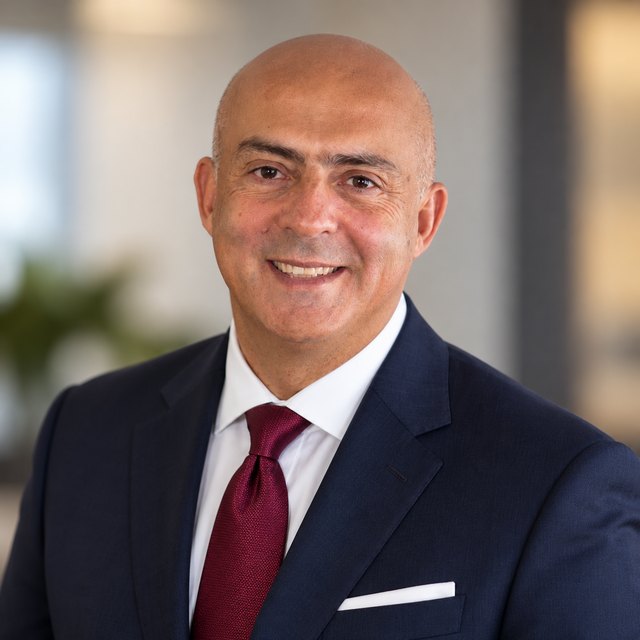
Jose Salloum is a Financial Security Advisor (conseiller en sécurité financière) certified by the Autorité des marchés financiers in Quebec, a Life and Accident & Sickness Insurance Agent licensed by the Financial Services Regulatory Authority of Ontario, and a Life Insurance Agent licensed by the Insurance Council of British Columbia. Licensed since 2001.
He has practised Infinite Banking since 2015 and founded Canadian Wealth Creation Centre Inc. in 2016. From 2020 to 2024 he was an IBC (Infinite Banking Concepts™) Authorized Practitioner of the Nelson Nash Institute, a private certification rather than a regulatory licence.
IBC Financial is the educational website of Canadian Wealth Creation Centre Inc., open to all Canadians. Services come only from Canadian Wealth Creation Centre Inc. Its representatives hold a licence in each province served: Quebec, Ontario, Alberta, British Columbia, Manitoba and New Brunswick. Jose Salloum's own licences cover Quebec, Ontario and British Columbia. This page is general education and not advice on any individual file.
Last reviewed 2026-10-01. By Jose Salloum, Financial Security Advisor in Quebec. In Ontario, Life and Accident & Sickness Insurance Agent. In British Columbia, Life Insurance Agent.