
Dentists and the Equipment Cycle: Who Is Paid Every Time
A dental practice replaces chairs, scanners, mills and imaging in cycles, so it finances equipment many times over a career. Each time, whoever advances the money is paid: a bank, a lessor, a vendor's finance company or, on a policy loan, the insurer, which sets the rate and receives the interest. Compare the routes on after-tax cost, what you own at the end and the effect on your cash. A participating policy is life insurance first and takes years to build loan value.
Every time a dental practice finances equipment, whoever advances the money is paid for it. On a term loan that is the bank or commercial lender; on a lease, the lessor; on vendor financing, the finance company behind the vendor. On a policy loan against a participating life insurance policy it is the insurer, which lends the money, sets the rate and receives the interest. No route makes the cost of financing disappear. The routes differ in after-tax cost, in what you own at the end, in the security taken and in what they do to the practice's cash.
What makes dentistry different is repetition. A practice buys a chair, a scanner, a mill, an imaging unit, a sterilisation suite and the leasehold work that holds them. Some years later it buys them again, and again after that. So the useful question is not only what this lease costs. It is how the practice will pay for each cycle, and who will be paid each time.
What does a dental practice finance, and how often?
Equipment, the space that holds it, the practice itself and the software that runs it, each on its own replacement timetable.
Dentistry is equipment intensive. Chairs and delivery units, handpieces, curing lights, an intraoral scanner, a milling unit, imaging hardware and the sterilisation equipment an inspector checks all wear out or fall behind, and each is paid for again.
The space counts too. Plumbing, suction, compressed air, cabinetry and radiation shielding are not ordinary leasehold improvements. They are installed for dentistry and they age with the equipment they serve, so a renovation and an equipment purchase can arrive together. The fit-out side is covered in leasehold improvements and a second location.
The practice itself may still be carrying debt. A dentist who bought in, bought out a retiring principal or opened cold started with acquisition debt, and part of it may still be owed when the first equipment cycle comes due. The purchase year is set out in buying a dental practice.
Software licences renew on their own schedule and behave like a permanent cost.
None of these items shares a replacement date. A chair, a scanner and a mill were bought in different years, wear at different rates and lose manufacturer support at different times. So a practice can go years without a gap between cycles, and financing becomes a standing job inside the business, the way payroll is a standing job rather than an event.
Why does the cycle matter more than any single purchase?
Because the same financing decision comes back again and again, and a small difference on each cycle adds up over a career.
An equipment lender earns its interest honestly. It supplies capital when the practice needs the equipment, so the production that equipment supports starts years earlier than it would if the practice saved first. It accepts the risk that the practice will not pay, and it prices that risk, which is one reason a younger practice with acquisition debt can be quoted different terms from an established one. And it arranges, holds and collects the loan. It is paid through interest and fees for all three.
Those services do not disappear when the lender changes. A policy loan has the same shape: the insurer supplies the money, holds the policy's value as security and charges interest. Whoever lends is paid.
What deserves attention is that each cycle can end up negotiated on its own, at the moment of sale, as if the previous ones had not happened. Add the previous ones up once from the lease documents and loan statements. The total shows you the pattern the practice has fallen into.
Treat that total as a record, not as a reason. Interest already paid is spent, and no decision today brings it back. The next purchase is decided on the future cost of each route, after tax, and on what each route leaves you owning and owing.
The question that follows is simple: who will finance the next cycle, on what terms, and at what after-tax cost? Answer it on purpose, with written offers in hand, rather than by default at a trade show or a demonstration.
Who lends, and who is paid, on each way to finance equipment?
Every route that uses someone else's money has a lender who is paid; the table names each one so you can compare like with like.
| Route | Who provides the money | Who you owe | Who receives the interest or finance charge | Main thing to check |
|---|---|---|---|---|
| Term loan | A bank or other commercial lender | That lender | That lender | Security taken, personal guarantee, covenants, prepayment terms |
| Vendor or dealer financing | The vendor's finance arm or a lender it works with | That finance company | That finance company | Whether the equipment price changes if you pay another way |
| Equipment lease | A lessor, linked to the vendor or independent | The lessor, under the lease | The lessor, through the payments | Buyout, renewal and early exit terms |
| Operating line of credit | A bank or other lender | That lender | That lender | Terms that let the lender reduce or call the line; meant for timing gaps |
| Cash or retained earnings | The practice's own funds | No one | No one; the cost is what that cash could otherwise have done | A thinner reserve for a slow quarter |
| Policy loan | The insurer, secured by the policy's cash value | The insurer | The insurer | Unpaid interest, lapse risk, tax above the adjusted cost basis, and a policy bought years earlier |
| Loan secured by a policy | An outside lender, with the policy assigned as collateral | That lender | That lender | Credit approval, the lender's rights over the policy, demand terms |
Read the policy loan row closely, because it is the easiest to misread. The insurer is the lender. It sets the rate under the contract and may change it. Repaying the loan reduces what is owed to the insurer and restores borrowing room under the contract. It does not pay interest to the practice or to the policy's owner. Any dividends the policy receives are declared at the insurer's discretion, are not guaranteed, and whether an outstanding loan affects them depends on the contract, so ask for that provision in writing.
You do not need life insurance to finance equipment well. Five of the seven routes in the table involve none. A policy loan only becomes an option for a practice whose owner already needs permanent life insurance and bought it years before the purchase.
How does a practice build an equipment replacement schedule?
purpose first, structure second, product last
The order to do it in
- 01Add up past financing costsEvery cycle so far, from the lease and loan statements.
- 02Name the next cycle, and whenWritten down, not approximate.
- 03Take both to your accountantBefore any insurance conversation.
- 04Then ask whether a contract belongsThe product comes last.
List every major item with its purchase date, expected working life and financing terms, then read the list as a calendar of future capital needs.
The cycle only becomes useful once it is written down. A replacement schedule is a simple table, updated each year, with honest dates and one person responsible for keeping it current.
Start with an inventory. Walk each operatory and the sterilisation area with your office manager, and list every item that would need financing to replace. For each one, record the following details.
- Item and location: for example, the chair and delivery unit in operatory 2, the scanner, the mill or the imaging unit.
- Date acquired: taken from the invoice or the lease agreement.
- Expected working life: based on the manufacturer, your service technician and your own experience.
- Support horizon: when the manufacturer expects to stop supplying parts or software updates.
- How it was financed: lease, loan, line of credit or cash, with the end date of any agreement.
- Likely next action: replace, refurbish, extend service or retire without replacing.
Next, sort the list by expected replacement year. Some practices find that several items cluster in the same period, because they were bought together at the purchase or at the last renovation. A cluster is where financing pressure is highest. Seeing it early lets you spread replacements over several years, negotiate before an item fails, or set cash aside in advance.
Then add money to the calendar. You do not need exact prices. A rough range from a recent quote or from your supplier is enough to show which years will be heavy. Beside each year, note how you expect to pay: a new lease, a term loan, the line of credit, cash, or a policy loan if the practice's owner already holds a policy with enough loan value by then.
Illustrative example, with no prices: a schedule for a four operatory practice might look like this. The years count from today.
| Item | Acquired | Expected replacement | Financed by | Agreement ends | Next action |
|---|---|---|---|---|---|
| Chairs and delivery units, operatories 1 and 2 | At purchase of the practice | Year 4 to 6 | Term loan | Year 2 | Get quotes in year 3 |
| Intraoral scanner | Two years ago | Year 3 to 4 | Lease | Year 3 | Decide on buyout or return before the lease ends |
| Panoramic imaging unit | At purchase of the practice | Year 5 to 8 | Cash | None | Ask the technician about support |
| Sterilisation equipment | Four years ago | Year 2 to 4 | Line of credit | Open | Plan the replacement with the technician |
| Practice software | Renewed yearly | Every year | Operating budget | Yearly | Review the licence at renewal |
In that example, years 3 to 5 carry most of the weight, which gives the practice time to collect offers, build a reserve, or move one purchase.
Review the schedule once a year, ideally when your accountant prepares the year-end statements. Update anything that failed early, anything that received a service extension and anything newly added. Keep it with the lease documents and loan statements. Together they answer the two questions that matter here: what the practice has paid, and what is coming next.
How should a dentist compare a lease, a loan and cash for one piece of equipment?
Put all three options on the same footing: the total cash paid over time, what the practice owns at the end, and what each choice does to flexibility.
A lease, a loan and a cash purchase are quoted in different languages. The lease shows a monthly payment. The loan shows a rate. Cash shows a price. Comparing them as quoted is how a practice ends up choosing the lowest payment rather than the lowest total cost. Ask the same kind of questions of each option instead.
For a lease:
- What is the total of every payment over the full term, including any fees at the start?
- What happens at the end: a buyout at a stated amount, a buyout at fair market value, a return, or a renewal?
- Who pays for maintenance, insurance and repairs during the term?
- Can the lease be ended early or upgraded, and on what terms?
For a loan:
- What is the rate, is it fixed or variable, and what is the total interest over the term?
- Is there a penalty for repaying early?
- What security does the lender take, and does the loan require a personal guarantee?
- Does it use up room on the practice's existing credit?
For cash:
- How much of the practice's reserve would this purchase use?
- What would that cash otherwise have supported, which is the opportunity cost of paying it out?
- How long would it take to rebuild the reserve from normal surplus?
Then collect the answers in one place. The table lists what to get in writing for any route.
| What to get in writing | Why it matters |
|---|---|
| Equipment price, with installation, training and trade-in shown separately | A finance offer can change the price; compare the same price on every route |
| Rate, or the lease rate factor, and whether it is fixed or variable | The payment alone hides the cost |
| Fees at the start, during the term and at the end | Fees change the total |
| Term and payment schedule | Sets the cash each month and the total |
| Residual, buyout or renewal terms | Decides what the practice owns at the end |
| Security, guarantees and covenants | Decides what the lender can take or restrict |
| Tax treatment of the payments or the purchase | The after-tax cost can differ from the headline |
| Effect on the cash reserve | A cheaper route can leave the practice thin |
| For a policy loan: the loan amount available, the insurer's rate and how it can change, and the adjusted cost basis | The insurer's terms and the tax result decide the cost |
Ask your accountant how each option is treated for tax, because a lease payment and capital cost allowance on a purchased asset follow different timetables. The after-tax comparison can differ from the before-tax one, as the next section shows.
Finally, weigh flexibility. Cash avoids interest to an outside lender but can leave the practice thin in a slow quarter. A loan or a lease preserves cash but adds a fixed payment. A lease can make an upgrade easier when technology changes quickly, and cost more when the equipment outlasts the term. No single answer suits every item. A chair that will serve for many years and a scanner that may date sooner can deserve different choices.
What does each route cost after tax?
Compare after-tax costs, because interest, lease payments, purchased equipment and premiums are each treated differently, and a dental practice generally cannot recover the sales tax on its equipment.
Interest on money borrowed and used to earn business income is generally deductible under the use test in paragraph 20(1)(c) of the Income Tax Act, so the after-tax cost is lower than the rate on the offer. The same logic can apply to lease payments, but how a given lease is treated depends on its wording, and your accountant reads the agreement to decide.
Equipment the practice buys is deducted over time through capital cost allowance. The CRA's list of classes of depreciable property (page modified 31 August 2026) includes these classes that a dental practice may meet:
- Class 8, at 20%: property not in another class, such as furniture, tools costing $500 or more, machinery and other business equipment.
- Class 12, at 100%: medical or dental instruments and other tools costing less than $500, and software that is not systems software.
- Class 50, at 55%: general purpose computer hardware and its systems software.
Which class a given item belongs to is your accountant's call. The first year rules have also changed in recent years. The CRA's page on the accelerated investment incentive (modified 21 July 2025) describes property acquired after 20 November 2018 and available for use before 2028, with a phase-out for property available for use after 2023. The CRA's guide T4002 (modified 16 April 2026) describes, under proposed changes, a reaccelerated incentive for property acquired after 2024 and available for use before 2034. Ask your accountant which rule applies to the year the equipment becomes available for use.
Sales tax is where dentistry differs from a business whose sales are taxable. Dental services are exempt supplies for GST and HST. The CRA's Notice 339 on input tax credits for dental practices (October 2024) says a dentist cannot claim an input tax credit on property acquired for use substantially all, meaning 90% or more, in exempt activities, and that capital personal property qualifies only when acquired for use primarily, meaning more than 50%, in commercial activities. For a practice whose work is mainly exempt dental care, the GST or HST on equipment is therefore generally a cost, whether the equipment is bought or leased. Include it when you compare routes.
The insurance side has its own rules. Premiums on a life insurance policy are generally not deductible. Interest on a policy loan can be deductible only if the borrowed money is used to earn business income, only if the insurer verifies the interest on the prescribed form, which is CRA Form T2210 (subsection 20(2.1)), and only if that interest is not added to the policy's adjusted cost basis. Paragraph 20(1)(c) also excludes money borrowed to acquire a life insurance policy.
Cash has a cost too. Paying from cash or from a policy avoids a lender's interest but not the cost of capital: money committed to premiums for years, or held back for equipment, is not paying down debt or earning a return elsewhere.
A practice in Quebec also files with Revenu Québec, and the Quebec sales tax has its own rules. Ask your accountant how both apply to the equipment and the financing.
Illustrative example, with assumed numbers only: suppose your corporation borrows $100,000 for equipment at an assumed 7% a year, repaid in 60 equal monthly payments. The rate and the tax rate below are assumptions chosen to show the arithmetic, not quotes and not your corporation's rate.
| Line | Amount |
|---|---|
| Monthly payment | $1,980.12 |
| Total paid over 60 months | $118,807.19 |
| Total interest paid to the lender | $18,807.19 |
| Tax saved if the interest is deductible, at an assumed 12% combined corporate rate | $2,256.86 |
| Interest cost after tax | $16,550.33 |
Now suppose the same $100,000 came from a policy loan at the same assumed 7%, repaid on the same schedule. The interest would be the same $18,807.19, paid to the insurer instead, and deductible only on the conditions above. So the difference between the routes is not the interest. It is the premiums paid for years before the loan value existed, the death benefit that came with them, the tax result of the loan, and a repayment schedule the contract may not impose, which helps in a slow quarter and hurts if the loan is never repaid.
What should a dentist ask a vendor or lender before signing?
three things, and only two are services
What the equipment lender is paid for
- 01Capital the practice lacked when it was neededA real service, worth paying for.
- 02The risk that the practice does not payAlso real, and priced higher for a young practice.
- 03The financing function itselfArranging, holding and recovering the money, charged every cycle.
Ask for every cost, condition and exit in writing, and give yourself time to read the documents before the equipment is installed.
Equipment financing can be offered at the moment of sale, sometimes at a trade show or during a demonstration. That is when the practice has the least time to compare. A fair offer should still stand after you have read it. A few questions, asked every time, protect the practice.
Questions for the vendor:
- What exactly is included in the price: installation, training, software, warranty and the first period of service?
- How long will the manufacturer supply parts and software updates for this model?
- What does service cost after the warranty ends, and who provides it locally?
- Is the financing provided by the vendor itself or by an outside lender, and does the price change if you pay another way?
- Will the vendor take the old unit, and how is that trade value shown on the invoice?
Questions for the lender or leasing company:
- What is the total of all payments, and is any amount due at the end?
- Can the agreement be cancelled, and what does it cost to end it early?
- Does it renew automatically if you do nothing at the end of the term?
- What security is taken, is a personal guarantee required, and does the agreement limit other borrowing?
- Does it require life or disability coverage to be assigned, and if so, may existing coverage be used?
- What happens to the agreement if the practice is sold, or if you cannot work?
Before signing, read the agreement yourself and give it to your accountant. Give it to your lawyer as well where a guarantee or security is involved. Keep a copy with your replacement schedule, and record the end date of the agreement there. Automatic renewals and missed buyout deadlines are costs that a written date makes simple to avoid.
One more question belongs to the practice rather than the vendor. Would this purchase happen now if the financing were not being offered on the spot? If the answer is no, wait until the schedule says the item is due.
How could a participating policy fund a later equipment cycle?
Only where the practice owner already needs permanent life insurance and the policy has had years to build loan value; then the insurer can lend against it, at interest the insurer sets and receives.
The idea of paying for repeated purchases through a participating policy comes from the financing approach known as The Infinite Banking Concept®, which R. Nelson Nash described in Becoming Your Own Banker®. The Infinite Banking Concept® is a mark of Infinite Banking Concepts, LLC. Neither Canadian Wealth Creation Centre Inc. nor Jose Salloum is affiliated with that organisation or endorsed by it.
Infinite Financial Sovereignty® is a registered trademark of Jose Salloum. It names a lifelong goal: relying less, over time, on outside lenders for purchases made again and again. It is a goal, not a promised result, and a policy loan is itself a loan from the insurer, with interest.
The policy is life insurance first. It exists for the death benefit paid when the person insured dies, and it is not a deposit, a savings account or an investment. A specially designed, high-cash-value, participating whole life insurance policy builds guaranteed cash values under its contract and may receive dividends, which are not guaranteed.
Once the policy has loan value, a policy loan works like this:
- The owner requests an advance from the insurer under the contract's loan provision, and the insurer confirms the amount available.
- The insurer sets the interest rate and may change it. The interest is owed to the insurer and paid to the insurer.
- Unpaid interest can be added to the loan, depending on the contract.
- If the loan and interest grow beyond the value the policy can support, the policy can end, with possible tax consequences.
- At death, the outstanding loan is deducted from the death benefit. On surrender, it is deducted from the cash value.
- The contract may not impose a repayment schedule. The owner can set one, but interest keeps accruing whether or not the owner keeps to it.
The money arrives with whoever owns the policy. If the owner is not the entity buying the equipment, for example because the dentist or another company owns the policy, moving the money there is a second transaction, with its own tax and legal consequences, and your accountant should design it before the loan is requested.
Tax follows the loan. Under section 148 of the Income Tax Act, a policy loan is a disposition of part of the policy. Only the part of the loan above the policy's adjusted cost basis immediately before the loan is included in income, in the year of the loan. The loan also reduces the adjusted cost basis. A later repayment restores it and can give a deduction under paragraph 60(s), limited to amounts previously included in income. Ask the insurer for the current adjusted cost basis before any loan, and read when a policy loan becomes taxable.
Time is the real constraint. Costs fall heaviest in a policy's early years, so early cash value can be well below the premiums paid, depending on the contract and design. Ask the insurer for guaranteed and illustrated values, and the loan available, for each year up to your likely need, and read about the real costs of those years.
How is a policy loan different from a loan secured by the policy?
On a policy loan the insurer lends; on a collateral loan an outside lender lends, and the policy is only its security.
Both involve the same policy, but they are different products with different lenders, tax results and risks.
| Feature | Policy loan from the insurer | Loan from an outside lender, secured by the policy |
|---|---|---|
| Who lends | The insurer | A bank or other lender |
| Who decides whether to lend | The insurer confirms the amount available under the contract | The lender, after its own credit review |
| Who receives the interest | The insurer | The lender |
| Who sets the rate | The insurer, and it may change it | The lender, under its agreement |
| Repayment | The contract may not require a schedule; interest still accrues | The lender's schedule, and possibly a demand clause |
| Tax on the policy | A disposition; income only above the adjusted cost basis | Assigning the policy as collateral is not a disposition |
| Premium deduction | None from the loan itself | Possible under paragraph 20(1)(e.2), on strict conditions |
| At death | The loan is deducted from the death benefit | The lender is paid from the proceeds under the assignment |
| If you stop paying | Interest can be added to the loan; the policy can end | The lender can enforce its security, including over the policy |
A collateral loan can suit a project that needs more money, or different terms, than a policy loan provides. But the outside lender examines the practice, can ask for other security and can decline. Before assigning a policy, have your accountant and lawyer read the lender's documents: the assignment changes who is paid first at death and can affect the capital dividend account of a corporation that owns the policy.
What would it look like across a practice's equipment cycles?
The first cycle is financed the way it always was; a policy loan becomes a possible second option only later, and only with repayment discipline.
Loan value takes years to build, so the first cycle after a policy is bought goes to a lender, a lessor or cash, as before. Any presentation that suggests otherwise deserves suspicion.
By a later cycle, a scanner replacement that would have gone to a vendor's finance arm could instead be paid with a policy loan, if the loan value is there by then. The owner then owes the insurer, at the insurer's rate, and the money reaches the practice by the route the accountant designed.
Repayment is the part that matters. A policy loan that is never repaid grows with interest, reduces the death benefit and can put the policy at risk. Set a written repayment schedule at least as firm as a lender's, and keep it. Repaying restores borrowing room for the next cycle; it does not pay interest to the practice. A dentist who will not keep a schedule they set themselves should not begin.
The death benefit is doing its own job the whole time. It is the reason the policy exists.
A slow quarter is where loan value can help. Value already in a policy is one more source to consider when borrowing elsewhere would be harder, subject to the amount available, the insurer's rate and the effect on the policy. It is not a substitute for a reserve or a line of credit.
Who owns the policy, and what does that decide?
the destination of the margin, not its existence
What holding capital in a contract changes
- What it changesWhere the financing margin goes; Capital under the practice's control for a later cycle.
- What it does not doEliminate interest; Reduce the dentist's personal tax bill; Replace the practice line of credit; Survive being started and abandoned.
Owner, payer and beneficiary are decided together, before the policy is issued, with your accountant and a lawyer; the options have different consequences, and no single answer fits every dentist.
A policy connected to a dental practice can be owned by the dentist personally, by the dental professional corporation, or by a holding company where provincial rules and your structure allow one. Each option changes who pays the premiums and with what dollars, where a policy loan's money arrives, what a creditor can reach, how a sale of the practice is treated and what happens at death. Which one suits you is a question for your accountant and lawyer, not for a general guide. The trade-offs are compared in personal or corporate ownership of the contract and corporate-owned life insurance.
A mismatch between the three roles does not announce itself. Where one person or company pays a premium and another benefits from that payment, a taxable benefit can arise for whoever benefited, and it can surface years later, on an audit or during a sale, covering several years at once.
Provincial rules shape the choice. Who may hold the shares of a dental professional corporation, and what it may do, differ by province. In Quebec, the regulation on practising dentistry within a partnership or a joint-stock company (D-3, r. 9, consolidated to 1 May 2026) sets conditions in section 1, rules on who holds voting shares and who may manage the company in section 3, and the declarations and documents owed to the Ordre des dentistes du Québec in section 4. That regulation governs how the practice is organised. It does not decide whether any company should own a policy. A lawyer who works with professional corporations where you practise answers that part.
What does the tax treatment of a policy depend on?
On facts about your structure, confirmed with your own accountant before anything is applied for.
Premiums are generally not deductible. The exception in paragraph 20(1)(e.2) of the Income Tax Act applies only when every condition is met:
- the policy is assigned to a restricted financial institution, such as a bank, in the course of a borrowing;
- that institution requires the assignment as collateral for the borrowing;
- the interest on the borrowing is deductible;
- the deduction is capped. It cannot exceed the premium or the net cost of pure insurance for the year, whichever is less, and only the part tied to the amount owing counts.
On our reading, a policy loan from the insurer does not meet those conditions, because it is an advance under the policy, not a borrowing secured by assigning the policy to an institution.
Growth inside the policy is not taxed each year while the policy stays exempt under Regulation 306 of the Income Tax Regulations. Exempt status is a condition to maintain. A policy changed carelessly can lose it, and that is treated as a disposition of the policy.
A death benefit can add to a private corporation's capital dividend account. Say a private corporation is the beneficiary and receives the proceeds after a death. The amount added is generally the proceeds less the policy's adjusted cost basis, under paragraph (d) of the definition in subsection 89(1). A loan, a collateral assignment, or the choice of owner and beneficiary can change the result. To pay a capital dividend from that account, the corporation files an election under subsection 83(2). Your accountant calculates the amount first; the steps are in paying a capital dividend after a death.
What about a spouse who does not work in the practice?
Coverage on that spouse is a household matter, and shares held by that spouse now face the tax on split income rules.
It is owned and priced differently and exists for a different reason: a household with young children loses more than income when a parent who stays home dies.
Shareholding by a spouse who does no work in the corporation has been narrowed by the rules on split income in section 120.4 of the Income Tax Act. Arrangements that were ordinary a decade ago may not be now, and the test is applied to facts, not intentions. An accountant reviews this.
And there is the outcome few plan for. A spouse who inherits a dental practice they cannot operate holds an asset whose value can fall quickly as patients leave, which is why the succession question arrives for a dentist long before the retirement question does. Two dentist households have their own version of these questions, set out in the spouse and two dentist households.
What does a policy not do for a dental practice?
the question at every replacement cycle
Who finances the next scanner
- 01The capitalA lender: Advanced when the equipment is needed. The corporation: Accumulated in the contract over years.
- 02The interestA lender: Paid to the lender every cycle. The corporation: Charged by the insurer on the advance.
- 03At the next cycleA lender: The practice applies again. The corporation: Capacity repaid is capacity available.
It does not remove interest. The insurer charges interest on a policy loan, and a presentation that leaves that out has misdescribed the arrangement.
Buying the policy does not by itself create a deduction, and a premium is not a way to pay less tax this year. The narrow exceptions above have their own conditions.
It does not replace a line of credit. Keep committed outside credit for payroll timing and for emergencies larger than any policy loan value.
It is not an investment and is not designed to compete with a market portfolio on rate of return. It is life insurance, which is a difference in purpose.
And it does not reward being started and abandoned. Surrendering a policy in its early years may return less than the premiums paid, ends the coverage, and can produce taxable income; the amount depends on the contract, any loan and the adjusted cost basis.
Who is this unlikely to suit?
A practice without durable surplus in a normal year, as distinct from a good one. Premiums have to be paid in the lean years too.
A dentist who may need the money back within a few years. Early surrender can be a loss rather than a delay.
An associate or a new owner carrying heavy acquisition debt at a high rate. Repaying expensive debt can be the better use of the same dollar, and saying so costs this practice a sale it would otherwise have made.
A dentist whose sale or retirement is close. Ask for the guaranteed and illustrated surrender values at your likely exit dates and compare them with keeping the money liquid; a short horizon can make the early costs especially damaging.
And anyone without a need for permanent life insurance. Term coverage for the need you have, plus a cash reserve, may do the job better. A clear no in the first meeting is worth more than a yes from someone who wanted the sale.
What stands behind the contract?
The insurer's contractual obligations, supervised according to its charter, with Assuris protection within stated limits if a member insurer fails.
A life insurer incorporated federally is supervised for solvency by OSFI; one incorporated provincially is supervised by its home province, which in Quebec is the Autorité des marchés financiers. The policy is not a deposit and is not backed by any government.
Every life insurer authorized to sell in Canada must belong to Assuris. For whole life, Assuris says the policyholder keeps up to $1,000,000 or 90% of the death benefit, whichever is higher, and up to $100,000 or 90% of the cash value, whichever is higher, calculated after deducting any policy loans.
Dividends are not guaranteed. The insurer's board declares them at its discretion based on the participating account's experience, and past dividends do not predict future ones. Read the guaranteed column of an illustration apart from the projected one.
In what order should a dentist work through this?
Purpose first, structure second, product last.
- Add up what the practice has paid in interest and fees across past cycles, as a record of the pattern.
- Write the replacement schedule and name the next cycle and its year.
- Collect written offers for the next purchase and compare them after tax.
- Take all of it to your accountant and lawyer: ownership options, the passive and active income position, and whether the shares may be sold one day.
- Only then ask whether a policy belongs in the picture, and only if there is a real need for permanent life insurance.
Reading is free. If a policy is bought, the firm is paid by insurer commission; ask any advisor, including this one, how they are paid.
Where does the rest of a dentist's financing plan sit?
The corporate structure beneath all of this is in business owners and the professional corporation and retained earnings. How a participating policy works is in policy basics. An incorporated physician, whose corporation holds investments rather than an operating practice, faces a different argument in incorporated physicians. The whole dental career, from buying a practice to selling it, is mapped in the guide for dentists.
A thirty-minute discovery meeting
A first conversation establishes whether this fits. No illustration is prepared and nothing is arranged.
Often the answer is no, and you will hear it during the call rather than in a proposal afterwards.
This form reaches Canadian Wealth Creation Centre Inc. Any meeting, any advice and any insurance product is provided by Canadian Wealth Creation Centre Inc., through its representatives who are licensed in the client's province. IBC Financial is the company's educational website: it distributes no product and no financial service, and it gives no individualised advice.
Common questions
How many times does a dentist finance the same equipment over a career?
Is an equipment lease cheaper than a loan for a dental practice?
What does the equipment lender actually get paid for?
Can a dental corporation own a life insurance policy?
Are premiums paid by my dental corporation deductible?
If capital sits inside a contract, how does the practice get at it for a scanner?
Does this replace the practice line of credit?
How long before a contract could fund an operatory refit?
My spouse does not work in the practice. Does that change anything?
What happens to a corporate contract if I sell the practice?
Who should a dentist ask before any of this is arranged?
What would make this the wrong idea for a dental practice?
Who receives the interest on a policy loan?
Is policy loan interest deductible for a dental practice?
Can my practice recover the GST or HST paid on dental equipment?
What capital cost allowance class does dental equipment fall into?
Sources
- Income Tax Regulations, Regulation 306, Justice Laws Canada, verified 2026-08-29
- Income Tax Act s.89(1), Capital Dividend Account, Justice Laws Canada, verified 2026-08-29
- Income Tax Act s.148(1) and 148(9). A policy loan is a disposition. Only the part above the adjusted cost basis is income. Justice Laws Canada, as recorded on this site, verified 2026-09-29
- Income Tax Act paragraph 60(s). A deduction can follow when a policy loan is repaid. Justice Laws Canada, verified 2026-09-28
- Income Tax Act paragraph 20(1)(c) and subsection 20(2.1). Interest on borrowed money, and the insurer's verification of policy loan interest. Justice Laws Canada, as recorded on this site, verified 2026-09-29
- Income Tax Act paragraph 20(1)(e.2). Premium deduction for a policy assigned as collateral. Justice Laws Canada, verified 2026-09-14
- Income Tax Act subsection 83(2). Election for a capital dividend. Justice Laws Canada, verified 2026-09-14
- Income Tax Act s.120.4. Tax on split income. Justice Laws Canada, as recorded on this site, verified 2026-09-28
- Canada Revenue Agency, Form T2210. The insurer verifies policy loan interest, verified 2026-09-29
- Canada Revenue Agency, Classes of depreciable property. Page modified 31 August 2026, verified 2026-09-29
- Canada Revenue Agency, Accelerated investment incentive. Page modified 21 July 2025, verified 2026-09-29
- Canada Revenue Agency, Guide T4002, chapter on capital cost allowance. Modified 16 April 2026, verified 2026-09-29
- Canada Revenue Agency, Notice 339, Input tax credits related to dental practices. October 2024, verified 2026-09-29
- Quebec, Regulation respecting the practice of the dental profession within a limited liability partnership or a joint-stock company, D-3, r. 9, sections 1, 3 and 4. Consolidated to 1 May 2026, LegisQuebec, verified 2026-09-29
- Assuris, Whole life protection. Limits are calculated after policy loans, verified 2026-09-29
About the author
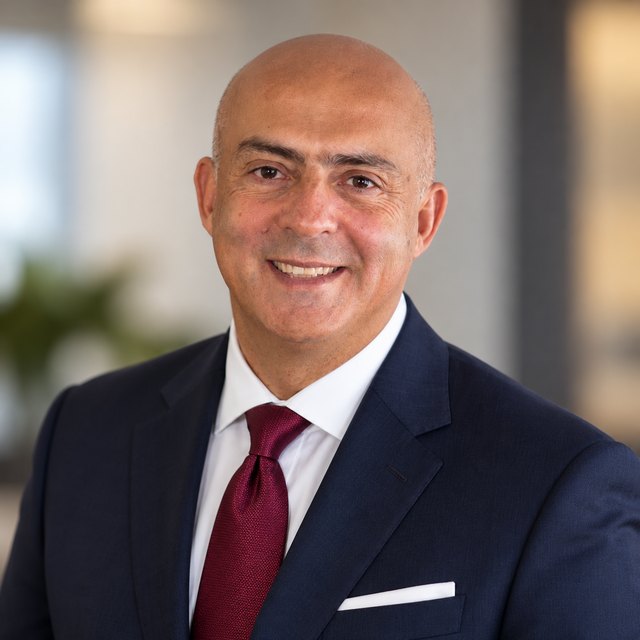
Jose Salloum is a Financial Security Advisor (conseiller en sécurité financière) certified by the Autorité des marchés financiers in Quebec, a Life and Accident & Sickness Insurance Agent licensed by the Financial Services Regulatory Authority of Ontario, and a Life Insurance Agent licensed by the Insurance Council of British Columbia. Licensed since 2001.
He has practised Infinite Banking since 2015 and founded Canadian Wealth Creation Centre Inc. in 2016. From 2020 to 2024 he was an IBC (Infinite Banking Concepts™) Authorized Practitioner of the Nelson Nash Institute, a private certification rather than a regulatory licence.
IBC Financial is the educational website of Canadian Wealth Creation Centre Inc., open to all Canadians. Services come only from Canadian Wealth Creation Centre Inc. Its representatives hold a licence in each province served: Quebec, Ontario, Alberta, British Columbia, Manitoba and New Brunswick. Jose Salloum's own licences cover Quebec, Ontario and British Columbia. This page is general education and not advice on any individual file.
Last reviewed 2026-09-29. By Jose Salloum, Financial Security Advisor in Quebec. In Ontario, Life and Accident & Sickness Insurance Agent. In British Columbia, Life Insurance Agent.