
How should a dentist finance the move from associate to practice owner in Canada?
Start by pricing the whole transition, not just the practice: the purchase, professional fees, working capital and a reserve for slower first months. Compare acquisition financing with the capital you have built as an associate, and protect your income before committing to long-term insurance funding. An existing participating whole life policy may provide life coverage and accessible cash value, but its early cash value may be too small to help much, and a policy loan from the insurer carries interest, possible tax consequences and risks.
What does a dentist actually buy when purchasing a practice?
A practice purchase can include equipment, goodwill and operating arrangements, but each part needs its own review before you decide how much to finance.
The chairs, imaging equipment, instruments, computers and supplies are the visible part of the purchase. Their condition matters. Ask what must be repaired or replaced soon, what is leased rather than owned, and whether the proposed price reflects those obligations. A purchase price that appears manageable can leave little room for an equipment replacement in the first year, and the equipment replacement cycle does not pause because the practice has just changed hands.
Goodwill is less visible. It may reflect the practice’s location, reputation, established patient relationships and ability to continue operating. It is not a guarantee that patients will stay or that past billings will continue. Review the financial records with an accountant who understands practice acquisitions, and ask what would happen if collections were lower than expected during the transition.
Patient records require particular care. Your lawyer should review the agreement and the applicable professional and privacy requirements for their custody, transfer and continued access. Also review how the seller will introduce the transition to patients and whether the seller will remain for any agreed period.
Confirm whether the lease can be assigned, whether the landlord’s consent is needed and what obligations come with the space. Understand the staff arrangements, compensation, accrued obligations and roles that keep the practice running. If you are buying into an existing practice rather than taking it over, you also need to know who will make decisions about staffing, equipment, distributions and a future partner’s exit.
The financing question is therefore broader than “Can I afford the price?” It is “Can I complete the purchase, keep the doors open, care for patients and meet my obligations if the transition takes longer than planned?” Build the answer from reviewed documents and a cash-flow plan, not from the seller’s headline asking price alone.
How do dental practice acquisition loans usually work in Canada?
where the structure usually goes wrong
Corporate-owned life insurance
- The company owns the contract and pays the premium
- Premiums are generally not deductible
- Corporate funding is not, by itself, a tax saving
- A death benefit it receives may credit the Capital Dividend Account
- Ownership and beneficiary structure is where it fails
An acquisition loan usually helps fund the purchase, while the lender examines whether the practice and the dentist can support repayment after closing.
A lender will commonly want financial statements and other records for the practice, details of the purchase agreement, information about you and a business plan. That plan should explain how you expect to operate the practice, what expenses you will take on, and how you will manage the transition from associate income to owner cash flow. Expect questions about your existing debts, available capital and the cash you will retain after the purchase.
The lender may also ask for a personal guarantee. That means a problem with the practice’s ability to pay can become a personal financial problem for you. Read the guarantee with your lawyer rather than treating it as a formality. Ask when it could be called on and whether its scope changes if you buy with a partner or through a corporation.
Life and disability insurance may be part of the lender’s requirements. The lender may want coverage assigned as security so that a death or disability does not leave the acquisition debt without a means of repayment. Ask exactly what coverage is required, how an assignment would work and what flexibility remains for your family. A lender’s requirement is one consideration; your household may need protection beyond the amount connected to the loan.
An acquisition loan is only one part of the funding plan. You may also need cash for legal and accounting work, changes to the premises, supplies and the period before collections settle into a dependable pattern. Do not assume the loan will cover every purchase-related cost or that access to credit is the same as cash held in reserve.
Before accepting financing, have your accountant test a less favourable first year: collections arrive more slowly, an employee leaves or equipment needs attention. Then ask the lender what happens if payments become difficult. Also ask what security it will take over the practice’s assets and whether the loan term depends on the remaining lease term, including renewals.
Why can the purchase year be a dentist’s highest-debt year?
frequently the same person, not always
Three roles inside one contract
- 01One contractAll three can differ. Only the policyholder changes it, subject to any irrevocable beneficiary.
- 02The policyholderOwns the contract and holds its rights, subject to any assignment.
- 03The insuredThe person whose life is covered.
- 04The beneficiaryReceives the death benefit.
The purchase year often brings a large new acquisition obligation before the practice has had time to generate cash under your ownership.
As an associate, you may have earned a substantial income without being responsible for the full cost of premises, payroll, equipment and financing. Ownership changes the timing of money coming in and going out. Staff and occupancy costs continue even when appointments are cancelled, collections are delayed or you are still establishing relationships with patients and the team.
The purchase can also coincide with other demands on your household’s cash. Existing education debt, a home loan, childcare costs or reduced income during the transition do not disappear because the practice needs money. If you use every available dollar at closing, a modest disruption can force you to rely on additional outside credit at a difficult moment.
That is why a first-year reserve deserves a separate line in the plan. Size it with your accountant using the actual practice expenses, the proposed financing payments and a cautious view of collections. Keep household needs in the calculation as well: the practice cannot be considered stable if meeting its bills leaves your family unable to meet theirs.
Debt at purchase is not automatically a sign of a poor decision. Many buyers use financing to acquire a practice rather than waiting until they can pay the full price in cash. The concern is a structure that leaves no room for a slow start. The more clearly you separate the purchase price, transition costs and reserve, the easier it is to judge whether the obligations fit. The same pattern appears when a professional joins an existing group, as described in a partnership buy-in and the year of highest debt.
What capital should I build while I am still an associate?
Build capital for a down payment and a first-year reserve before taking on commitments that depend on a future practice purchase.
Start with money you can use when the time comes. A down payment may reduce the amount you need from a lender, although some lenders will consider financing most or all of a purchase for a qualified buyer; ask what each written offer covers. A separate reserve can help cover early operating expenses without turning every delay in collections into a new borrowing decision. If you are considering a purchase with a partner, available capital can also give you more room to negotiate the timing and terms of a buy-in.
Capital changes your position even if you ultimately borrow. You can assess a practice without needing a particular lender approval to solve every gap in the plan. You can ask for repairs, a different closing timetable or clearer transition arrangements. You can also walk away if the records do not support the price. None of those choices requires a large sum by itself; together, they show why accessible capital matters, and why capitalization comes before use.
Keep your priorities in order. If cash flow is tight, disability insurance and suitable term life coverage generally come before funding a participating whole life policy. Your ability to earn as a dentist is central to both household expenses and a future acquisition plan. Address essential protection first, then keep enough liquid money for near-term needs. Long-term policy funding should come only from real surplus that you can commit without weakening those foundations, and after comparing it with other uses of that money, such as paying down debt, a TFSA or RRSP, or term coverage.
This approach connects to the financing idea behind The Infinite Banking Concept®, described by Nelson Nash in Becoming Your Own Banker® (2000). It is first a concept about financing, not merely a type of life insurance: the policy is a tool, and financing is the purpose. Nash’s premise is that a family’s need for financing is greater than its need for life insurance protection. When you buy something, you either pay interest to an outside lender or give up what the cash might otherwise have earned by paying cash. The aim is to think like a lender and, over years, build a financing system your family can use for its own needs. A wider view of how this applies across a dental career is set out in the overview for dentists.
Could a participating whole life policy help with both coverage and future financing?
the cycle a contract is used through
Funding, drawing and repaying
- 01Premium funds the contract on the agreed schedule
- 02Value accumulates under the terms of the contract
- 03The insurer advances against the cash value
- 04Interest accrues to the insurer while a balance stands
- 05Repayment restores the capacity that was used
A participating whole life policy started during the associate years could provide life coverage and later access to cash value, but it needs years of steady funding and must fit alongside more immediate priorities.
In Canada, the usual insurance tool for this approach is a participating whole life policy from a Canadian insurer. It is an insurance contract, not an investment. Its contract sets out guaranteed cash values. Participating dividends are possible, but dividends are never guaranteed. Cash value is generally small relative to premiums paid in the early years, when the policy is most costly to establish; the real costs of those years deserve a close look. If you do fund a policy, ask whether a waiver of premium rider suits your plan, since disability is a central risk for a practice owner.
Once sufficient cash value has built, the owner may be able to request a policy loan. This is an advance from the insurer, secured by the policy’s cash value. It is requested from the insurer rather than approved like an acquisition loan, but the insurer confirms the amount available under the contract and its rules, and an assignee’s consent may be needed. The owner plans repayments within the contract’s terms. Interest is paid to the insurer. The policy continues to be administered under its own terms; taking a loan does not make the cost of financing disappear.
For a dentist, a possible later use might be equipment or a partner buyout. Whether that makes sense depends on the amount available, the insurer’s terms, the policy’s existing obligations and the other ways of funding the expense. An unpaid loan and its interest reduce what beneficiaries receive at death. If the debt grows too large relative to the policy’s value, the policy can lapse. Review an in-force illustration and the loan terms before relying on cash value for a particular date or amount.
Canadian tax treatment also matters. A policy loan is a disposition under section 148 of the Income Tax Act: the amount above the policy’s adjusted cost basis immediately before the loan is included in income, as explained in when a policy loan becomes taxable. Repayment of an amount previously included in income can be deductible under paragraph 60(s) of the Income Tax Act, within its limits. Growth within the policy escapes annual taxation only while the policy continues to meet the exempt policy test in section 306 of the Income Tax Regulations. Have your accountant review the policy’s figures and proposed use rather than assuming every advance is tax-free. If the policy is held by a professional corporation, the analysis changes again, as discussed in the dental professional corporation and retained earnings.
This is a gradual financing strategy, not a substitute for acquisition credit or a cash reserve. Canadian Wealth Creation Centre Inc., the firm that provides the service and publishes the educational website IBC Financial, calls the destination Infinite Financial Sovereignty® (a registered trademark of Jose Salloum). It is a goal: over time, finance more ordinary needs through a family financing system, rely less on commercial lenders for ordinary purchases, remembering that a policy loan is itself a loan from the insurer, with interest. It is not a promised outcome of buying a policy.
Should my down payment and first-year reserve come from credit, savings or a policy loan?
four settled, then one question
What comes before any product
- 01Accessible cash for something unexpected
- 02High interest debt repaid before anything accumulates
- 03Protection verified by a needs analysis, not an assumption
- 04Capital, which has to exist before it can do anything
- 05Then where it is held, and how many jobs each dollar does
Compare each source by its cost, reliability under pressure and effect on the capital you will have after closing.
The down payment and the reserve do different jobs. Money committed at closing cannot also cover payroll during a slow month. Decide how much must remain accessible after the transaction, then check that each proposed source can actually provide funds when needed. In particular, cash value shown on a policy statement is not automatically the amount available as a policy loan.
| Source | Cost | If cash flow is tight | What it builds or preserves |
|---|---|---|---|
| Line of credit from an outside lender | Interest and any applicable lending costs, under the credit agreement | Required payments and credit terms still apply; continued access depends on the agreement | Preserves some cash at the outset, but adds an outside obligation |
| Cash savings | No loan interest; you give up what the spent cash might otherwise have earned | No payment is due on spent savings, but the cash is no longer available as a reserve | Reduces debt; future reserves must be rebuilt |
| Policy loan against an existing policy | Interest paid to the insurer; possible tax consequences depending on adjusted cost basis | The owner plans repayments within the insurer’s rules, but unpaid debt grows and can reduce the death benefit or lead to lapse | Leaves the policy in force under its terms if maintained, but creates debt secured by its cash value |
A line of credit from an outside lender can be useful for a temporary need, but do not treat an available limit as permanent cash. Read its terms and ask what could change if the practice performs poorly.
A policy loan is available only if you already have a suitable policy with enough accessible cash value. It should be compared with outside credit on its actual terms, never described as costless. If the policy’s life coverage has been assigned to an acquisition lender, discuss any proposed policy loan with the insurer and lender first. An assignment can affect what you may do with the policy.
You may use more than one source. The sounder combination is the one that lets you close, retain a workable reserve and meet your obligations during a slower start, without depending on dividends or optimistic collections.
What could a policy started five years before a practice purchase actually do?
After five years, an existing policy might help with one part of the transition, but its accessible cash value could still be far short of the purchase funding required.
Illustrative example only: Assume an associate has paid a total of $120,000 in premiums into a participating whole life policy over five years. At the planned purchase date, assume the policy shows $80,000 of cash value and, under this invented example’s policy terms, the insurer would permit a $55,000 policy loan. These are round figures for arithmetic, not a projection or a typical policy outcome. Actual premiums, cash values and available advances must come from the specific contract and insurer.
Assume the dentist needs $100,000 at closing and wants a separate $50,000 reserve for the first year. The practice acquisition itself will be financed separately. If the dentist has saved $120,000 in accessible cash, one possible plan is to put $100,000 toward closing and retain $20,000 in cash. A $30,000 policy loan could bring the reserve to $50,000: $20,000 cash plus $30,000 advanced by the insurer. That advance would use $30,000 of the $55,000 the insurer would permit, leaving $25,000 of loan capacity unused.
The arithmetic shows a possible role for an existing policy. It does not show that the policy paid for the practice or that all $80,000 of cash value was available without conditions. The $30,000 advance would accrue interest payable to the insurer. If left unpaid, the debt would reduce the death benefit and could contribute to lapse. Whether any of the advance is taxable depends on the policy’s adjusted cost basis at that time. Had the $120,000 of premiums stayed in savings instead, about $240,000 would be within reach before any growth, against $175,000 here: $120,000 of cash plus $55,000 of loan capacity. The policy adds life coverage and contract values; whether that trade is worth it depends on needing permanent coverage at all. The example also assumes $24,000 a year of premiums on top of separate savings; a smaller surplus shrinks every figure.
It also shows what the policy cannot fix. Without the $120,000 of separate savings in this example, the illustrated policy loan would not provide both the $100,000 needed at closing and the $50,000 reserve: the full $55,000 the insurer would permit covers just over a third of that $150,000. If the buyer needs life coverage assigned to a lender, an existing or proposed assignment may further limit the plan. And if cash flow after purchase cannot support the policy’s continuing premiums, using its cash value for a reserve may create another strain rather than solve one.
Run your own version with actual documents: the purchase budget, available savings, a current policy statement, the insurer’s loan terms and a cautious first-year cash-flow forecast. Write down, before closing, when and from which income the $30,000 (or your own figure) will be repaid, so the advance does not quietly become permanent.
What should I settle with my accountant and lawyer before buying?
Settle the purchase structure, insurance ownership and financing obligations together, because a decision in one area can restrict your choices in another.
Ask your accountant and lawyer to explain the difference between buying practice assets and buying shares in the entity that owns the practice. The agreement should make clear what transfers, which obligations you may take on and how the purchase structure affects your situation. If you are buying into a practice, have the ownership agreement address decision-making, additional capital needs, disability, death and how a partner’s interest could be bought out.
Discuss whether any participating whole life policy would be owned personally or by a corporation. Do not choose ownership solely because a lender asks for insurance or because you might want a policy loan later. Ownership affects who controls the policy, who can request an advance and how the coverage fits with family and practice needs. If a corporation owns the policy, the corporation is the borrower on any policy loan, and getting that money to you personally is a separate tax question. Your accountant should review the tax implications, and your lawyer should check how any lender assignment interacts with your intended use.
Ask the insurer and your insurance representative for the contract details before making a funding commitment. Identify the guaranteed cash values, the assumptions used for any dividend illustration, the premiums you must maintain and what happens if you borrow and do not repay promptly. Assuris protects eligible Canadian policyholders within limits if a member insurer fails, and it calculates that protection after policy loans; it is not a government guarantee.
Before closing, ask for and keep in writing:
- the amount the insurer will actually advance today, as distinct from the cash value on the statement;
- the current loan interest terms and how the insurer applies repayments;
- the policy’s current adjusted cost basis, and what part of a proposed advance would be included in income;
- whether an assignment to the acquisition lender limits a policy loan or a change of ownership;
- the premiums you must keep paying in the purchase year, and what happens if one is missed.
Be clear about who this approach does not suit. A dentist with uncertain income, inadequate disability protection, insufficient term coverage for family needs, little accessible cash or a purchase planned too soon for meaningful cash value should not strain their budget to start a long-term policy. It is also a poor fit for someone who cannot fund it steadily or would need to rely on possible dividends to make the plan work. The author is paid commissions by insurers when a policy is bought.
The useful test is not whether one product can be connected to a practice purchase. It is whether the complete plan protects your household, leaves enough cash for the first year and gives you financing choices you can sustain as an owner. The same questions come back later, when the practice is established and attention turns to a dentist’s retirement plan.
A thirty-minute discovery meeting
A first conversation establishes whether this fits. No illustration is prepared and nothing is arranged.
Often the answer is no, and you will hear it during the call rather than in a proposal afterwards.
This form reaches Canadian Wealth Creation Centre Inc. Any meeting, any advice and any insurance product is provided by Canadian Wealth Creation Centre Inc., through its representatives who are licensed in the client's province. IBC Financial is the company's educational website: it distributes no product and no financial service, and it gives no individualised advice.
Common questions
Can I use a policy loan for the down payment on a dental practice?
Will a lender require life and disability insurance when I buy a dental practice?
Is a policy loan tax-free in Canada?
How much cash should I keep after buying a dental practice?
Should I own a whole life policy personally or through my dental corporation?
Can I start a whole life policy shortly before buying a practice?
Sources
- Income Tax Act s.148, Justice Laws Canada, verified 2026-09-28
- Income Tax Act paragraph 60(s), Justice Laws Canada, verified 2026-09-28
- Income Tax Regulations, Regulation 306, Justice Laws Canada, verified 2026-09-28
- Assuris, Whole Life protection, net of policy loans, verified 2026-09-28
- Nelson Nash, Becoming Your Own Banker®, 2000, verified 2026-09-28
About the author
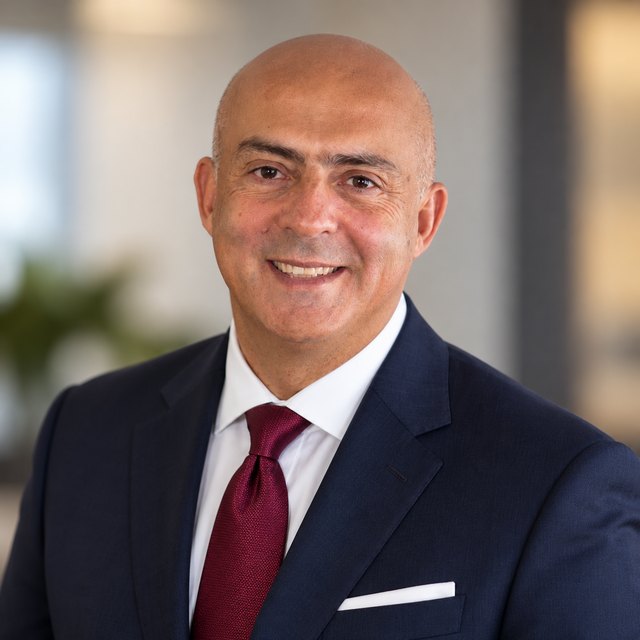
Jose Salloum is a Financial Security Advisor (conseiller en sécurité financière) certified by the Autorité des marchés financiers in Quebec, a Life and Accident & Sickness Insurance Agent licensed by the Financial Services Regulatory Authority of Ontario, and a Life Insurance Agent licensed by the Insurance Council of British Columbia. Licensed since 2001.
He has practised Infinite Banking since 2015 and founded Canadian Wealth Creation Centre Inc. in 2016. From 2020 to 2024 he was an IBC (Infinite Banking Concepts™) Authorized Practitioner of the Nelson Nash Institute, a private certification rather than a regulatory licence.
IBC Financial is the educational website of Canadian Wealth Creation Centre Inc., open to all Canadians. Services come only from Canadian Wealth Creation Centre Inc., in Quebec, Ontario, Alberta, British Columbia, Manitoba and New Brunswick. This page is general education and not advice on any individual file.
Last reviewed 2026-09-28. By Jose Salloum, Financial Security Advisor.