
How can a Canadian dentist plan retirement income without an employer pension?
A dentist without an employer pension can build retirement income from several sources: an RRSP, a TFSA, an individual pension plan where appropriate, corporate savings, a practice sale and public pensions. A participating whole life policy established years earlier may offer another way to access funds, but it is not a pension, and a policy loan can be taxable. Loans carry interest, tax and lapse risks. The plan must still work if the practice sells later, or for less, than expected.
Why do dentists often have to start retirement planning later?
Long training, education debt and the cost of establishing a practice can delay retirement saving just as a dentist’s income begins to rise.
A dentist’s early career places several demands on the same cash flow. There may be education debt to repay, a household to establish, equipment to purchase and a practice to buy or build. A dentist who acquires a practice in their thirties may carry business debt at the point when friends in other occupations have been saving for years. It means the plan has to begin with the dentist’s actual obligations rather than an assumed career timeline.
For a self-employed dentist, no employer is setting aside a pension contribution. An incorporated dentist may be employed by a professional corporation, but that does not make retirement funding automatic either. The dentist has to decide what to take out of the practice, what to leave in it and which sources will eventually pay household expenses.
Start by separating three questions. What must the practice earn to operate safely? What does the household need now? What can be set aside without relying on an uninterrupted run of strong practice income? A plan that answers only the last question may be too fragile to keep.
Debt deserves a place in this review, but not every debt calls for the same decision. A practice loan, equipment financing and personal debt can have different terms and purposes. Paying debt while building accessible reserves may be more useful than directing every available dollar to a long-term arrangement.
The dentist also needs protection against a loss of earning capacity. If illness or injury stops clinical work, the retirement plan may have to support the household much earlier than intended. Review disability coverage, life insurance needs, business obligations and an emergency reserve before committing to funding that must continue for many years; the page on disability and the capital plan sets out that order.
This is why retirement planning for a dentist is better understood as a sequence of decisions than as the purchase of a single product. Our companion guide on financing a dental career considers the earlier debt and practice decisions. Those decisions shape how much freedom a dentist has to save later.
What sources of retirement income can a Canadian dentist build?
a leveraged strategy, described as one
What an insured retirement plan depends on
- 01A participating contract funded heavily from the start
- 02The contract assigned to a lender as collateral
- 03A line of credit drawn during retirement
- 04The death benefit repays the lender at the end
- 05Everything depends on the lender continuing to lend
Most dentists need a combination of personal savings, corporate resources, possible practice-sale proceeds and public benefits rather than one source expected to do everything.
Each source has a different job. Some can provide accessible money before retirement. Others depend on withdrawal rules, the practice or eligibility. Seeing them side by side helps prevent a projected practice sale from hiding a shortfall in the rest of the plan.
| Possible source | What it may contribute | What to check |
|---|---|---|
| RRSP | A personal pool for retirement withdrawals | Available room, future tax on withdrawals and the effect of compensation choices |
| TFSA | Accessible funds with tax-free withdrawals under the account rules | Available room and whether accessible savings are needed for other goals |
| Individual pension plan | A defined benefit pension arrangement through an eligible corporation | Employment and compensation history, funding obligations, actuarial work and administration |
| Retained corporate earnings | Funds that may support later compensation or distributions | Corporate tax, personal tax when funds leave and the need for practice working capital |
| Practice sale | Possible proceeds from selling shares or practice assets | Buyer demand, sale structure, debt, taxes and timing |
| CPP or QPP and OAS | Public benefits for which the dentist qualifies | Contribution record, eligibility, timing and possible OAS recovery tax |
An RRSP depends in part on earned income and available deduction room. For an incorporated dentist, salary and dividends do not have the same effect on future RRSP room or Canada Pension Plan contributions. That makes the annual compensation decision part of retirement planning, not merely a question of the current tax bill. An accountant can compare the consequences using the dentist’s records rather than a generic rule.
A TFSA serves a different purpose. Its permitted withdrawals are tax-free, and it can be useful where the household values access to funds. An RRSP withdrawal, by contrast, is generally taxable. The plan needs to consider when the money may be needed.
An individual pension plan, or IPP, is a registered defined benefit arrangement that may be available through a professional corporation where the requirements are met. It involves formal administration and actuarial funding. It is not simply an RRSP with another name, and it may not suit a dentist whose corporate cash flow is uneven or whose retirement and sale dates are uncertain. The Canada Revenue Agency’s registered pension plans guide (T4099) describes the structure and its administrative obligations.
Retained earnings can give an incorporated dentist choices, but the money belongs to the corporation until it is properly paid out. A personal retirement budget cannot assume that the full corporate balance is available for household spending. Taxes, liabilities and the practice’s need for cash matter, as the page on the professional corporation and retained earnings explains.
Public benefits are another layer, not a substitute for examining household costs. Dentists who have worked in Quebec should review their Quebec Pension Plan record with Retraite Québec; elsewhere, review Canada Pension Plan entitlements with Service Canada. Old Age Security has its own eligibility rules, and higher income can trigger a recovery tax.
How does the timing of a dental practice sale change the plan?
different timelines, different failures
Two questions inside a succession plan
- A succession planThe two run on different timelines, and they fail in different ways.
- Who will lead the businessA plan covering only leadership leaves the harder one open.
- Who will own the businessThe ownership question is the one that is usually left open.
A practice sale is a possible funding event, but its timing, net proceeds and tax treatment cannot be treated as settled years in advance.
A dentist may picture selling the practice when clinical work ends. That can happen, but the household may need money before a buyer is ready, or the dentist may want to reduce hours before giving up ownership. Equipment condition, lease terms, staffing, the transfer of patient relationships and the buyer’s financing can all affect negotiations.
There is also a difference between a sale price and cash available for retirement. Outstanding practice debt may have to be repaid. Transaction costs and taxes may apply. If a sale involves shares, the tax questions differ from a sale of assets. Whether shares qualify for a capital gains deduction depends on statutory conditions and the corporation’s circumstances; it must not be assumed simply because the owner is a dentist. The page on selling the practice covers these questions, and the accountant and lawyer should review the proposed transaction before the sale process fixes its shape.
Think about the period on either side of the sale. If a dentist expects to stop full-time work before closing, which source pays household expenses in the meantime? If the sale occurs sooner than expected, will the dentist still want the same long-term insurance commitments? If it occurs later, what will cover living costs without forcing an unfavourable sale?
Corporate assets need particular attention. Accumulating funds inside a professional corporation can support future choices, but it can also affect sale planning. Ownership, beneficiary designations, lending arrangements and any proposed corporate reorganization should be reviewed together.
The useful exercise is to model more than one outcome. In one, the practice sells on the hoped-for date. In another, the sale is delayed while the dentist works fewer hours. In a third, net proceeds are lower than the household expected. It is to find out whether ordinary expenses can still be paid without depending on a particular buyer or a particular insurance-backed loan.
The doctor retirement plan guide discusses related decisions about professional corporations and retirement withdrawals. A dental practice, however, may also be an asset to sell, which changes the timing.
How does the financing concept Nelson Nash described fit a dentist’s retirement?
The concept is about financing throughout a career; a life insurance policy is a possible tool, not the concept itself or a replacement for a retirement plan.
The financing idea known as The Infinite Banking Concept® was set out by Nelson Nash in Becoming Your Own Banker® in 2000. His premise was that a family’s lifetime need for financing can be greater than its need for life insurance protection. Purchases are financed one way or another: an outside lender charges interest, or paying cash gives up what those funds could otherwise have earned. The policy is the tool; financing is the purpose.
For a dentist, the question starts well before retirement. Training, a practice purchase and repeated equipment purchases can create substantial financing needs. Thinking like a lender means examining the purpose, repayment plan and opportunity cost of each use of money. Over years, a household may build its own financing system, use it for appropriate purchases and reduce its reliance on outside lenders for ordinary purchases. That is a direction for planning, not an instruction to take on more debt.
In Canada, the usual insurance tool considered for this approach is a participating whole life policy from a Canadian insurer. It has guaranteed cash values specified by the contract. It may receive participating dividends, but dividends are never guaranteed. The contract continues to be administered under its own terms when the owner obtains an available policy loan; receiving a loan does not erase premiums or other obligations.
The value of the concept is not that every purchase must be financed through a policy. A dentist still compares available cash, outside credit, borrowing costs and the effect on household reserves. A policy may eventually add another choice, but only after capitalization comes before use: it must be established and funded for years. It should not be bought on the assumption that it will quickly finance a practice or provide a dependable retirement cheque.
Canadian Wealth Creation Centre Inc., which provides the service and publishes the educational website IBC Financial, calls the long-term goal of reducing and eventually ending reliance on outside lenders for ordinary purchases Infinite Financial Sovereignty® (a registered trademark of Jose Salloum). It is a goal, never a promise. A dentist’s progress toward it depends on cash flow, discipline, health, policy terms and choices made over many years.
How could an existing whole life policy provide funds in retirement?
four rules that are frequently mixed up
Tax when a benefit is paid on death
- 01A life insurance benefit reaches a named beneficiary untaxed
- 02The public pension death benefit is taxable to the recipient
- 03Employer death benefits are exempt up to a stated limit
- 04Canada has no estate tax
- 05The deemed disposition at death can still be large
A policy established and funded years earlier may support an advance from its insurer or secure a separate loan from an outside lender, but both routes create debt that must be managed.
With a policy loan, the insurer advances money to the policyholder under the contract’s terms, secured by the policy’s cash value. An available contractual policy loan does not require a separate credit application. The owner can generally choose a repayment pattern within the contract terms, but interest is owed to the insurer. Unpaid interest can be added to the balance. The insurer deducts an outstanding balance from what would otherwise be payable on death.
A collateral loan is different. An outside lender makes the loan, using an assignment of the policy as security; arrangements of this kind are sometimes described as an insured retirement plan. The lender sets its own conditions. Approval, continued access, the amount available and the terms of repayment are not guaranteed. The lender may also have rights to insurance proceeds when the insured person dies.
In either case, people sometimes plan for the death benefit to repay the outstanding debt. That can be part of a documented arrangement, but it is not costless retirement income. Interest may accrue for years, leaving less for beneficiaries. If borrowing grows too large relative to the available value, the arrangement can come under pressure while the dentist is alive.
Illustrative arithmetic only: Suppose an established policy has a death benefit of $500,000 at the time of death and an insurer policy loan balance, including unpaid interest, of $90,000. Ignoring any other contract adjustments, $500,000 less $90,000 leaves $410,000 for the beneficiary. These figures are invented solely to show subtraction. They are not a projection, an available loan amount or a statement about any policy’s future death benefit.
The example also shows why the annual statement matters. The dentist needs the current cash value, loan balance, interest charges and death benefit, not just an illustration prepared when the policy was purchased. Any plan that assumes indefinite borrowing should also test what happens if interest is not paid, dividends are lower than illustrated or the household needs more funds than expected.
A loan is a way to obtain funds, not a pension payment. Before using one for routine retirement spending, identify which household expense it would cover, when it would be drawn and how the growing balance would be reviewed. Compare it with drawing from the TFSA, RRSP or corporation.
Are policy loans taxable retirement income in Canada?
the shelter holds while the policy stays exempt
What exempt status does and does not do
- 01What the exemption givesNo annual tax on increases in cash value while the policy stays exempt (section 12.2 and Regulation 306); A death benefit that is not taxed as policy income.
- 02What it does not giveProtection from tax on a surrender, a lapse, or a policy loan above the adjusted cost basis; Protection if the policy stops being exempt.
They can be: a Canadian policy loan can produce taxable income, and a collateral loan raises different tax questions and lending risks.
Under section 148 of the Income Tax Act, a policy loan from the insurer is a disposition of an interest in the policy. To the extent the proceeds exceed the policy’s adjusted cost basis immediately before the disposition, the excess is included in the policyholder’s income. The adjusted cost basis is a tax calculation, not simply the sum of premiums paid. It changes over the life of a policy, so an advance that caused no income inclusion at one time cannot safely be assumed to have the same treatment later.
Where a policy loan amount was previously included in income, repayment may give rise to a deduction under paragraph 60(s) of the Income Tax Act, subject to its rules. That possibility does not remove the tax on the original advance. Ask the insurer for the current adjusted cost basis and give the figures to the accountant before requesting a loan; the page on when a policy loan becomes taxable walks through the calculation.
A collateral loan from an outside lender is a different transaction from an insurer policy loan, and it should not be assumed to share its tax treatment. What happens if the policy is surrendered, transferred, lapses or pays a death benefit depends on the ownership, documents and events involved, and the accountant should review each of those outcomes. If a corporation owns the policy, the dentist must also consider how borrowed funds could properly reach the household and what tax would apply then.
The policy’s internal tax treatment has a condition too. Its growth remains sheltered under the life insurance rules only while it qualifies as an exempt policy under section 306 of the Income Tax Regulations. Neither that status nor an early advance that produced no income inclusion makes a borrowing plan untaxed income; the page on retirement income from a contract and the word tax-free explains why that label does not fit.
Finally, a policy can lapse if its obligations are not maintained and debt and interest consume the available value. A lapse can have tax consequences even when the dentist receives no new cash to pay them. For these reasons, tax review belongs before borrowing, and a plan needs an approach for monitoring both the debt and the policy.
What are the drawbacks of using participating whole life insurance for retirement flexibility?
The main drawbacks are substantial early costs, years of required funding, uncertain dividends, borrowing costs and the possibility that debt undermines both coverage and the retirement plan.
Participating whole life insurance is life insurance. It is not an investment, and it is not a substitute for the RRSP, TFSA or other sources a dentist may need. Its guaranteed cash values are set out in the contract; amounts attributed to future participating dividends are not guaranteed. Early cash value may be much less than the premiums paid, as the page on the real costs shows. That is especially important for a dentist still repaying education or practice debt.
Steady funding matters. If premiums compete with payroll, essential equipment, household expenses or an emergency reserve, the arrangement may become a burden instead of a source of flexibility. Read the policy’s guaranteed figures separately from dividend illustrations and ask what happens under less favourable conditions.
Borrowing adds another layer. Interest paid on an insurer policy loan goes to the insurer; interest on a collateral loan goes to the outside lender. In either arrangement, unpaid interest can compound. A collateral lender can change what it is willing to offer under its agreement, and a new loan application may be refused. An outstanding insurer loan reduces the death benefit available to beneficiaries. A collateral assignment may direct proceeds to the lender first. The page on risks and failure modes lists how such arrangements break down.
It is worth asking whether the policy is needed for protection as well as financing. If there is little need for permanent life insurance and the household mainly needs accessible funds, another approach may be more suitable. The design also needs to fit the dentist’s province, professional corporation and estate documents.
Assuris protects eligible Canadian policyholders within its limits if a member insurer fails, and it calculates that protection after policy loans. Assuris is an independent, industry-funded organization, not a government guarantee. Contractual guarantees still depend on the insurer meeting its obligations, subject to that protection.
This approach does not suit a dentist starting late with no spare cash flow. It is also poorly matched to someone who expects to need every available dollar within the next ten years.
The author is paid commissions by insurers when a policy is bought. That gives readers a reason to compare an insurance proposal with simpler ways to meet the same household need.
What should an incorporated dentist ask their accountant and lawyer before retiring?
Ask them to connect the household income plan, the practice sale, the professional corporation and any policy ownership or borrowing documents before committing to a withdrawal strategy.
Bring the same set of records to both conversations: household spending needs, practice debt, corporate financial statements, RRSP and TFSA information, public benefit estimates, insurance contracts and any preliminary sale proposal. A useful plan shows where cash comes from in each stage: while clinical work continues, during any reduction in hours, between stopping work and selling, and after a sale.
Ask the accountant:
- How do salary and dividends today affect RRSP room, CPP or QPP contributions and the corporation’s cash needs?
- Does an individual pension plan fit the dentist’s employment history and ability to meet its funding and administrative obligations?
- How much of the corporation’s retained earnings could be distributed for household use after relevant taxes and obligations?
- What changes if the practice is sold through an asset sale rather than a share sale? Could the shares qualify for a capital gains deduction, and what must be checked well before a sale?
- If there is a personally or corporately owned policy, what is its current adjusted cost basis? How would a proposed policy loan, a later repayment, a transfer or a lapse be treated?
- If the corporation receives loan proceeds, how could it provide funds to the dentist, and what would happen for tax purposes?
- How should taxable withdrawals be coordinated with OAS recovery tax and other retirement income?
Ask the lawyer:
- Who should own the policy, who should be its beneficiary and do those choices still work if the practice is sold?
- Would an insurer loan or collateral assignment conflict with existing practice financing or other security arrangements?
- What rights would an outside lender have to the death benefit, and what happens if lending terms change?
- Do the will, powers of attorney, corporate records and any shareholders’ agreement reflect the intended outcome?
- Would a proposed policy transfer or corporate reorganization require further tax analysis before documents are signed?
Personal and corporate ownership lead to different routes for funds and death proceeds. A corporation-owned policy does not turn a corporate loan into personal spending money without further steps. At death, insurance proceeds received by a private corporation may affect its capital dividend account, but the calculation and any payment to shareholders require proper review and documentation.
The aim is a plan that remains usable when circumstances change. If the accountant’s figures require a prompt practice sale and the lawyer’s documents assume continued ownership, the work is not finished. If projected retirement spending depends on a lender approving future advances, show that dependence plainly. A dentist can then decide what to change while there is still time and cash flow to do so.
A thirty-minute discovery meeting
A first conversation establishes whether this fits. No illustration is prepared and nothing is arranged.
Often the answer is no, and you will hear it during the call rather than in a proposal afterwards.
This form reaches Canadian Wealth Creation Centre Inc. Any meeting, any advice and any insurance product is provided by Canadian Wealth Creation Centre Inc., through its representatives who are licensed in the client's province. IBC Financial is the company's educational website: it distributes no product and no financial service, and it gives no individualised advice.
Common questions
Can a self-employed dentist retire without a workplace pension?
Should an incorporated dentist pay salary or dividends for retirement planning?
Is an individual pension plan available to a dentist with a professional corporation?
Can a dentist use a whole life policy to supplement retirement cash flow?
Is a Canadian life insurance policy loan taxable?
What happens to the debt when the dentist dies?
Sources
- Income Tax Act s.148, Justice Laws Canada, verified 2026-09-28
- Income Tax Act paragraph 60(s), Justice Laws Canada, verified 2026-09-28
- Income Tax Regulations, Regulation 306, Justice Laws Canada, verified 2026-09-28
- Assuris, Whole Life protection, net of policy loans, verified 2026-09-28
- Canada Revenue Agency, Registered Pension Plans Guide (T4099), verified 2026-09-28
- Retraite Québec and Service Canada, public pension information, verified 2026-09-28
- Nelson Nash, Becoming Your Own Banker®, 2000, verified 2026-09-28
About the author
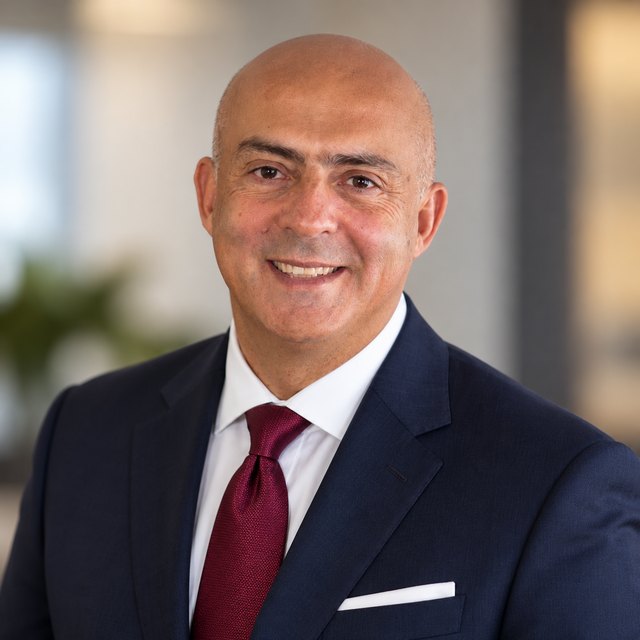
Jose Salloum is a Financial Security Advisor (conseiller en sécurité financière) certified by the Autorité des marchés financiers in Quebec, a Life and Accident & Sickness Insurance Agent licensed by the Financial Services Regulatory Authority of Ontario, and a Life Insurance Agent licensed by the Insurance Council of British Columbia. Licensed since 2001.
He has practised Infinite Banking since 2015 and founded Canadian Wealth Creation Centre Inc. in 2016. From 2020 to 2024 he was an IBC (Infinite Banking Concepts™) Authorized Practitioner of the Nelson Nash Institute, a private certification rather than a regulatory licence.
IBC Financial is the educational website of Canadian Wealth Creation Centre Inc., open to all Canadians. Services come only from Canadian Wealth Creation Centre Inc., in Quebec, Ontario, Alberta, British Columbia, Manitoba and New Brunswick. This page is general education and not advice on any individual file.
Last reviewed 2026-09-28. By Jose Salloum, Financial Security Advisor.