Business Owners Retirement Plan
A business owner has no pension and no employer match, and usually holds most of their wealth in one illiquid asset. Retirement planning therefore has two halves that are really one: building assets outside the business, and arranging an exit that converts the business into money. Planning only the second is the common failure.
A business owner has no pension, no employer match and no payroll deduction quietly building something in the background.
They usually hold most of their wealth in a single illiquid asset that depends on their continued presence.
Retirement planning therefore has two halves that are really one plan: building assets outside the business, and arranging an exit that turns the business into money. Planning only the second is where most owners get into difficulty.
Why it is different from employee retirement planning
No pension, and no match. Nothing accumulates unless the owner arranges it.
Income is variable, which makes consistent contribution harder in exactly the years it matters most.
Most of the net worth is in one asset, undiversified, illiquid, and tied to a single industry and often a single location, which is the same concentration a property investor carries in a different asset.
The asset depends on the owner. A business that cannot operate without its founder is worth considerably less than one that can, and frequently unsaleable.
There is a deadline that is not a birthday. An employee retires when they choose. An owner retires when a buyer appears, which is not the same thing.
And the CPP question is a choice and not a given. An owner paying salary contributes and accrues. One paying only dividends contributes nothing and accrues nothing. That trade is often made for good short-term reasons, without the retirement consequence being calculated.
The vehicles available
RRSP. Requires salary, because contribution room comes from earned income. An owner paying only dividends creates no room. The deduction is valuable at high marginal rates.
TFSA. Available regardless of how the owner is paid, tax-free on withdrawal, fully liquid. For most owners it should be filled every year before anything more elaborate is considered.
Corporate retained earnings. Income taxed at corporate rates and retained defers the personal tax until distribution. Money invested inside the company is a different matter: passive investment income is taxed at high rates annually and, beyond a threshold, reduces access to the small business deduction on active income. A company accumulating investments can therefore raise the tax on its operating profits, which is the point owners are least often told.
Individual Pension Plan. A defined benefit arrangement for an owner, allowing larger deductible contributions than an RRSP at older ages, with actuarial and administrative cost attached.
Corporate-owned permanent insurance, where growth inside an exempt contract is not passive investment income while the contract remains exempt. That is a specific technical point and not a general argument, and it is set out with insurance and capital for Canadian business owners.
Most owners use several. The mix depends on the marginal rates, how the owner is paid, and how close the exit is.
The figures, and why they need checking
different taxation, different timing
Where retirement income comes from
- 01Government benefits
- 02Registered plans
- 03Savings held outside a registered plan
- 04Employer plans, where there is one
- 05A business or a property, for many households
Several amounts govern this planning and every one of them moves.
The lifetime capital gains exemption shelters capital gains on qualifying small business corporation shares. It was $1,250,000 for 2025 and is indexed annually. The qualification conditions are strict and concern the composition of the company's assets over the period before the sale.
The capital gains inclusion rate was confirmed at one half following the cancellation of the previously proposed increase.
RRSP room is eighteen percent of prior-year earned income to an annual dollar maximum that is indexed.
An Employee Ownership Trust exemption was introduced for qualifying sales, with its own conditions and its own limit.
To be accurate about it. Every figure above carries the year it applied to and none was independently verified for this page. They change annually, some change by legislation, and a figure quoted from a website is not a basis for a transaction. Confirm each with your accountant or against CRA before relying on it.**
The exit is the funding event
For most owners, the largest single retirement contribution is the sale.
Sale to a third party. The highest price where the business is genuinely transferable. Requires the company to run without the owner.
Sale to family. Emotionally simpler, financially more complex, and the tax rules for intergenerational transfers have specific conditions.
Sale to employees or management, frequently vendor-financed, meaning the owner's retirement income depends on the business continuing to perform under new management.
Sale to an Employee Ownership Trust, a newer route with its own tax treatment.
Winding down. Realistic for many service businesses whose value is the owner, and it produces far less than an owner expects.
Each has a different tax outcome, and the gap between the most and least efficient structure on the same business is frequently larger than a decade of retirement saving.
What happens when the sale does not arrive
The scenario that should shape the plan and rarely does.
Most businesses that go to market do not sell at the price or on the timing the owner expected, and a substantial proportion do not sell at all.
The reasons are ordinary. The owner is the business. The customer base is concentrated. The financials are not clean enough to survive diligence. The industry has moved. The owner's health forced the timing.
And the consequence is severe where the plan assumed the proceeds. An owner of sixty-eight with a business that will not sell, no registered savings and no pension has very few options remaining.
Which is the argument for building outside the business. Not because the business will fail, but because a retirement that depends entirely on one uncertain transaction is not a plan, it is a hope with a spreadsheet attached.
A useful test. If the business were worth nothing tomorrow, what would retirement look like? If the answer is nothing, the concentration is the problem to address first, before any product is considered.
Making the business saleable
Worth its own section, because it is retirement planning even though it does not look like it.
Reduce dependence on the owner. Documented processes, a management team, and relationships that belong to the company and not to one person.
Clean the financials. Several years of statements that will survive diligence, with personal expenses out of the company.
Diversify the customer base. Concentration is the discount a buyer applies most readily.
Get the structure right early. Qualifying for the capital gains exemption depends on the composition of the company's assets over the period before a sale, so a balance sheet full of investments can disqualify shares that would otherwise have qualified. This cannot be fixed the month before closing.
Start years ahead. Every item above takes time, and the owner who begins when a buyer appears has left the value on the table.
Government benefits
five steps, and you may stop at any of them
From first conversation to a contract in force
- 01A thirty minute discovery meeting, with no products
- 02The suitability record a licence requires before advice
- 03A design meeting, guarantees shown separately
- 04Application and underwriting, decided by the insurer
- 05An annual review once the contract is in force
CPP, based on contributions, which depend on salary having been paid.
Old Age Security, based on residency and not contributions, subject to a recovery tax above an income threshold. Sale proceeds in one year can trigger that recovery, which is a timing consideration and not a reason to avoid the sale.
Guaranteed Income Supplement, income-tested, and unlikely to apply where a business has been sold.
Neither CPP nor OAS is designed to carry a household, and for an owner accustomed to a business income they replace very little.
When to start
Registered contributions: now, every year, regardless of how far away retirement is.
Exit planning: at least five years out, and preferably ten. The structural work does not compress.
Insurance: while insurable. Health is the one input nobody controls and it tends to change at the least convenient time.
Succession conversations: before they are urgent. Family and management transitions arranged under pressure produce worse outcomes for everyone involved.
How an owner is paid, and why it decides so much
Salary against dividends is treated as a tax question and it is equally a retirement question.
Salary creates RRSP room. Eighteen percent of earned income, which is where that room comes from. An owner paying only dividends creates none, and the room forgone in a given year cannot be recovered later.
Salary builds CPP, with the owner paying both the employee and employer portions. Dividends build nothing.
Salary is deductible to the company, reducing corporate income.
Dividends avoid the payroll contributions and are paid from after-tax corporate income, which is where the integration principle operates: the combined corporate and personal tax is designed to approximate what the same income would have borne personally.
Most owners use a mix, and the proportions are usually set once and rarely revisited even as circumstances change.
The point for retirement is simple. A decade of dividend-only compensation is a decade of no RRSP room and no CPP accrual. That may still be the right answer, and it should be a decision and not a default.
The passive income problem, stated plainly
if one is missing, look again
Four things required before anything else
- 01Durable surplus cash flow, in an ordinary year
- 02A horizon measured in decades rather than years
- 03A place in the household's wider position
- 04A clear purpose for the contract itself
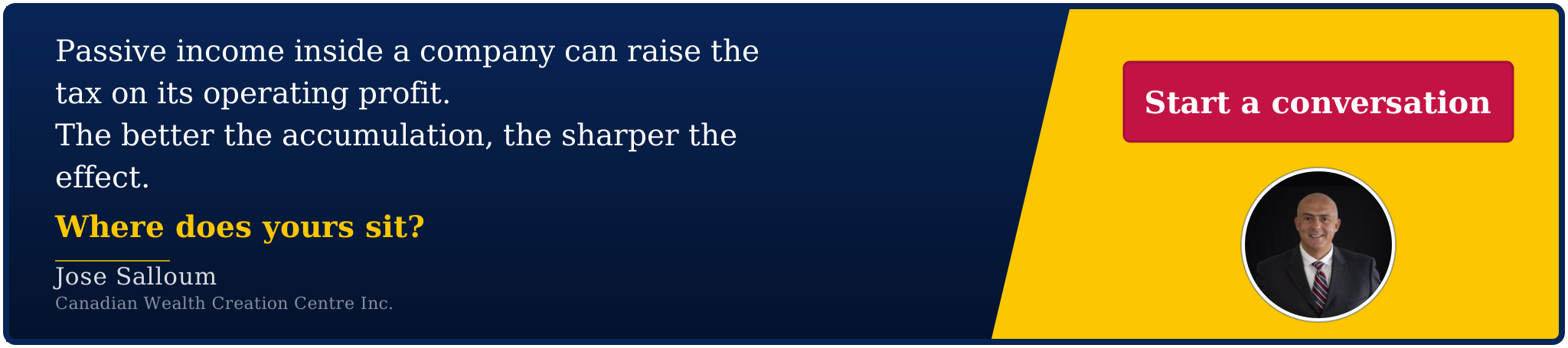
The rule that catches successful owners who did everything else correctly.
Active business income up to the small business limit is taxed at a low rate, which is what makes retaining earnings attractive.
But passive investment income earned inside the company reduces access to that low rate, on a sliding scale beyond a threshold, until it is eliminated entirely.
The consequence. A company that has retained profits successfully for years, and invested them, can find the tax on its operating income rising as a result. The better the accumulation has gone, the sharper the effect.
Three ordinary responses, each with trade-offs an accountant should price.
Pay more out personally and invest outside the company, accepting the personal tax now.
Use a holding company structure, which addresses creditor exposure and does not by itself solve the passive income issue.
Hold assets whose growth is not passive investment income, which is the technical basis on which corporate-owned exempt insurance is proposed. It is a narrow point and not a general argument, and it belongs with an accountant who has done it before.
What matters here is that the problem is real and it is arithmetic. An owner planning to retire on retained corporate investments should know how the rule affects them before the accumulation is large enough to matter.
A sequence that works for most owners
Not advice, and an order that is defensible in most circumstances.
Fill the TFSA every year. Tax-free, liquid, available regardless of how you are paid, and almost always the first place surplus money should go.
Pay enough salary to generate RRSP room, where the marginal rates make the deduction worthwhile, and use the room.
Address the concentration. Assets outside the business, so retirement does not depend on one transaction.
Then consider corporate accumulation, with the passive income rules understood and modelled.
Then consider an Individual Pension Plan or corporate insurance, where the capacity exists and the need is genuine.
And run the exit planning alongside all of it, from at least five years out, because the structural work cannot be compressed into the year a buyer appears.
Anyone proposing the last item before the first four has reversed the sequence, and reversing it is common because the later items generate commissions and the earlier ones do not.
That is worth saying on a page published by a practice that earns from the later items. A reader who fills their TFSA, uses their RRSP room, and builds assets outside the business has done the work that matters most, and this practice earns nothing from any of it.
Incorporated professionals face a related but distinct version of this, set out on doctor retirement plan.
The three-legged position most owners hold
An owner's retirement rests on three assets and they behave very differently.
The business. Illiquid, undiversified, dependent on the owner, and worth whatever a buyer will pay on the day and not what a formula suggests.
Retained corporate investments. Liquid, and subject to the passive income rules that can raise the tax on operating profit as they grow.
Personal registered and non-registered savings. Liquid, diversified, and usually the smallest of the three because surplus went into the business.
The imbalance is the risk. Most owners hold too much of the first and too little of the third, and the first is the one that may not convert.
Rebalancing takes years and costs tax. Which is why it is a planning decision made a decade out and not a reaction at the point of sale.
What to do in each decade
Thirties and forties. Establish the compensation mix deliberately, use registered room, and insure the income. The habits set here are the ones that persist.
Fifties. Model the passive income position, test whether the shares would qualify for the exemption today, and begin the transferability work.
Sixties. Decide the exit route, stage the tax, and plan the transition and not the transaction.
And at every stage, hold assets outside the business, because a retirement resting on one uncertain sale is not a plan.
The question to answer before any of it
the cycle a contract is used through
Funding, drawing and repaying
- Premium funds the contract on the agreed schedule
- Value accumulates under the terms of the contract
- The insurer advances against the cash value
- Interest accrues to the insurer while a balance stands
- Repayment restores the capacity that was used
If the business were worth nothing tomorrow, what would retirement look like?
If the answer is nothing, the concentration is the problem, and it is the problem to address before any product is considered.
If the answer is modest but survivable, the planning is working and the business becomes upside and not the foundation.
The first step
Establish what the business would actually sell for, from somebody who values businesses and not from an assumption.
Most owners have never had it done, and the figure decides whether the rest of the plan is realistic or aspirational.
And the second step
Build something outside the business, whatever the valuation says.
A retirement resting on one transaction is not diversified by optimism.
Both steps cost a meeting each. Neither generates a commission, and together they decide whether anything else on this page is worth reading.
An owner who knows the valuation and holds assets outside the business has a retirement. One who knows neither has a business and an intention, and the two are not the same thing.
Start with the valuation.
What this page will not do
It will not tell you which vehicles to use.
That depends on how you are paid, your marginal rates now and later, the passive income position of your company, how close the exit is and what form it will take. Those questions belong to an accountant who has your figures, working with a legal advisor on the structure.
This practice is licensed to advise on insurance, which is one component among several here, and it is stated on the author page that the compensation arrives when a contract is issued. Slow decisions age better than fast ones.
The corporate structures behind all of this are in business owners, and the wider retirement context is in retirement planning.
A thirty-minute discovery meeting
A first conversation establishes whether this fits. No illustration is prepared and nothing is arranged.
Often the answer is no, and you will hear it during the call rather than in a proposal afterwards.
This form reaches Canadian Wealth Creation Centre Inc. Any meeting, any advice and any insurance product is provided by Canadian Wealth Creation Centre Inc., through its representatives who are licensed in the client's province. IBC Financial is the company's educational website: it distributes no product and no financial service, and it gives no individualised advice.
Common questions
Should I use an RRSP or leave money in the corporation?
Will selling my business fund my retirement?
What is the lifetime capital gains exemption?
Do business owners get CPP?
When should I start planning the exit?
How do you retire as a business owner?
What are the tax advantages available to a business owner?
What are the contribution limits for a business owner?
Which retirement vehicles work for a business owner?
Which options give a business owner investment flexibility?
What government benefits does a business owner receive at retirement?
How does succession planning affect a business owner's retirement plan?
How can a business owner use The Infinite Banking Concept® in retirement planning?
What is the passive income rule for a corporation?
How do I find out what my business is actually worth?
Does a Quebec corporation change anything?
Sources
- Income Tax Act, lifetime capital gains exemption provisions, Justice Laws Canada, verified 2026-08-21
About the author
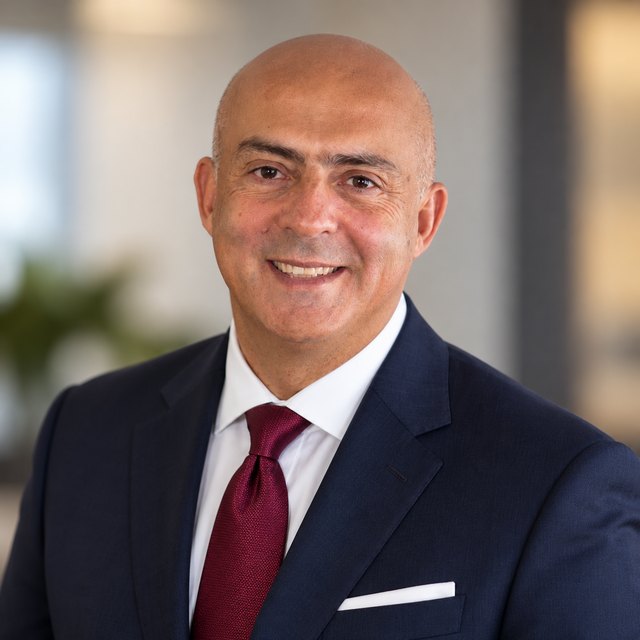
Jose Salloum is a Financial Security Advisor (conseiller en sécurité financière) certified by the Autorité des marchés financiers in Quebec, a Life and Accident & Sickness Insurance Agent licensed by the Financial Services Regulatory Authority of Ontario, and a Life Insurance Agent licensed by the Insurance Council of British Columbia. Licensed since 2001.
He has practised Infinite Banking since 2015 and founded Canadian Wealth Creation Centre Inc. in 2016. From 2020 to 2024 he was an IBC (Infinite Banking Concepts™) Authorized Practitioner of the Nelson Nash Institute, a private certification rather than a regulatory licence.
IBC Financial is the educational website of Canadian Wealth Creation Centre Inc., open to all Canadians. Services come only from Canadian Wealth Creation Centre Inc. Its representatives hold a licence in each province served: Quebec, Ontario, Alberta, British Columbia, Manitoba and New Brunswick. Jose Salloum's own licences cover Quebec, Ontario and British Columbia. This page is general education and not advice on any individual file.
Last reviewed 2026-08-21. By Jose Salloum, Financial Security Advisor in Quebec. In Ontario, Life and Accident & Sickness Insurance Agent. In British Columbia, Life Insurance Agent.