
Veterinarians and What the Practice Is Worth to Anybody Else
A veterinary owner spends a career building something whose value is decided by people who are not in the room: an associate who may not be able to fund a purchase, a consolidator whose offer is shaped by earnings and by the veterinarian's willingness to stay, or nobody at all. A veterinary practice is generally harder to sell than a dental one, because the buyer pool is thinner, the earnings after paying a replacement veterinarian are the number a purchaser actually prices, and a practice built around one person's relationships transfers badly. This page sets out what that means for an exit, what has to exist if the practice turns out to be worth less than the owner assumed, and which of those questions belong to an accountant and a lawyer rather than to an insurance advisor. Canadian Wealth Creation Centre Inc. publishes it as education rather than as advice on any particular practice.
A veterinarian spends thirty years building a practice, then finds its value is decided by people who are not in the room.
An associate who may not be able to fund a purchase. A group that buys practices on a formula. Or, in some places, nobody.
This page is about that number, and about what has to exist if it is smaller than the assumption a career was built on.
What the practice is worth to somebody other than its owner
Not what it cost to build, and not what it produces for the person who built it. A purchaser buys earnings that continue after the transaction and relationships that survive it.
The number a buyer prices is the earnings after paying somebody to do the owner's clinical work. Where the owner is also the most productive veterinarian, that subtraction is large, and it is where most owners first see that their income and their business value are different things.
Everything else adjusts around that. The lease and its term, the condition of the equipment, whether the premises are owned personally, the depth of the associate team, and how much of the client base follows a person and not a place.
Two practices with the same revenue can be worth materially different amounts. That is not a market failure. It is the market pricing a risk the owner has carried without noticing, because while the owner is there the risk never shows up.
Why it is harder to sell than a dental practice
Here is what actually happens. The buyer pool is thinner, and that is the largest single reason. Fewer new graduates arrive with the earnings to service acquisition debt at the size an established practice commands, and a purchase that cannot be financed is not a purchase.
Production is harder to separate from the owner. In many practices the founder is the veterinarian clients ask for by name and whose judgement the staff defers to. Goodwill of that kind is real, valuable, and it does not transfer.
The premises complicate the deal. Where the building is owned personally a sale becomes two transactions negotiated together, and where it is leased the remaining term becomes part of the price.
And the alternatives are fewer. In a large city there may be several plausible purchasers. In a smaller one there may be a consolidator, one local colleague, or nobody, and an owner who has not tested which is true has assumed an answer.
The associate buy-in, and who funds it
a notional account, not a bank balance
The Capital Dividend Account
- 01A notional tax account of a private Canadian corporation
- 02It records amounts the corporation received without tax
- 03A death benefit it receives, less the adjusted cost basis, may credit it
- 04Available balances may be paid out as capital dividends
- 05The credit depends entirely on the ownership structure
Almost never out of savings, and that single fact decides the shape of most of these transactions.
A younger veterinarian usually arrives with education debt and without the equity a lender wants to see. The purchase is then funded by a lender against the practice, by the retiring owner accepting payment over time, or by some combination, and each puts a different party at risk of loss.
Vendor financing moves the risk onto the person leaving. The retiring owner is not paid at closing, and is relying on a practice continuing to perform under somebody else while no longer being there to make sure it does.
That is a decision about risk and not about price, and it is routinely treated as a payment term. It belongs with a lawyer and an accountant before terms are discussed.
What a consolidator changes about the number
Groups that acquire veterinary practices have changed the market in much of the country, and pretending otherwise does an owner no favours.
They price on normalised earnings and not on revenue. The calculation substitutes a market rate salary for the owner's clinical work, adjusts for items a purchaser would not repeat, and prices what is left. An owner who has been paying themselves in whatever way suited the year often does not recognise the result.
The structure is frequently not a single cash payment. Part may be deferred, part contingent on the practice performing after the sale, part paid in shares of the acquiring group, and the veterinarian may be asked to stay for a defined period. Each is negotiable and each has a tax character of its own.
None of this is an argument for or against selling to one. It is an argument for understanding the shape of an offer before it arrives, because an owner reading these terms under a deadline negotiates from the weaker position.
The owner whose identity is the work
Most veterinary owners did not want a business. They wanted the work, and the business arrived attached to it, which is different from having chosen it.
That shows up in the way the practice is run. Fees held below what the economics require because a long standing client is struggling. Hours no manager would schedule. Equipment bought because it improves the medicine and not because it pays for itself. Each decision is defensible and several are admirable.
It also shows up in what has not been done. No valuation, no agreement with the associate beyond an understanding, nothing written for what happens if the owner cannot work, and no conversation with an accountant about tax.
The two facts are connected and it is worth saying so plainly. A person who finds the business side uncomfortable postpones it, and the postponement is invisible for decades because the practice keeps running. It becomes visible in one year, by which time the options have narrowed.
The exit that is not a sale
where the structure usually goes wrong
Corporate-owned life insurance
- 01The company owns the contract and pays the premium
- 02Premiums are generally not deductible
- 03Corporate funding is not, by itself, a tax saving
- 04A death benefit it receives may credit the Capital Dividend Account
- 05Ownership and beneficiary structure is where it fails
A practice can also simply stop, and that is the outcome least often planned for.
Winding down is a real ending. The equipment goes for whatever it fetches, the lease is bought out, the records are transferred to a colleague, and what the owner assumed was capital turns out to have been income all along.
The uncomfortable question follows immediately. If the practice contributes nothing at the end, what else exists, and was it built during the years the practice produced surplus.
That is a cash flow question long before it is an insurance one. It asks whether value was being moved out of a business that might not be saleable and into something that does not depend on a buyer existing.
Infinite Financial Sovereignty®, and whose idea the underlying one was
The underlying idea belongs to somebody else and is named as his. The method Nelson Nash named The Infinite Banking Concept® is a mark of Infinite Banking Concepts, LLC and is described in his own writing, and neither Canadian Wealth Creation Centre Inc. nor Jose Salloum is affiliated with that organisation or endorsed by it.
Infinite Financial Sovereignty® is a registered trademark of Jose Salloum. It names one narrower discipline held to over a lifetime: that a business should be its own source of capital rather than route every requirement through an outside lender.
In the doing, it means holding capital inside a participating whole life contract issued by a federally regulated insurer. The contract accumulates a contractual value, and when capital is needed an advance is requested against it and not arranged outside, then repaid on a schedule the owner sets.
None of that is free, fast, or a way of escaping interest. The insurer charges interest on an advance, the costs fall heaviest in the early years, and what changes is the destination of the financing margin and not its existence.
What capital under the practice's control changes about an exit
It creates value that does not depend on a buyer existing. Whatever the practice turns out to be worth, capital accumulated inside a contract the corporation owns is there on the day and was priced by nobody's formula.
It can fund the other side of a buy-in. Where an associate cannot raise the purchase price the money has to come from somewhere, and a retiring owner not depending on the proceeds to live can structure a transition and not accept what is available.
It changes what a slow transition costs. An owner reducing hours over five years produces less while the practice still needs capital, and that gap is financed by somebody. Capital already under the corporation's control needs no application in the years the books look weakest.
The death benefit is doing its own work throughout. This is life insurance first, and for a practice with an associate, a lease, acquisition debt and a family behind it, what the contract pays if the owner dies first is not secondary.
And the repayment is the part usually skipped. A practice that takes an advance and does not repay it has borrowed on different paper. The discipline is the strategy; the contract is only where the capital sits.
Who owns the contract, and why it is decided early
Most veterinarians in a position to consider this are incorporated, so the ownership question arrives immediately and is not a formality.
Three decisions have to be made together: who owns the contract, who pays the premium, and who is named as beneficiary. Deciding them separately, or letting whoever completes the application decide, is the commonest expensive error here and it is set out under corporate-owned life insurance.
A mismatch does not announce itself. Where one party pays a premium and another is advantaged by it, a taxable benefit can arise for whoever was advantaged, and it surfaces years later on an audit or during a sale.
And the shareholders agreement has to say what happens. Where two veterinarians own a practice together, what occurs on a death, a departure or a disagreement should be written down and funded, which is the subject of the succession process.
What the tax treatment depends on, and who decides it
frequently the same person, not always
Three roles inside one contract
- One contractAll three can differ. Only the policyholder changes it, subject to any irrevocable beneficiary.
- The policyholderOwns the contract and holds its rights, subject to any assignment.
- The insuredThe person whose life is covered.
- The beneficiaryReceives the death benefit.
On facts about the corporation, and it must be confirmed with the veterinarian's own accountant before anything is applied for. That sentence is the load-bearing condition of this section, not a disclaimer at the end of it.
Premiums are generally not deductible. A narrow exception can apply where a policy is assigned as collateral for a loan used to earn income, subject to conditions that must be met and not assumed. Growth inside the contract is not taxed annually while the contract remains exempt under Regulation 306, Income Tax Regulations, and exempt status is maintained and not inherent.
On death, the amount by which the benefit exceeds the policy's adjusted cost basis is credited to the capital dividend account under ITA s.89(1), from which a capital dividend may be elected. The credit is the excess and not the whole benefit, the adjusted cost basis moves over the life of the contract, and the election is a filing that must be made correctly. The accountant calculates it.
And accumulated value sits on the balance sheet, which reaches the sale. It can affect how shares are priced, and separately whether they satisfy statutory conditions attached to certain exemptions at the moment of a sale. Those conditions are tested on facts and timing, and whether they are met is a question for the accountant and the corporate lawyer, asked years ahead.
What this does not do
It does not create a buyer. Nothing here makes a practice saleable that was not, and any presentation implying otherwise has changed the subject.
It does not replace a succession plan. A death benefit answers the question of money that must exist on a particular day, not who runs the practice or how client relationships transfer.
It does not eliminate interest, because the insurer charges interest on an advance, and it does not reduce a personal tax bill, because nothing here is a deduction.
And it does not outperform a market portfolio measured as a return. Participating whole life insurance is an insurance product and not an investment, a difference in purpose rather than marketing, and a contract surrendered early returns less than was paid in, permanently.
Who this does not suit
A practice without durable surplus in a normal year, as distinct from a strong one. Surplus appearing only in the strongest years is not the raw material this requires.
An owner within about a decade of leaving. The early costs will not have been recovered, the compounding has no time to work, and the answer is no.
An associate still carrying heavy education or acquisition debt at a high rate. Repaying it is generally the better use of the same dollar, and saying so costs this practice a sale it would otherwise have made.
And anyone who wants this compared on rate of return. The comparison is unfavourable and always will be. Where the case against is strongest is set out under objections and risks, in this practice's own words, because a reader who meets the objections only elsewhere meets them from somebody with a different motive.
What stands behind the contract
protection arranged late is not protection
Asset protection turns on timing
- 01Statutory exemptions under provincial law
- 02Ownership structures arranged in advance
- 03Insurance with a properly named beneficiary
- 04A transfer made to defeat a known creditor can be reversed
- 05Protection put in place early is the protection that holds
The contractual obligations of the issuing insurer, and nothing else. They depend on that insurer's continued solvency and they are not backed by any government, which is a materially different position from a deposit at a chartered bank.
Assuris protects Canadian policyholders within its published limits where an insurer fails. That is meaningful, it is not deposit protection, and the difference is worth understanding before rather than after.
Dividends are not guaranteed. They are declared annually at the discretion of the insurer's board based on the performance of the participating account, and past dividend performance does not indicate future results. The guaranteed schedule and the projected values above it should be read separately.
The equipment question is answered on the dentist page
A veterinary practice also finances equipment repeatedly, and that argument is made elsewhere and not repeated here in a thinner version.
The mechanics are the same across professions. Diagnostic imaging, an anaesthesia machine, laboratory analysers, surgical equipment and the leasehold work housing them do not share a replacement date, so financing inside a practice is a standing function and not an event.
The dentist page carries that argument, including what an equipment lender is paid for and what changes when the corporation performs the function instead. A veterinarian reading it will recognise the whole of it.
What is different here is the ending and not the cycle. A dental practice generally has a market. A veterinary practice may not, which is why this page is about the exit.
The order to do it in
Get a formal valuation from somebody who values veterinary practices. Years before a sale, not months, because the point of knowing the number early is having time to act on it.
Then find out who the realistic buyers are. An associate who could be financed, a colleague nearby, a group that acquires practices, or nobody. Almost no owner has written that list down.
Then put the arrangement with the associate in writing and fund it. An understanding is not an agreement, and an unfunded agreement describes money that does not exist.
Then take the whole picture to an accountant and a lawyer, before any insurance conversation. The questions are who should own what, how proceeds would be taxed, and whether the shares are meant to be sold at all.
Only then look at whether a contract belongs in the picture. Purpose first, structure second, product last. Four of those five earn an insurance advisor nothing, which is worth knowing about the order in which they are usually proposed.
Where the rest of this sits
The corporate structuring underneath all of it is in business owners, and the mechanism of the contract is in how a participating policy works. A first conversation costs nothing and arranges nothing. Book a conversation, or read the cornerstone guide first. Nobody can answer this one for you.
A thirty-minute discovery meeting
A first conversation establishes whether this fits. No illustration is prepared and nothing is arranged.
Often the answer is no, and you will hear it during the call rather than in a proposal afterwards.
This form reaches Canadian Wealth Creation Centre Inc. Any meeting, any advice and any insurance product is provided by Canadian Wealth Creation Centre Inc., through its representatives who are licensed in the client's province. IBC Financial is the company's educational website: it distributes no product and no financial service, and it gives no individualised advice.
Common questions
Why is a veterinary practice harder to sell than a dental one?
What is my practice actually worth?
How does an associate buy-in usually get funded?
Should I sell to a consolidator?
What happens to the value if I want to stop working immediately?
Can a veterinary corporation own a life insurance policy?
How does the capital dividend account fit into a practice sale?
Does accumulated policy value affect the value of my shares?
What if the practice cannot be sold at all?
Is life insurance a substitute for a succession plan?
Who should a veterinarian ask before any of this is arranged?
What would make this the wrong idea for a veterinary practice?
Sources
- Income Tax Regulations, Regulation 306, Justice Laws Canada, verified 2026-08-30
- Income Tax Act s.89(1), Capital Dividend Account, Justice Laws Canada, verified 2026-08-30
About the author
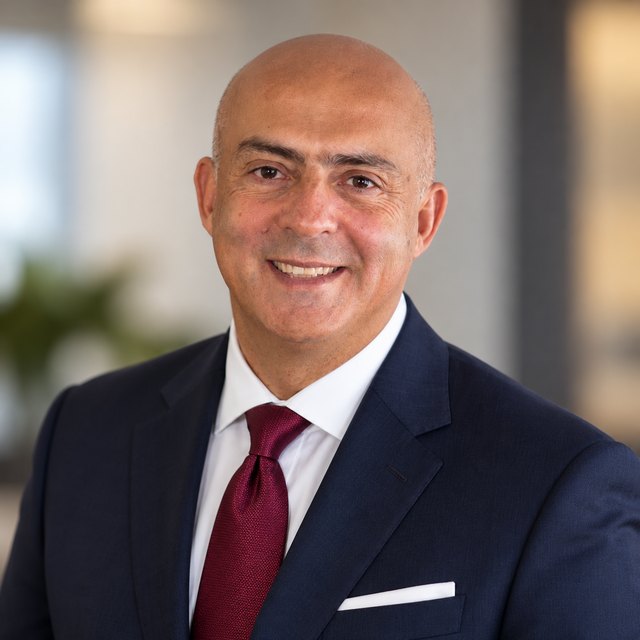
Jose Salloum is a Financial Security Advisor (conseiller en sécurité financière) certified by the Autorité des marchés financiers in Quebec, a Life and Accident & Sickness Insurance Agent licensed by the Financial Services Regulatory Authority of Ontario, and a Life Insurance Agent licensed by the Insurance Council of British Columbia. Licensed since 2001.
He has practised Infinite Banking since 2015 and founded Canadian Wealth Creation Centre Inc. in 2016. From 2020 to 2024 he was an IBC (Infinite Banking Concepts™) Authorized Practitioner of the Nelson Nash Institute, a private certification rather than a regulatory licence.
IBC Financial is the educational website of Canadian Wealth Creation Centre Inc., open to all Canadians. Services come only from Canadian Wealth Creation Centre Inc. Its representatives hold a licence in each province served: Quebec, Ontario, Alberta, British Columbia, Manitoba and New Brunswick. Jose Salloum's own licences cover Quebec, Ontario and British Columbia. This page is general education and not advice on any individual file.
Last reviewed 2026-08-31. By Jose Salloum, Financial Security Advisor in Quebec. In Ontario, Life and Accident & Sickness Insurance Agent. In British Columbia, Life Insurance Agent.