
Manufacturers and the Machine That Outlives Its Financing
A production machine can keep running for years after its loan is repaid. How long is a measurement for your own plant, from its maintenance records and its economic life, not a rule of thumb. The lender sets the loan's term and amortization. The years between the last payment and the next machine decide how much of the next purchase is financed, and on whose terms. A participating life insurance policy can be one source of an advance then, with interest owed to the insurer.
A production machine can keep working for years after the loan that bought it is repaid. How many years depends on the machine, how well it is maintained and how long it stays competitive, so the gap is something you measure for your own plant, not a number anyone can promise you. The useful question is what the company does between the last payment and the next machine, because that is when the next purchase is quietly decided.
Part of what follows discusses participating whole life insurance, and Canadian Wealth Creation Centre Inc. is paid a commission by the insurer if a policy is bought. You should know that before you read the sections that mention one. The rest is about the machine, the lender and the corporation's cash, and it applies whether or not you ever buy a policy.
How long does a machine last compared with the loan that paid for it?
Four different lengths of time get mixed together in this conversation, and each one comes from a different place. Keep them apart and the planning gets much easier.
| Measure | What it means | Who sets it | Where you find it |
|---|---|---|---|
| Term | How long the lender commits to the loan on its current conditions | The lender, in the loan agreement | The loan agreement or the lease |
| Amortization | How long the payments would take to repay the whole balance | The lender, under its own lending policies | The payment schedule |
| Physical life | How long the machine can keep running safely | The machine, its duty cycle and its maintenance | Maintenance records and the manufacturer |
| Economic life | How long it stays worth running against a newer machine | Your costs, your customers and the market | Your own cost, scrap and quality records |
The term and the amortization are not the same thing. The federal guidelines for the Canada Small Business Financing Program, under which private lenders make the loans and the government shares some losses, set the maximum term of a term loan under the program, meaning the length of the government's coverage, at 15 years, and allow repayment to be amortized over a longer period. Their own example is a mortgage with an interest term of 5 years and an amortization of 25 years (read 1 October 2026). An equipment loan uses the same vocabulary. When a term ends before the balance is repaid, the rest is renewed or refinanced on whatever conditions apply at that time.
The same guidelines leave the share of the purchase that is financed to the lender's internal policies and its view of the risk. Ask your lender how it sets the amortization for your machine, whether it looks at the machine's expected useful life, and what happens at the end of the term.
Physical life and economic life part ways too. A press can still run after it stops being worth running, because a newer machine does the same work with less scrap, labour or energy, or because a customer now asks for a tolerance it cannot hold. The gap between the financing and the machine is real only up to the economic life, so measure that one from your own records.
What does a plant actually own?
A small number of very large assets. One production line, or a handful of machines, can carry most of the value of a plant's equipment, and the rest is tooling, handling gear and fixtures.
A building, owned or leased, fitted out for one process. Power, extraction, floor loading and craneage are expensive to install and hard to take with you.
Tooling and fixtures with lives of their own. They are replaced more often than the machine they run on, and some plants pay for them from operating cash rather than financing them.
And people who know how it runs. The understanding of a particular machine's habits can sit with two or three people, and it appears nowhere on the balance sheet.
What happens in the years after the last payment?
When the loan on a machine is repaid, the payment stops while the output continues. Whatever went to the lender each month is now available, and it can easily be absorbed as comfort instead of decided as policy. Distributions rise, the plant absorbs the extra, or cash builds up in the corporation without anyone deciding why.
The quiet years are not free years. The machine still costs money to keep running, and maintenance, rebuilds and spare parts can grow as it ages. A leased machine may carry a residual payment or a return condition at the end of the lease. A loan refinanced at the end of its term may still be running. Count those before you call any cash freed.
The shape is the opposite of a fleet's. A trucking operation replaces units on a rolling basis, so some unit is always being financed. A plant's financing can stop for years and then restart all at once, with one purchase far larger than any single truck. A landscaping and snow removal company lives a yearly version of the same problem, with income in some months and costs in all twelve.
What is decided in this window decides the next purchase. A company that sets the freed cash aside on purpose arrives at the replacement with choices. One that does not arrives with a quotation and a lender's terms.
Why does nobody in the company know how to make this decision?
where the structure usually goes wrong
Corporate-owned life insurance
- 01The company owns the contract and pays the premium
- 02Premiums are generally not deductible
- 03Corporate funding is not, by itself, a tax saving
- 04A death benefit it receives may credit the Capital Dividend Account
- 05Ownership and beneficiary structure is where it fails
If a machine lasts twenty years, the last comparable decision may have been somebody else's. The person who specified, financed, installed and commissioned the current line may have retired, and the people who will do the next one may never have done it.
There may be no file. No record of what the specification got wrong, how long commissioning took, what installation cost beyond the machine, or which supplier promises held.
And the decision is hard to undo. A wrong machine is not a bad quarter. It can mean years of producing at the wrong cost, or a loss taken to get out of it, and either outcome can outlast the management team that chose it.
So treat it as the rare event it is. Bring in people who have done one recently, document the project while it happens, and write down what the next decision maker will wish they had known. Start the file now, with the installation date and the total cost of the machine you run today.
What does owning or leasing the building change?
Owning means a second long asset, which may carry its own mortgage. The property has its own life, financing and value, and in a good location it can end up worth more than the operating business inside it.
Leasing means a smaller capital base and a renewal risk. A plant fitted out for one process cannot move cheaply, which is a weak position in a renewal negotiation and a serious one if the building is sold.
At an exit the two can part ways. A buyer may want the business without the property, or the property may be the owners' retirement while the business is wound down. Those are different transactions with different tax results.
Which is better is a question for your accountant and a commercial lawyer, looking at the process, the location, the lease and what the owners intend. Settle it long before it becomes urgent, which here means before a lease renewal or a sale.
Why is the workforce a financial risk?
A plant runs on a small number of specific people. A millwright, a tool and die maker, a controls technician or a setter who knows one line's behaviour cannot always be replaced from the general labour market within a month.
Their knowledge is mostly undocumented. How a machine behaves in humidity, which alarm is real, what the last operator did to hold a tolerance: little of it is written down, and it leaves with the person.
An absence can become a cash problem within a quarter. Output falls, scrap rises, a customer is disappointed, and the effect reaches the accounts before anybody has been replaced.
That risk has a management answer and an insurance answer. Documenting the knowledge and training a second person deal with the cause. Key person life insurance deals with the financial consequence of a death, and disability or critical illness coverage are separate policies with their own terms; both are set out under key person coverage. Only the second answer is something you buy.
What is an equipment lender paid for?
Three things, and it helps to separate them before the next purchase rather than during it.
The use of money the company did not have when the machine was needed. That is real and worth paying for, because production that starts two years earlier is worth more than production that starts after the company has saved.
The risk that the company does not pay. That is real too, and the lender prices it, which can mean a higher cost for a single plant with a few large customers than for a group with several sites. A consultant carrying the same concentration toward one client is described under the contract that ends.
And the lender's own cost and margin for arranging, holding and collecting the loan. Changing who lends does not make that cost disappear. A company paying from its own reserve gives up what the reserve could have earned. A company borrowing from an insurer against a policy pays interest to the insurer. A company borrowing from another lender pays that lender. The choice is about whom you owe and on what terms, not about whether money costs anything.
How does the tax system treat the machine itself?
frequently the same person, not always
Three roles inside one contract
- One contractAll three can differ. Only the policyholder changes it, subject to any irrevocable beneficiary.
- The policyholderOwns the contract and holds its rights, subject to any assignment.
- The insuredThe person whose life is covered.
- The beneficiaryReceives the death benefit.
The machine is depreciable property, so as a general rule its cost is not deducted all at once. The CRA describes capital cost allowance as a yearly deduction that spreads the cost over several years, and says you cannot deduct the full cost of depreciable property in the year you acquire it (page modified 31 August 2026). For manufacturing equipment, its page on classes of depreciable property (modified 31 August 2026) lists two classes:
- Class 43, at a rate of 30%, for eligible machinery and equipment used in Canada primarily to manufacture or process goods for sale or lease, when it is not in Class 29 or Class 53.
- Class 53, at a rate of 50%, for eligible manufacturing and processing machinery and equipment acquired after 2015 and before 2026.
The first year can be different. The CRA's page on the accelerated investment incentive (modified 21 July 2025) describes an enhanced first-year allowance for eligible property acquired after 20 November 2018, and a full deduction in the first year for eligible Class 53 property. Both are being phased out for property that becomes available for use after 2023, and neither applies to property that becomes available for use after 2027.
A proposal may change this again. On 15 September 2026 the Department of Finance announced a proposed Productivity Mega Deduction, which would allow immediate expensing, on a permanent basis, of most depreciable property acquired on or after that date, with buildings among the exclusions. It is a proposal and needs legislation. Ask your accountant which rule applies to your machine in the year it becomes available for use, and whether the proposal has been enacted by then.
Interest on an equipment loan can be deductible under paragraph 20(1)(c) of the Income Tax Act when the borrowed money is used to earn income from the business. That is why any comparison between borrowing for a machine and paying for it another way has to be made after tax. A deductible cost and a non-deductible cost of the same size do not cost the company the same amount.
Which tax rules shape the cash the quiet years produce?
Before any of the freed cash is treated as available, ask your accountant which of these rules apply to your company:
- The small business deduction, which taxes active business income at a lower rate up to the business limit.
- The federal passive income rule, which shrinks that limit when the company and its associated companies earn investment income above a threshold, measured as adjusted aggregate investment income. The provinces decide separately whether to follow it. See retained earnings and the passive income rule.
- The personal services business rules, which can deny the small business deduction to a company that, in substance, provides one person's services in place of an employee. They can matter where a related company sells services.
- In Quebec, the provincial small business deduction, which keeps a condition tied to the hours paid to employees.
These rules decide how much of a dollar of profit is left to set aside. Cash kept in the corporation as a reserve earns investment income that is taxed each year and counts in the passive income measure. Growth inside an exempt life insurance policy is not taxed each year, and how the policy is treated under the passive income rule is a question for your accountant, with the policy's own figures. How a corporate reserve is built and kept has its own page.
What are the ways to fund the next machine?
Each route below does a different job. None is ranked, and no rates are given, because the terms belong to each lender and change.
| Route | Who lends, and who receives the interest | When it is ready | What is pledged | Tax question for the accountant | In a bad year | Main drawback |
|---|---|---|---|---|---|---|
| Equipment loan | A lender, which receives the interest | After credit approval | The machine, and possibly a personal guarantee | Interest deductibility; capital cost allowance on the machine | Payments continue and covenants apply | The lender's terms decide |
| Lease | A lessor, paid through the lease payments | After credit approval | The lessor owns the machine | Whether it is a true lease or a purchase for tax | Payments continue | Residual or return conditions at the end |
| Vendor financing | The vendor or its finance company | At purchase | The machine | As for a loan or a lease, depending on the form | Payments continue | Tied to one supplier's terms |
| Operating line | A lender, which receives the interest | Within the authorized limit | Receivables and inventory, depending on the agreement | Interest deductibility | The lender can reduce or call the line | Meant for working capital, not long assets |
| Corporate cash reserve | Nobody lends; the company gives up what the cash could earn | When the cash is there | Nothing | Investment income taxed yearly; the passive income measure | It may be needed for operations instead | Takes years to build |
| Policy loan | The insurer, which receives the interest | Once the policy has loan value | The policy's cash surrender value secures it | A disposition under s. 148(9); interest counts only as the insurer verifies it on Form T2210 | Unpaid interest can be added to the loan | Takes years to build; reduces the death benefit while owing |
| Loan from another lender, secured by a policy | That lender, which receives the interest | After credit approval | A collateral assignment of the policy, a hypothec in Quebec | The assignment itself is not a disposition | The lender's terms decide | Two parties to satisfy, the lender and the insurer |
A purchase can combine several of these routes. What matters is that each part names who lends, who is paid, what is pledged and what happens if the business has a bad year.
What does an illustrative example of the quiet years show?
Illustrative example. Every figure is an assumption chosen for the arithmetic. It is not a forecast, a quotation, a rate or anyone's real company, and it ignores tax, inflation and any income the money earns. Assume your current machine cost $900,000 installed and you financed all of it with 84 monthly payments of $12,500. You paid $1,050,000 in total, and $150,000 of that was the cost of financing. Assume an economic life of 20 years. The payments stop at the end of year 7, which leaves 13 years with no payment on the machine.
The worksheet runs in this order, and each input comes from its own document:
- The installation date and the expected economic life, from the maintenance file and the manufacturer: here, 20 years.
- The date of the last payment, from the loan agreement: here, the end of year 7.
- The payment that stops, from the payment schedule: here, $12,500 a month, or $150,000 a year.
- The amount the directors decide to set aside each year, after the working capital reserve the plant keeps anyway: here, $100,000 a year.
- The total installed cost of the next machine, from a quotation and your records of the last project: here, $1,150,000 for the machine, $150,000 for installation and commissioning, $60,000 for tooling and $40,000 of production lost during ramp-up, or $1,400,000.
- Subtract the amount set aside by the replacement date from the total installed cost. What remains is the part to finance.
| Case | Years of setting aside | Set aside by replacement | Left to finance |
|---|---|---|---|
| No plan | 0 | $0 | $1,400,000 |
| Base case | 13 | $1,300,000 | $100,000 |
| Stress test 1: two weak years with nothing set aside | 11 | $1,100,000 | $300,000 |
| Stress test 2: the machine is replaced at year 16, not year 20 | 9 | $900,000 | $500,000 |
The stress tests are there because the base case is the one you hope for. The weakest years you have already lived through are a test to run, not a limit on how bad a year can get. In every case the company still finances part of the purchase. What changes is how much, and on whose terms.
If part of the money set aside goes to premiums on a participating policy bought for a lasting insurance need, the amount available at the replacement date is not the premiums paid. It is the loan value the contract allows on that date, less any loan already owing. Ask the insurer for that figure in the guaranteed column and in the illustrated column, for the year the machine is due.
Where does Infinite Financial Sovereignty® come from, and what does it ask of a plant?
The underlying idea is not this practice's. The financing approach known as The Infinite Banking Concept®, which R. Nelson Nash described in his own writing, is a mark of Infinite Banking Concepts, LLC, and neither Canadian Wealth Creation Centre Inc. nor Jose Salloum is affiliated with that organisation or endorsed by it.
Infinite Financial Sovereignty® is a registered trademark of Jose Salloum. It names a narrower discipline carried out over a lifetime: own permanent life insurance for the protection it gives, and know in advance, in writing, what you could borrow against it, from whom and on what terms, before a repeating need for capital comes back. For a plant, the repeating need is the next machine.
Where a specially designed, high-cash-value, participating whole life insurance policy is part of that plan, it is bought first as life insurance, for a death benefit the business or the family needs over the long term. Its cash value grows slowly, and once the policy has loan value the owner can ask the insurer for an advance against it. The quiet years of a long equipment cycle are when premiums can come from genuine surplus, and the replacement is when an advance may be useful. That match of timing is why the idea comes up for manufacturers. It is not a promise of any result.
None of it is free or fast, and none of it avoids interest. The insurer charges interest on an advance, and the policy's costs weigh most in its early years.
Who lends, and who is paid, when a policy helps buy a machine?
a notional account, not a bank balance
The Capital Dividend Account
- 01A notional tax account of a private Canadian corporation
- 02It records amounts the corporation received without tax
- 03A death benefit it receives, less the adjusted cost basis, may credit it
- 04Available balances may be paid out as capital dividends
- 05The credit depends entirely on the ownership structure
A policy loan is an advance from the insurer to the owner of the policy. When the corporation owns the policy, the insurer lends its own money to the corporation, up to a loan value the contract sets, and the policy's cash surrender value secures it. The loan value can be lower than the cash value; the contract says how much. The corporation owes the insurer. The interest is charged by and paid to the insurer, at a rate the insurer sets and may change, and depending on the contract, interest left unpaid is added to the loan and bears interest itself.
Repayments reduce the corporation's debt to the insurer, and they are what makes the next advance possible. Skip them and the balance grows. If the balance overtakes the value securing it, the contract can end, and that ending is a disposition that can produce income for the corporation to the extent the proceeds exceed the adjusted cost basis.
The adjusted cost basis is, in plain terms, the policy's tax cost: premiums add to it and some amounts reduce it. A policy loan is a disposition under s. 148(9). Only the part of the loan above the adjusted cost basis immediately before the loan is income, and the loan lowers that basis. Repaying the loan restores the basis and can give a deduction under paragraph 60(s), limited to amounts previously included in income. Interest on a policy loan counts toward a deduction only to the extent the insurer verifies it on CRA Form T2210, under subsection 20(2.1), and only where the money is used to earn income from the business. That is our reading of the rules this site has recorded; your accountant applies them to your figures.
If the contract ends with a loan outstanding, the proceeds for tax are the cash surrender value less the loans owing, so the small cheque at the end does not decide the tax. Before any surrender, ask the insurer in writing for the proceeds, the loan settlement, the adjusted cost basis and the tax slip it expects to issue, and give them to your accountant.
At the death of the person insured, the insurer deducts any loan balance from the death benefit, so the corporation receives less. A smaller amount received also means a smaller capital dividend account credit.
A loan from another lender, with the policy assigned as collateral, is a different transaction. That lender decides whether to lend, the corporation owes that lender, and that lender receives the interest. The corporation still owns the policy. The assignment, a hypothec in Quebec, gives the lender the right to be paid from the policy first, and when the loan is repaid the lender releases it and the policy stays with the corporation. Giving the assignment is not a disposition for tax.
The money goes to the corporation, not to you. Getting it to a shareholder is a second transaction, by salary, by dividend or by repaying a shareholder loan, each with its own tax. In the other direction, a policy loan to the corporation does not reduce what a shareholder owes the corporation; only the shareholder's own repayment does. See the shareholder loan and the policy loan and how a policy loan works.
What would it look like across one machine's life?
The first machine is financed the way it always was. A policy's loan value takes years to build, so a company that starts now keeps using lenders, and any presentation that suggests otherwise deserves suspicion.
During the term, premiums are paid alongside the equipment payments, from operating surplus. That is the part that needs the surplus to be durable, not occasional.
In the owned years, the freed payment has a planned destination: the reserve, the premiums, paying down expensive debt, or the owners, by a decision the directors record.
At the next replacement, part of the purchase may be funded by an advance from the insurer, alongside a loan or a lease for the rest. The advance is a debt to the insurer. Repaying it on a schedule the corporation commits to is what keeps loan value available for the machine after that, and it is the step a plan can quietly skip.
Who owns the policy, who pays, and who is the beneficiary?
If your plant is incorporated, perhaps with an operating company and a holding company, the ownership question arrives at once.
Three decisions are made together: who owns the policy, who pays the premium and who is named beneficiary. Deciding them one at a time, or leaving them to whoever fills in the application, can cost money later. The options are set out under corporate-owned life insurance and personal or corporate ownership of the contract. Which entity should own, pay and receive has no general answer; your accountant and your lawyer settle it for your structure.
Some combinations carry a known risk. When a corporation pays a premium on a policy the shareholder owns personally, or one payable to the shareholder's family, the CRA can include a benefit in the shareholder's income under subsection 15(1) of the Income Tax Act. Its page on shareholder benefits lists a shareholder's life insurance premiums paid by the corporation among its examples. Where operating risk sits matters too. An operating company that carries product liability and creditor exposure is a different owner from a holding company, and that is a structuring question for the lawyer.
The beneficiary designation has its own law. Insuring another person's life needs an insurable interest or that person's written consent; in Quebec the rule is in article 2418 of the Civil Code. In Quebec, a designation of a married or civil union spouse as beneficiary, made in a writing other than a will, is irrevocable unless it says otherwise (article 2449), so an owner who names a spouse may need that spouse's consent to change it later.
A shareholders' agreement may already say something. If one obliges the survivors to buy a deceased shareholder's shares, read that obligation before anything is sized; it is the subject of succession planning.
What do the tax rules say about the policy itself?
Facts about your corporation decide it, and your accountant confirms them before anything is applied for.
Premiums are generally not deductible. A limited deduction can exist under paragraph 20(1)(e.2) of the Income Tax Act. The conditions, as the site has recorded them and as the CRA's archived interpretation bulletin IT-309R2 describes them, are that an interest in the policy is assigned to a restricted financial institution in the course of borrowing from it, that the interest on the borrowing is deductible, and that the institution requires the assignment as collateral. The deduction is then limited to the part of the lesser of the premium and the policy's net cost of pure insurance for the year that reasonably relates to the amount owing. That is our reading; the bulletin is archived and may not reflect current law, and your accountant tests your actual loan against the Act.
Growth inside the policy is not taxed each year while the policy stays exempt under Regulation 306 of the Income Tax Regulations. Exempt status is a condition the policy has to keep meeting, not a permanent feature of the product.
At the death of the person insured, a private corporation that receives the death benefit as beneficiary can add the benefit, less the policy's adjusted cost basis, to its capital dividend account under s. 89(1). The account is a tax record, not cash. Paying a capital dividend from it takes an election under subsection 83(2), and the corporation's accountant calculates the balance before any dividend is declared. Federal rules apply everywhere; a Quebec corporation also deals with Revenu Québec.
A possible sale brings the policy into it. The lifetime capital gains exemption applies only to qualified small business corporation shares, and the CRA's Guide T4037 (2025) sets tests that include what the company's assets are used for, at the sale and over the 24 months before it. A policy is an asset that is not used in the business, so its value can weigh against those tests, and how it is valued for them has its own rule in the Act. Ask your accountant to run them with the policy in the company, years ahead; an exit in ten years shows how that planning starts.
What does a policy not do?
three mechanics, one of them fatal
How wealth actually crosses a generation
- 01What passes outside the estate by designation
- 02The deemed disposition that taxes almost everything else
- 03Whether the estate holds cash to pay that tax
- 04Selling assets to pay the tax is the common failure
It does not remove interest. The insurer charges interest on an advance, and a presentation that leaves that out has misdescribed the arrangement.
It does not lower this year's tax bill. The premium is generally not deductible, and the narrow collateral deduction above has conditions that have to be met, not assumed.
It does not replace committed credit. A manufacturer needs an operating line for the gap between paying for material and being paid for finished goods, for a large order that has to be resourced before it is invoiced, and for a customer who pays late. A credit relationship built in a strong year is what carries a plant through a weak one.
It is not an investment and should not be judged as one. Participating whole life insurance is life insurance, and its purpose is the death benefit and the guaranteed values the contract sets.
And it does not survive being started and abandoned. A policy surrendered in its early years can return less than the premiums paid, and in a cyclical business the temptation to stop arrives in a bad year.
Who should not use a policy for this?
A company without durable surplus in a normal year, as distinct from a strong one. Manufacturing is cyclical, weak years will come, and premiums fall due in them.
A plant whose next machine is needed within a few years. A policy is the wrong tool for a business need that close, because early values can be well below the premiums paid. Keep money for a near-term purchase in the reserve, or plan its financing with your lender.
Owners who may sell while the policy's values are still low. Compare the guaranteed and illustrated cash surrender values at the likely sale date with the premiums paid by then, and decide with those figures in front of you.
A company carrying expensive debt. Paying down a high-rate balance saves a known amount of interest, which a policy's non-guaranteed values cannot promise.
A company with no lasting need for life insurance. The policy is bought for the death benefit first.
And anyone shopping on rate of return. Judged as a return against a market portfolio, a participating policy can compare poorly, because it was built for a different job.
What stands behind the contract?
The guarantees are the insurer's promise, so they rest on its solvency. They are not a deposit, and no government backs them. Solvency supervision is by charter: the Office of the Superintendent of Financial Institutions for a federally incorporated insurer, and the home province (the AMF in Quebec) for a provincially incorporated one.
Every life insurer authorized in Canada must belong to Assuris. Assuris protects a whole life policyholder for up to $1,000,000 or 90% of the promised death benefit, whichever is higher, and up to $100,000 or 90% of the promised cash value, whichever is higher, calculated on the net values after policy loans (Assuris, whole life, read 1 October 2026). A loan outstanding at a failure therefore reduces the values protected.
Dividends are not guaranteed. The insurer's board declares them each year, based on the experience of the participating account, and past dividends do not indicate future ones.
The guaranteed values in a contract and the illustrated values above them are two different columns. Read them separately, and plan on the guaranteed one.
In what order should a manufacturer work through this?
- Write down when each major machine was installed and its expected remaining economic life. That one page turns an eventual purchase into a dated one.
- Find what the last machine cost in total: installation, commissioning, tooling and production lost during ramp-up, not just the invoice.
- Add up the financing cost of the loans and leases already paid. The documents are in the office, and the total changes the conversation.
- Run the worksheet above on your own figures, with both stress tests.
- Take all of it to your accountant before any insurance conversation, and settle which tax rules apply, including capital cost allowance on the next machine.
- Ask a commercial lawyer about the structure, any shareholders' agreement and the building.
- Only then, and only if a lasting insurance need exists, look at whether a policy belongs in the plan, and ask whoever proposes one how they are paid.
Ask each professional for the scope of the work and the fees before they start. Purpose first, structure second, product last.
Where does the rest of this sit?
The corporate structuring underneath all of it is on the business owners hub, the mechanics of the contract are under how a participating policy works, and the shorter cycle version of the same question is set out for dental practices. The premium test for a corporation is on funding premiums from corporate cash flow, and an accountant asked to review a proposal will find a briefing on accountants and the strategy they are asked to approve.
A thirty-minute discovery meeting
A first conversation establishes whether this fits. No illustration is prepared and nothing is arranged.
Often the answer is no, and you will hear it during the call rather than in a proposal afterwards.
This form reaches Canadian Wealth Creation Centre Inc. Any meeting, any advice and any insurance product is provided by Canadian Wealth Creation Centre Inc., through its representatives who are licensed in the client's province. IBC Financial is the company's educational website: it distributes no product and no financial service, and it gives no individualised advice.
Common questions
Why does the gap between a machine's life and its financing term matter?
What is the difference between a loan's term and its amortization?
Is a manufacturer's position really different from a trucking fleet's?
Nobody here has bought a machine like this before. Is that normal?
Should the company own its building or lease it?
Why is the workforce a financial risk rather than an operational one?
How is a new production machine deducted for tax?
How could a participating policy be used toward a machine?
Who receives the interest on a policy loan used to buy equipment?
Does a policy replace the plant's operating line?
Are premiums paid by my operating company deductible?
How does a corporate-owned policy affect a sale of the business?
What happens to a policy loan when the insured person dies?
What would make this the wrong idea for a manufacturer?
Who should a manufacturer talk to, and in what order?
Sources
- Innovation, Science and Economic Development Canada, Canada Small Business Financing Program guidelines. The maximum term of a term loan is 15 years, and repayment can be amortized over a longer period., verified 2026-10-01
- Canada Revenue Agency, Claiming capital cost allowance, modified 31 August 2026. The cost of depreciable property is deducted over several years., verified 2026-10-01
- Canada Revenue Agency, Classes of depreciable property, modified 31 August 2026. Class 43 at 30% and Class 53 at 50% for manufacturing and processing machinery., verified 2026-10-01
- Canada Revenue Agency, Accelerated investment incentive, modified 21 July 2025. The enhanced first-year allowance and its phase-out., verified 2026-10-01
- Department of Finance Canada, news release of 15 September 2026 on the proposed Productivity Mega Deduction. A proposal that needs legislation., verified 2026-10-01
- Income Tax Act, paragraphs 20(1)(c) and 20(1)(e.2) and subsection 20(2.1). Justice Laws Canada, as recorded on this site's contractors page., verified 2026-09-30
- Canada Revenue Agency, Interpretation Bulletin IT-309R2, Premiums on life insurance used as collateral (archived). The conditions of the collateral deduction., verified 2026-10-01
- Income Tax Act, subsections 148(1) and 148(9) and paragraph 60(s). Policy loans, dispositions and the adjusted cost basis, as recorded on this site's policy loans page., verified 2026-09-29
- Income Tax Regulations, Regulation 306, Justice Laws Canada, verified 2026-08-30
- Income Tax Act s.89(1), Capital Dividend Account, Justice Laws Canada, verified 2026-08-30
- Income Tax Act, subsections 89(1) and 83(2) on the capital dividend account, as recorded on this site's capital dividend account page., verified 2026-09-29
- Income Tax Act, subsection 15(1), shareholder benefits, as recorded on this site., verified 2026-09-29
- Canada Revenue Agency, Shareholder benefits, modified 10 June 2025. A shareholder's life insurance premiums paid by the corporation are listed as an example., verified 2026-10-01
- Canada Revenue Agency, Guide T4037, Capital Gains 2025, modified 11 February 2026. The tests for qualified small business corporation shares., verified 2026-10-01
- Assuris, Whole life protection. The limits, calculated on net values after policy loans., verified 2026-10-01
- Civil Code of Québec, articles 2418 and 2449, as recorded on this site., verified 2026-09-27
About the author
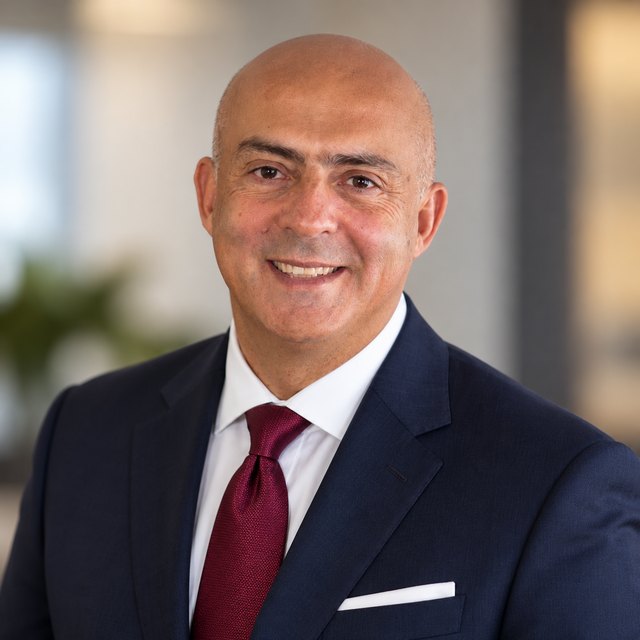
Jose Salloum is a Financial Security Advisor (conseiller en sécurité financière) certified by the Autorité des marchés financiers in Quebec, a Life and Accident & Sickness Insurance Agent licensed by the Financial Services Regulatory Authority of Ontario, and a Life Insurance Agent licensed by the Insurance Council of British Columbia. Licensed since 2001.
He has practised Infinite Banking since 2015 and founded Canadian Wealth Creation Centre Inc. in 2016. From 2020 to 2024 he was an IBC (Infinite Banking Concepts™) Authorized Practitioner of the Nelson Nash Institute, a private certification rather than a regulatory licence.
IBC Financial is the educational website of Canadian Wealth Creation Centre Inc., open to all Canadians. Services come only from Canadian Wealth Creation Centre Inc. Its representatives hold a licence in each province served: Quebec, Ontario, Alberta, British Columbia, Manitoba and New Brunswick. Jose Salloum's own licences cover Quebec, Ontario and British Columbia. This page is general education and not advice on any individual file.
Last reviewed 2026-10-01. By Jose Salloum, Financial Security Advisor in Quebec. In Ontario, Life and Accident & Sickness Insurance Agent. In British Columbia, Life Insurance Agent.