Quantitative Easing Explained: What the Bank of Canada Did and Why
Quantitative easing is when a central bank buys large amounts of bonds and pays with newly created settlement balances, to push down longer-term interest rates. The Bank of Canada did this from 2020 until October 2021, then began shrinking its holdings in April 2022. It is public and legal, and it is not a direct payment to households.
Most people picture new money arriving the way it does in films: a printing press running through the night, sheets of banknotes stacked on pallets. When they hear that the Bank of Canada created hundreds of billions of dollars during the pandemic, that is the image that comes to mind.
The reality was quieter. No pallets. No helicopters. Mostly keystrokes, bond purchases and entries on a balance sheet that anyone can read.
So what actually happened? And should a family that never bought a bond in its life care about any of it?
It should, for a simple reason. Quantitative easing changed the price of money for years. It influenced mortgage rates, the value of homes and investments, and the interest a careful saver could earn. Families felt it at the kitchen table even if they never heard the term. Understanding it helps you read the next crisis calmly, without fear and without the myths that tend to travel with it.
Let me explain what quantitative easing is, what it is not, and what Canada actually did.
What is quantitative easing?
Quantitative easing, often called QE, is when a central bank buys large amounts of bonds and pays for them with newly created settlement balances. The goal is to push down longer-term interest rates and support borrowing and spending, usually when the policy interest rate is already very low and cannot be cut much further.
Normally, the Bank of Canada works through one lever: its policy interest rate. Raising or lowering that rate changes the cost of overnight borrowing between major institutions, and that change ripples out to the rates families pay. The sister page on who sets interest rates in Canada explains that chain.
But the policy rate mainly touches short-term borrowing. And once it is near zero, there is little room left to cut. In March 2020, as the pandemic shut down much of the economy, the Bank of Canada cut its policy rate to near zero. It needed a second lever.
QE was that second lever. By buying large amounts of longer-term bonds, the Bank of Canada increased demand for them. When demand for bonds rises, their prices rise, and their yields, the interest rates they pay, fall. Since many longer-term borrowing costs, including fixed mortgage rates, follow bond yields, the effect was meant to reach families and businesses.
Here is the contrast to hold onto.
The policy rate steers the price of overnight money. Quantitative easing reaches for the price of money over years.
How does a bond purchase add settlement balances?
One QE purchase, step by step
How a bond purchase adds settlement balances
- 01The Bank of Canada announces it will buy government bonds
- 02An investor agrees to sell a bond it holds
- 03New settlement balances go to the investor's institution
- 04The institution credits the investor with a matching deposit
- 05The bond becomes an asset on the Bank of Canada balance sheet
When the Bank of Canada buys a bond, it pays by crediting the settlement account that the seller's financial institution holds with it. Those balances did not exist a moment before. If the seller is an investor, such as a pension fund, its institution also credits the investor with a new deposit.
Let me walk through it in steps.
- The Bank of Canada announces that it will buy a certain amount of bonds, mainly Government of Canada bonds.
- An investor that holds such a bond agrees to sell it.
- The Bank of Canada credits new settlement balances to the account of the investor's financial institution.
- That institution credits the investor's account with a matching deposit.
- The bond now sits on the Bank of Canada's balance sheet as an asset, and the new settlement balances sit there as a liability.
Notice what happened and what did not. The investor gave up a bond and received money of the same value. Its wealth did not jump at the moment of the sale; it swapped one asset for another. The financial institution now holds more settlement balances at the Bank of Canada. And the Bank of Canada now owns a bond it did not own before.
Settlement balances are the money that large institutions use to settle payments with each other. Since 23 March 2020, the Bank of Canada has operated a floor system, keeping enough of those balances in the system that overnight rates trade near its deposit rate. QE added a great many of them.
One more point, because it trips up many explanations. Adding settlement balances does not mean institutions can then lend ten times as much. Canada phased out statutory reserve requirements between 1992 and 1994, and as the Bank of England explained in 2014, lending is driven by demand from creditworthy borrowers and by capital rules, not by a multiple of reserves. The page on the money multiplier explains why.
Is quantitative easing the same as printing money?
Not in the way most people imagine. QE creates new settlement balances, and bond sellers end up with new deposits, but it swaps a bond for money of equal value; it is not a gift. No banknotes need to be printed, and it is not a payment to households. Whether it was wise is a fair, separate debate.
There are three common shortcuts in how QE is described, and each one misleads in a different way.
"It is free money handed out to people." It is not. In QE, the Bank of Canada buys a bond and pays for it. The seller gives something of equal value in return. Government benefit programs during the pandemic were separate decisions made by elected governments and paid through government accounts. QE influenced the cost at which governments and others could borrow, but it was not itself a cheque to anyone.
"It is the same as ordinary lending." It is not. When a lender makes a loan, it creates a new deposit for the borrower, and the borrower owes the money back with interest. The cluster's main page on how money is created in Canada explains that this kind of lending creates the majority of money in the Canadian economy. QE is different: no one borrows from the Bank of Canada in a QE purchase. It buys an asset outright.
"It is counterfeiting." A popular claim says QE is no different from counterfeiting. That description does not fit. Counterfeiting is, by definition, illegal and hidden. The Bank of Canada operates under the Bank of Canada Act, announces its programs publicly and reports its holdings in published financial statements. You can believe QE went too far, or lasted too long, or helped some people more than others. Those are reasonable positions. But they are arguments about policy, not about legality.
I find it helpful to replace the slogans with a plain sentence: during QE, the Bank of Canada bought bonds with newly created central bank money, openly and under law, to push down longer-term interest rates. Everything worth debating starts from there.
What did the Bank of Canada do in 2020 and 2021?
From 2020 to 2025
Canada's quantitative easing and tightening
- 01Balance sheet about $120 billion11 March 2020.
- 02Floor system for overnight rates begins23 March 2020.
- 03Balance sheet peaks at about $575 billion10 March 2021.
- 04Quantitative easing endsOctober 2021.
- 05Quantitative tightening beginsApril 2022.
- 06The Bank of Canada says QT will end that yearJanuary 2025.
In March 2020, the Bank of Canada cut its policy rate to near zero and began large purchases of bonds, mainly Government of Canada bonds. Its balance sheet grew from about $120 billion on 11 March 2020 to a peak of about $575 billion on 10 March 2021. It ended quantitative easing in October 2021.
Those figures come from the Library of Parliament, which tracked the Bank of Canada's balance sheet through the pandemic. They include the large bond purchases and the other emergency operations of that period, so it is wiser to read them as the size of the whole response rather than of one program.
| Date | What the record shows |
|---|---|
| 11 March 2020 | Balance sheet about $120 billion |
| 23 March 2020 | Floor system for overnight rates begins |
| 10 March 2021 | Balance sheet peaks at about $575 billion |
| 12 May 2021 | Balance sheet about $478 billion |
| October 2021 | Quantitative easing ends |
| April 2022 | Quantitative tightening begins |
Why act on that scale? In early 2020, financial markets were under severe strain. Many investors wanted cash at the same moment, and even normally safe bonds became hard to sell at fair prices. When markets for government bonds stop working smoothly, the effects travel quickly to mortgages, business loans and government financing. Large purchases were meant first to restore calm, and then to keep longer-term borrowing costs low while the economy recovered.
Looking back, people will weigh the result differently. Some will remember that markets steadied and that borrowing stayed affordable through a frightening year. Others will remember that inflation later rose well above target and that asset prices climbed. Both memories are part of the honest record.
What is quantitative tightening, and when did Canada start it?
Two ways new money appears
A QE purchase and a commercial loan compared
- Who creates the new moneyQE bond purchase: The Bank of Canada. Loan from a lender: The lender making the loan.
- What is createdQE bond purchase: Settlement balances, and a deposit for the seller. Loan from a lender: A new deposit for the borrower.
- What the other side givesQE bond purchase: A bond of equal value. Loan from a lender: A promise to repay with interest.
- Is anything owed backQE bond purchase: No, the purchase is outright. Loan from a lender: Yes, principal and interest.
Quantitative tightening, or QT, is the reverse of quantitative easing. The central bank stops buying bonds and lets the ones it holds mature without replacing them, so its balance sheet and the settlement balances in the system shrink over time. The Bank of Canada began QT in April 2022 and said in January 2025 that it would end that year.
The sequence in Canada ran like this. QE ended in October 2021. In April 2022, as inflation ran well above its 2% target and the Bank of Canada was raising its policy rate sharply, it began QT. Bonds it held reached maturity, the government repaid them, and the Bank of Canada did not buy new ones to replace them. Each maturing bond removed settlement balances from the system, the mirror image of a QE purchase.
In a speech on 21 January 2025, a Deputy Governor of the Bank of Canada explained that quantitative tightening would end that year. Ending QT does not mean the balance sheet returns to its 2020 size. Under the floor system, the Bank of Canada keeps enough settlement balances in the system for overnight rates to trade near its deposit rate.
As read on 5 November 2026, the policy rate was 2.50%, after a 25 basis point increase announced on 28 October 2026. QE and QT are tools for unusual times. In ordinary times, the policy rate does most of the work.
What effects did quantitative easing have?
QE is generally credited with steadying financial markets in 2020 and lowering longer-term interest rates, which made mortgages and other long borrowing cheaper. Lower rates also tend to raise the prices of homes, shares and bonds. That fed a lasting debate, because people who already owned assets often gained more than those relying on savings and wages.
Let me take the effects one at a time, as fairly as I can.
Calmer markets. In a panic, a buyer willing to purchase in size can restore order. Most observers agree that large central bank purchases helped bond markets function again in 2020.
Lower long-term rates. By adding demand for bonds, QE pushed their yields down. Fixed mortgage rates and other long borrowing costs tend to follow bond yields, so borrowing for a home or a business became cheaper than it otherwise would have been.
Higher asset prices. When safe bonds pay little, investors look elsewhere, and when borrowing is cheap, buyers can bid more. Both forces tend to lift the prices of homes, shares and other assets. Economists still debate how much of the rise in those years came from QE and how much from other forces, such as housing supply and population growth.
The distribution debate. Because QE worked partly through asset prices, households that already owned homes and investments tended to benefit more than households that held mostly cash or relied on wages. The sister page on cheap money and careful savers explains this through the Cantillon effect, the idea that those closest to where new money enters gain first.
The counterpoint. Supporters of QE answer that without it, the 2020 downturn could have been deeper, with more lost jobs and failed businesses, and that unemployment hurts families of modest means the most. That argument deserves a fair hearing too.
Here is the contrast I would leave you with.
QE did not choose winners by name. It changed prices, and prices sort winners from losers on their own.
What can a household do about monetary policy?
Clearing up the slogans
What quantitative easing is and is not
- 01Quantitative easing isLarge purchases of bonds, mainly government bonds; Paid with newly created settlement balances; Meant to lower longer-term interest rates; Public, legal and reported on a published balance sheet.
- 02Quantitative easing is notA cheque or direct payment to households; A loan that someone must repay to the Bank of Canada; The same as lending by commercial lenders; Secret or unauthorized money creation.
A household cannot change monetary policy, predict the next crisis or decide when QE or QT begins. It can decide how much of its life depends on borrowing at whatever rate the market offers, how large its emergency cushion is, how its debts are structured, and whether it owns capital of its own rather than only borrowing someone else's.
When policy shifts as dramatically as it did from 2020 to 2023, it is natural to feel like a passenger. In one sense you are. But passengers still choose where they sit, how tightly they fasten the belt, and what they carry.
Here is what I suggest you consider.
Know which way your household leans. Are you mostly a borrower, mostly a saver, or both? A borrower with a large variable balance feels policy changes quickly. A saver living on interest feels them in the opposite direction. Knowing your lean tells you which kind of policy shift would hurt most.
Keep a cushion that does not depend on markets. Emergency money should be safe and available, even when markets are under strain, because that is exactly when you are most likely to need it.
Structure debt so a shift does not break the budget. A family that can carry a meaningfully higher payment is not forced into decisions by a policy change.
Think like a lender, over decades. Every era of policy, cheap money or dear money, rewards those who own capital and can lend it, and charges those who must borrow it. The page on thinking like a lender explores that shift in perspective.
For some families, part of building that capital is a participating whole life insurance policy, designed and funded over many years. It is insurance first; the death benefit is its primary purpose. It is not an investment and its cash value is not a deposit. Cash value already credited does not go down when markets fall, though dividends are not guaranteed and a lower dividend scale slows future growth. In the early years, cash value is below the premiums paid. A policy loan is made by the insurer, with the cash value as collateral; it is a real debt that accrues interest and should be repaid with discipline. And it suits only families with years ahead, steady cash flow and a genuine need for insurance.
What this page will not tell you
This page does not predict whether the Bank of Canada will use quantitative easing again, how bond yields or house prices will move, or what you should do with your mortgage, savings or investments. It describes a public policy as recorded in published sources. Your own decisions depend on your income, debts, goals and time horizon.
It also simplifies. Central bank operations include details this page leaves out: the exact mix of securities bought, how purchases were run through dealers, the accounting of the Bank of Canada's income, and how other countries' programs differed. Readers who want those details will find them in the Bank of Canada's own publications and in the Library of Parliament's research.
What this page gives you is the shape of the thing. Once you see it clearly, the next headline about central bank balance sheets becomes much less mysterious.
Who this does not suit
This explainer is general, and the capital-building ideas near its end do not suit every household. A participating whole life policy does not suit a family that needs its money within a few years, has no emergency fund, carries high-interest debt without a plan, has irregular income, or has no need for life insurance.
For those families, the stronger first steps are plainer ones: an emergency cushion, a budget that holds under higher rates, and steady repayment of expensive debt. Those steps protect a household through QE, QT and everything in between.
If you want to apply these ideas to your own family's capital, the page on owning your own pool of capital is the natural next step. It explains how some families build capital over decades, and what that honestly requires.
Important Disclosure: This page is general information and education only. It is not personalized financial, insurance, investment, tax or legal advice, and policies, rates and rules change. Figures are as reported by the cited sources and should be verified with official publications. Life insurance is an insurance product, not an investment, and its cash value is not a deposit. Guarantees in a participating whole life policy are contractual guarantees of the issuing insurer, dependent on its financial strength and claims-paying ability, and are not government guarantees. Dividends are not guaranteed; they are declared by the insurer's board of directors and past dividends do not indicate future dividends. A policy loan is a debt to the insurer that accrues interest and reduces the net cash value and the death benefit if not repaid. The author is a licensed insurance professional who may earn a commission on the sale of insurance products.
In plain words: I wrote this page so that the next time someone tells you money is being printed out of thin air, you can see what is really happening and judge it for yourself. I am not telling you what to buy or how to vote. If you decide to build capital for your family, do it with an experienced licensed insurance professional who understands these contracts, an accountant and a legal advisor who know your situation. And know that if you buy a policy through me, I may be paid a commission.
If you would like to talk through what this means for your own family, I invite you to book a free 30-minute discovery meeting.
A thirty-minute discovery meeting
A first conversation establishes whether this fits. No illustration is prepared and nothing is arranged.
Often the answer is no, and you will hear it during the call rather than in a proposal afterwards.
This form reaches Canadian Wealth Creation Centre Inc. Any meeting, any advice and any insurance product is provided by Canadian Wealth Creation Centre Inc., through its representatives who are licensed in the client's province. IBC Financial is the company's educational website: it distributes no product and no financial service, and it gives no individualised advice.
Common questions
What is quantitative easing in simple terms?
Is quantitative easing the same as printing money?
How much did the Bank of Canada's balance sheet grow during the pandemic?
When did quantitative easing end in Canada?
What is quantitative tightening?
Did quantitative easing cause higher house prices in Canada?
Can quantitative easing hurt savers?
Is quantitative easing legal in Canada?
Sources
- Library of Parliament, publication 2015-51-E, modified 19 May 2021: most money is created when lenders extend new loans; Bank of Canada balance sheet from $120 billion (11 March 2020) to a peak of $575 billion (10 March 2021), $478 billion on 12 May 2021, verified 2026-11-05
- Bank of Canada, Deputy Governor speech, 21 January 2025, The end of quantitative tightening and what comes next: quantitative easing ended October 2021, quantitative tightening began April 2022 and would end in 2025, verified 2026-11-05
- Bank of Canada, Framework for market operations: floor system since 23 March 2020, verified 2026-11-05
- Bank of England, Money creation in the modern economy, Quarterly Bulletin 2014 Q1: loans create deposits; the money multiplier is not how lending works, verified 2026-11-05
- Bank of Canada, Key interest rate page: policy interest rate 2.50% after a 25 basis point increase announced 28 October 2026, verified 2026-11-05
About the author
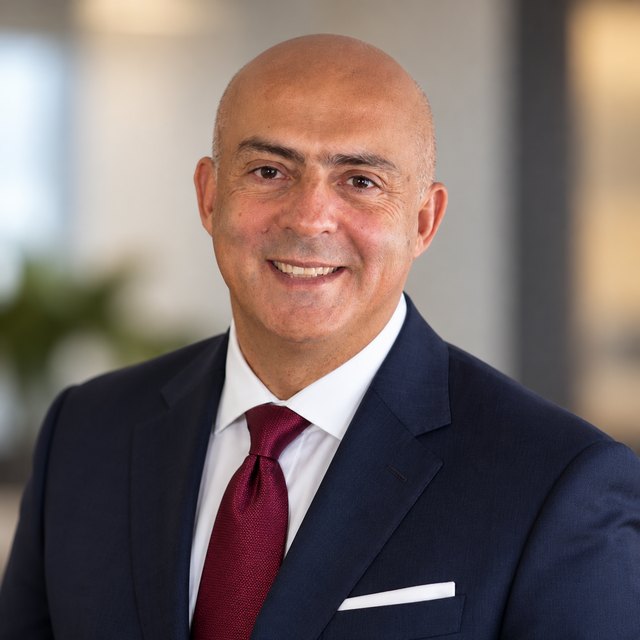
Jose Salloum is a Financial Security Advisor (conseiller en sécurité financière) certified by the Autorité des marchés financiers in Quebec, a Life and Accident & Sickness Insurance Agent licensed by the Financial Services Regulatory Authority of Ontario, and a Life Insurance Agent licensed by the Insurance Council of British Columbia. Licensed since 2001.
He has practised Infinite Banking since 2015 and founded Canadian Wealth Creation Centre Inc. in 2016. From 2020 to 2024 he was an IBC (Infinite Banking Concepts™) Authorized Practitioner of the Nelson Nash Institute, a private certification rather than a regulatory licence.
IBC Financial is the educational website of Canadian Wealth Creation Centre Inc., open to all Canadians. Services come only from Canadian Wealth Creation Centre Inc. Its representatives hold a licence in each province served: Quebec, Ontario, Alberta, British Columbia, Manitoba and New Brunswick. Jose Salloum's own licences cover Quebec, Ontario and British Columbia. This page is general education and not advice on any individual file.
Last reviewed 2026-11-05. By Jose Salloum, Financial Security Advisor in Quebec. In Ontario, Life and Accident & Sickness Insurance Agent. In British Columbia, Life Insurance Agent.