
Medical Specialists, Equipment and the Private Clinic Cycle
A specialist who works outside hospital pays for equipment and space in cycles, so the financing decision returns every few years. Compare a lease, a lender's loan, vendor financing and cash on total cost after tax, what you own at the end and your reserve. An existing participating whole life policy can support a policy loan from the insurer, at a rate it sets and may change, but it reduces the death benefit and can be taxable; a new policy funds nothing this year.
A family physician can practise for years with an examination table, a computer and a stethoscope. A specialist who performs procedures in an office cannot. An ophthalmologist who works in an office needs imaging and lasers. A gastroenterologist who runs an endoscopy suite needs scopes, reprocessing equipment and a room built for sedation. A dermatologist may need lasers, a cardiologist ultrasound and testing equipment, an anaesthesiologist in a procedure clinic a full set of monitors. Each of those purchases is large, and each comes back.
That is the subject here: the cycle of buying, financing and replacing equipment, and the private clinic that holds it. The money questions are concrete. Who lends on a $250,000 device, and who is paid? Is a lease cheaper than a loan once tax is counted? Why does the sales tax on medical equipment generally stay a cost for a physician? What must be in place, in Quebec and elsewhere, before a clinic can open its doors? And where, if anywhere, does a participating whole life policy fit?
If your work happens entirely in hospital, much of this belongs to the hospital. If part of it happens in your own premises, or in a clinic you share with colleagues, the equipment and the space become your financing problem, on a schedule you do not fully control. I am paid by insurer commissions when a policy is bought. Reading costs you nothing.
One point first. A life insurance policy bought this year will not pay for equipment you need this year or next. A new policy builds cash value slowly. Everything below about policy loans applies to a policy you already own, or to a plan for later cycles. The broader picture of a physician's money, stage by stage, is in the collection for physicians.
What does a specialist's office practice finance, and how often?
Three layers: the equipment that performs or supports procedures, the computer systems that record and transmit them, and the space built around both. Each layer has its own working life, and none of them shares a replacement date, so financing becomes a recurring task in the practice rather than a single event.
Equipment is the most visible layer. It ranges from small instruments to large diagnostic and procedural units, and it ages in two ways. It wears out, and it falls behind: a manufacturer stops supplying parts or software updates, a newer model changes what referring physicians expect, or a standard of practice moves. Your service technician and the manufacturer's support notices tell you more about the real working life of a unit than any rule of thumb.
The second layer is information technology: the electronic medical record, image archiving, the network, workstations and the software that links a device to your reports. It renews on shorter cycles, and parts of it behave like a permanent subscription rather than a purchase.
The third layer is the space. A procedure room, a sterile reprocessing area, ventilation, medical gases, plumbing for scopes, reinforced floors for heavy units and, for some imaging, radiation shielding. These are leasehold improvements, and they are built for a specific use. They age with the equipment they serve, and they belong to a lease that has its own end date.
| Layer | Examples in a specialist's office | What can trigger replacement | Financing question it raises |
|---|---|---|---|
| Procedural and diagnostic equipment | Ultrasound, endoscopy towers and scopes, ophthalmic imaging and lasers, testing equipment, monitors | Wear, end of manufacturer support, new standards, volume | Lease, loan, vendor financing or cash, for each unit |
| Information technology | Medical record, image archiving, network, workstations, device software | Licence renewals, security, compatibility with devices | Operating budget or short financing; often a recurring cost |
| The space | Procedure rooms, reprocessing, ventilation, shielding, cabinetry | The lease term, a move, a new service, an inspection | Build-out financing, the lease and its renewal options |
A scope tower bought at opening, an imaging unit added later and a renovation tied to a lease renewal can fall due in the same few years. Seen early, that cluster can be spread out. Seen late, it becomes rushed decisions made at the moment of sale.
Who pays for equipment in hospital, in a shared clinic and in your own premises?
In hospital, the institution generally buys and maintains the equipment you use. In a shared clinic, the cost-sharing or overhead agreement decides who owns and pays for each unit. In your own premises, you or your professional corporation own the equipment and carry its financing. A specialist can work in two of these settings at once.
The setting decides whose balance sheet holds the device. Read the agreements before you assume.
| Setting | Who generally owns the equipment | Who carries the financing | What you should read |
|---|---|---|---|
| Hospital | The institution | The institution, under its own budget | Your privileges and any department agreement on equipment you supply yourself |
| Shared clinic or group | The group, a clinic company, or the physicians in shares | The group or company, recovered through overhead or a cost-sharing formula | The cost-sharing or overhead agreement, and the exit clause |
| Your own premises | You or your professional corporation | You or your corporation, through a lease, a loan, vendor financing or cash | The lease of the premises, each equipment agreement, your lender's terms |
A shared clinic deserves a closer look, because the money can travel in two ways. Under a genuine cost-sharing arrangement, one physician or a manager may pay the capital and lease costs as agent for the others, who reimburse their share. The Canada Revenue Agency's GST/HST policy statement P-238 (7 November 2000) treats such a reimbursement under a true agency arrangement as no supply, so no GST/HST applies to it. A clinic company that charges physicians for the use of its space and equipment is in a different position: that charge can be a taxable supply. The structure, not the label, decides. If you are joining a group rather than equipping your own office, joining a clinic or group practice covers the overhead agreement and the buy-in.
Where you own the equipment yourself and are incorporated, decide early whether the corporation or you will own and finance each unit. The borrower is the one who may deduct the interest, and the owner claims capital cost allowance, so keep the device, its financing and its insurance in the same name. If retained earnings would pay, several regimes apply first: the small business deduction and its business limit, the passive income rule, the personal services business rules and, in Quebec, the paid-hours condition on the provincial deduction; the incorporated physician's corporation sets them out.
Why does the cycle matter more than any single purchase?
a notional account, not a bank balance
The Capital Dividend Account
- A notional tax account of a private Canadian corporation
- It records amounts the corporation received without tax
- A death benefit it receives, less the adjusted cost basis, may credit it
- Available balances may be paid out as capital dividends
- The credit depends entirely on the ownership structure
Because the same decision returns every few years, on several units at once. A small difference in cost, terms or timing, repeated across a career, adds up, and a practice that decides each purchase at the moment of sale tends to finance by default rather than by design.
A lender is paid for real services. A lessor, lender or vendor's finance company puts the equipment to work years before you could have saved for it, prices the risk that you will not pay, and documents and collects the loan. Interest and fees pay for that, whoever lends, an insurer on a policy loan included.
Gather the equipment leases and loan statements of the last ten years once, and add up the interest and finance charges. That total is a record, not a reason to act; what is paid is paid. It shows how the next cycle will go if nothing changes.
A replacement calendar turns the cycle into something you can plan. Build it once, review it each year with your year-end statements, and keep one person responsible for it.
- List each unit that would need financing to replace, with its location and serial number.
- Record the date acquired and how it was financed, with the end date of any lease or loan.
- Ask your service technician for the expected working life and the manufacturer's support horizon.
- Note the likely next action: replace, refurbish, extend the service contract or retire the unit.
- Sort by expected replacement year, and mark the years where several units fall due together.
- Beside each heavy year, write how you expect to pay, and who must be asked for an offer and when.
Illustrative example, with no prices: a calendar for an office with one procedure room might read like this, with years counted from today.
| Unit | Acquired | Expected replacement | Financed by | Agreement ends | Next action |
|---|---|---|---|---|---|
| Endoscopy tower and scopes | At opening | Years 4 to 6 | Equipment lease | Year 3 | Ask for buyout and return terms in year 2 |
| Reprocessing equipment | At opening | Years 5 to 7 | Term loan | Year 4 | Plan with the service technician |
| Ultrasound unit | Two years ago | Years 5 to 7 | Vendor financing | Year 3 | Check software support dates |
| Monitors and recovery equipment | At opening | Years 4 to 7 | Cash | None | Inspect and budget |
| Medical record and archiving | Renewed yearly | Every year | Operating budget | Yearly | Review at renewal |
Here, years 4 to 6 carry most of the weight. That gives you two or three years to collect offers, build a reserve or move one replacement.
How do a lease, a loan, vendor financing and cash compare for one device?
Put every route on the same footing: the total paid over the term, what you own at the end, what the lender can take or restrict, and what is left in your reserve. A low monthly payment is not a low cost, and the after-tax answer can differ from the one on the offer.
A lease quotes a payment, a lender a rate, a vendor a promotion and cash a price. Translate them into the same terms before you compare.
| Route | Who provides the money | Who you owe | Who receives the interest or finance charge | What to check first |
|---|---|---|---|---|
| Equipment lease | A lessor, independent or linked to the manufacturer | The lessor | The lessor, through the payments | End-of-term options, early exit, who insures and maintains |
| Term loan from a lender | A lender that finances professionals or equipment | The lender | The lender | Security, personal guarantee, prepayment, covenants |
| Vendor or manufacturer financing | The vendor's finance arm or a partner lender | That finance company | That finance company | Whether the price changes if you pay another way |
| Line of credit | A lender | The lender | The lender | Whether the limit can be reduced or called; meant for timing gaps |
| Cash or retained earnings | You or your corporation | Nobody | Nobody; the cost is what that cash could otherwise have done | The reserve left for a slow quarter |
| Policy loan on a policy you own | The insurer, against the cash value | The insurer | The insurer, at a rate it sets and may change | Loan value, tax above the adjusted cost basis, lapse risk |
| Loan with a policy assigned as collateral | An outside lender | That lender | That lender | Credit approval, the lender's rights over the policy, release on repayment |
For a lease, ask for the total of every payment and fee, the end-of-term terms (a stated buyout, a buyout at fair market value, a return or a renewal), who pays insurance and maintenance, and the cost of ending early or upgrading. Leases can suit equipment whose technology moves quickly. They can cost more when a unit outlives the term.
For a loan, ask for the rate, whether it is fixed or variable, the total interest over the term, the prepayment terms, the security taken and whether a personal guarantee is required. A loan secured by a general security agreement can reach more than the device it paid for.
For vendor financing, ask for the cash price first, in writing. A promotional rate is sometimes paid for through a higher equipment price, and you see it by comparing the same price on every route.
For cash, ask how much of your reserve the purchase would use, how long the reserve would take to rebuild, and what that cash would otherwise have done. Cash avoids a lender's interest. It does not avoid the cost of capital.
Two checks apply whatever the route. Health Canada says Class II, III and IV medical devices need a device licence before they can be imported and sold in Canada, and it advises purchasers to check the Medical Devices Active Licence Listing before buying. Ask the vendor for the licence number and verify it yourself. Then ask what the service contract covers after the warranty, because an unserviceable device is a cost with no revenue.
What does tax change: capital cost allowance, interest and the GST/HST?
Equipment you buy is deducted over time through capital cost allowance, interest on money borrowed for the practice can be deductible, and the GST or HST on equipment used mainly for exempt medical services is generally a cost you cannot recover. Compare routes after tax, with your accountant reading each agreement.
Start with capital cost allowance. The Canada Revenue Agency's page on classes of depreciable property (modified 31 August 2026) lists the classes a specialist's office is most likely to meet:
- Class 8, at 20%: furniture, appliances, tools costing $500 or more, some fixtures and machinery, which is where much medical equipment lands.
- Class 12, at 100%: tools and instruments costing less than $500, with medical and dental instruments named specifically.
- Class 50, at 55%: general purpose computer hardware and its systems software.
The class of a given unit is your accountant's decision. First-year rules have changed in recent years. The CRA's guide T4002 (Chapter 4, modified 16 April 2026) describes the accelerated investment incentive for property acquired after 20 November 2018 and available for use before 2028, with a phase-out after 2023, and, under proposed changes, a reaccelerated incentive for property acquired after 2024 and available for use before 2034. Which rule applies depends on when the unit becomes available for use, so give your accountant the delivery and installation dates.
Leasehold improvements follow a different rule. They go into Class 13, which the CRA's archived Interpretation Bulletin IT-464R describes as spreading the cost over the remaining term of the lease, counting a first renewal option, and never faster than one fifth a year. T4002 confirms that the half-year rule does not apply to Class 13. The practical point: a short lease spreads the tax deduction over fewer years, never fewer than five, and it also shortens the time the improvements have to pay for themselves.
Interest is next. The CRA's page on line 8710, interest and bank charges (modified 31 August 2026) says interest on money borrowed for business purposes, or to acquire property for business purposes, can be deducted. It also lets you choose to capitalize interest on money borrowed to acquire depreciable property, adding it to the cost instead of deducting it at once; ask your accountant whether that suits the year. Lease payments can be deductible as well, depending on how the lease is written, which is why the accountant reads the agreement rather than its title.
The sales tax is where medicine differs from most businesses. The CRA's page on the type of supply (modified 19 November 2025) lists most health, medical and dental services performed by licensed physicians for medical reasons as exempt supplies, and says you generally cannot claim input tax credits for the GST/HST paid on purchases used to make exempt supplies. For a practice whose work is mainly insured medical care, the GST or HST on a device, a lease payment or a build-out is therefore generally part of the cost. A service performed for another reason than a medical one may fall outside that exemption, which changes the picture for the share of equipment used to provide it. Your accountant decides how the rules apply to your mix of services.
In Quebec, the Quebec sales tax has its own rules, administered by Revenu Québec, and Quebec residents and corporations file with Revenu Québec as well as with the CRA. Ask your accountant how both taxes apply to the equipment and to the way it is financed.
What does the arithmetic look like on a $250,000 device?
frequently the same person, not always
Three roles inside one contract
- 01One contractAll three can differ. Only the policyholder changes it, subject to any irrevocable beneficiary.
- 02The policyholderOwns the contract and holds its rights, subject to any assignment.
- 03The insuredThe person whose life is covered.
- 04The beneficiaryReceives the death benefit.
In this illustrative example, $250,000 is financed over five years at assumed rates. A lender's loan at 7.5% costs about $50,569 in interest, a collateral loan at 7% about $47,018, a policy loan at 6.5% about $43,492. Sales tax assumed at 13% adds $32,500 that a mainly exempt practice generally cannot recover.
Illustrative example. Every figure is an assumption chosen to show the arithmetic, not a quote from any vendor, lender or insurer and not a typical result. Interest is calculated monthly on the declining balance over 60 equal payments. The policy loan row assumes you already own a policy whose insurer will advance $250,000; your contract may charge interest differently, for example once a year, which changes the figure.
| Route for the $250,000 | Rate assumed | Monthly payment | Total interest over 60 months | Paid to |
|---|---|---|---|---|
| Lender's term loan | 7.5% | About $5,009 | About $50,569 | The lender |
| Loan from a lender with a policy assigned as collateral | 7.0% | About $4,950 | About $47,018 | The lender |
| Policy loan from the insurer | 6.5% | About $4,892 | About $43,492 | The insurer |
The order in that table comes only from the rates assumed. Change them and the order can change. The policy loan route also reduces the death benefit while the loan is outstanding and depends on loan value built over many earlier years of premiums.
Now the sales tax. At an assumed combined rate of 13%, the tax on $250,000 is $32,500. If the device is used mainly for exempt medical services, that amount is generally not recoverable through input tax credits, so it belongs in the cost of every route. Whether it is financed or paid in cash, it is real money.
Then the question every device must answer: does it pay for itself? On the lender's loan, the payment is about $5,009 a month. If each procedure performed with the device leaves an assumed $150 after supplies, staff time and its share of rent, you need about 34 procedures a month to cover the payment alone, before any income to you. That is a capacity question: referrals, booking time, staff and the fee schedule of your province's plan decide whether 34 is easy or out of reach. Ask that question before you sign, with your own figures.
Deductible interest costs less after tax than the table shows, and a Class 8 device is deducted over many years at 20% on a declining balance, subject to the first-year rules above. Neither makes the equipment cheaper to buy; they change when the tax relief arrives.
What does a private clinic add to the equipment decision?
A lease, a build-out and a waiting period. The premises must be leased and improved before the first patient is seen, the improvements stay with the building, and rent, staff and loan payments start before the provincial plan pays for the first procedure. Read the lease before you finance anything built inside it.
The lease comes first because everything you build depends on how long you can stay. A procedure room fitted with ventilation, gases and reinforced flooring is worth its cost only if the lease runs long enough to use it. Ask for the initial term, the renewal options and their conditions, the landlord's consent for alterations, any relocation or demolition clause, the restoration obligation at the end, and whether the landlord contributes to the improvements. If the lease is short and the renewal is at the landlord's discretion, the build-out is a bet on a negotiation you have not had yet.
Then the sequence of a build-out. Plans and approvals, a contractor's quote, a deposit, progress payments during construction, equipment delivery and installation, inspections, staff hiring and training, and only then the first patient. In some provinces, procedures under sedation or anaesthesia need the premises inspected before they begin, which can add weeks between the end of construction and the first billing. Each step has a cash cost, and many are paid before any revenue arrives.
A lender may finance only part of that. A deposit, the soft costs, the sales tax and the months of rent and payroll before opening can come from your own cash. A worksheet shows how deep that hole is.
Illustrative example, a first-year cash plan for the clinic only. Every figure is assumed. Your own salary or household draw is left out, on the assumption that your hospital work covers it; if it does not, add it as a sixth line. The worksheet uses five inputs, in this order:
- Your cash contribution at signing: $45,000 in month 1, for the deposit on the build-out and equipment and the costs lenders do not finance.
- Rent: $9,000 a month from month 1.
- Staff: $14,000 a month from month 3, when hiring and training begin.
- The equipment loan payment: about $5,009 a month from month 4, from the example above.
- Billings received from the provincial plan: none until month 5, then $30,000 in month 5, $45,000 in month 6 and $60,000 a month from month 7, with supplies and other costs at 15% of billings received. Cash each month equals billings received, less supplies, rent, staff, the loan payment and, in month 1, your contribution.
| Month | Billings received | Supplies and other costs | Cash that month | Running total |
|---|---|---|---|---|
| 1 | $0 | $0 | About $54,000 out | About $54,000 short |
| 2 | $0 | $0 | About $9,000 out | About $63,000 short |
| 3 | $0 | $0 | About $23,000 out | About $86,000 short |
| 4 | $0 | $0 | About $28,009 out | About $114,009 short |
| 5 | $30,000 | $4,500 | About $2,509 out | About $116,519 short |
| 6 | $45,000 | $6,750 | About $10,241 in | About $106,278 short |
| 7 to 12 | $60,000 each | $9,000 each | About $22,991 in each | Back above zero in month 11; about $31,665 ahead at month 12 |
On those assumptions, the clinic needs about $116,519 of cash behind it at the end of month 5. Two stress tests, alone and together, show how fragile that is:
- Billings 20% lower all year: the deepest point is about $121,619 short, and the year ends about $42,285 short.
- Opening two months later, with rent and staff unchanged: the deepest point is about $172,538 short, and the year ends about $70,335 short.
- Both at once: the deepest point is about $177,638 short, and the year ends about $123,885 short.
The gap between $116,519 and $177,638 is the real lesson. Construction delays and slow referrals are ordinary events, not disasters, and a plan that only works when both go well leaves no room for either. A smaller cash contribution, a rent-free fit-out period negotiated in the lease, a later start for some staff or a reserve held apart from the project would each change the picture. A delay you lived through on a past project is a stress test, never a ceiling.
A second location or a new procedure room follows the same logic. Before you add one, ask whether referrals and booking time exist to fill it, whether staff can be found, and whether the first clinic's cash can carry the second through its own waiting period.
How do Quebec's rules shape a specialist's private clinic?
regulated as insurance under provincial law
Why this is not an investment
- 01It is a contract that pays a benefit on death
- 02It is regulated as insurance under provincial law
- 03Contractual value and dividends are insurance features
- 04Judge it as insurance: coverage, cost, access
In Quebec, your status with the RAMQ decides who pays for insured services and on what tariff, and leaving the plan requires Santé Québec's authorization. A specialized medical centre needs its own authorization from Santé Québec, with physicians in control and either participating or non-participating physicians only. Settle both before you sign a lease.
The Régie de l'assurance maladie du Québec (RAMQ) recognises three statuses. A participating physician practises within the health insurance plan and is paid according to the tariffs in the agreement negotiated for the profession; the patient presents a valid card and pays nothing for covered services. A non-participating physician sets their own fees and does not accept the health insurance card; the patient pays and the RAMQ does not reimburse. A withdrawn physician (désengagé) practises outside the plan but is paid according to the agreement's tariffs; the patient pays and can claim reimbursement from the RAMQ.
The RAMQ's page for specialists on whether to participate in the plan sets the conditions for a change. To become non-participating, a physician must first obtain an authorization from Santé Québec. A physician who received their permit on or after 24 April 2025 must have practised five years within the plan before becoming non-participating. A change to non-participating or withdrawn status takes effect on the 31st day after the request is sent, a return to participating status after eight days, and patients must be told of the new status in writing before services are provided. Those dates decide when a private clinic's revenue can start, so build them into the timetable.
A specialized medical centre (centre médical spécialisé, or CMS) is a further step. Santé Québec's application form for authorization to operate a CMS, read on 2 October 2026, requires that physicians control the operating company or partnership and form the majority of the quorum of its board, that the centre name a medical director, and that it be one of two models: a centre where only physicians subject to an agreement under section 19 of the Health Insurance Act practise, or one where only non-participating physicians practise. The form cites the Act respecting the governance of the health and social services system (chapter G-1.021). Ask a Quebec lawyer or notary which authorizations your project needs before you commit to premises or equipment.
The professional side has its own rules. The Collège des médecins du Québec regulates practice, including practice through a company; the conditions for practising medicine in a business corporation or a limited liability partnership are set out in joining a clinic or group practice. The Fédération des médecins spécialistes du Québec (FMSQ) represents Quebec's medical specialists, and the remuneration terms negotiated for them shape the revenue line of any participating clinic. For billing timing and irregular income under the RAMQ, see fee-for-service billing and irregular income.
On tax, Quebec residents and Quebec corporations file with Revenu Québec as well as with the Canada Revenue Agency, and the Quebec sales tax follows its own rules. Ask your accountant to cover both before you compare financing routes.
What do Ontario and the other provinces require of a private clinic?
Each province licenses or inspects community clinics in its own way, and the Canada Health Act sets conditions on insured services, including on charges to patients. In Ontario, a community surgical and diagnostic centre is licensed under a 2023 statute, and the College inspects premises where certain procedures are performed. Ask your province's ministry and college before you build.
In Ontario, the Ministry of Health's OHIP INFOBulletin 230907 (27 September 2023) says the Integrated Community Health Services Centres Act, 2023 came into force on 25 September 2023 and repealed and replaced the Independent Health Facilities Act. Facilities are licensed as integrated community health services centres, commonly called community surgical and diagnostic centres. The bulletin states that it is an offence for a centre to charge an insured person a facility cost for an insured service. If your project depends on a licence of that kind, the licence comes before the lease and the equipment.
The College of Physicians and Surgeons of Ontario runs an Out-of-Hospital Premises Inspection Program. It applies to premises where physicians perform procedures under general anaesthesia, parenteral sedation, regional anaesthesia or certain local anaesthesia, and a new premises must pass an inspection before those procedures begin. The medical director applies, and a fee applies. Build the inspection into the timetable of your build-out, because the waiting period in the worksheet above lengthens if it is late.
Across Canada, the Canada Health Act sets conditions on the provinces for insured services, including on extra-billing and user charges, and Health Canada says a province that fails to meet those conditions could face deductions from its federal transfer. That is one reason provincial rules on what a clinic may charge a patient for an insured service are strict, and why a revenue plan built on patient charges needs a lawyer's reading before it reaches a lender.
The other provinces have their own ministries, colleges and statutes, which we have not set out here. British Columbia physicians bill the Medical Services Plan (MSP); other provinces have their own plans, each with its own payment schedule. Provincial rules on who may own the shares of a medical professional corporation also apply; ask the college and a lawyer before a corporation signs for the premises or the equipment.
How could a participating whole life policy fit a later equipment cycle?
If you already own one with enough cash value, it can supply a policy loan from the insurer, or serve as collateral for a lender's loan, without surrendering the coverage. It cannot fund this year's device from a new policy, it is not free money, and every dollar owed reduces the death benefit until repaid.
A participating whole life policy is life insurance first. It has guaranteed cash values set by the contract and may receive dividends, which the insurer declares each year and which are not guaranteed. The Autorité des marchés financiers describes a policy loan as borrowing with the cash surrender value as collateral, repaid with interest; if the person insured dies first, the insurer subtracts what is owed, with interest, from the insurance payable.
The insurer is the lender. It advances its own funds at a rate it sets and may change, and the interest is owed to and paid to the insurer. Depending on the contract, unpaid interest is added to the loan. For tax, a policy loan is a disposition under subsection 148(9) of the Income Tax Act: the part of the proceeds above the policy's adjusted cost basis just before the loan is income, and the loan lowers the basis. Repaying a taxed amount can give a deduction under paragraph 60(s) in the year of repayment. If the loan and interest overtake the value securing them, the policy can end after the notice the contract provides, and that can create taxable income to the extent the proceeds exceed the adjusted cost basis. Interest on a policy loan used to earn business income can be deductible only if the insurer verifies it on Form T2210, under subsection 20(2.1). See how a policy loan works and when a policy loan becomes taxable.
A lender may instead take the policy as collateral. The assignment gives it a right to be paid first from the policy up to what you owe; the policy stays yours, and the assignment is released on repayment. As recorded on this site, an assignment as security is not a disposition under subsection 148(9).
Canadian Wealth Creation Centre Inc., which publishes this educational website, calls the long-term aim Infinite Financial Sovereignty®, a registered trademark of Jose Salloum: a source of capital built over many years for the recurring purchases of a career, repaid on a schedule you hold yourself to. It is a goal, not a promised result, drawing on the financing approach known as The Infinite Banking Concept®, which R. Nelson Nash described. The same reasoning appears for another equipment-heavy business in the machine that outlives its financing.
If your corporation owns the policy, the loan is an advance from the insurer to the corporation; moving money to you is a second transaction with its own tax. Whether you, your corporation or a holding company should own a policy stays open here; see personal or corporate ownership of the contract, the incorporated physician's corporation and the business owners section, and decide with your accountant and lawyer.
What are the drawbacks and risks?
the cost that never appears on a statement
Opportunity cost, and why it stays invisible
- 01The value of the alternative you gave up
- 02The one real cost that never appears on a statement
- 03A comparison is incomplete until the alternative is named
- 04Every decision about capital carries one
Equipment can date before it is paid for, a build-out stays with the landlord's building, revenue depends on referrals and provincial rules you do not control, and sales tax is generally a cost. A policy loan adds interest owed to the insurer, a smaller death benefit and possible tax.
- Obsolescence. A unit can lose manufacturer support while payments remain.
- The lease. A short term or a discretionary renewal can strand improvements you financed.
- Rules that change. Remuneration agreements, licensing and plan status shape revenue and can move.
- Personal guarantees. A guarantee or a general security agreement can reach beyond the device.
- Disability. Payments continue if you cannot work; see disability and the capital plan.
- The policy loan. The rate can change, unpaid interest compounds, the death benefit falls and a lapse with a loan can create tax. Dividends are not guaranteed, so a repayment plan that relies on them is fragile.
What should you ask before you sign?
Ask the vendor and the lender for every cost and exit in writing, your accountant for the after-tax comparison and the cash plan, your lawyer for the lease, guarantees and provincial authorizations, and the insurer, if a policy is involved, for the loan value, the rate and the adjusted cost basis.
- Vendor: the cash price, the Health Canada licence number, the service contract and the support horizon.
- Lender or lessor: total cost, end-of-term terms, security, guarantees and prepayment.
- Accountant: the capital cost allowance class, deductibility, GST/HST or QST, and who should own and borrow.
- Lawyer (in Quebec, a lawyer or notary): the lease, the authorizations, the ownership rules for your corporation.
- Insurer, through a licensed representative: how much it will advance today, how the rate is set and charged, the adjusted cost basis, and how the representative is paid.
How should you read the figures above?
Every price, rate, billing amount and margin in the examples is an assumption chosen to show the arithmetic. The rules and fixed amounts from the CRA, Health Canada, the RAMQ, Santé Québec, Ontario, the CPSO and Assuris come from pages read on 2 October 2026. Replace each assumption with a figure from a written document.
No real loan rate, lease factor, fee, premium or cash value appears. Keep the worksheet's order and run both stress tests with your inputs. Assuris, which every life insurer authorized in Canada must belong to, protects a whole life policy up to $1,000,000 or 90% of the death benefit, and up to $100,000 or 90% of the cash value, whichever is higher, after policy loans are deducted.
Who this does not suit
A policy loan for equipment does not suit you if you do not already own a policy with enough loan value, if you would not repay a loan no one schedules for you, or if your family needs every dollar of the death benefit. A private clinic does not suit a plan that only works if construction, authorizations and referrals all arrive on time. Working within a hospital or a shared clinic is a sound choice too. When you want to look at your own figures, start with the self-check on the Becoming a Client page.
A thirty-minute discovery meeting
A first conversation establishes whether this fits. No illustration is prepared and nothing is arranged.
Often the answer is no, and you will hear it during the call rather than in a proposal afterwards.
This form reaches Canadian Wealth Creation Centre Inc. Any meeting, any advice and any insurance product is provided by Canadian Wealth Creation Centre Inc., through its representatives who are licensed in the client's province. IBC Financial is the company's educational website: it distributes no product and no financial service, and it gives no individualised advice.
Common questions
Is it better to lease or buy medical equipment in Canada?
Can a physician claim the GST or HST paid on medical equipment?
What capital cost allowance class is medical equipment in?
How are leasehold improvements for a medical clinic deducted?
Is interest on an equipment loan deductible for a physician?
What should I check before buying a used ultrasound or endoscopy unit?
Can a specialist open a private clinic in Quebec?
What is the difference between a non-participating and a withdrawn physician in Quebec?
Do Ontario private clinics need a licence to provide insured services?
How much cash does a specialist need before opening a clinic?
Can I use a policy loan to buy medical equipment?
Should my professional corporation or I own the clinic's equipment?
Sources
- Canada Revenue Agency, Classes of depreciable property, modified 31 August 2026. Class 8 at 20% covers furniture, tools of $500 or more and machinery; Class 12 at 100% includes medical instruments costing less than $500; Class 50 at 55% covers general purpose computer hardware and systems software., verified 2026-10-02
- Canada Revenue Agency, guide T4002, Chapter 4, Capital cost allowance, modified 16 April 2026. The half-year rule does not apply to Class 13. The accelerated investment incentive covers property acquired after 20 November 2018 and available for use before 2028; under proposed changes, a reaccelerated incentive covers property acquired after 2024 and available for use before 2034., verified 2026-10-02
- Canada Revenue Agency, archived Interpretation Bulletin IT-464R, Capital cost allowance, leasehold interests. Class 13 spreads the cost of leasehold improvements over the lease term, counting a first renewal option, and never faster than one fifth a year., verified 2026-10-02
- Canada Revenue Agency, Type of supply, modified 19 November 2025. Most health, medical and dental services performed by licensed physicians or dentists for medical reasons are exempt, and input tax credits generally cannot be claimed for the GST/HST paid on purchases for exempt supplies., verified 2026-10-02
- Canada Revenue Agency, GST/HST policy statement P-238, Application of the GST/HST to payments made between parties within a medical practice organization, 7 November 2000. Shared capital and lease costs under a genuine cost-sharing arrangement, where a practitioner acts as agent, are not a supply., verified 2026-10-02
- Canada Revenue Agency, Line 8710, Interest and bank charges, modified 31 August 2026. Interest on money borrowed for business purposes can be deducted; interest may be capitalized on money borrowed for depreciable property; policy loan interest needs the insurer's verification on Form T2210 by June 15 of the following year., verified 2026-10-02
- Health Canada, Purchase of licensed medical devices for use in healthcare facilities, modified 18 March 2021. Class II, III and IV medical devices need a Health Canada device licence before they can be imported and sold; purchasers should check the Medical Devices Active Licence Listing., verified 2026-10-02
- Régie de l'assurance maladie du Québec, Professionals offering covered services. Participating, non-participating and withdrawn professionals, and who pays the fees in each case., verified 2026-10-02
- Régie de l'assurance maladie du Québec, Je décide de participer ou non au régime d'assurance maladie du Québec (specialists). Authorization from Santé Québec before becoming non-participating; a physician holding a permit issued on or after 24 April 2025 needs five years of practice in the plan first; a change to non-participating or withdrawn takes effect on the 31st day after the request; patients are told in writing., verified 2026-10-02
- Santé Québec, Formulaire de demande d'autorisation pour l'exploitation d'un centre médical spécialisé (CMS), 1re étape. Authorization from Santé Québec; physicians form the majority of the board's quorum; a centre where only participating physicians practise or only non-participating physicians practise; a medical director; Act respecting the governance of the health and social services system (chapter G-1.021)., verified 2026-10-02
- Fédération des médecins spécialistes du Québec, home page, and Collège des médecins du Québec, home page., verified 2026-10-02
- Ontario Ministry of Health, OHIP INFOBulletin 230907, Changes to the Independent Health Facilities Sector, 27 September 2023. The Integrated Community Health Services Centres Act, 2023 came into force on 25 September 2023 and replaced the Independent Health Facilities Act; charging an insured person a facility cost for an insured service is an offence., verified 2026-10-02
- College of Physicians and Surgeons of Ontario, Out-of-Hospital Premises Inspection Program. Premises where procedures under general anaesthesia, sedation, regional anaesthesia or certain local anaesthesia are performed are inspected, and a new premises must pass inspection before those procedures begin., verified 2026-10-02
- Health Canada, About the Canada Health Act, modified 7 July 2026. Provinces that fail to meet the Act's conditions could face deductions from their transfer payments., verified 2026-10-02
- Autorité des marchés financiers, How to access the cash surrender value without cancelling your life insurance. A policy loan uses the cash surrender value as collateral, is repaid with interest, and amounts owed at death come off the insurance payable; a policy can also secure a loan from another financial institution., verified 2026-10-02
- Assuris, Whole Life. Up to $1,000,000 or 90% of the death benefit and up to $100,000 or 90% of the cash value, whichever is higher, after policy loans are deducted. Assuris home page: every life and health insurer authorized to sell insurance in Canada is required to belong to Assuris., verified 2026-10-02
- Income Tax Act, subsections 148(1) and 148(9), paragraphs 20(1)(c) and 60(s), and subsection 20(2.1), Justice Laws Canada, as recorded on this site., verified 2026-09-30
About the author
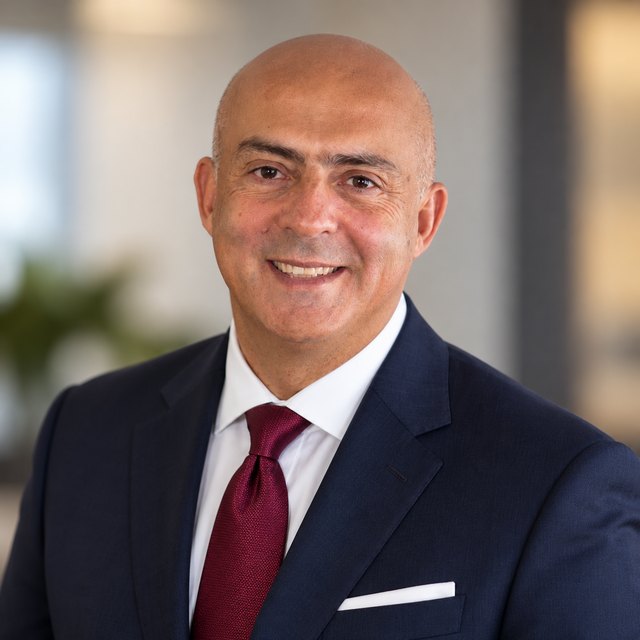
Jose Salloum is a Financial Security Advisor (conseiller en sécurité financière) certified by the Autorité des marchés financiers in Quebec, a Life and Accident & Sickness Insurance Agent licensed by the Financial Services Regulatory Authority of Ontario, and a Life Insurance Agent licensed by the Insurance Council of British Columbia. Licensed since 2001.
He has practised Infinite Banking since 2015 and founded Canadian Wealth Creation Centre Inc. in 2016. From 2020 to 2024 he was an IBC (Infinite Banking Concepts™) Authorized Practitioner of the Nelson Nash Institute, a private certification rather than a regulatory licence.
IBC Financial is the educational website of Canadian Wealth Creation Centre Inc., open to all Canadians. Services come only from Canadian Wealth Creation Centre Inc. Its representatives hold a licence in each province served: Quebec, Ontario, Alberta, British Columbia, Manitoba and New Brunswick. Jose Salloum's own licences cover Quebec, Ontario and British Columbia. This page is general education and not advice on any individual file.
Last reviewed 2026-10-02. By Jose Salloum, Financial Security Advisor in Quebec. In Ontario, Life and Accident & Sickness Insurance Agent. In British Columbia, Life Insurance Agent.