What a Trust Is, in Plain Language, for Someone Who Owns Life Insurance
A trust is an arrangement in which a settlor transfers property to a trustee, who holds it for beneficiaries under written terms. A trust can own a life insurance policy, receive its death benefit, or own shares of a company that owns the policy. Each brings filings and legal costs for your accountant and lawyer or notary to review.
"Put the policy in a trust." People hear that sentence from a lawyer drafting a will, from an accountant looking at a company, or from a relative who did it years ago. It sounds like one thing. It is several. A trust can own a life insurance policy, receive the money when the insured person dies, or own the shares of a company that holds the policy, and each arrangement behaves differently for control, tax and cost.
The word arrives with assumptions attached. Some think a trust avoids tax, others that it is only for the very wealthy. Neither is right, and a decision made on the wrong picture is expensive to unwind: a deed that does not match the beneficiary designation, a trust that files nothing for years, a policy sitting in an arrangement nobody in the family understands. Before you agree to any of it, you deserve to know what the thing is.
This page explains a trust in plain language for someone who owns, or is about to own, a life insurance policy. It is general information from a licensed insurance professional, not tax or legal advice. The tax analysis belongs to your accountant, and the drafting to a lawyer, or in Quebec a notary or lawyer. Start with the parties.
What is a trust, in plain words?
A trust is an arrangement in which one person, the settlor, transfers property to another, the trustee, who holds and manages it for the benefit of people named or described, the beneficiaries. The trustee has the control. The beneficiaries have the benefit. The written terms, usually a trust deed or a will, set the rules both must follow.
The Canada Revenue Agency's T3 Trust Guide puts the roles simply. The settlor is generally the person who set up the trust by contributing property to it. The trustee is an individual or a trust institution that holds the legal title to property in trust. The beneficiary is the person for whose benefit the trust is created. One person can hold more than one role.
What separates a trust from a gift is the split between control and benefit. Give a sum to an adult child, and the child decides what to do with it. Settle it on a trust for that child, and the trustee decides, within your terms, when and how the child benefits. That is why families use a trust: someone other than the beneficiary holds the reins.
A trust is not a company and it is not an account, but the Income Tax Act treats it as a taxpayer of its own. Subsection 104(2) deems a trust to be an individual in respect of the trust property, and subsection 104(1) reads a reference to a trust as including the trustee who holds that property. So the trust has its own tax year, its own return and its own tax bill, handled by the trustee.
What makes a trust valid outside Quebec?
In the common law provinces and territories, a trust exists only when three things are certain: the intention to create a trust, the property placed in it, and the people who benefit. The CRA's T3 Trust Guide states the same test. If one is vague, the arrangement may fail as a trust, whatever its title says.
Certainty of intention means the words show that the settlor meant the property to be held in trust, not merely hoped someone would use it wisely. "I would like my brother to look after my daughter with this money" may not be enough. A clause naming a trustee and the terms on which the trustee holds the money usually is. That difference is drafting, which is why the drafting is work for a lawyer.
Certainty of property means it is clear what is in the trust. For a policyowner the question is concrete: the policy itself, the death benefit once paid, or shares of a company? Each answer leads to a different document and different paperwork with the insurer. Certainty of beneficiaries means a trustee can tell who may benefit, by name or by a class described clearly enough to say who is in it and who is not.
How is a trust different in Quebec?
three mechanics, one of them fatal
How wealth actually crosses a generation
- What passes outside the estate by designation
- The deemed disposition that taxes almost everything else
- Whether the estate holds cash to pay that tax
- Selling assets to pay the tax is the common failure
Quebec's trust comes from the Civil Code, not from the common law, and it is built differently. It is usually explained as a patrimony by appropriation: property set aside for a purpose, which the settlor, the trustee and the beneficiary do not own. Articles 1260 and 1261 deal with this; a notary or lawyer confirms how they apply.
In the common law, the trustee holds legal title and the beneficiary holds what lawyers call a beneficial interest. Quebec does not split ownership that way. As the Civil Code's approach is generally summarized, the property leaves the settlor's patrimony and forms a separate one, administered by the trustee, in which none of the three parties holds the ownership. The vocabulary changes too: fiducie, fiduciaire, constituant.
The difference is practical. It can affect how a trust is constituted, how the property is administered, and how a beneficiary designation works alongside the trust, since the Civil Code has its own chapter on insurance beginning at article 2445. The federal tax rules on this page still apply to a trust in Quebec, and a Quebec trust may have provincial filings of its own, which your accountant identifies. The final word on the documents belongs to a Quebec notary or lawyer.
What is the difference between an inter vivos trust and a testamentary trust?
An inter vivos trust is created during the settlor's lifetime and exists from the day it is settled. A testamentary trust is generally created on and as a result of a death, usually by a will. The CRA's own definition is short: an inter vivos trust is a trust that is not a testamentary trust.
The practical difference is timing. An inter vivos trust can own property today, including a life insurance policy. A testamentary trust is only a set of clauses in a will until the will takes effect, so it cannot own a policy during the insured person's life, and a death benefit meant for it is directed to the trustee named in the will. How that designation is worded, and what goes wrong when the will and the insurer's form drift apart, is on a death benefit and a testamentary trust.
Tax treatment differs less than it once did. Subsection 122(1) of the Income Tax Act taxes a trust at the highest individual percentage and leaves out two kinds of trust: a graduated rate estate and a qualified disability trust. A graduated rate estate is the estate that arose on and as a consequence of a death, and the CRA notes it can keep that status for up to 36 months. Most other trusts, created by will or during life, are taxed at the top rate.
| Attribute | Inter vivos trust | Testamentary trust |
|---|---|---|
| When it begins | When it is settled, during the settlor's lifetime | Generally on and as a result of a death |
| Usual document | A trust deed | A will |
| Can it own a policy while the insured is alive? | Yes, if the deed gives the trustees that power | No, it does not exist yet |
| Usual link to a policy | Owner, beneficiary, or shareholder of a company that owns one | Receives the death benefit through a designation to its trustee |
| Rate on income kept in the trust | Highest individual percentage | Highest individual percentage, unless it is a graduated rate estate or a qualified disability trust |
What do discretionary and fixed interests mean?
protection arranged late is not protection
Asset protection turns on timing
- 01Statutory exemptions under provincial law
- 02Ownership structures arranged in advance
- 03Insurance with a properly named beneficiary
- 04A transfer made to defeat a known creditor can be reversed
- 05Protection put in place early is the protection that holds
In a fixed trust, the deed sets each beneficiary's share, for example equal thirds, and the trustee must follow it. In a discretionary trust, the trustee decides which beneficiaries receive income or capital, how much and when, within the limits the deed sets. Many family trusts combine the two, with fixed rights for some purposes and discretion for others.
A fixed interest is simple and rigid: the trustee cannot give more to a child in school. A discretionary interest gives the trustee room to respond, and puts more weight on choosing the trustee well, because the trustee must consider the beneficiaries fairly and act within the deed. It also has tax effects, since income paid or made payable to a beneficiary is taxed differently from income kept in the trust.
For a policyowner, the choice shows up when the death benefit arrives. A fixed trust divides it by the formula. A discretionary trust lets the trustee hold it, help one beneficiary with a home, fund education for another, or keep it invested for a beneficiary who is not ready. Neither design is right in the abstract. It depends on the family, and the lawyer or notary drafts it.
What is a bare trust, and does it have to file?
A bare trust is an arrangement in which the trustee only holds legal title and acts as agent for the beneficiaries, who make the decisions. The CRA says bare trusts did not have to file a T3 return for 2024 or 2025, and that certain bare trusts must file for taxation years ending on or after 31 December 2026.
The Income Tax Act does not use the phrase "bare trust". It reaches the idea in subsection 104(1): an arrangement is generally deemed not to be a trust when the trust can reasonably be considered to act as agent for all its beneficiaries in all dealings with all its property.
The filing position has changed several times, so old information is a trap. In the CRA's frequently asked questions on enhanced trust reporting, updated 5 October 2026 and read today, bare trusts were not required to file a T3 return, including Schedule 15, for 2024 and 2025. For taxation years ending on or after 31 December 2026, what the CRA calls reportable bare trusts must file. It lists exclusions, for example where every beneficiary is also a legal owner, and certain principal residences held for a spouse or a related person.
Why does this matter to a policyowner? Because informal arrangements around policies and family companies are common, such as shares held in one name for a whole family. Whether one is a reportable bare trust from 2026 depends on the facts. Bring the documents to your accountant before the year-end.
How is a trust taxed in broad terms?
A trust pays tax on the income it keeps, generally at the highest individual rate. Income that is paid, or made payable, to a beneficiary in the year can usually be deducted by the trust and is taxed in the beneficiary's hands instead. The trustee reports all of it on a T3 return, due 90 days after the trust's year-end.
The rate comes from subsection 122(1): the federal tax payable by a trust is based on the highest individual percentage for the year, applied to its amount taxable. Provincial tax is added, so the combined rate depends on where the trust is resident and on the year. Your accountant computes it, and this page quotes no rate.
The flow-through works through three subsections. Subsection 104(6) lets a trust deduct amounts that became payable in the year to a beneficiary, and subsection 104(13) includes them in the beneficiary's income. Subsection 104(24) adds the condition with teeth: an amount is not considered payable unless it was paid in the year or the beneficiary was entitled in the year to enforce payment.
The return is the T3 Trust Income Tax and Information Return. The CRA says it is due no later than 90 days after the trust's tax year-end, and most trusts other than graduated rate estates use a 31 December year-end. A trust that must file, other than a listed trust, also completes Schedule 15: name, address, date of birth for an individual, country of residence and tax identification number of every trustee, settlor, beneficiary and controlling person.
One more rule belongs on your accountant's list. Subsection 75(2) can attribute a trust's income and gains back to the person who contributed the property, if that property can revert to that person, pass to people that person chooses, or not be dealt with without that person's consent. How a deed is drafted can decide whether it applies.
What is the 21-year rule?
three omissions and one misplaced emphasis
Where a compound projection gets oversold
- 01A constant rate is assumed where returns actually vary
- 02Tax is left out of the arithmetic
- 03Fees are left out of the arithmetic
- 04Time matters more than rate for most households
Every 21 years, a trust is generally deemed to dispose of its capital property at fair market value and to reacquire it at that value. Any gain that has built up is taxed in the trust, even though nothing was sold. The rule is in paragraph 104(4)(b) of the Income Tax Act, and planning for the anniversary starts years ahead.
The clock usually starts on the day the trust was created, and the deemed disposition falls on the day that is 21 years after the latest of the dates the Act lists. The trust receives no cash, so the tax is paid from other resources, or the trustees act before the anniversary, often by distributing property to beneficiaries as the deed and the Act allow. How the rule touches a trust that owns a policy, or shares of a company that owns one, is taken up on a family trust as the owner of a policy and a family trust, a holding company and the policy. Ask your accountant to note the 21st anniversary in the file on the day the trust is settled.
What does a trust cost to set up and run?
A trust costs money at three points: drafting the deed or the will, running the trust every year, and winding it up. Drafting is a professional fee from a lawyer or notary. Running it means the yearly T3 return and Schedule 15 where required, accounting, trustee time or trust company fees, and paperwork for each decision.
The setup cost depends on how complex the deed is, how many beneficiaries there are, and whether a company is part of the structure. A testamentary trust clause in a will is usually simpler than an inter vivos family trust that will hold shares and a policy. This page gives no figures, because fees vary by professional and by file.
The running cost is the one families underestimate. A trust files every year it is required to, keeps minutes of trustee decisions, records what was paid to whom, and keeps its documents consistent with the insurer's records. A trust company charges for that work, and a family trustee spends real time on it.
A trust earns its cost when the control it provides is genuinely needed. When it is not, a carefully worded beneficiary designation may do the job for nothing, as the page on a minor beneficiary and a beneficiary who cannot be found shows for one common case.
What are the three ways a trust meets a life insurance policy?
the designation exists to avoid the estate
Why a contingent beneficiary matters
- 01What happens to the proceeds if the primary beneficiary cannot receive them?
- 02They receive the proceedsA contingent is named. The designation carries the proceeds past the estate.
- 03The proceeds generally fall into the estateNo contingent is named. An estate exposes them to delay and cost, and creditors of the estate may then reach them.
A trust can meet a life insurance policy in three ways. It can own the policy, so its trustees control it during the insured person's life. It can be the beneficiary, so the death benefit is paid to its trustee. Or it can own shares of a company that owns the policy, so its influence over the policy is indirect.
When the trust owns the policy, the trustees hold the owner's rights, such as paying premiums and, where the deed allows, naming beneficiaries. The roles of owner, insured and beneficiary are on what is a policyholder, and this arrangement in detail on a family trust as the owner of a policy.
When the trust is the beneficiary, the policy is usually owned by an individual and the death benefit goes to the trustee of a trust, often one created by the will. The trust controls the money only after the death, as covered on a death benefit and a testamentary trust. Whether a designation shelters the proceeds from creditors is a separate question, on the designation and what a creditor can reach.
When the trust owns shares of a company that owns the policy, the trustees vote the shares and the company's directors decide about the policy. The money at death goes first to the company and reaches the trust only through the company's own steps, which can involve the capital dividend account. That chain is set out on a family trust, a holding company and the policy, and where a policy sits in a corporate group on the holding company and where the contract sits.
| Attribute | The trust owns the policy | The trust is the beneficiary | The trust owns shares of the company that owns the policy |
|---|---|---|---|
| Who controls the policy while the insured is alive | The trustees | The individual owner | The company's directors |
| Who receives the death benefit | The trust, through its trustee | The trustee of the trust | The company |
| Usual kind of trust | Inter vivos | Testamentary, sometimes inter vivos | Inter vivos family trust |
| Documents that must agree | Trust deed and the insurer's records | Will or deed and the beneficiary designation | Trust deed, shareholder agreement, company records and designation |
What should you ask the accountant and the lawyer or notary?
Ask the lawyer or notary what problem the trust solves that a beneficiary designation cannot, and what the deed must say about the policy. Ask the accountant how the trust will be taxed, what it must file each year, when its 21st anniversary falls, and whether an attribution rule could apply to what you contribute.
For the lawyer or notary: who are the trustees, and who replaces them? Does the deed let the trustees own a policy and change the beneficiary? Fixed or discretionary, and why? For the accountant: what kind of trust is this for tax, must it file a T3 return and Schedule 15 this year, could subsection 75(2) apply, and what does moving an existing policy into the trust cost in tax?
For the insurer, through the licensed insurance professional who placed the policy: what does the insurer need to record a trustee as owner or beneficiary, and can it confirm in writing what it holds on file? That is the part an insurance professional does.
Who this does not suit
A trust does not suit a household whose goals a plain beneficiary designation already meets, or someone unwilling to pay for drafting and for yearly filings over many years. It also does not suit a family with nobody who will still be willing and able to act as trustee ten or twenty years from now.
It does not suit someone who wants a trust mainly to reduce tax. Income kept in the trust is taxed at the highest individual percentage, the 21-year rule reaches built-up gains, and attribution rules can send income back to the contributor. Nor does it suit someone who wants to keep full control while appearing to give it up: a deed that lets the settlor take the property back can bring subsection 75(2) into play and undercut the reason for the trust. If you are not ready to let a trustee decide, a trust may not be the right instrument yet.
What this page will not tell you
It will not tell you whether to create a trust, which kind, or who should be trustee. It gives no tax rate, no fee and no figure for any policy, and it does not interpret any deed, will or designation. Those are questions for your accountant and your lawyer, or in Quebec your notary or lawyer.
What it can leave you with is a vocabulary and a set of questions. When someone says "put the policy in a trust", you can ask which of the three ways they mean, which kind of trust, who controls it, what it files and what it costs each year. The estate planning section gathers the related pages, and who can own a life insurance policy sets a trust beside the other kinds of owner. Take from this what applies to you.
A thirty-minute discovery meeting
A first conversation establishes whether this fits. No illustration is prepared and nothing is arranged.
Often the answer is no, and you will hear it during the call rather than in a proposal afterwards.
This form reaches Canadian Wealth Creation Centre Inc. Any meeting, any advice and any insurance product is provided by Canadian Wealth Creation Centre Inc., through its representatives who are licensed in the client's province. IBC Financial is the company's educational website: it distributes no product and no financial service, and it gives no individualised advice.
Common questions
What is a trust in simple terms?
Can a trust own a life insurance policy in Canada?
Do bare trusts have to file a T3 return in 2026?
How is a family trust taxed in Canada?
What is the 21-year rule for trusts?
Is a trust in Quebec different from a trust in the rest of Canada?
Sources
- Income Tax Act, subsections 104(1) and 104(2). A reference to a trust is read to include the trustee or other legal representative having ownership or control of the trust property. An arrangement is generally deemed not to be a trust where the trust can reasonably be considered to act as agent for all the beneficiaries in all dealings with all of its property. A trust is deemed to be an individual in respect of the trust property. Justice Laws Canada, current to 30 September 2026., verified 2026-10-23
- Income Tax Act, paragraph 104(4)(b) and subsections 104(6), 104(13) and 104(24). A trust is deemed to dispose of certain capital property at fair market value and reacquire it on the day that is 21 years after the latest of the dates listed. A trust may deduct amounts that became payable in the year to a beneficiary, which the beneficiary includes in income. An amount is deemed not to have become payable unless it was paid in the year or the beneficiary was entitled in the year to enforce payment. Justice Laws Canada, current to 30 September 2026., verified 2026-10-23
- Income Tax Act, subsection 122(1). The tax payable by a trust is based on the highest individual percentage for the year applied to its amount taxable. The subsection does not apply to a graduated rate estate or a qualified disability trust. Justice Laws Canada, page current to 21 June 2026., verified 2026-10-23
- Income Tax Act, subsection 75(2). Where a resident trust holds property on condition that it may revert to the person from whom it was received, pass to persons that person determines, or not be disposed of without that person's consent or direction, the income or loss and taxable capital gains from the property are attributed to that person while resident in Canada. Justice Laws Canada, current to 30 September 2026., verified 2026-10-23
- Canada Revenue Agency, T3 Trust Guide 2025 (T4013) and the page Trust types and codes. A trust is generally created when there is certainty of intention, of property and of beneficiaries. The settlor is generally the person who set up the trust by contributing property. The trustee holds legal title to property in trust. A testamentary trust is generally created on and as a result of a death, an inter vivos trust is one that is not testamentary, and an estate can be a graduated rate estate for up to 36 months after the death. canada.ca, modified 27 February 2026 and 30 June 2026., verified 2026-10-23
- Canada Revenue Agency, When to file, Filing a trust's T3 return. The T3 return must be filed no later than 90 days after the trust's tax year-end, and trusts other than graduated rate estates and certain mutual fund trusts generally use a 31 December year-end. canada.ca, modified 1 April 2026., verified 2026-10-23
- Canada Revenue Agency, Enhanced reporting rules for trusts and bare trusts: Frequently asked questions, and What has changed. Bare trusts are not required to file a T3 return, including Schedule 15, for the 2024 and 2025 taxation years. Certain bare trusts, called reportable bare trusts, must file for taxation years ending on or after 31 December 2026, with listed exclusions; Schedule 15 asks for the name, address, date of birth, country of residence and tax identification number of every trustee, settlor, beneficiary and controlling person. Late filing where no tax is owing is $25 a day, minimum $100, maximum $2,500, and a knowing or grossly negligent false statement or omission carries the greater of $2,500 and 5% of the highest fair market value of the trust's property in the year. canada.ca, updated 5 October 2026., verified 2026-10-23
About the author
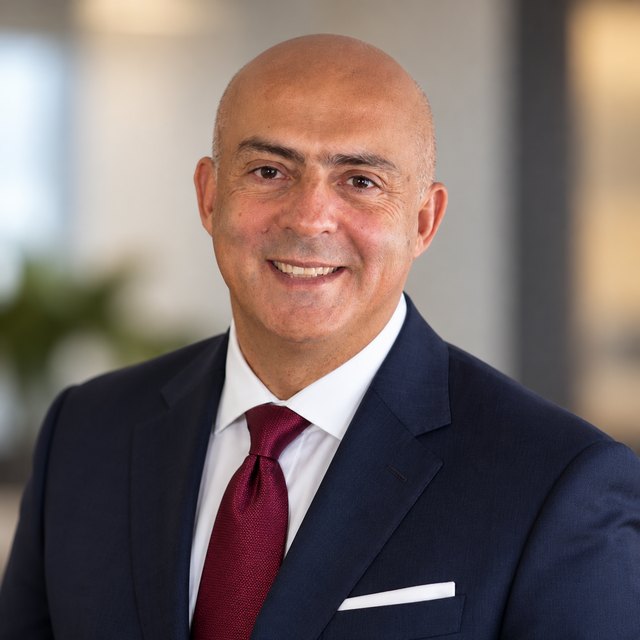
Jose Salloum is a Financial Security Advisor (conseiller en sécurité financière) certified by the Autorité des marchés financiers in Quebec, a Life and Accident & Sickness Insurance Agent licensed by the Financial Services Regulatory Authority of Ontario, and a Life Insurance Agent licensed by the Insurance Council of British Columbia. Licensed since 2001.
He has practised Infinite Banking since 2015 and founded Canadian Wealth Creation Centre Inc. in 2016. From 2020 to 2024 he was an IBC (Infinite Banking Concepts™) Authorized Practitioner of the Nelson Nash Institute, a private certification rather than a regulatory licence.
IBC Financial is the educational website of Canadian Wealth Creation Centre Inc., open to all Canadians. Services come only from Canadian Wealth Creation Centre Inc. Its representatives hold a licence in each province served: Quebec, Ontario, Alberta, British Columbia, Manitoba and New Brunswick. Jose Salloum's own licences cover Quebec, Ontario and British Columbia. This page is general education and not advice on any individual file.
Last reviewed 2026-10-23. By Jose Salloum, Financial Security Advisor in Quebec. In Ontario, Life and Accident & Sickness Insurance Agent. In British Columbia, Life Insurance Agent.