A Life Insurance Policy in a Trust: An Objective Study of the Pros and Cons, Scenario by Scenario
A trust can own a life insurance policy, own the company that owns it, or simply receive the death benefit. Each brings control and a written plan, and each costs legal fees, yearly filings and tax work. Most trusts also face the 21-year rule. No structure suits every family; your accountant and lawyer or notary decide.
"Put the policy in a trust." Few sentences in estate planning travel as fast. A friend did it, or an accountant raised it years ago. A second sentence almost always follows: "Watch the 21-year rule, but there are ways around it."
Both sentences deserve a careful look, because each hides a choice with a long tail. A trust can own a policy, receive the death benefit, or own the company that holds the policy. These are different structures, with different costs, tax rules and answers to the 21-year question. A family can choose one in an afternoon and live with it for forty years. And some "ways around" the rule do much less than people think.
This page lays out six scenarios and asks the same questions of each. The drawbacks get as much room as the advantages. It reports what is said in the market about the 21-year rule and checks each claim against the Income Tax Act, read on 23 October 2026. It recommends nothing. It is general information from a licensed insurance professional, not tax, legal or investment advice. Every decision here belongs to your accountant and your lawyer or, in Quebec, your notary.
If the words settlor, trustee and beneficiary are new to you, start with what a trust is for a policyowner.
Why do families want their policy in a trust?
Families usually want three things. They want people they trust to control the policy. They want continuity if the owner dies or loses capacity. And they want a written plan for how the money is shared. A trust can deliver each of these. It also brings yearly filings, legal costs, careful tax work and, for most trusts, the 21-year rule.
Control comes first. When one person owns a policy, that person alone can change the beneficiary, take an advance or surrender it. When trustees own it, those decisions are shared, written down and made under duties to the beneficiaries. Some families value that; others find it slow.
Continuity is the second reason. A trust does not die and does not lose capacity, so the policy still has an owner on the worst day. That matters most when the owner and the person insured are different people, the case explained on joint owners and the successor owner.
The third reason is the plan. A deed can say who benefits, in what shares, at what age and with how much discretion. A designation cannot say much of that, but it costs nothing, and a deed costs money every year.
Tax is rarely the honest reason. Under subsection 148(9) of the Income Tax Act, a payment under an exempt policy because the person insured died is not a disposition, whoever receives it. A trust does not make the death benefit more tax favoured; what happens after it arrives is your accountant's ground.
How should you read the six scenarios?
Each scenario answers the same seven questions. How is it set up? Who owns, who pays, with which dollars, and who receives? What does it do well? What does it cost, and where does it fail? What is the 21-year question? What changes in Quebec? What should you ask? No scenario is ranked, and none is recommended here.
- A. The family trust owns the policy; family members fund it by gift or loan.
- B. The family trust owns the policy and pays from what it already holds.
- C. A holding company owns the policy; a family trust owns its shares.
- D. A trust owns the company; family members own and pay for the policy outside it.
- E. An operating company sits under a holding company under a trust.
- F. No trust owns the policy; a trustee is named only as beneficiary.
Three words carry the weight. The owner holds the rights under the contract. The payer provides the premium, with personal dollars (after personal tax) or corporate dollars (after corporate tax). The receiver is the beneficiary on the insurer's file. The roles are explained on what a policyholder is.
Scenario A: what if the trust owns the policy and the family funds it?
In scenario A, a family trust set up during a lifetime owns the policy and is usually its beneficiary. The trust has no income of its own, so family members give or lend it the money for each premium. The trustees control the policy, and the proceeds are held under the deed. The attribution rules are the main tax question.
How it is set up. A lawyer, or a notary in Quebec, drafts and settles the trust. The trust applies for a new policy on a parent's life, with that parent's consent. Or an existing policy is transferred to it, which is a disposition with its own tax cost. The trust is named as beneficiary on the insurer's file. The details are on a family trust as the owner of a life insurance policy.
Who owns, who pays, who receives. The trust owns. In substance a family member pays, with personal after-tax dollars given or lent to the trust. The trust receives, then its beneficiaries under the deed.
What it does well. It gives trustee control during life, continuity if the person insured loses capacity, and a written plan after death, outside that person's estate. A family with young children may find that worth the cost.
What it costs and where it fails. Every premium is a personal after-tax dollar, plus the cost of the trust around it. Sections 74.1 to 74.5 can attribute income from property given or lent to a spouse or a minor back to the giver, even through a trust. Subsection 75(2) can attribute income and gains to a contributor who may get the property back or decide who receives it. Under subsection 74.5(2), a loan falls outside attribution only if it bears interest at a set minimum rate, paid within 30 days after each year end. A missed payment is the classic failure.
The 21-year question. The anniversary arrives whether or not the person insured is alive. Whether subsection 104(4) reaches the policy itself is a technical question, set out in the 21-year section below. The trust's other capital property is reached.
Quebec. Under article 1261 of the Civil Code, the trust patrimony is a patrimony by appropriation, usually created by a notarial deed. Article 2457 exempts the rights under a contract from seizure when the beneficiary is a spouse, a descendant or an ascendant. A trust is not on that list; the notary confirms how the two fit.
What to ask. Who funds each premium, and how? Is any beneficiary a spouse or a minor? Could subsection 75(2) apply, given the deed?
Scenario B: what if the trust owns the policy and pays from what it already holds?
protection arranged late is not protection
Asset protection turns on timing
- 01Statutory exemptions under provincial law
- 02Ownership structures arranged in advance
- 03Insurance with a properly named beneficiary
- 04A transfer made to defeat a known creditor can be reversed
- 05Protection put in place early is the protection that holds
In scenario B, the trust owns the policy and pays the premiums from income or capital it already holds, such as investments or shares. No new gift or loan is needed each year. The cost is that income used for premiums stays in the trust, and income a trust keeps is taxed in the trust, at the top rate.
How it is set up. Usually an existing family trust, often one created to hold shares of a family company, adds a policy. The deed must allow the trustees to hold life insurance and to use income or capital for premiums. Many older deeds were written for shares and say nothing about insurance, so a lawyer or notary reads it first.
Who owns, who pays, who receives. The trust owns, pays and receives. The dollars are trust dollars. If they come from dividends on private company shares, they were first earned and taxed in the company.
What it does well. No new money leaves the family's pockets each year. The policy sits with the other trust assets under one deed, and the proceeds land in a structure that already has a plan.
What it costs and where it fails. Under subsections 104(6), 104(13) and 104(24), income paid or payable to a beneficiary in the year is deducted by the trust and included by the beneficiary. Income kept to pay a premium gets no deduction. Under subsection 122(1), it is taxed at the highest individual percentage. Paying income out and having it come back is a different plan, with its own rules, including the tax on split income in section 120.4. And income spent on premiums never reaches the beneficiaries, which can strain the trustees' duty of fairness.
The 21-year question. These trusts often hold shares with large built-up gains, and the anniversary reaches them whatever happens to the policy. The policy's own position is the question set out below.
Quebec. A Quebec deed is read under the Civil Code. Ask the notary whether it lets the trustees acquire a policy and use income for premiums. Ask the accountant how the trust's Quebec return, the TP-646, treats the income kept.
What to ask. Does the deed allow this? What tax does the trust pay on income it keeps? Is the plan fair to every beneficiary?
Scenario C: what if a holding company owns the policy and a trust owns the company?
In scenario C, a holding company owns the policy on the founder, pays the premiums with corporate dollars and is the beneficiary. A family trust owns the holding company's shares. At death the company receives the proceeds and a credit to its capital dividend account. The money reaches the trust only through a capital dividend.
How it is set up. The holding company applies for the policy, owns it and is named beneficiary. The chain, level by level, is on a family trust, a holding company and the policy. Where the contract should sit in a group is on the holding company and where the contract sits.
Who owns, who pays, who receives. The holding company owns and pays, with corporate after-tax dollars; your accountant compares their cost with personal ones. The company receives. The trust receives a capital dividend if one is declared and the election filed.
What it does well. Corporate dollars pay the premium. Under paragraph (d) of the capital dividend account definition in subsection 89(1), proceeds received over the policy's adjusted cost basis are added to the account. Under subsection 83(2), a capital dividend elected up to that account is not included in the shareholder's income, here the trust. The mechanics are on paying a capital dividend after a death and the capital dividend account.
What it costs and where it fails. Four separate acts must happen: the payment to the company, the dividend, the election and the trustees' decision. The credit is the excess over the adjusted cost basis, not the whole death benefit. The policy is a corporate asset that the company's creditors may reach, as explained on a corporate contract when the company is in trouble. And the founder controls the policy only as a director, never as a trustee.
The 21-year question. Here the trust holds shares, which are capital property. On the anniversary, the trust is deemed to dispose of them at fair market value, and that value can reflect the policy the company owns. How a policy is valued inside a company is for the accountant and a business valuator.
Quebec. The federal rules apply the same way. The trust is read under the Civil Code, and the company and trust may also file with Revenu Québec. The key question is simple: does the insurer's file name the company the plan expects?
What to ask. What is the trust's anniversary date? What credit would arise on today's adjusted cost basis? May the trustees receive and pay out capital dividends?
Scenario D: what if the trust owns the company but the family pays for the policy?
In scenario D, a trust owns the company's shares, but family members pay the premiums with personal dollars and own the policy themselves or through a separate trust. The death benefit never passes through the corporation, so it stays away from the company's creditors and the capital dividend steps. The price is costlier dollars and no capital dividend account credit.
How it is set up. An individual, a couple or a separate trust owns the policy and names the beneficiary. The family takes money out of the company as salary or dividends, pays personal tax, then pays the premium.
Who owns, who pays, who receives. A family member or a separate trust owns. The family pays with personal after-tax dollars. The beneficiary on the insurer's file receives directly, outside the company.
What it does well. Under subsection 148(9), the death benefit of an exempt policy is not a disposition when paid. It reaches the family without a dividend, an election or a director's decision. It is not a corporate asset, so the company's creditors have no claim on it as such.
What it costs and where it fails. There are three trade offs. First, each premium dollar was taxed as salary or dividend before it was spent, so it uses more pre-tax income than a premium the company pays. Second, proceeds received personally create no capital dividend account credit, so they cannot help carry corporate surplus out by a capital dividend. Third, the company may pay the premium anyway, on a policy owned by a shareholder or by the trust that is its shareholder. Then subsection 15(1) can tax the value of that benefit in the shareholder's hands. That risk is on when the corporation pays and the shareholder owns, and the wider choice on personal or corporate ownership of the contract.
The 21-year question. If an individual owns the policy, no 21-year rule applies to it. If a separate trust owns it, the question in scenario A returns. The family trust still faces its own anniversary on the company shares.
Quebec. With personal ownership, the Civil Code rules on designations apply directly. Under article 2457, rights are exempt from seizure when a spouse, descendant or ascendant is the beneficiary. A notary confirms how this applies to your family.
What to ask. What does each premium cost in pre-tax income, personally against corporately? What credit is given up? Who owns the policy if its owner dies first?
Scenario E: where does the policy sit when an operating company is under the holding company?
four rules that are frequently mixed up
Tax when a benefit is paid on death
- 01A life insurance benefit reaches a named beneficiary untaxed
- 02The public pension death benefit is taxable to the recipient
- 03Employer death benefits are exempt up to a stated limit
- 04Canada has no estate tax
- 05The deemed disposition at death can still be large
In scenario E, a trust owns a holding company, which owns an operating company. The policy can sit in either company, and wherever it sits, that company receives the proceeds and the capital dividend account credit. A policy in the operating company sits next to the business risk, and its proceeds must climb two levels to reach the trust.
How it is set up. The operating company runs the business and carries its debts and lawsuits. The holding company holds investments and the operating company's shares, and the trust holds the holding company.
Who owns, who pays, who receives. Either the operating company owns, pays and receives, or the holding company does, paying with dividends sent up from below. The trust receives only what climbs through capital dividends.
What it does well. A policy in the operating company is paid where the cash is earned. A policy in the holding company is kept away from the business risk and needs one less capital dividend step after a death.
What it costs and where it fails. In the operating company, the policy is exposed to that company's creditors, and a buyer of its shares may not want it. How that would affect a sale is for the accountant. Reaching the trust takes two capital dividends and two elections. In the holding company, money must move up first. And if the operating company pays a premium on a policy the holding company owns, a benefit question can arise.
The 21-year question. The trust holds the holding company's shares. Their value reflects both companies, including the policy wherever it sits, and the anniversary reaches them.
Quebec. Each company and the trust may file in Quebec as well as federally, and a notary or lawyer reads the documents under Quebec law.
What to ask. Which company carries the business risk, and which has the cash? Would a planned sale change where the policy sits?
Scenario F: what if no trust owns the policy and a trustee is only the beneficiary?
In scenario F, the owner keeps the policy during life and names a trustee as beneficiary, under an insurance trust declaration or a trust created by the will. The owner keeps full control while alive. There is no trust to run or file for during life. The trust only begins its work at death.
How it is set up. The owner signs a designation naming a trustee, in the policy or in a separate writing, or names the trustee of a trust the will creates. The details are on a death benefit and a testamentary trust. The difference between receiving and owning is on a trust as the beneficiary or as the owner.
Who owns, who pays, who receives. An individual owns and pays, usually with personal after-tax dollars. At death the trustee receives the proceeds and holds them for the beneficiaries.
What it does well. Control stays with the owner, and there is no T3 return for the policy during life. Proceeds paid by designation can stay out of the estate, which matters where a province charges a fee on the estate's value, as compared on beneficiary or estate.
What it costs and where it fails. There is no continuity during life. If the owner loses capacity, someone needs legal authority to act. If the owner is not the person insured and dies first, the policy passes under the will or to a successor owner. A revocable designation can be changed at any time, which is flexible and also fragile. A trust created by will depends on a valid will that is found.
The 21-year question. No trust holds the policy during the owner's life, so no anniversary touches it then. A trust created at death starts its own clock at death.
Quebec. Under article 2446, a designation is made in the policy or in another writing, which may or may not be a will. A testamentary trust is usually set out in a notarial will. Whether naming a trustee for a child keeps the protection of article 2457 is for the notary.
What to ask. Is a trust that starts at death enough? Is the lawyer's wording actually on the insurer's file? What happens if I lose capacity?
How do the six scenarios compare side by side?
The table puts the six scenarios side by side. It shows who owns, who pays and with which dollars, who receives at death, whether a capital dividend account credit arises, what the 21-year rule reaches, and what the trust files during life. It has no ranking column, because no scenario is right for every family.
| Scenario | Owner | Who pays, which dollars | Who receives at death | Capital dividend account credit | What the 21-year rule reaches | Trust filings during life |
|---|---|---|---|---|---|---|
| A | Family trust | Family, personal dollars, by gift or loan | The trust | None | Trust capital property; the policy is for the accountant | T3 and Schedule 15 |
| B | Family trust | The trust, from its own income or capital | The trust | None | Often shares with large gains | T3 and Schedule 15 |
| C | Holding company | The company, corporate dollars | The company, then the trust | Yes, over the adjusted cost basis | The shares, which can reflect the policy | T3 and Schedule 15 |
| D | A person or a separate trust | Family, personal dollars | The beneficiary, outside the company | None | The shares | T3 for the share trust |
| E | Either company | That company, corporate dollars | That company, then the trust | Yes, where received | The holding company shares | T3 and Schedule 15 |
| F | An individual | The owner, personal dollars | The trustee | None | Nothing during life | None for the policy |
A pattern shows. Corporate scenarios use cheaper dollars and gain a credit, but add steps and creditor exposure. Trust ownership adds continuity and control, but adds filings and tax questions. Scenario F adds the least and gives the least during life.
What does the 21-year rule do to a trust that holds a policy?
Subsection 104(4) deems most trusts to dispose of their capital property, other than depreciable property, at fair market value 21 years after the trust was created, and every 21 years after. The trust reports the gain and pays the tax, though nothing was sold. Some trusts, such as alter ego trusts, use a date set by a death instead.
The first date comes from paragraph 104(4)(b): 21 years after the latest of 1 January 1972, the day the trust was created, and certain other days. Paragraph (c) repeats it every 21 years. The CRA's audit manual says the trust reports these gains on Form T1055 and is liable for the tax. It bites hardest on a trust holding shares of a growing company, which can face a large bill with no cash.
Some trusts follow a different calendar. For alter ego, joint partner and spousal trusts, paragraph 104(4)(a) sets the first date at a death. Those are explained on alter ego and joint partner trusts and a life insurance policy.
Where does a policy fit? Section 54 defines capital property as property whose gain on disposition would be a capital gain. Subparagraph 39(1)(a)(iii) says a capital gain excludes a gain on disposing of an insurance policy, including a life insurance policy, other than a segregated fund part. Policy gains are measured under section 148 and taxed as income. Read together, these lead many commentators to say the 21-year rule does not reach the policy itself. This page reports that reading and does not adopt it. Ask your accountant to confirm it for your trust, in writing.
What does the market say about fixing the 21-year rule, and what does the statute say?
a notional account, not a bank balance
The Capital Dividend Account
- 01A notional tax account of a private Canadian corporation
- 02It records amounts the corporation received without tax
- 03A death benefit it receives, less the adjusted cost basis, may credit it
- 04Available balances may be paid out as capital dividends
- 05The credit depends entirely on the ownership structure
Clients hear several ways to "deal with" the 21-year rule. Each does something specific under the Act, each has a cost, and none makes the rule disappear. Below, each claim is reported as it is usually told, then checked against the statute as read on 23 October 2026: what it requires, what it costs and what can go wrong.
"The rule does not touch a life insurance policy." This is the reading set out above. It costs nothing if it holds for your facts. What goes wrong is assuming it covers more than it does: in scenarios C and E the trust holds shares, and the policy can raise their value.
"Distribute everything to the beneficiaries before the anniversary." Under subsection 107(2), a personal trust can distribute property to a beneficiary in satisfaction of a capital interest. It generally does so at the trust's cost amount. The deferred gain moves to the beneficiary. It requires a deed that allows it and a Canadian resident beneficiary. It costs control: the beneficiary now owns the property, with that person's creditors and separation in play. And under subsection 107(4.1), if subsection 75(2) ever applied to the trust's property, fair market value can replace the rollover.
"A beneficiary abroad can receive it the same way." Not under the same rule. Subsection 107(5) applies fair market value under subsection 107(2.1) to a distribution to a non-resident beneficiary, with narrow exclusions. Families with children abroad need this analysis early.
"And the policy rolls out like the shares." This is where people assume most. Distributing a policy interest is a disposition, and section 148 has its own rules. The trust and the beneficiary often do not deal at arm's length. If so, subsection 148(7) can deem proceeds equal to the greatest of the cash surrender value, the value of any consideration and the adjusted cost basis. How subsections 148(7) and 107(2) interact for a policy is a question for your accountant.
"Move everything to a new trust and the clock restarts." It does not. Under subsection 104(5.8), when property moves from one trust to another under subsection 107(2) and related rules, the receiving trust takes the earliest of the first trust's date and its own. A transfer meant to reset the clock carries the old date, and adds a second trust to run.
"Freeze the company inside the trust." In an estate freeze, the trust exchanges growth shares for shares of fixed value, and new growth shares go to others, sometimes a new trust. It requires a valuation and legal work. It limits future growth inside the old trust but does not erase the gain already built up. Subsection 75(2) and the tax on split income need checking, and a policy the company owns enters the valuation.
"Give every beneficiary a fixed, vested interest." Paragraph (g) of the trust definition in subsection 108(1) excludes from subsection 104(4) a trust whose interests have all vested indefeasibly. The exceptions are many, including alter ego and spousal trusts and trusts with more than 20% non-resident interests. It requires giving up the discretion that is often the reason for the trust.
"Just pay the tax." Paying deliberately is a legitimate choice, and the trust's cost of its property is then reset. Subsection 159(6.1) lets a trust elect to pay the extra tax from the deemed disposition in up to 10 equal annual instalments, with security the Minister accepts and interest at the prescribed rate. It costs cash and interest. What goes wrong is reaching the date with no cash and no plan.
"Wind the trust up." Ending the trust distributes everything it holds, so the rules above apply to each asset, and the deed must allow it. In Quebec, article 1296 of the Civil Code says a trust ends when its term expires, its condition is fulfilled or its purpose is attained, among other cases. Winding up ends trustee control, and with it the reason for the trust.
"Keep the policy out of the trust from the start." Scenarios D and F do exactly that, at the cost of the continuity and trustee control trust ownership gives during life. It is a design choice, not a repair.
In short, every method trades tax, control and cost, and each depends on a deed that allows it. Start with your accountant years before the anniversary.
What are the general pros and cons of a policy in a trust?
The advantages are mostly about control, continuity and a written plan. The drawbacks are mostly about cost, complexity, tax rules and the loss of personal control. Both lists apply whether the coverage is term insurance or a specially designed, high-cash-value, participating whole life insurance policy, whose dividends are never guaranteed.
What a trust can do well:
- Trustees, not one person, control the policy under a written deed.
- The policy keeps an owner if the person insured dies or loses capacity.
- The proceeds are held and shared on terms chosen in advance.
- A young or vulnerable beneficiary need not receive a lump sum.
- The policy and its proceeds can stay outside the insured person's estate.
- The deed names who replaces a trustee, so the plan outlives any one person.
What a trust costs or cannot do:
- It costs legal fees to set up and accounting fees every year.
- It files a T3 return and beneficial ownership details every year.
- It does not make a death benefit more tax favoured than a designation.
- Gifts and loans to fund it can bring in the attribution rules and subsection 75(2).
- Most trusts face the 21-year rule on their capital property.
- It does not shield property from debts that existed before the transfer.
- The settlor gives up personal control, which is the point and also the cost.
- Moving a policy into or out of a trust is a disposition with its own tax.
The two lists are close in length on purpose. A family that reads only the first is reading a brochure.
Which documents must agree?
Five documents must tell the same story: the trust deed, the company's articles and any shareholder agreement, the beneficiary designation, the will, and the insurer's records. When one disagrees, the insurer pays according to its file. The deed and the will cannot fix a designation that sends the money elsewhere.
- The deed: who benefits, what trustees may do, whether they may hold a policy and distribute capital.
- The articles and shareholder agreement: who the directors are, what each share class may receive, what happens at a death.
- The designation: who receives the proceeds, and whether it is revocable.
- The will: who receives what the trust and the designation do not cover.
- The insurer's records: the owner, the person insured and the beneficiary as the insurer holds them.
Ask the insurer for written confirmation of the owner and beneficiary on file, and keep it with the deed. Read the five together once, with both professionals. How a designation meets creditors is on the designation and what a creditor can reach.
What does a trust cost each year, and what must it file?
two different questions about one dollar
Recovery is not the same as return
- Return asks what the money earned
- Recovery asks whether the money came back
- Capital returns through the income an asset produces
- Capital returns through the eventual sale
- Capital returns through the deductions its cost permits
A trust has legal costs at the start, accounting costs each year and trustees' time. An express trust resident in Canada files a T3 return every year unless it is a listed trust, and a trust subject to Quebec income tax files the TP-646. Penalties apply to late or incomplete beneficial ownership schedules.
The CRA's FAQ on the enhanced reporting rules lists, among listed trusts, a trust whose assets do not exceed $50,000 in fair market value throughout the year; your accountant checks whether yours fits. For a 31 December year end, the CRA's example gives a filing date of 31 March.
Schedule 15 names every trustee, settlor, beneficiary and controlling person. Where no tax is owing, a late or incomplete schedule costs $25 a day, with a minimum of $100 and a maximum of $2,500. A knowing or grossly negligent false statement costs the greater of $2,500 and 5% of the highest value of trust property in the year. The CRA adds that certain bare trusts may need to file for years ending on or after 31 December 2026.
In Quebec, Revenu Québec says a trust subject to Québec income tax for a year must file the TP-646. Then count trustees' time, a trust company's fee if one acts, and occasional share valuations, on top of the premiums, for as long as the trust exists.
What should you ask your accountant?
Bring your accountant the trust deed, the company's financial statements, and the insurer's statement of cash surrender value and adjusted cost basis. Then ask about funding, attribution, the capital dividend account, the 21-year date, distributions and filings. Ask for the important answers in writing, because the trust will outlive the meeting.
- What is our trust's 21st anniversary, and what does subsection 104(4) reach that day?
- Is the policy itself capital property for our trust, and will you confirm it in writing?
- If we fund premiums by gift or loan, do sections 74.1 to 74.5 or subsection 75(2) apply?
- If we lend, what rate and schedule does subsection 74.5(2) require?
- What capital dividend account credit would arise today, and how would it reach the trust?
- If we distribute the policy or the shares, how do subsections 107(2) and 148(7) apply?
- Could any amount paid to a beneficiary be split income under section 120.4?
What should you ask your lawyer or notary?
Your lawyer, or in Quebec your notary, reads the deed, the will, the designation and the company documents together. Ask whether they allow every step the plan relies on, who replaces each trustee and director, and whether the insurer's file matches the deed. The legal side decides whether the tax plan can be carried out at all.
- Does the deed allow the trustees to hold a policy and pay its premiums?
- May the trustees distribute capital, including the policy or shares, before the anniversary?
- Are the beneficiaries' interests discretionary or fixed, and what does that change?
- Who replaces a trustee who dies, resigns or can no longer act?
- Does the designation on file match the deed and the will?
- In Quebec, how do the Civil Code's trust and designation rules apply to our documents?
What this page will not tell you
It will not tell you which scenario suits your family, or whether you need a trust at all. It will not say how the 21-year rule reaches your policy. It will not quote a premium, a rate, a dividend scale or a tax amount. Those answers depend on your documents and figures, so they belong to your professionals.
It does not draft a deed, value shares or take a tax position. A licensed insurance professional can explain the contract, what the insurer needs to record an owner or beneficiary, and confirm in writing what is on file. Every kind of owner is compared on who can own a life insurance policy. The tax cost of each change of owner is on moving a policy to a new owner, and the wider topics are on the estate planning page.
Who this does not suit
A policy in a trust, in any of these forms, does not suit every family. It fits poorly when a simple designation reaches the goal, when yearly costs would take a large share of the benefit, or when nobody can serve as trustee for decades. It also fits poorly when the family expects it to cut tax or erase debts.
- A household whose only goal is to pay a spouse or adult children directly.
- A family with a modest policy, where yearly fees would weigh heavily.
- A family with no one willing to act as trustee for twenty years or more.
- An owner who wants to keep personal control, which can defeat the trust and bring in subsection 75(2).
- A family that expects the trust to remove tax on the death benefit or protect against existing debts.
- A family with a key beneficiary abroad, unless the non-resident rules have been studied first.
If one of these describes you, scenario F or a careful designation with a contingent beneficiary may do the work with less machinery. If none does, meet your accountant and your lawyer or notary together, with these questions in hand.
A thirty-minute discovery meeting
A first conversation establishes whether this fits. No illustration is prepared and nothing is arranged.
Often the answer is no, and you will hear it during the call rather than in a proposal afterwards.
This form reaches Canadian Wealth Creation Centre Inc. Any meeting, any advice and any insurance product is provided by Canadian Wealth Creation Centre Inc., through its representatives who are licensed in the client's province. IBC Financial is the company's educational website: it distributes no product and no financial service, and it gives no individualised advice.
Common questions
Is it a good idea to put life insurance in a trust in Canada?
Does the 21-year rule apply to a life insurance policy owned by a trust?
How do families deal with the 21-year rule on a family trust?
Should my holding company or my family trust own my life insurance policy?
Can I pay the premiums personally if my family trust owns the company?
What is the difference between a trust as beneficiary and a trust as owner of a policy?
Sources
- Income Tax Act, subsections 104(1), 104(4), 104(5.8), 104(6), 104(13), 104(20) and 104(24), and subsection 122(1). Under 104(4)(b) and (c), a trust is deemed to dispose of its capital property (other than depreciable property) at fair market value on the day 21 years after the latest of 1 January 1972, the day it was created and certain other days, and every 21 years after; 104(4)(a) and (a.4) set the date at a death for spousal, joint partner, alter ego and similar trusts. Under 104(5.8), when property moves from one trust to another under 107(2) and related rules, the transferee takes the earliest of the transferor's day and its own day. Income paid or payable to a beneficiary is deducted by the trust and included by the beneficiary, payable meaning paid in the year or enforceable. A trust other than a graduated rate estate or qualified disability trust pays the highest individual percentage on its amount taxable. Justice Laws Canada, current to 30 September 2026 (122 shown current to 17 March 2026)., verified 2026-10-23
- Income Tax Act, subsections 107(2), 107(2.1), 107(4.1) and 107(5), and the definition of trust in subsection 108(1). A distribution of property by a personal trust in satisfaction of a capital interest is generally at the trust's cost amount; 107(2.1) applies fair market value where 107(2) does not; 107(4.1) displaces 107(2) where subsection 75(2) applied to trust property and the beneficiary is not the contributor; 107(5) applies fair market value to a distribution to a non-resident, with narrow exclusions. Paragraph (g) of the trust definition excludes from 104(4) a trust all of whose interests have vested indefeasibly, subject to listed exceptions including alter ego and spousal trusts and trusts with more than 20% non-resident interests. Justice Laws Canada, current to 30 September 2026., verified 2026-10-23
- Income Tax Act, subsections 148(7), 148(8) and 148(9), subparagraph 39(1)(a)(iii) and section 54. A gift, a distribution from a corporation, a disposition by operation of law or a disposition to a non-arm's length person deems proceeds equal to the greatest of the value (cash surrender value), the fair market value of any consideration and the adjusted cost basis, and the acquirer takes that cost; 148(8) sets proceeds at the adjusted cost basis for certain transfers to a child. Disposition includes a surrender and a policy loan, and excludes a payment in consequence of death under an exempt policy. A capital gain does not include a gain on the disposition of an insurance policy, including a life insurance policy, other than a segregated fund part. Capital property is property whose gain on disposition would be a capital gain. Justice Laws Canada, current to 30 September 2026., verified 2026-10-23
- Income Tax Act, subsection 89(1) (capital dividend account, paragraph (d)), subsection 83(2) and subsection 15(1). Life insurance proceeds received by a corporation in consequence of a death, over the policy's adjusted cost basis, are added to the capital dividend account. A private corporation may elect, at or before the time a dividend becomes payable, to treat the full dividend as a capital dividend to the extent of the account, and no part is included in any shareholder's income. The value of a benefit conferred by a corporation on a shareholder is included in the shareholder's income, with listed exceptions. Justice Laws Canada, current to 30 September 2026., verified 2026-10-23
- Income Tax Act, subsections 74.1(1), 74.1(2), 74.5(1), 74.5(2), 75(2), 159(6.1) and section 120.4. Income from property transferred or lent, directly or indirectly by means of a trust, to a spouse or to a non-arm's length minor is attributed to the transferor. A loan is excluded if interest is at least the lesser of the prescribed rate and an arm's length rate and is paid within 30 days after each year end; 75(2) attributes income and capital gains to a contributor where property may revert, pass as the contributor determines, or needs the contributor's consent. A trust may elect to pay the extra tax from a 104(4) deemed disposition in up to 10 equal annual instalments, with acceptable security and interest at the prescribed rate. Split income through a trust tied to taxable dividends on unlisted shares is taxed at the highest individual percentage. Justice Laws Canada, current to 30 September 2026 (75 and 159 shown with earlier currency dates)., verified 2026-10-23
- Civil Code of Québec, articles 1261, 1271, 1296, 2446 and 2457, read in Légis Québec's version view. The trust patrimony is a patrimony by appropriation. A personal trust for several persons successively may not include more than two ranks of beneficiaries of the fruits and revenues, in addition to the capital beneficiary. A trust ends by renunciation or lapse of the beneficiaries' rights, expiry of its term, fulfilment of its condition, attainment of its purpose or a court finding that its purpose cannot be attained. A designation of beneficiaries or subrogated policyholders is made in the policy or in another writing, whether or not a will. Where the beneficiary is the married or civil union spouse, a descendant or an ascendant, the rights under the contract are exempt from seizure until the sum insured is paid. Légis Québec., verified 2026-10-23
- Canada Revenue Agency, Income Tax Audit Manual chapter 17 (estates and trusts, modified 1 September 2026), Enhanced reporting rules for trusts and bare trusts FAQ and What has changed (both updated 5 October 2026). Every 21 years a trust is deemed to dispose of its capital property at fair market value, reports the gains using Form T1055 and is liable for the tax. An express trust resident in Canada files a T3 every year unless it is a listed trust. A trust whose assets do not exceed $50,000 in fair market value throughout the year is a listed trust; Schedule 15 late filing is $25 a day, minimum $100, maximum $2,500, and a knowing or grossly negligent false statement carries the greater of $2,500 and 5% of the highest fair market value of trust property. Certain bare trusts may need to file for taxation years ending on or after 31 December 2026. canada.ca., verified 2026-10-23
- Revenu Québec, Trusts page. A trust subject to Québec income tax for a given taxation year must file the Trust Income Tax Return (TP-646). revenuquebec.ca., verified 2026-10-23
About the author
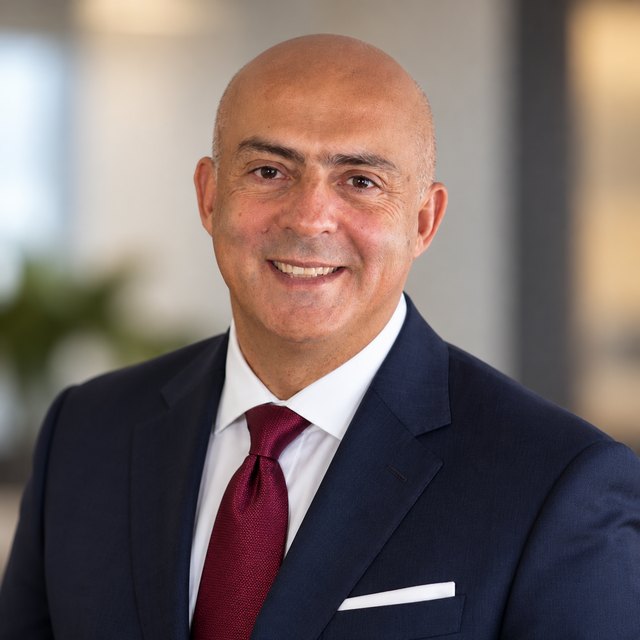
Jose Salloum is a Financial Security Advisor (conseiller en sécurité financière) certified by the Autorité des marchés financiers in Quebec, a Life and Accident & Sickness Insurance Agent licensed by the Financial Services Regulatory Authority of Ontario, and a Life Insurance Agent licensed by the Insurance Council of British Columbia. Licensed since 2001.
He has practised Infinite Banking since 2015 and founded Canadian Wealth Creation Centre Inc. in 2016. From 2020 to 2024 he was an IBC (Infinite Banking Concepts™) Authorized Practitioner of the Nelson Nash Institute, a private certification rather than a regulatory licence.
IBC Financial is the educational website of Canadian Wealth Creation Centre Inc., open to all Canadians. Services come only from Canadian Wealth Creation Centre Inc. Its representatives hold a licence in each province served: Quebec, Ontario, Alberta, British Columbia, Manitoba and New Brunswick. Jose Salloum's own licences cover Quebec, Ontario and British Columbia. This page is general education and not advice on any individual file.
Last reviewed 2026-10-23. By Jose Salloum, Financial Security Advisor in Quebec. In Ontario, Life and Accident & Sickness Insurance Agent. In British Columbia, Life Insurance Agent.