
What Should a New Pharmacist in Canada Do First About Student Debt, Insurance and Savings?
List every debt and licensing cost, then decide how tax will be set aside from salary and any relief shifts. Keep loan payments current, build a cash reserve, and check the federal forgiveness for pharmacists in rural communities. Settle disability coverage before a permanent policy. A policy loan comes from the insurer at a rate it sets and may change, and dividends are not guaranteed.
The day your licence arrives, the debt you carried through school becomes a monthly bill, and your income takes on a shape it never had as a student. You may be on a salary at a community pharmacy or a hospital, with tax taken off every pay. You may be picking up relief shifts, paid as a self-employed person with nothing withheld. Many new pharmacists do both for a while. The loans are the same either way. What changes is how money reaches you, and that decides what you do first.
So the first decisions are about order, not products: what to list, what to set aside, what to protect and what to leave for later. A permanent life insurance policy may have a place in that order one day, on conditions set out below. It does not belong at the front.
I am paid by insurer commissions when a policy is bought, which is one more reason to test everything here against your own figures. Quebec has its own section, because its pharmacy program, its student loans and its tax return run on separate rules. The collection for pharmacists and the wider business owners section take up the questions that come later: ownership, the corporation and retirement.
What does your pharmacy school debt look like on one page?
Write each debt on its own line: who lent it, the rate, whether the rate can change, when the first payment falls due, and any relief you might qualify for. Government student loans and a line of credit from a financial institution follow different rules, so they never belong on the same line.
You may carry three kinds of debt at once. Government student loans come from the Canada Student Loans program, from your provincial program, or from both; in Quebec, they come from the province's own program. A student line of credit comes from a financial institution, and its rate may be variable, tied to that lender's prime rate.
| What to record | Why it matters |
|---|---|
| The lender, by name | A government loan and a line of credit differ on interest, relief and tax credits |
| The rate, and whether it is fixed or variable | A variable rate can rise while you are still settling in |
| The date of the first payment | The loans may start on different dates |
| Whether a parent or anyone else co-signed | Someone else can be liable if a payment is missed |
| Whether extra payments are allowed without a penalty | It decides where spare money can go later |
| Any forgiveness or relief program you might qualify for | Some programs need an application within a fixed window |
Two federal facts change how the debts compare. The National Student Loans Service Centre says, on its page Things You Need to Know, that effective 1 April 2023 the Government of Canada permanently eliminated the accumulation of interest on all Canada Student Loans. The same page says interest still accrues on the provincial portions of the Canada-Ontario and Canada-Saskatchewan integrated student loans. And the Government of Canada's page Repay a student loan (modified 3 June 2026) says you start paying six months after the end of your studies.
That six-month window can overlap with licensing. The grounds for delaying repayment that Canada lists on its repayment start page (modified 16 December 2025) are full-time studies, certain reservist service, and leave from studies for medical or parental reasons. Studying for licensing exams after graduation is not on that list. If your first payment could fall due before your first full pay, ask the National Student Loans Service Centre and your provincial program, in writing, what you will owe and when.
Which costs come between graduation and your first full pay?
Licensing examinations, registration with your provincial regulator, professional liability coverage, and often a move. They arrive before a full salary does, so list them with the debts. The amounts are set by each body and change from year to year.
Outside Quebec, the usual route to a licence passes through the Pharmacy Examining Board of Canada (PEBC), the national certification body for pharmacists. Its fee schedule, read on 3 October 2026, lists $870 for Part I of the Pharmacist Qualifying Examination, the multiple choice part, and $1,950 for Part II, the clinical examination known as the OSCE, both shown as 2027 fees. Document evaluation, which some applicants need, is listed at $715. Check the schedule for your own session, because fees are set for a given year.
Your provincial regulator then sets its own registration, licence and annual fees. Professional liability coverage is another line. Ask your regulator whether it requires coverage and how you obtain it; in Quebec, as the Quebec section explains, enrolment in the order's professional liability fund is part of the permit application.
Add the costs of starting work: a move, a deposit on an apartment, perhaps a car. None is large alone. Together, before a full pay, they add up.
If you draw on the line of credit for these costs, decide the amount in advance and stop there, so a temporary bridge does not become the habit that pays for everything else.
Salaried, relief or both: how does your status change the money?
where the structure usually goes wrong
Corporate-owned life insurance
- 01The company owns the contract and pays the premium
- 02Premiums are generally not deductible
- 03Corporate funding is not, by itself, a tax saving
- 04A death benefit it receives may credit the Capital Dividend Account
- 05Ownership and beneficiary structure is where it fails
A salary arrives on a schedule with tax withheld. Relief shifts paid to you as a self-employed person arrive without withholding, and you set aside the tax and pension contributions yourself. Doing both at once can leave you short at tax time, because your employer withholds as if the salary were your only income.
Salaried positions and relief work, sometimes called replacement work, are treated differently for tax. Whether an arrangement makes you an employee or self-employed depends on its facts and its contract, not its name; ask your accountant.
On a salary, your employer deducts income tax, pension contributions and Employment Insurance premiums before the money reaches you. On relief income paid to you as a self-employed person, nobody does. The Canada Revenue Agency explains on its page Who has to pay instalments (modified 20 January 2026) that you must pay instalments in 2026 if your net tax owing is more than $3,000 ($1,800 if you live in Quebec) in 2026, and was also above that amount in either 2025 or 2024.
If your student years stayed under the threshold, no instalments are required in your first year of relief work. That year's tax still comes due when you file, and instalments can then begin for the next year. The bill for one year and the first instalments for the next can land in the same season.
Your employer sets withholding on the salary alone. Relief income stacks on top of it and can be taxed at a higher rate than the withholding assumed. Ask your accountant to estimate the extra tax and set aside that share of every relief payment, the day it arrives, in a separate account.
The Government of Canada's page Contributions to the Canada Pension Plan (modified 3 August 2026) says a self-employed person makes the whole contribution, where an employee shares it with the employer. In Quebec, the Quebec Pension Plan applies instead.
Employment Insurance is the third difference. A self-employed person is not covered automatically. The Government of Canada's pages on EI benefits for self-employed people explain that you can opt in to special benefits, such as maternity, parental and sickness benefits, by entering an agreement with the Canada Employment Insurance Commission. The agreement must be in place for at least 12 months before you claim, and the qualifying page for claims in 2026 requires $9,254 of net self-employed earnings in 2025. You can withdraw at any time unless you have received special benefits; after a claim, you keep paying premiums for as long as you are self-employed. In Quebec, maternity, paternity and parental benefits come from the Québec Parental Insurance Plan, and self-employed workers contribute to it.
Relief income across a career is the subject of relief shifts and irregular income.
Does the rural loan forgiveness apply to pharmacists?
Yes, for the federal part of your loan. The Government of Canada lists pharmacists among the occupations eligible as of December 31, 2025, for up to $60,000 over five years, if you work in a rural area or a small population centre and meet the conditions on hours and good standing.
The Government of Canada's page Canada Student Loan Forgiveness (modified 3 June 2026) places pharmacists in its highest tier, with family doctors, family medicine residents, dentists and psychologists: $8,000, $10,000, $12,000, $14,000 and $16,000 over a maximum of five years, for a total of $60,000.
You must work in an eligible occupation, in a rural area or a population centre of no more than 30,000 people, for a full year of 12 consecutive months, providing in-person services for at least 400 hours. Your loan must be in good standing, meaning up to date on its payments. Forgiveness applies only to the outstanding federal part of a loan, never the provincial or territorial part. And you have 90 days after completing a year of eligible work to apply.
So check whether a community qualifies before you sign a contract there, keep your payments current from the first month, and keep records of your hours and place of work.
Where to practise is never only about a loan, but a forgiveness worth up to $60,000 belongs in the comparison. The conditions are the government's and can change, so read the page again the year you apply, and confirm the amount for your own loan with the program before you count on it.
In what order should the first pay be used?
Tax first, because relief income already owes it. Required loan payments next. Then a starter reserve in accessible cash. Then extra payments on the costliest debt, judged by its rate and by whether its interest earns a tax credit. Speed matters less than order.
Required payments come first among the debts: a missed payment brings fees, can cost you forgiveness, and stays in the credit record a future lender reads.
The reserve comes next. Its job is to carry you through a month with fewer shifts, a gap between jobs, or the waiting period of a disability contract without drawing again on the line of credit. There is no standard size for a new pharmacist. The worksheet in the next section shows one way to measure yours.
Then compare the debts on their real cost, with two tax rules in view.
The first is the federal student loan interest credit. The Canada Revenue Agency's page Line 31900: Interest paid on your student loans (modified 20 January 2026) allows a claim for interest on loans under the Canada Student Loans Act, the Canada Student Financial Assistance Act, the Apprentice Loans Act and similar provincial or territorial laws. It excludes private student loans, lines of credit, and loans combined, renegotiated or consolidated with another loan. Unused amounts can be carried forward for up to five years, and the CRA says it does not track that for you.
So interest on a student line of credit from a financial institution earns no student loan credit, even though it paid for your degree. And moving a government loan into a private consolidation loan can end the credit on the interest it still carries. Ask your accountant before you consolidate anything.
The second is forgiveness. If you may qualify for the rural program above, the federal part of your loan could shrink without extra payments from you, which changes where an extra dollar does the most good.
Registered plans come into this conversation too, often through an employer's group plan at your first job. They do different jobs from paying down debt and from life insurance, and nothing here ranks them. Questions about them go to your accountant or to a representative registered for the investments the plan would hold.
After that, sending most of the surplus to the costliest debt, or saving faster because a move is close, can both be sensible if chosen on purpose.
What does a first-year worksheet look like when you mix salary and relief shifts?
frequently the same person, not always
Three roles inside one contract
- One contractAll three can differ. Only the policyholder changes it, subject to any irrevocable beneficiary.
- The policyholderOwns the contract and holds its rights, subject to any assignment.
- The insuredThe person whose life is covered.
- The beneficiaryReceives the death benefit.
One page, filled in each month: the salary deposited, the relief income received, the tax set aside on that relief income, the fixed payments, and what is left. Run it on an ordinary month, then on two weaker ones. The weaker months tell you how large your reserve needs to be.
Each line is subtracted from the one before.
- Salary deposited. What your employer actually paid into your account, after withholding, from your pay statement.
- Relief income received. What the pharmacies paid you for relief shifts this month, from your account, not what you invoiced.
- Tax set-aside on relief income. A percentage your accountant gives you, applied to the relief income only, because the salary already had tax withheld, and moved the same day to a separate account.
- Fixed payments. Loan payments from your loan statements; household costs from your own records; regulator fees and liability coverage divided by twelve.
- What remains. The surplus for the month, or the shortfall.
Illustrative example. Every figure is an assumption chosen to show the arithmetic, not a typical salary, a shift rate or a quote: a salary deposit of $5,800 after withholding; relief shifts at $400 each, four in an ordinary month; a tax set-aside of 30% of relief income; government student loan payments of $450; line of credit payments of $900; household costs of $4,200; and $150 a month for regulator fees and liability coverage.
| Line | Ordinary month (4 relief shifts) | Quiet month (1 relief shift) | Between jobs (no salary, 2 relief shifts) |
|---|---|---|---|
| Salary deposited | $5,800 | $5,800 | $0 |
| Relief income received | $1,600 | $400 | $800 |
| Total received | $7,400 | $6,200 | $800 |
| Tax set-aside at 30% of relief income | $480 | $120 | $240 |
| Left after the set-aside | $6,920 | $6,080 | $560 |
| Fixed payments | $5,700 | $5,700 | $5,700 |
| Surplus or shortfall | $1,220 | $380 | ($5,140) |
Read it from the bottom. An ordinary month leaves $1,220, and a quiet month still leaves something, because the salary carries the fixed costs. The last column matters most: a month between jobs, with only two relief shifts, leaves a shortfall of $5,140. Two such months would need $10,280 from somewhere, and at $1,220 a month that takes about eight and a half ordinary months to set aside.
Two changes make it worse: a variable rate on the line of credit that rises, and a 30% set-aside that proves too low, so the shortfall appears at tax time instead. A weak month in this example is a stress test, not a floor; your own can be weaker.
That is why the reserve comes before extra debt payments and any permanent premium.
Which protection comes before any permanent policy?
Disability insurance first, because your ability to work pays every line of the worksheet. Then term life insurance, if someone depends on your income or a lender requires coverage. A permanent policy can wait until both are settled and your cash flow is known.
A disability does not stop the loan payments or the rent. Look at coverage while you are healthy.
If your employer has a group plan, start there. Read its definition of disability, its waiting period and its benefit, and ask one question in writing: what happens to this coverage when I leave the job? Group coverage can end with the employment, and relief work paid to you as a self-employed person comes with no employer plan.
The Autorité des marchés financiers sets out what to check in its guide Disability insurance (salary insurance): 10 things to do to avoid surprises. Four points matter most at the start of a pharmacy career.
- The definition of disability. An own occupation definition pays if you cannot perform all the duties of your regular occupation; an any occupation definition pays only if you cannot perform the duties of any gainful occupation for which you are qualified. The AMF notes that own occupation coverage is generally more expensive, and that many contracts switch from the first to the second after a period such as 12 to 24 months.
- The waiting period. The time at the start of a disability during which no benefit is paid even though you are disabled. Your reserve carries you through it.
- Exclusions. The AMF notes that some contracts cover psychiatric disorders and others do not, and that exclusions differ from one contract to the next.
- Pre-existing conditions. Conditions whose symptoms began before the coverage can be excluded during the first two years.
Compare any group plan with an individual contract on those four points and on portability. The page on pharmacists, disability and the capital plan goes further.
Term life insurance answers a different question: what would a spouse, a child or a lender need if you died? If no one depends on your income and no lender requires it, a large death benefit is not automatic. If someone does, term coverage can meet the need without a permanent premium. Some term contracts include a right to convert to permanent coverage without new evidence of health, within deadlines and on the products the contract names; the page on converting term or buying a new contract compares the two routes.
One rule applies to every application. Under the Genetic Non-Discrimination Act, no one may require you to take a genetic test, or to disclose the results of one, as a condition of an insurance contract. Beyond that, answer every question fully and accurately; in Quebec the duty is wider, as the Quebec section explains.
Why does a financing habit matter more than a product right now?
Because every purchase you make will be financed somehow: by a lender, with interest, or by your own cash, which gives up what it could have earned. The habit of deciding how before you buy is what any later system needs, and you can start it this month with no product at all.
This practice is built on the financing approach known as The Infinite Banking Concept®, which R. Nelson Nash described in his book Becoming Your Own Banker®. Its starting point is a way of thinking: you finance everything you buy. If you borrow, you pay interest to a lender. If you pay cash, you give up the interest that money could have earned elsewhere. The guide to opportunity cost explains the principle.
For a new pharmacist, the idea starts as habits. Before an optional purchase, check whether it leaves enough for the tax account, the reserve and the fixed payments. When you borrow, know which future income repays it, salary or relief, and what happens if that income stops. When a debt is paid off, send part of the payment you no longer make to savings; you are already used to living without it. That is thinking like a lender.
Over years, a household with a dependable surplus can build its own source of financing and pay less interest to outside lenders on its ordinary purchases. Canadian Wealth Creation Centre Inc., which provides the service and publishes the educational website IBC Financial, calls that long-term aim Infinite Financial Sovereignty®. It is an aim, not a result anyone can promise, and it begins with the worksheet above.
The decisions after this first year are set out in financing a pharmacy career.
When could a participating whole life policy make sense for you?
different taxation, different timing
Where retirement income comes from
- 01Government benefits
- 02Registered plans
- 03Savings held outside a registered plan
- 04Employer plans, where there is one
- 05A business or a property, for many households
When your income has settled, your tax set-aside works, your reserve exists, your costliest debt has a plan and your disability coverage is in place. Then a premium paid from steady surplus, without borrowing, can be considered. Before that, a premium competes with things that protect you more.
The insurance used in this approach is a participating whole life policy. It is life insurance first, not a savings account or a deposit. It provides a death benefit and cash values that the contract guarantees, and it may receive policy dividends, which are not guaranteed: the insurer decides each year what, if anything, it pays. An illustration shows what could happen under stated assumptions. It is not money you can plan a payment around.
The early years cost the most. Much of each early premium pays for the insurance and the insurer's costs, so the cash value can stay well below the premiums paid for several years, and a policy surrendered early can return less than you put in. That is why capitalization comes before use: a policy cannot support a loan until value has built. The real costs of a contract, and how to measure them year by year, are worth reading before any application.
Size the premium to your weakest month on the worksheet, not your strongest. Depending on the contract, a paid-up additions rider can accept optional payments that buy more insurance and cash value, within the contract's limits and the tax rules that keep the policy exempt. Optional payments can be skipped in a lean year; the base premium cannot.
Do not buy a policy to pay for something planned in the next few years: a down payment, a car, the move to a rural pharmacy, or a share of a pharmacy. That money belongs in accessible cash or with a lender built for the purpose.
If ownership is in your plans, who should own a policy (you personally, a pharmacy corporation or a holding company) has no general answer; your accountant and lawyer settle it with your figures. The capital a pharmacy ties up in stock, claims and equipment is the subject of the capital on the shelf, and the purchase itself has its own article, buying a pharmacy or joining a banner.
Before any application, ask the insurer, through the licensed representative presenting the policy, to answer in writing:
- Which values in the illustration does the contract guarantee, and which depend on dividends? Ask for a second version at a lower dividend scale.
- What is the base premium, which payments are optional, and what happens if an optional payment is skipped?
- In which year, if any, does the guaranteed cash value first exceed the total premiums paid?
- How is the loan interest rate set, and how and when can it change?
- Who will be the owner, the person insured and the beneficiary, exactly as the application will show them?
Who lends, and who is paid, when you take a policy loan?
The insurer lends. It advances money against the policy's cash value, which serves as security, at a rate the insurer sets and may change, and the insurer receives the interest. The loan can be taxable above the adjusted cost basis, an unpaid balance reduces the death benefit, and a lapse with a loan outstanding can create tax.
The Autorité des marchés financiers describes a policy loan, in its guide How to access the cash surrender value without cancelling your life insurance, as borrowing with the insurance's cash surrender value as collateral, which you will eventually have to repay with interest. If you die before repaying it, the insurer subtracts the amounts owed and the accrued interest from the insurance payable. The cash value stays in the contract, pledged as security.
Depending on the contract, unpaid interest can be added to the loan and then bear interest itself. If the loan and its interest grow past the value securing them, the policy can end after the notice the contract provides. That ending can create taxable income, to the extent the amount treated as proceeds exceeds the adjusted cost basis.
The tax rules come from section 148 of the Income Tax Act, as the site's page on when a policy loan becomes taxable explains. A policy loan is a disposition under s. 148(9). Only the part of the loan above the policy's adjusted cost basis just before the loan is included in income, and the loan lowers that basis. Repaying the loan restores the basis within limits, and where part of a loan was taxed, a repayment can give a deduction under paragraph 60(s) in the year you repay, limited to amounts previously included. The adjusted cost basis is a tax figure the insurer calculates and reports, not the total of premiums you remember paying. Ask the insurer for it before you borrow.
Interest on a loan used for personal spending is not deductible. Where money is used to earn business income, your accountant applies the use test, and the insurer must verify the interest on Canada Revenue Agency Form T2210.
Here is how three sources of money compare, by function. No rates appear; each lender sets its own.
| Student line of credit | Policy loan | Accessible savings | |
|---|---|---|---|
| Who provides the money | A financial institution | The insurer | You |
| Who receives the interest | The financial institution | The insurer | No one; you give up what the savings would earn |
| What secures it | Your credit, sometimes a co-signer | The policy's cash value | Nothing is needed |
| Available in your first years | Often already open from school | Only once cash value has built | Only once you have saved it |
| Student loan interest credit | Not available for a line of credit | Not available | Not applicable |
| Tax on taking the money | None | Can be income above the adjusted cost basis | None on the withdrawal itself |
| If you do not repay | Collection and damage to your credit | The balance grows, the death benefit falls, and the policy can end | Nothing is owed, but the reserve is gone |
The contract's guaranteed values are guarantees of the insurer, not of a government. Assuris states on its Whole Life page that it protects up to $1,000,000 or 90% of the death benefit, whichever is higher, and up to $100,000 or 90% of the cash value, whichever is higher, calculated after deducting any policy loans. Every life insurer authorized to sell in Canada must belong to Assuris. Solvency supervision depends on the insurer's charter: the Office of the Superintendent of Financial Institutions for a federally incorporated insurer, and the home province (the AMF in Quebec) for a provincially incorporated one. The policy loans page covers repayment and interest in more detail.
What is different for a new pharmacist in Quebec?
Nearly every step runs on Quebec's own rules: a four-year doctorate and a permit from the Ordre des pharmaciens du Québec, Quebec student loans, a lower federal instalment threshold, the Québec Parental Insurance Plan, a pharmacy ownership rule in the Pharmacy Act, and Civil Code rules on disclosure and beneficiaries.
The Ordre des pharmaciens du Québec (OPQ) issues the permit to practise. Its page for students trained in Quebec describes the route: the first-cycle doctorate in pharmacy from the Université de Montréal or Université Laval, which the Order describes as four years of full-time study; registration on the Order's student register at the start of studies, so you can perform reserved activities during internships, at a fee the page shows as $352.44; and an online application for the permit after graduation. That page does not list the PEBC examination among its steps. The Order's permit page adds that the application includes enrolment in its professional liability insurance fund, with fees that depend on the month the permit is issued. Section 19 of the Pharmacy Act (CQLR c. P-10) sets out who is entitled to obtain a permit.
Ownership is set by the same Act. Section 27 allows only a pharmacist, a partnership of pharmacists, a joint-stock company all of whose shares are held by pharmacists and all of whose directors are pharmacists, or a non-profit legal person whose founders, directors and members are all pharmacists, to own a pharmacy. Section 28 lets the heir, liquidator or trustee of a deceased owner's succession administer the pharmacy for three years, under a pharmacist's personal supervision. We read both on LégisQuébec on 3 October 2026. That rule matters later, when a share of a pharmacy is offered; a Quebec lawyer or notary confirms how it applies.
Owners in Quebec have an association of owner pharmacists, and a pharmacy's claims under the public prescription drug insurance plan go to the Régie de l'assurance maladie du Québec (RAMQ), which publishes a billing manual for pharmacists. As an employee or relief pharmacist you will not bill the RAMQ yourself, but the pharmacy's revenue depends on it.
Quebec student loans come from the province's own program, under the Act respecting financial assistance for education expenses. Revenu Québec's page Interest paid on a student loan (updated 15 May 2024) allows a non-refundable credit for interest paid on loans under that Act, the federal student loan Acts, the federal Apprentice Loans Act and provincial student aid laws. Interest on lines of credit and on student loans combined with other loans does not qualify, and only the person who received the loan can claim it. Complete Schedule M each year to track what you can carry forward, even in a year you claim nothing. The federal forgiveness for rural service applies only to the federal part of a loan, so check whether any part of yours is federal before counting on it.
Quebec residents file a provincial return with Revenu Québec as well as the federal one, and the CRA's instalment threshold for them is $1,800 rather than $3,000, so relief income can trigger instalments sooner. Self-employed workers contribute to the Québec Parental Insurance Plan, which provides maternity, paternity and parental benefits in place of EI for those benefits.
Two Civil Code rules matter the day you apply for insurance. Under article 2408, you must disclose all facts you know that are likely to materially influence the insurer's decision, not only the facts the printed questions ask about. Under article 2449, naming your married or civil union spouse as beneficiary in a writing other than a will makes the designation irrevocable, unless it is stipulated otherwise. An irrevocable beneficiary's consent can then be needed for later changes, including some loans. Settle that point with your notary or lawyer before you sign.
What are the drawbacks and risks of starting a policy too soon?
different timelines, different failures
Two questions inside a succession plan
- 01A succession planThe two run on different timelines, and they fail in different ways.
- 02Who will lead the businessA plan covering only leadership leaves the harder one open.
- 03Who will own the businessThe ownership question is the one that is usually left open.
The main risk is tying scarce early cash to a long contract before your income, reserve, debts and protection are settled. A premium that fits a month full of relief shifts can strain a quiet one, early cash values are low, and a policy surrendered in its first years can return less than was paid.
- The premium competes with the reserve. If a quiet month and a premium arrive together, one of them goes on the line of credit, and a long-term contract becomes short-term debt.
- Borrowing to pay premiums. Do not use a line of credit or any other loan to pay a premium. It creates outside debt at once, while the policy's cash value is still small, and ties the plan to your continued access to credit.
- Counting on dividends. Dividends are not guaranteed. A projected dividend is not cash that makes a premium affordable.
- Early surrender. In the first years the cash value can be well below the premiums paid. Stopping then can cost money you will not recover.
- Relief income treated as permanent. A premium sized on a full schedule of shifts assumes the shifts continue. If they thin out, the premium stays.
- Losing forgiveness. If a premium makes you late on a federal loan payment while you are working toward rural forgiveness, the cost can exceed the premium.
- A loan used as a reserve. A policy loan depends on value already built and on the contract's terms. It carries interest paid to the insurer and lowers the death benefit while it is outstanding. Accessible cash does a different job.
- Structure chosen in a hurry. Owner, payer and beneficiary are hard to change later, and a change can be taxed. Settle them with your accountant and your lawyer first.
The objections to this approach, and the answers to them, are in the objections and risks section.
How should you read the figures above?
Figures from a government body, a regulator, the PEBC or Assuris carry their source and date; open the page again the year you rely on one. Figures in the worksheet are assumptions chosen to show the arithmetic. None is a typical salary, a shift rate, a loan rate or a premium.
The first group comes from the bodies that set them: forgiveness, instalment thresholds, the EI earnings requirement, the PEBC and OPQ fees and the Assuris limits. Each was read on 3 October 2026 on the page named beside it. They change, sometimes yearly; the PEBC fees are shown as 2027 fees, and the French version of the federal forgiveness page, read the same day, does not name pharmacists in its table of amounts. Check again before you act.
The second group is the worksheet: a $5,800 salary deposit, $400 per relief shift, a 30% set-aside, $5,700 of fixed payments. They exist so you can follow how each line feeds the next. A 30% set-aside is not your tax rate, and $400 is not a market rate for a shift. Replace every figure with your own.
No real salary, shift rate, loan rate or premium appears; each depends on your employer, your lender or your contract.
Who does this approach not suit yet?
It does not suit anyone whose income has not settled, who has no reserve, who uses a line of credit for living costs, who carries a high-rate debt without a plan, or who has not sorted out disability coverage. Nor does it suit money needed within a few years.
That list describes a situation, not a person, and situations change. In the first year after licensing, several can describe you at once. That is where a career starts, not a failure.
Nor does it suit someone who would stretch to pay the base premium, who counts on a full schedule of relief shifts to afford it, or who expects the policy to replace a reserve or the money for a first home or a share of a pharmacy. And if you would not repay an outside lender on time, a policy loan asks for more discipline than you may want to carry.
If any of these apply, the useful work this year is the worksheet, the tax account, the reserve, the costliest debt and the disability contract. Come back to the question when those are in place.
What should you ask before you act?
Ask each person the question that is theirs, in writing: the loan programs about repayment and forgiveness, the accountant about tax and instalments, the lawyer or notary about contracts and designations, and the insurer about guarantees, costs and loan terms.
Your student loan programs:
- When is my first payment due, and what is its amount?
- Which part of my loan is federal and which part is provincial?
- Does the community I am considering qualify for forgiveness, what amount would apply to my loan, and what records should I keep?
Your accountant:
- What share of each relief payment should I set aside for tax and pension contributions, and when do my instalments begin?
- Does my withholding on salary need adjusting because of relief income?
- Which of my debts' interest earns a credit, and should I keep my government loan apart from any consolidation?
- If I am thinking of incorporating for relief work, could the personal services business rules apply?
Your provincial regulator:
- What are the registration, licence and annual fees, and what professional liability coverage is required?
- May a pharmacist practise through a company in this province, and on what conditions?
Your lawyer (in Quebec, a lawyer or a notary):
- What does my employment or relief contract say about notice, hours and restrictions on where I may work afterwards?
- If I name my spouse as beneficiary, is the designation revocable?
Your insurer, through a licensed representative:
- What does my disability contract mean by disability, how long is the waiting period, and which exclusions apply?
- Does my group coverage end when I change jobs, and can it be converted without new medical evidence, by what date?
- If I consider a participating policy later: the guaranteed column, the base premium against optional payments, the loan terms, and how a loan affects the death benefit and, depending on the contract, the dividends.
Ask, too, how anyone presenting a policy is paid; as said at the start, I am paid by insurer commissions when a policy is bought. When your foundations are in place and you want to look at your own figures, the first step is described here.
A thirty-minute discovery meeting
A first conversation establishes whether this fits. No illustration is prepared and nothing is arranged.
Often the answer is no, and you will hear it during the call rather than in a proposal afterwards.
This form reaches Canadian Wealth Creation Centre Inc. Any meeting, any advice and any insurance product is provided by Canadian Wealth Creation Centre Inc., through its representatives who are licensed in the client's province. IBC Financial is the company's educational website: it distributes no product and no financial service, and it gives no individualised advice.
Common questions
Can a pharmacist get Canada Student Loan forgiveness for working in a rural community?
Does my Canada Student Loan still charge interest after I finish pharmacy school?
When do I have to start repaying my student loans after my pharmacy degree?
Can I claim the interest on my pharmacy student line of credit on my tax return?
How much do the PEBC pharmacist exams cost?
Do pharmacy graduates in Quebec write the PEBC Qualifying Examination?
Do relief pharmacists have to pay tax instalments?
Can a self-employed relief pharmacist get maternity or parental benefits?
Should a relief pharmacist incorporate?
What should a new pharmacist look for in disability insurance?
Should a new pharmacist buy whole life insurance in the first year?
How is a policy loan different from a student line of credit?
Can I own a pharmacy right after I get my licence?
What should a Quebec pharmacist know before naming a spouse as beneficiary?
Sources
- Government of Canada, Canada Student Loan Forgiveness, modified 3 June 2026. Pharmacists are listed among the occupations eligible as of December 31, 2025: up to $60,000 over five years, in a rural area or a population centre of no more than 30,000, 400 hours of in-person services, loan in good standing, federal part only, 90 days to apply., verified 2026-10-03
- National Student Loans Service Centre, Things You Need to Know. Effective 1 April 2023, interest no longer accumulates on Canada Student Loans; it accrues only on the provincial portions of the Canada-Ontario and Canada-Saskatchewan integrated loans., verified 2026-10-03
- Government of Canada, Repay a student loan, modified 3 June 2026. Repayment starts six months after the end of studies., verified 2026-10-03
- Government of Canada, Repay a student loan: how to start, modified 16 December 2025. Grounds to delay repayment: full-time studies, certain reservist service, leave from studies for medical or parental reasons., verified 2026-10-03
- Canada Revenue Agency, Line 31900: Interest paid on your student loans, modified 20 January 2026. Government student loans only; lines of credit and combined loans excluded; five-year carry-forward you track yourself., verified 2026-10-03
- Revenu Québec, Interest paid on a student loan, updated 15 May 2024. Lines of credit and combined loans excluded; Schedule M tracks the carry-forward., verified 2026-10-03
- Canada Revenue Agency, Who has to pay instalments, modified 20 January 2026. Net tax owing above $3,000, or $1,800 for Quebec residents, in 2026 and in 2025 or 2024., verified 2026-10-03
- Government of Canada, Contributions to the Canada Pension Plan, modified 3 August 2026. A self-employed person makes the whole contribution; Quebec has the Quebec Pension Plan., verified 2026-10-03
- Government of Canada, EI benefits for self-employed people (modified 7 August 2026), Who can qualify (modified 31 December 2025) and Withdraw from the program. Agreement of at least 12 months, $9,254 of 2025 net self-employed earnings, premiums continue after a claim., verified 2026-10-03
- Gouvernement du Québec, Taux de cotisations au Régime québécois d'assurance parentale, updated 19 March 2026. Self-employed workers appear in the 2026 contribution table., verified 2026-10-03
- Canada Revenue Agency, What is a PSB, modified 20 November 2025. An incorporated employee loses the small business deduction and pays an additional tax., verified 2026-10-03
- Pharmacy Examining Board of Canada, Examination dates and fees. Pharmacist Qualifying Examination Part I $870 and Part II $1,950 (2027 fees); document evaluation $715., verified 2026-10-03
- Ordre des pharmaciens du Québec, pages for students trained in Quebec and for the permit. Doctorate from the Université de Montréal or Université Laval, four years full time, student register at $352.44, enrolment in the professional liability fund with the permit application., verified 2026-10-03
- Pharmacy Act, CQLR c. P-10, sections 19, 27 and 28, LégisQuébec, update of 1 December 2024., verified 2026-10-03
- Régie de l'assurance maladie du Québec, Facturation, pharmacien. Billing manual, forms and newsletters for pharmacists., verified 2026-10-03
- Autorité des marchés financiers, Disability insurance (salary insurance): 10 things to do to avoid surprises. Own occupation and any occupation, waiting period, exclusions, two-year rule on pre-existing conditions., verified 2026-10-03
- Autorité des marchés financiers, How to access the cash surrender value without cancelling your life insurance. The cash surrender value is the collateral; amounts owed and interest are subtracted from the insurance at death., verified 2026-10-03
- Assuris, Whole Life and home page. Up to $1,000,000 or 90% of the death benefit and up to $100,000 or 90% of the cash value, whichever is higher, net of policy loans. Every life insurer authorized in Canada must belong to Assuris., verified 2026-10-03
- Income Tax Act, section 148 (subsection 148(9), disposition and adjusted cost basis) and paragraph 60(s); Canada Revenue Agency Form T2210, as recorded on this site., verified 2026-10-01
- Civil Code of Québec, articles 2408 and 2449, LégisQuébec, as recorded on this site., verified 2026-09-27
- R. Nelson Nash, Becoming Your Own Banker®, on financing every purchase., verified 2026-09-30
About the author
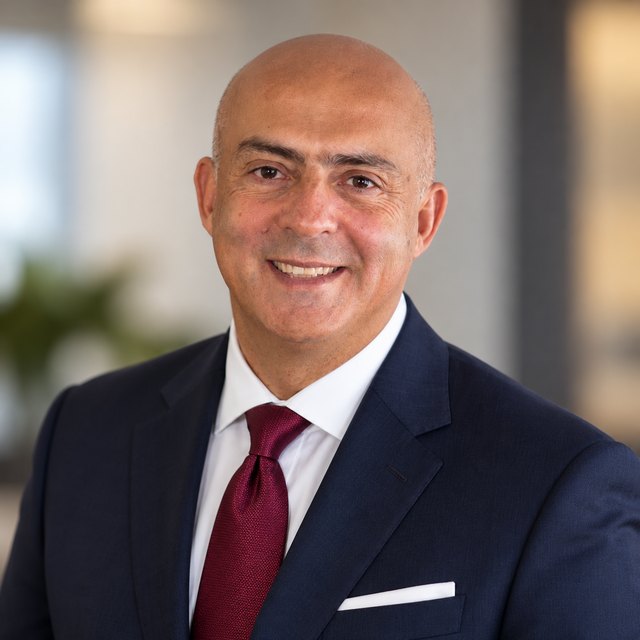
Jose Salloum is a Financial Security Advisor (conseiller en sécurité financière) certified by the Autorité des marchés financiers in Quebec, a Life and Accident & Sickness Insurance Agent licensed by the Financial Services Regulatory Authority of Ontario, and a Life Insurance Agent licensed by the Insurance Council of British Columbia. Licensed since 2001.
He has practised Infinite Banking since 2015 and founded Canadian Wealth Creation Centre Inc. in 2016. From 2020 to 2024 he was an IBC (Infinite Banking Concepts™) Authorized Practitioner of the Nelson Nash Institute, a private certification rather than a regulatory licence.
IBC Financial is the educational website of Canadian Wealth Creation Centre Inc., open to all Canadians. Services come only from Canadian Wealth Creation Centre Inc. Its representatives hold a licence in each province served: Quebec, Ontario, Alberta, British Columbia, Manitoba and New Brunswick. Jose Salloum's own licences cover Quebec, Ontario and British Columbia. This page is general education and not advice on any individual file.
Last reviewed 2026-10-03. By Jose Salloum, Financial Security Advisor in Quebec. In Ontario, Life and Accident & Sickness Insurance Agent. In British Columbia, Life Insurance Agent.