
Financing a Pharmacy Career: From Pharmacy School to Ownership
Pay for each stage with the tool designed for it. Government student loans and grants come first, a professional line of credit covers only the gap, and the first paycheques go to protection, a reserve and steady repayment. A participating policy belongs later, once a surplus has lasted a year, never for a purchase due soon. The insurer lends against it at a rate it sets; the loan reduces the death benefit and can be taxable.
A pharmacy career asks for money long before it pays any back. Prerequisite university years, a doctorate in pharmacy, licensing exams, a regulator's fees, a first job that may be salaried or a string of relief shifts, and for some, the purchase of a pharmacy. Each step costs money before the income it leads to arrives, and the habits formed around the first loans tend to follow you to the counter you eventually own.
So the real question is how to finance a whole career, from the first year of pharmacy school to ownership and sale, so that every loan has a job, a source of repayment and an end date. Below, stage by stage: the Canadian rules that change the cost, the tools that fit, and the later, narrower place where a participating whole life policy can have a role.
A plain word about my own interest first. When someone buys a policy, the insurer pays me a commission; that is how I earn my living. You pay nothing to read this, and a good share of it is not about insurance at all.
The other articles for pharmacists are gathered in the pharmacists collection, part of the wider business owners section.
What does financing a pharmacy career involve, from pharmacy school to ownership?
A chain of money decisions across thirty or forty years: school costs, licensing fees, a first job's cash flow, then larger sums if you buy a pharmacy, join a banner or renovate. No single tool serves every link. A life insurance policy belongs to the later links only, after protection is in place and debt is under control.
Not every career touches every row; a hospital pharmacist may never own a store. Find your row, then read the ones below it: they show what today's choices prepare.
| Career stage | What costs money | Tools that suit it | What a policy can do here |
|---|---|---|---|
| Pharmacy school | Tuition, rent and food, books, student fees | Government loans and grants first, then a professional student line of credit, summer income, family support | Nothing yet: no surplus exists to pay premiums |
| Licensing | PEBC or regulator fees, perhaps a move | Savings; a tax credit if the exam qualifies | Nothing yet |
| First job, salaried or relief | Paying down school debt, building a reserve, protection, a car, a first home | A steady repayment plan, cash set aside, term life and disability coverage | Premature on a tight budget, since cash value grows slowly |
| Buying a pharmacy or joining a banner | The price or a share of it, opening inventory, working capital | A term loan, vendor financing, supplier credit, savings | Value built in earlier years can cover a slice, with interest owed to the insurer |
| Renovation, automation, a second store | Fit-out, a dispensing robot, a new location | Equipment leases and loans, a term loan, cash the business kept | A policy loan can cover part of a purchase planned well ahead |
| Mature practice | Repeat purchases, family needs | Cash the business kept, a line of credit, a policy loan if it suits | This is where a policy funded for years can carry the most weight |
| Sale and retirement | Transition costs, income once the counter closes | Sale proceeds, registered savings, cash | A source of cash, with tax and death benefit consequences |
Look at the two ends of the table. At the top, other people's money pays, because yours does not exist yet. At the bottom, part of the money can be yours, provided you put it aside along the way. Which of the two describes your fifties is settled in the decade after your first paycheque.
What does a pharmacy degree cost before the first paycheque?
More than tuition. The entry-to-practice degree in Canada is a doctor of pharmacy (PharmD), which follows university prerequisites, and licensing adds exam and regulator fees. At the University of Toronto, 2026 to 2027 tuition for domestic Ontario residents is $18,420, before incidental fees of about $2,123 a year.
The University of Toronto's Leslie Dan Faculty of Pharmacy, read on 3 October 2026, is one example. Its PharmD lasts three years, two of courses with practice rotations and one of rotations and electives, and admission normally follows two years of university study. For 2026 to 2027 it lists tuition of $18,420 for domestic Ontario residents and $22,590 for domestic students from other provinces, plus incidental fees of about $2,122.69 per academic year. Other faculties set their own fees.
Quebec follows its own path. The Ordre des pharmaciens du Québec says students trained in Quebec complete the first-cycle doctorate in pharmacy at the Université de Montréal or the Université Laval, register in the Ordre's student register during their first session for a one-time fee of $352.44 including taxes, then apply for the permit once the faculty confirms the diploma.
Outside Quebec, licensing runs through the Pharmacy Examining Board of Canada (PEBC) and then the provincial regulator. The PEBC's fee page, read on 3 October 2026, lists $870 for Part I of the Qualifying Examination (multiple choice) and $1,950 for Part II (the clinical OSCE), both marked as 2027 fees. Your provincial college adds its own requirements and fees. Budget for the possibility of sitting an exam twice.
Part of that cost can come back at tax time. According to the Canada Revenue Agency's page on eligible tuition fees (modified 15 May 2026), an exam fee paid to a school, a professional association or a comparable body can count toward the tuition tax credit when the exam is a condition of a professional status that a federal or provincial law recognizes. Each institution's fees have to exceed $100 to count. File the receipts, and let your accountant confirm which of your exams qualify.
Should pharmacy school be paid with government loans or a professional line of credit?
Lean on government loans and grants for as much as they cover, and draw on a private line only for what remains. Since 1 April 2023 the federal part of a Canada Student Loan has been interest-free. A professional line differs: the lender owns its rate, can move it, and wants interest from the first month.
Employment and Social Development Canada announced the change in its release "Government of Canada provides interest-free loans for students, effective April 1": interest on Canada Student Loans ended permanently on 1 April 2023, and interest that built up before that date still has to be paid. Quebec, the Northwest Territories and Nunavut stay outside the federal program and fund their own student aid. Where a province lends alongside Ottawa, its share of the loan carries the province's own terms.
| Question | Government student loan | Professional student line of credit |
|---|---|---|
| Whose money is it? | Ottawa's, a province's, or both | A private lender's |
| Interest during school | Nothing on the federal part; in Quebec, the province covers it while you study | You owe at least the interest each month |
| Credit on interest paid | A federal credit, and a Quebec credit, may apply | No student loan interest credit at all |
| First repayment | Six months after you finish | Whatever the line's contract says |
| A lean year after graduation | Repayment assistance, and forgiveness for some pharmacists | No access to the Repayment Assistance Plan |
| Consolidating with other debt | The credit on its interest is lost | Not relevant |
Each source was read on 3 October 2026. Ottawa's page Repay a student loan (modified 3 June 2026) sets repayment at six months after studies end. The Financial Consumer Agency of Canada's page Student lines of credit (modified 14 October 2025) says at least the interest is payable while studying and the Repayment Assistance Plan does not apply. The CRA's page on line 31900 (updated 20 January 2026) confines the interest credit to government student loans, shuts out any loan merged or renegotiated with other borrowing, and allows unused amounts to wait up to five years.
That last rule is easy to miss: folding a government loan into a private consolidation loan to simplify your payments can end its credit. The first-year choices, from which debt to attack first to the size of the reserve, are the subject of new pharmacists, student debt and what to do first.
Can a pharmacist's student loans be forgiven?
where the structure usually goes wrong
Corporate-owned life insurance
- 01The company owns the contract and pays the premium
- 02Premiums are generally not deductible
- 03Corporate funding is not, by itself, a tax saving
- 04A death benefit it receives may credit the Capital Dividend Account
- 05Ownership and beneficiary structure is where it fails
Some can. Pharmacists became an eligible occupation under Canada Student Loan Forgiveness as of 31 December 2025. The program forgives up to $60,000 of Canada Student Loans over five years for qualifying work in a rural area or a small population centre. A private line of credit and a Quebec loan fall outside it.
The federal page Canada Student Loan Forgiveness (modified 3 June 2026, read on 3 October 2026) lists pharmacists among the new occupations. The amounts rise with each year of service: $8,000, $10,000, $12,000, $14,000 and $16,000, for up to $60,000. Each year, the page asks for:
- twelve months in a row working as a pharmacist;
- 400 or more hours of services you deliver in person;
- a workplace in a rural area or in a community of 30,000 people or fewer;
- payments that are up to date on the loan;
- an application filed within 90 days of finishing the year.
Notice what forgiveness touches: the cheaper federal debt, never the private line. A Quebec loan, granted outside the federal program, is not covered either. For a graduate choosing between a small community and a city, it is a real number to weigh beside salary and cost of living.
What does a line of credit cost in the first years of work?
At an assumed $80,000 balance and an assumed 7% rate, interest alone is about $467 a month and $5,600 a year. Two years of interest-only payments cost $11,200 and leave the balance untouched. No student loan interest credit applies, so after-tax income pays it.
Illustrative example. Every number below is an assumption picked to make the arithmetic visible. No lender quoted it.
- What you owe on the professional line the day you graduate: $80,000.
- Its rate: 7% a year, applied monthly to the balance; the real rate is the lender's to set and to change.
- The marginal tax rate on the dollars that pay the interest: 35%.
- Plan A pays $1,600 a month from the first month of work. Plan B pays interest only for two years, then $1,600 a month.
| Measure | Amount |
|---|---|
| Interest each month on $80,000 at 7% | about $467 |
| Interest each year | $5,600 |
| Interest over two years of interest-only payments | $11,200 |
| Pre-tax income needed to pay $5,600 at a 35% marginal rate | about $8,615 |
| Plan A: payments and total interest | 60 payments, about $14,861 |
| Plan B: total interest | about $26,061, over 84 months |
| Each $10,000 repaid early saves, every year at 7% | $700 |
Plan B costs about $11,200 more and two extra years: the price of free cash early. A move, a job gap or a first child can justify it. Pay it on purpose. After twelve payments, Plan A owes about $65,955; Plan B still owes $80,000. A higher rate raises every figure.
Salaried, relief or owner: how does the first job change the financing plan?
It changes how steady your income is and who arranges your protection. A salaried pharmacist receives regular pay and may have group benefits. A self-employed relief pharmacist has uneven income and arranges protection alone. An owner carries the business's debts as well as personal ones, through a corporation.
These are three ways of working, not three ranks, and one career can pass through all three.
- Salaried, in a community pharmacy or a hospital. Regular pay makes a fixed debt payment easier to plan. Group insurance may cover part of the disability and life need; the booklet says how much, how long, and what ends when you leave.
- Relief (replacement) pharmacist, self-employed. Income depends on the shifts you accept and when invoices are paid. A larger reserve comes first, and fixed payments are sized to a weak month. Relief shifts and irregular income covers the uneven months.
- Owner. The corporation carries its own debts for inventory, fit-out and the purchase.
Self-employment leaves one gap to close. Employment and Social Development Canada's page "Benefits for self-employed people" (modified 7 August 2026) explains that self-employed people who register can access six special benefits: maternity, parental, sickness, two family caregiver benefits, and compassionate care. It treats a person who controls more than 40% of a corporation's voting shares as self-employed, which can include a pharmacist who controls a pharmacy company. In Quebec, maternity, paternity and parental benefits come from the Québec Parental Insurance Plan. The Quebec government's eligibility page says a self-employed worker needs at least $2,000 of insurable earnings in the qualifying period, contributions paid or owed, Quebec residence, and a reduction of at least 40% in time spent on the business.
In what order should a new pharmacist set up protection, a reserve and debt payments?
Start with protection and cash on hand, then commit firmly to the most expensive debt, then size the car and the home to your leanest month. Premiums you mean to pay for decades come last, once a surplus has shown up month after month for a year. Get the order right and the amounts tend to follow.
The jump from a student budget to a pharmacist's pay can be sudden. Settle the sequence before the first paycheques find other uses:
- Cash set aside, and kept apart from any insurance contract. A slow invoice or a quiet first month belongs to the reserve, not to a credit card. Cash value in a policy is no substitute for it.
- Disability coverage sized to your work and your new income. Every later plan assumes you can keep practising; pharmacists, disability and the capital plan covers the questions.
- Life insurance for whoever relies on your income, and for a lender that asks for it. Term insurance covers a large amount cheaply in the early years.
- A dated plan to retire the professional line, since its rate is out of your hands.
- A car and a home your early years can actually carry, checked against your leanest month. Canadian mortgages come up for renewal at the end of each term, and the rate is reset then; keep room for a bigger payment.
- After all that, any premium meant to run for decades, matched to a surplus you have watched hold for twelve months.
Registered plans do a different job from a life insurance policy, and nothing here ranks one against the other. Questions about them, whether an RRSP, a TFSA or another plan, go to a representative registered for the investments the plan would hold, or to your accountant.
What should you ask yourself before any loan, whoever the lender is?
frequently the same person, not always
Three roles inside one contract
- One contractAll three can differ. Only the policyholder changes it, subject to any irrevocable beneficiary.
- The policyholderOwns the contract and holds its rights, subject to any assignment.
- The insuredThe person whose life is covered.
- The beneficiaryReceives the death benefit.
Run the review a lender would run on you: the purpose of the money, the income that will pay it back, the full cost, your plan if that income stops, and the date your borrowing room comes back. Run it whether the money comes from a supplier, a lessor, a line of credit or an insurer.
With your own capital, no credit committee reviews you; you play that role. The habit is described in thinking like a lender. Before each borrowing decision, put half a page in writing:
- The purchase. Name it precisely, and say why it cannot wait a year.
- The income behind it. Which revenue pays it back, and what other bills already lean on that revenue?
- The price of the money. Rate, fees, collateral and length; and who controls the rate.
- The lean-month test. Would the payment have fit in your worst month of the last twelve?
- The six-month test. If you were off work for half a year, where would the payment come from?
- Tax. Could the interest be deducted, given what the money buys? That answer is your accountant's.
- Collateral. What are you pledging, and does a third party, such as a lender holding an assignment, have to agree?
- Recovery. On what date will this borrowing room be free again?
If an answer stays vague, wait, or pick a simpler route. A page written before the decision also puts a policy loan and an outside offer side by side on the same terms.
When does buying a pharmacy or joining a banner enter the financing plan?
When the school debt is shrinking, a reserve exists and a lender is willing to finance a purchase. Provincial law decides who may own a pharmacy and its shares, and a banner agreement can add conditions. Those rules shape the loan, the corporation and any insurance a lender asks for, so read them before the offer.
In Quebec, section 27 of the Pharmacy Act (CQLR c. P-10), read on LégisQuébec on 3 October 2026, provides that, subject to sections 28 to 30, only a pharmacist, a partnership of pharmacists, a joint-stock company whose shares are all held by pharmacists and whose directors are all pharmacists, or a non-profit legal person whose founders, directors and members are all pharmacists may own a pharmacy and buy and sell medications as its owner. Section 28 lets the heir, liquidator or trustee of a deceased owner's succession administer the pharmacy for three years, under the personal supervision of a pharmacist.
Practising through a company in Quebec also falls under the Règlement sur l'exercice de la pharmacie en société (P-10, r. 16). On our reading of the text on LégisQuébec, a pharmacist must send the Ordre a sworn declaration at least 30 days before the company begins its activities, and the company must carry professional liability coverage of at least $1,000,000 per claim and $2,000,000 for all claims in a 12-month period. A Quebec lawyer or notary confirms how this applies to you.
Elsewhere, provincial pharmacy laws and regulators set the ownership rules, which differ; ask both the regulator and a lawyer before choosing a share structure. A banner, the network whose name and services a pharmacy may operate under, can add conditions on purchasing, fees, renovations and transfer, which a lawyer reads in the actual agreement.
The purchase itself is a lender's file: a term loan, sometimes vendor terms, supplier terms for inventory, and your own cash. The lender may require life and disability insurance assigned to it. What a pharmacy ties up in stock, drug plan receivables and equipment is set out in the capital on the shelf; the purchase decision is in buying a pharmacy or joining a banner.
At what point in a pharmacy career does participating whole life insurance make sense?
When three things are true at once: you are protected, your dearest debt is falling, and a monthly surplus has lasted a full year. The policy is insurance first. Its guaranteed cash values grow slowly and its dividends carry no guarantee. Bought early, or for a store purchase a few years out, it becomes a bill without a purpose.
First, the contract itself. If the policy is in force when the person insured dies, at any age, it pays a death benefit. Meanwhile a cash value accumulates along a schedule the contract guarantees. As a participating policy, it may also receive dividends that the insurer declares year by year, in amounts the insurer alone decides and does not guarantee. What you hold is life insurance, not an investment and not a savings account.
Some pharmacists give the policy a second job. As years pass, the cash value becomes collateral for advances the insurer is willing to make. The financing approach R. Nelson Nash called The Infinite Banking Concept® is built on that feature: pay for planned purchases with advances from the insurer, secured by your own policy, then repay them as strictly as a commercial lender would insist, so the room is back for the next purchase. Canadian Wealth Creation Centre Inc., the firm I work with, gives the long-run aim of that discipline a name: Infinite Financial Sovereignty®. Treat it as a heading to steer by, not a promise; interest and risk remain.
Time is the constraint. Capitalization comes before use: for several years the cash value can trail what you have paid in, and a contract cancelled early can hand back less than it took. That rules a policy out of the school years, and out of any store purchase you expect to make soon.
Look at a policy seriously only when all three of these hold:
- your disability and life protection is in place and fits your work;
- every debt you carry has a repayment plan, and the dearest one is getting smaller;
- for twelve months running, money has been left over after the reserve.
Meet them, and the policy can grow with the career, so some capital may exist when the renovation or the second store arrives. If not, waiting is a sound decision. Before you sign an application, read the real costs of a participating policy.
When you borrow against a policy, who lends, who is paid and what is at risk?
an irreversible trade, described plainly
What a life annuity exchanges
- 01Capital is paid to an insurer
- 02The insurer pays income for life, on the contract's terms
- 03It removes the risk of outliving the money
- 04Nothing at death, unless a guarantee was bought
- 05Once payments begin, the choice is generally permanent
The insurer lends its own money to whoever owns the policy, holding the cash surrender value as security and charging a rate it may revise. Every dollar of interest goes to the insurer. Borrowing above the adjusted cost basis creates taxable income, and whatever is still owed when the person insured dies comes out of the death benefit.
The Autorité des marchés financiers, in How to access the cash surrender value without cancelling your insurance (read 3 October 2026), says you use the cash surrender value as security, repay the amounts borrowed plus interest, and if you die first, the insurer subtracts the amounts owed and accrued interest from the insurance payable. Our guide to policy loans covers each step in detail.
- The lender: the insurer, acting under the contract's loan clause.
- The borrower: whoever owns the policy; a pharmacy corporation that owns it is the debtor itself.
- The interest: paid to the insurer, at whatever rate the insurer sets now or later. Some contracts add unpaid interest to the balance, where it starts bearing interest too.
- The security: the cash surrender value, which remains inside the contract the whole time.
- At death: whatever is owed, interest included, comes off the amount the beneficiary receives.
- For tax: section 148 of the Income Tax Act makes a policy loan a disposition. The part of the loan that exceeds the adjusted cost basis just before it is taxed as income; the rest is not, but the basis drops by the amount borrowed. Paying the loan back rebuilds the basis up to set limits, and repaying a portion that was already taxed can earn a paragraph 60(s) deduction in that later year. In Quebec, Revenu Québec applies its own return too.
- If repayment stops: once loan and interest catch up with the value behind them, the contract can terminate after the notice it provides, and that lapse can trigger tax on whatever the proceeds exceed the adjusted cost basis.
There is another way to borrow. A separate lender advances the money and holds the policy as collateral through an assignment; it chooses the rate and keeps the interest. For tax, assigning the policy is not a disposition. You remain the owner, and the assignment ends when that loan is paid off. Ask that lender what it requires and what you may do with the policy while the assignment is in place.
What does a policy loan toward a pharmacy purchase look like in numbers?
On an assumed $60,000 loan at an assumed 6.75%, repaid at $1,500 a month, the loan clears in 46 payments and costs about $8,163 in interest, paid to the insurer. With an assumed adjusted cost basis of $75,000, it creates no taxable income but lowers the basis to $15,000 until repayments restore it.
Illustrative example. None of these figures comes from an insurer or a lender; they are chosen to show how the pieces move.
- Your participating policy has been in force for many years, and the insurer has confirmed in a letter that $60,000 can be advanced.
- Use of the money: $60,000 of the down payment on a pharmacy, with a lender's term loan for the balance.
- Rate on the advance: 6.75% a year, computed monthly; the insurer decides the real rate and the method and may change both.
- You send the insurer $1,500 a month, starting one month after the advance.
- The adjusted cost basis just before the advance is $75,000 in one case and $40,000 in the other.
- A comparison loan from an outside lender at 7.5%, repaid at the same $1,500.
| Measure | Advance from the insurer at 6.75% | Outside loan at 7.5% |
|---|---|---|
| Amount borrowed | $60,000 | $60,000 |
| Monthly payment | $1,500 | $1,500 |
| Payments to clear the debt | 46 | 47 |
| Interest over the life of the debt | about $8,163, to the insurer | about $9,260, to the lender |
| Balance after 12 payments | about $45,610 | about $46,026 |
| Adjusted cost basis just before the advance | Taxable income that year | Basis left afterward |
|---|---|---|
| $75,000 | $0, since $60,000 is under the basis | $15,000 |
| $40,000 | $20,000, the slice above the basis | $0 |
In the $40,000 case, paying the advance back later can earn a paragraph 60(s) deduction of up to the $20,000 that was taxed, claimed in the year of repayment; the earlier tax is not refunded. And had the person insured died right after payment twelve, with a $750,000 death benefit assumed, about $45,610 would come off, leaving about $704,390 to the beneficiary.
Be fair to both columns. The advance wins here for one reason: its assumed rate is lower, and a lender quoting less would win instead. The policy route shifts who decides the repayment pace and removes a credit application; that has value only if you keep paying as the table assumes. Expect the lender financing the rest of the purchase to count the advance as one of your debts.
What does incorporating the pharmacy change?
Three roles split apart: the corporation can borrow, pay premiums and own a policy in its own name. Corporate tax regimes and provincial ownership rules apply before any surplus can be discussed. Nobody can say in general whether you, the corporation or another entity should own, pay for or receive a policy; your accountant and lawyer decide that first.
Your accountant applies these rules to money left in a corporation before any policy enters the picture: the small business deduction and its business limit; the passive income rule, which can reduce that limit as the corporation's investment income grows; the personal services business rules, which can apply to an incorporated pharmacist working for a single pharmacy the pharmacist does not own; and, in Quebec, a condition on hours paid to employees that can reduce the provincial small business deduction. See retained earnings and the passive income rule.
In Quebec, every share of a company that owns a pharmacy must be held by a pharmacist, which on our reading leaves no place among them for a holding company, a trust or a relative who is not a pharmacist. Check any structure against that rule before deciding anything else, insurance included.
- Who borrows. When the corporation owns the policy, the insurer's advance is the corporation's debt, not yours, and it cannot pay down what you personally owe. Getting the cash into your hands takes a salary, a dividend or the repayment of a shareholder loan, and each one is taxed on its own terms.
- Who pays. A corporation paying premiums on a policy that you own, or that benefits you, invites the CRA to assess a shareholder benefit. Have the accountant look at it before any premium is paid.
- Deducting the interest. Paragraph 20(1)(c) of the Income Tax Act can allow a deduction when the money is used to earn business income; it turns on the use. For a policy loan, the insurer has to certify that interest as well, on CRA Form T2210, Verification of Policy Loan Interest by the Insurer (modified 4 December 2023).
The options, you personally, the pharmacy corporation or a holding company where provincial rules permit one, are compared in the policyholder decision for an incorporated owner. The choice stays yours, your accountant's and your lawyer's.
How does the financing plan change toward selling the pharmacy and retiring?
The financing needs shrink while the exit and income questions grow. A sale brings tax tests, transition costs and, in Quebec, a buyer who must qualify under the Pharmacy Act. Retirement replaces practice income with income you built. A policy that financed purchases may then serve another purpose, each loan still carrying its tax and death benefit effects.
A sale of shares can qualify for the lifetime capital gains exemption on qualified small business corporation shares if the shares meet the tests in the CRA's guide T4037 (Capital Gains 2025, modified 11 February 2026): one at the time of sale, on assets used in an active business, and others over the 24 months before it, on the corporation's assets and on who owned the shares. The CRA's page on line 25400, capital gains deduction (modified 5 February 2026, read on 3 October 2026) states that, under proposed changes, the exemption for 2025 is $1,250,000. Note "under proposed changes", and confirm the status and amount with your accountant in the year you sell. Assets not used in the business, a policy's cash value among them, can affect the tests, so plan years ahead. Timing, price and the policy inside the corporation are covered in selling the pharmacy.
If no employer pension waits for you, your retirement income will be whatever you set aside; retirement without an employer pension explains the role of each vehicle. An advance taken to fund retirement is still debt. Left unpaid it compounds, it cuts what your heirs receive, and it can become taxable once it passes the adjusted cost basis. Map each year's advances with your accountant instead of calling them tax-free.
What is different for a pharmacist in Quebec?
residence decides almost everything
Living in one province, working in another
- 01Your advisor must be licensed where you live
- 02Your estate is settled under your province of residence
- 03Residence on the last day of the year decides your return
- 04Where you work decides which pension plan applies
Almost every stage has a Quebec counterpart: Aide financière aux études for student aid, the Ordre des pharmaciens du Québec for the permit and for company practice, the RAMQ paying for public drug plan services, the Pharmacy Act on ownership, the Québec Parental Insurance Plan, and a second tax return with Revenu Québec.
- Student assistance. The Quebec government's page on the loans and bursaries program says the government pays the interest during your studies and that you have six months before repayment, during which you may pay the interest or add it to the loan. Revenu Québec's page on interest paid on a student loan allows a credit for interest on government student loans and excludes lines of credit; Schedule M tracks interest you may carry forward.
- Public drug plan billing. The Régie de l'assurance maladie du Québec (RAMQ) pays pharmacists for services to insured persons, and its own page says it checks that payment against the agreements between the Association québécoise des pharmaciens propriétaires (AQPP) and the Minister of Health and Social Services. Those agreements, not last year's pattern, set the terms an owner plans cash flow on.
- Ownership and practice in a company. Section 27 of the Pharmacy Act and regulation P-10, r. 16 apply, as described above.
- Tax and law. You file federally like every Canadian, and a Quebec resident or corporation files with Revenu Québec as well. Contracts, the naming of beneficiaries and family patrimony are governed by the Civil Code of Québec, which is why a lawyer or a notary is the person to see.
What can go wrong with a policy-based plan, and what does it cost?
The contract wants premiums year after year and pays back slowly at first. Advances carry interest at a rate the insurer may raise, shrink what your family would receive, and can produce taxable income. Dividends may disappoint. Of all these, only the repayment habit is fully in your hands; the others can be prepared for, never erased.
- A hard year does not pause the premium. Disability, a cut in drug plan fees or a lost relief contract can strain the budget. Find out now which options the contract offers when a premium cannot be paid, and keep them for emergencies.
- Leaving early is expensive. Cancel in the first years and you may get back less than you put in.
- Interest left unpaid compounds. A balance that reaches the value securing it can end the contract and trigger tax.
- The loan rate is not fixed. The insurer may change it, so leave a margin in any plan.
- Dividends may fall short of the illustration. A plan that only works at the illustrated scale is a fragile plan.
- Your beneficiaries receive less while an advance is outstanding.
- Nobody enforces the schedule but you. That is the freedom of the approach, and its weak point.
Assuris has limits. Its whole life page, read on 3 October 2026, protects the greater of $1,000,000 or 90% of the death benefit, and the greater of $100,000 or 90% of the cash value, both figured on values after policy loans are deducted. Every life insurer authorized in Canada must belong to Assuris. Who watches an insurer's solvency depends on where it is incorporated: the Office of the Superintendent of Financial Institutions federally, the home province otherwise, which in Quebec means the AMF.
Which questions should you put in writing before you act?
Get three sets of written answers: the lender's complete terms, your accountant's view of the tax, and the insurer's guaranteed values, loan clause and adjusted cost basis. Then put one question to yourself honestly: will you repay a debt that nobody chases you for, in a quiet month as well as a busy one?
To a lender, any lender, including the one holding your student line:
- How is your rate set, and on what notice can it move?
- What happens to my payments after graduation, and can I pay interest only for a while?
- What collateral or life insurance will you require, and until when?
To your accountant (in Quebec, add a lawyer or notary for the law):
- Ranked after tax, which of my debts is the most expensive, and which ones earn a credit?
- Do my licensing exam fees qualify for the tuition tax credit?
- If I buy a pharmacy, who may hold the shares under my province's rules, and who should own, pay for and be named on any policy?
- Given what the money will buy, could I deduct the interest?
To the insurer, through a licensed representative:
- Put the guaranteed cash values in a column of their own, separate from anything that depends on dividends, and run a second version at a reduced dividend scale.
- How do you set the loan rate, and what becomes of interest I leave unpaid?
- What is my adjusted cost basis now, and how much taxable income would the advance I am considering create?
- If I miss a premium, what does the contract let me do?
- Who pays you on this policy, and how much depends on my buying it?
Which figures here are assumptions, and which are sourced facts?
Two different kinds. Loan balances, rates, cash values and tax rates in the examples were picked to make the mechanics visible; no lender or insurer supplied them. Tuition, exam fees, forgiveness amounts and Assuris limits carry a source and a date, and they are real prices and rules that can change after that date.
Before you rely on a dated figure, reopen its page; faculties and the PEBC reset fees each year, and federal programs change too. To run your own numbers, swap each assumption for the figure in your loan contract, your annual policy statement and the insurer's written answers, then redo the arithmetic. If everything hangs on one rate staying where it is, leave room for it to move.
Who should not finance a pharmacy career this way?
Leave the policy aside for now if, once protection, debt payments and the reserve are covered, nothing reliable is left each month, or if the money has to fund a purchase in the next few years. It is also the wrong approach for anyone who would let an unscheduled loan drift.
Set it aside, too, while disability coverage is missing, while your dearest debt is still growing, or if you would simply rather use lenders and savings at each stage. That is a sound way to finance a pharmacy career, and every step above serves it just as well. None of the steps needs a policy to be useful.
It may fit if a surplus has held for a year or longer, you have a need for permanent life insurance, and you want a pool of capital to borrow against for an owner's larger purchases, repaid on a timetable you hold yourself to. If that sounds like you, start with the self-check on the Becoming a Client page.
A thirty-minute discovery meeting
A first conversation establishes whether this fits. No illustration is prepared and nothing is arranged.
Often the answer is no, and you will hear it during the call rather than in a proposal afterwards.
This form reaches Canadian Wealth Creation Centre Inc. Any meeting, any advice and any insurance product is provided by Canadian Wealth Creation Centre Inc., through its representatives who are licensed in the client's province. IBC Financial is the company's educational website: it distributes no product and no financial service, and it gives no individualised advice.
Common questions
How much does pharmacy school cost in Canada?
How should I pay for pharmacy school in Canada?
Do pharmacy students pay interest on Canada Student Loans?
Can pharmacists get Canada Student Loan forgiveness?
Is the interest on a pharmacy student line of credit tax deductible?
Can I claim my PEBC exam fees on my tax return?
Can a self-employed relief pharmacist get EI maternity or sickness benefits?
Who can own a pharmacy in Quebec?
Should a new pharmacist buy whole life insurance?
Can I use a policy loan to help buy a pharmacy?
Who receives the interest on a policy loan, and is the loan taxable?
Can a pharmacy corporation take a loan on a policy it owns?
How is financing a pharmacy career different in Quebec?
Sources
- University of Toronto, Leslie Dan Faculty of Pharmacy, PharmD frequently asked questions and How to become a pharmacist. Three-year PharmD after about two years of university; 2026 to 2027 tuition $18,420 for domestic Ontario residents and $22,590 for other domestic students; incidental fees about $2,122.69 per academic year., verified 2026-10-03
- Ordre des pharmaciens du Québec, Étudiants formés au Québec. Doctorate at the Université de Montréal or the Université Laval; student register fee of $352.44, taxes included, paid once., verified 2026-10-03
- Pharmacy Examining Board of Canada, Examination dates and fees. Qualifying Examination Part I $870 and Part II $1,950, marked as 2027 fees., verified 2026-10-03
- Canada Revenue Agency, Eligible tuition fees, modified 15 May 2026. Exam fees tied to a professional status recognized by statute can count; each institution's fees must exceed $100., verified 2026-10-03
- Employment and Social Development Canada, news release, Government of Canada provides interest-free loans for students, effective April 1 (March 2023). Federal interest ended on 1 April 2023; Quebec, the Northwest Territories and Nunavut stay outside the federal program., verified 2026-10-03
- Government of Canada, Repay a student loan, modified 3 June 2026. Payments begin six months after studies end., verified 2026-10-03
- Financial Consumer Agency of Canada, Student lines of credit, modified 14 October 2025. Interest is owed during studies; no access to the Repayment Assistance Plan., verified 2026-10-03
- Canada Revenue Agency, Line 31900, interest paid on your student loans, updated 20 January 2026. The credit is limited to government student loans; unused amounts wait up to five years., verified 2026-10-03
- Government of Canada, Canada Student Loan Forgiveness, modified 3 June 2026. Pharmacists eligible as of 31 December 2025; up to $60,000 over five years, under stated conditions., verified 2026-10-03
- Employment and Social Development Canada, Benefits for self-employed people, modified 7 August 2026. Six special benefits after registration; the 40% voting shares rule; Quebec parental benefits through the QPIP., verified 2026-10-03
- Gouvernement du Québec, Québec Parental Insurance Plan, eligibility conditions for a pregnancy or birth. Self-employed workers need $2,000 of insurable earnings and a 40% reduction in time spent on the business., verified 2026-10-03
- Gouvernement du Québec, Loans and Bursaries Program, its advantages. The government pays the interest during studies; six months before repayment., verified 2026-10-03
- Revenu Québec, Interest paid on a student loan. Government student loans earn the Quebec credit; a line of credit does not., verified 2026-10-03
- Pharmacy Act, CQLR c. P-10, sections 27 and 28, LégisQuébec. Who may own a pharmacy in Quebec; the succession's three years., verified 2026-10-03
- Règlement sur l'exercice de la pharmacie en société, CQLR c. P-10, r. 16, LégisQuébec. Sworn declaration to the Ordre 30 days before activities begin; liability coverage of $1,000,000 per claim and $2,000,000 per 12-month period., verified 2026-10-03
- Régie de l'assurance maladie du Québec, Responsabilités de la Régie et des pharmaciens. The RAMQ pays pharmacists and checks payment against the AQPP agreements with the Minister., verified 2026-10-03
- Canada Revenue Agency, Line 25400, capital gains deduction, modified 5 February 2026. Under proposed changes, the 2025 lifetime capital gains exemption is $1,250,000., verified 2026-10-03
- Canada Revenue Agency, Guide T4037, Capital Gains 2025, modified 11 February 2026. The tests for qualified small business corporation shares., verified 2026-10-03
- Autorité des marchés financiers, How to access the cash surrender value without cancelling your insurance. The insurer deducts any unpaid loan and interest from the insurance paid at death., verified 2026-10-03
- Assuris, Whole Life. Death benefit and cash value limits, applied after policy loans are deducted., verified 2026-10-03
- Canada Revenue Agency, Form T2210, Verification of Policy Loan Interest by the Insurer, modified 4 December 2023., verified 2026-10-03
- Income Tax Act, section 148 and paragraphs 60(s) and 20(1)(c), Justice Laws Canada, as recorded on this site; Justice Laws refused an automated request on 3 October 2026., verified 2026-09-30
About the author
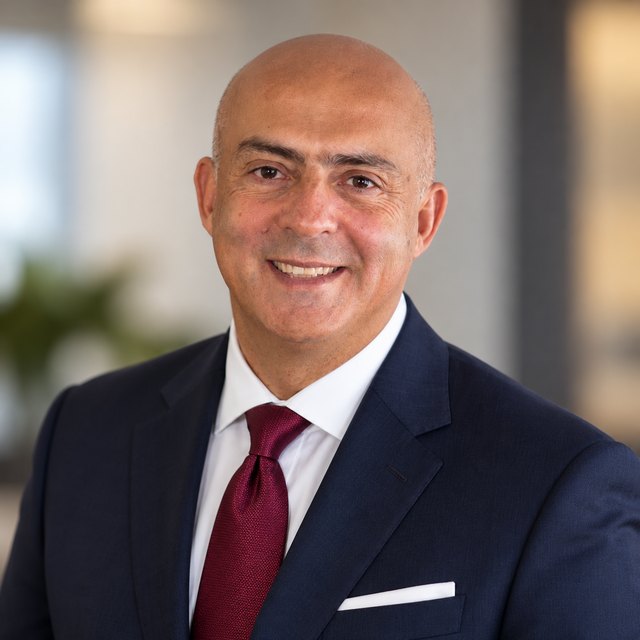
Jose Salloum is a Financial Security Advisor (conseiller en sécurité financière) certified by the Autorité des marchés financiers in Quebec, a Life and Accident & Sickness Insurance Agent licensed by the Financial Services Regulatory Authority of Ontario, and a Life Insurance Agent licensed by the Insurance Council of British Columbia. Licensed since 2001.
He has practised Infinite Banking since 2015 and founded Canadian Wealth Creation Centre Inc. in 2016. From 2020 to 2024 he was an IBC (Infinite Banking Concepts™) Authorized Practitioner of the Nelson Nash Institute, a private certification rather than a regulatory licence.
IBC Financial is the educational website of Canadian Wealth Creation Centre Inc., open to all Canadians. Services come only from Canadian Wealth Creation Centre Inc. Its representatives hold a licence in each province served: Quebec, Ontario, Alberta, British Columbia, Manitoba and New Brunswick. Jose Salloum's own licences cover Quebec, Ontario and British Columbia. This page is general education and not advice on any individual file.
Last reviewed 2026-10-03. By Jose Salloum, Financial Security Advisor in Quebec. In Ontario, Life and Accident & Sickness Insurance Agent. In British Columbia, Life Insurance Agent.