
A Family Trust and Its Policy, From Year One to the 21st Anniversary
A family trust that owns a life insurance policy moves through stages: the deed and settlement, a first T3 return, years of premiums and records, life events, a review in years 15 to 20, and the 21st anniversary under subsection 104(4). Each stage has its own filings and decisions, for your accountant and lawyer or notary.
A family trust is signed in an afternoon. Then it lives for decades. The people around the table on the first day are rarely the same people who make the last decision. Children grow up. A trustee retires. A beneficiary moves away. And somewhere ahead, written into the Income Tax Act, a date is waiting.
When the trust owns a life insurance policy, that long life matters even more. The policy may run for forty years or more. The trust has to pay for it, keep its records, file every year and answer to every beneficiary. Families who plan well for the first day sometimes plan very little for the years in between. That is where most of the work, and most of the surprises, sit.
This page follows one family trust and its policy from the deed to the 21st anniversary and beyond, stage by stage. It says what usually happens at each stage, who acts, what is filed and what to ask. It is general information from a licensed insurance professional, not tax, legal or investment advice. Every decision on this page belongs to your accountant and your lawyer or, in Quebec, your notary.
If you are still deciding whether a trust should own the policy at all, start with a family trust as the owner of a life insurance policy. This page assumes that choice is made.
What has to happen before anyone signs?
Before signing, the family agrees on the purpose, and a lawyer or Quebec notary drafts the trust deed. The settlor, trustees and beneficiaries are chosen. The deed's powers are checked against the plan for the policy. Then the deed is signed and the trust is settled with its first property.
The deed is the trust's rulebook for its whole life. It decides who may benefit, what trustees may do, how they are replaced and how the trust ends. The clauses that matter most when a trust will own a policy are explained on the trust deed clauses that matter for a policy. If a power is missing on day one, adding it later can be hard or impossible.
The choice of people matters as much as the wording. Who settles the trust, and with what? Who funds the premiums later? Is any beneficiary a spouse or a minor child? These answers shape the tax analysis, including the attribution rules. The three roles are explained on what a trust is for a policyowner.
Before signing, read the documents that will have to agree for decades: the deed, the will of each parent, any shareholder agreement, and the policy plan. The study page sets out which documents must agree. Fixing a mismatch is cheap now and costly later.
What happens in year one?
three mechanics, one of them fatal
How wealth actually crosses a generation
- 01What passes outside the estate by designation
- 02The deemed disposition that taxes almost everything else
- 03Whether the estate holds cash to pay that tax
- 04Selling assets to pay the tax is the common failure
In year one the trust is funded, applies for or receives the policy, gets a trust account number and opens its records. Most trusts use a 31 December year end, so the first T3 return, with Schedule 15 where required, is usually due 90 days after the first year closes.
Funding comes first, because the trust pays the premiums from money it holds. That money usually comes from a family member as a gift or a loan. Either route can bring in the attribution rules or subsection 75(2), so the funding method is settled with the accountant before the first cheque. A loan needs written terms and a payment record from the start.
Then comes the policy. The trustees sign the application as owner, and the person to be insured signs too. Or an existing policy is moved into the trust, which is a disposition with its own tax cost, explained on moving a policy to a new owner. Either way, the insurer usually asks for a copy of the deed, and the beneficiary on file should be checked against the plan.
The trust also needs a number. The CRA says a trust gets its account number online or by mailing Form T3APP, with a signed copy of the trust document. The CRA's When to file page says a T3 return is due no later than 90 days after the trust's tax year end. Most trusts must use a 31 December year end.
The first return is where the beneficial ownership rules start. The CRA's FAQ says an express trust resident in Canada files every year unless it is a listed trust. A trust with assets of $50,000 or less in fair market value throughout the year is generally a listed trust and does not file Schedule 15. Whether a trust holding a policy fits is for your accountant to decide.
What does the trust do in the early years?
In the early years the trust pays each premium, keeps a clean record of where the money came from, files its returns, and keeps Schedule 15 current. Trustees meet, at least yearly, to review the policy statement, the beneficiary on file and the funding. Quiet years are when good records are built.
Every premium needs a paper trail. Who gave or lent the money? On what date? Was loan interest charged and paid as agreed? An accountant may need these answers twenty years later, when the people who remember are gone. Keep a separate account in the trust's name only, and never pay premiums from a personal account by mistake.
Trustees should meet and write down what they decided. A short yearly minute is enough: the premium paid, the policy statement read, the beneficiary confirmed, any question for the accountant. In Quebec, a trustee acts as an administrator of the property of others, and article 1351 of the Civil Code requires a summary account to the beneficiary at least once a year.
Most insurers send a yearly policy statement. Read it with care. It shows what the contract holds and, for some policies, values that are not guaranteed. If the policy is a specially designed, high-cash-value, participating whole life insurance policy, any dividends are never guaranteed. Ask the insurer each year, in writing, to confirm the owner and beneficiary on its file.
What happens when life changes?
Life events test the deed. A death, a separation, a trustee who leaves, a child who turns 18 or moves abroad: each can change who signs, who benefits, what is filed or how tax applies. The trustees act under the deed, tell the insurer and update Schedule 15, then ask the accountant and lawyer or notary.
If the person insured dies, the insurer pays the trust as beneficiary, and the deed governs what follows. How the death benefit is taxed is on taxes on death benefits. If a trustee dies or resigns, the deed's replacement clause applies. In Quebec, article 1276 lets the settlor appoint trustees or set how they are replaced.
If the settlor or a funding parent dies, the funding stops unless someone else steps in. The trust then needs a new source for the premiums, or a decision about the policy. A will can leave money to the trust, but only if it was drafted with the trust in mind. Read both documents together while everyone is alive.
A separation raises questions the deed may already answer. Is a spouse a beneficiary, a trustee or both? Does the deed define who counts as a spouse? Can a former spouse be removed? These are questions for the lawyer or notary, not for the trustees alone. The risk of a designation nobody changed is explained on divorce and the designation nobody changed.
When a beneficiary turns 18, some rules change. Under subsection 74.1(2) of the Income Tax Act, attribution to a minor stops for a year once the person turns 18 before the year ends. Ask the accountant what this changes for your trust. A beneficiary who moves outside Canada raises other questions, explained on a trust with a beneficiary outside Canada.
Why do years 15 to 20 matter so much?
protection arranged late is not protection
Asset protection turns on timing
- 01Statutory exemptions under provincial law
- 02Ownership structures arranged in advance
- 03Insurance with a properly named beneficiary
- 04A transfer made to defeat a known creditor can be reversed
- 05Protection put in place early is the protection that holds
Years 15 to 20 are when the 21-year question usually starts in earnest. The trustees ask the accountant what the anniversary will reach, value what the trust holds, and read what the deed allows. Starting this early leaves time to act. Starting in year 20 often leaves only the choice to pay.
The review starts with the date. Paragraph 104(4)(b) of the Income Tax Act sets it 21 years after the latest of 1 January 1972, the day the trust was created and certain other days. Confirm the creation date from the signed deed and the settlement record, not from memory.
Next comes the question of what the rule reaches. The deemed disposition applies to capital property other than depreciable property. How it reaches a life insurance policy is a technical question with a commonly reported answer, set out and checked on the scenario study. Shares the trust holds are usually the larger concern.
Then come the options. People raise several: distributing to beneficiaries, a freeze, paying the tax, winding up, a new trust. The study page reports each one and checks it against the statute, so this page does not repeat it. Each needs a deed that allows it, a valuation and time. The review is also the moment to ask whether a beneficiary is ready to own a policy or shares outright.
What happens on the 21st anniversary?
At the end of the anniversary day, subsection 104(4) deems the trust to dispose of its capital property, other than depreciable property, at fair market value, and to reacquire it at that value right after. Any built up gain becomes taxable, though nothing was sold. The trust reports it on the T3 return for that year.
The date is not a meeting. It passes at the end of a calendar day, whether anyone notices or not. Whatever the trustees decided to do before it must be finished before it. A distribution signed the day after is a distribution after the anniversary, with the gain already deemed.
The filing follows the normal rhythm. The CRA's T3 Trust Guide lists Form T1055, Summary of Deemed Dispositions. The return for the year that includes the anniversary is due 90 days after the year end. If tax is owing, the trust needs cash or a payment plan, and the study page explains the option to pay over time.
Under paragraph 104(4)(c), the rule repeats every 21 years. Paying the tax resets the trust's cost of the property, because it is deemed reacquired at fair market value. It does not end the rule. A trust that continues faces the next anniversary, 21 years later, with the same questions.
What comes after the anniversary?
underwriting is the part nobody controls
How long each stage takes
- The discovery meetingThirty minutes. Online, with no products.
- The suitability recordOne sitting. A licence requires it before advice.
- The design meetingOne hour. More than one route, guarantees shown apart.
- Underwriting2 to 6 weeks. Decided by the insurer, sometimes longer.
- First conversation to a contract in force6 to 10 weeks. When nothing waits on a medical.
After the anniversary, the trust either continues or winds up. A continuing trust keeps paying premiums, filing every year and planning for the next date. A trust that winds up hands its property to those entitled to it and files a final return. Either path needs the deed's authority and the accountant's review.
Continuing is a real choice. The trust may still serve its purpose: young grandchildren, a policy whose insured is alive, a family that wants trustees in charge. The cost is another 21 years of filings and records, and another anniversary. The deed must allow the trust to last that long.
Winding up means distributing each asset, and each distribution has its own tax rules. Handing a policy to a beneficiary is a change of owner, which moving a policy to a new owner explains. The CRA says a final T3 return is due 90 days after the trust's year end. Revenu Québec sets the final TP-646 for an inter vivos trust 90 days after the calendar year it winds up.
After the final distribution, the insurer's records must change. The new owner signs for the policy, and the beneficiary is chosen again. In Quebec, article 1297 of the Civil Code says the trustee hands the property to those entitled to it at the end of the trust. Article 1363 requires a final account detailed enough to check.
How do the stages compare at a glance?
The table below sets out each stage of a family trust that owns a policy: what usually happens, who acts, what is filed and what to ask. It summarises this page. It is not a checklist that replaces the deed, the accountant or the lawyer or notary.
| Stage | What happens | Who acts | What is filed | What to ask |
|---|---|---|---|---|
| Before signing | Purpose agreed, deed drafted, people chosen | Family, lawyer or notary | Nothing yet | Does the deed allow everything the plan needs? |
| Year one | Trust funded, policy applied for or moved in | Settlor, trustees, insurer | Trust account number, first T3, Schedule 15 if required | How are premiums funded, and do attribution rules apply? |
| Early years | Premiums paid, records kept, yearly review | Trustees | T3 each year unless listed; Quebec TP-646 where it applies | Does the insurer's file still match the deed? |
| Life events | Death, separation, trustee change, child turns 18 or moves | Trustees, then professionals | Updated Schedule 15 | What does this change for tax and for the deed? |
| Years 15 to 20 | Date confirmed, assets valued, options weighed | Trustees, accountant, lawyer or notary | Nothing new | What will the anniversary reach, and what can we still do? |
| 21st anniversary | Deemed disposition at fair market value | Trustees, accountant | T3 for that year, Form T1055 | Is there cash for any tax owing? |
| After | Trust continues or winds up | Trustees, beneficiaries, insurer | Yearly T3, or a final T3 and TP-646 | Who owns the policy next, and who is its beneficiary? |
Most of the cost in the table sits in rows that look quiet. The filings in the early years repeat for two decades. The life events row is where documents fall out of step. Reading the whole table at the start helps a family judge whether it can carry the trust for its full life.
What is different in Quebec?
In Quebec, a trust is a patrimony by appropriation under article 1261 of the Civil Code. It belongs to no one. The trustee administers it as the property of others, gives a yearly account, and hands it over at the end. The notary or lawyer applies these rules, and the TP-646 joins the federal return.
Article 1278 gives the trustee control and exclusive administration of the trust patrimony, as an administrator of the property of others charged with full administration. That brings duties that run for the trust's whole life. Article 1351 requires a summary account to the beneficiary at least once a year, so the yearly minute described above has a legal role.
The end of a Quebec trust follows the Code too. Article 1296 says a trust ends when the rights of all beneficiaries lapse, when its term expires, when its condition is fulfilled or when its purpose is attained, among other cases. Article 1297 then has the trustee hand the property to those entitled to it. The 21st anniversary under the Income Tax Act is a separate, federal date that does not end the trust.
On tax filing, Revenu Québec says that, as a rule, a trust subject to Québec income tax files form TP-646 within 90 days after its tax year ends, with RL-16 slips where they apply. The federal T3 and Schedule 15 are separate. Your accountant confirms which returns your trust files, and your notary or lawyer reads the deed against the Code.
What should you ask, and whom?
no legal limit, a practical one
How many contracts you may own
- 01There is no legal limit on the number in Canada
- 02Financial underwriting sets the practical limit
- 03Total coverage in force is assessed against income
- 04Insurers share this information with one another
Take tax questions to your accountant and deed questions to your lawyer or, in Quebec, your notary. Ask at the start, at each life event and again in years 15 to 20. Ask for the important answers in writing, because the people who answer today may not be there on the anniversary.
For your accountant:
- What is our trust's exact 21st anniversary, and what will subsection 104(4) reach that day?
- Must our trust file a T3 and Schedule 15 every year, or is it a listed trust?
- How should premiums be funded, and do sections 74.1 to 74.5 or subsection 75(2) apply?
- What changes when a beneficiary turns 18 or moves outside Canada?
- If the trust distributes the policy or winds up, what does each distribution cost in tax?
For your lawyer or notary:
- Does the deed let the trustees hold a policy, pay premiums and distribute property before the anniversary?
- Who replaces a trustee who dies, resigns or can no longer act?
- How does the deed treat a spouse after a separation?
- Do the deed, the wills and the insurer's records still agree?
- In Quebec, how do articles 1278, 1351 and 1296 to 1297 apply to our trust?
What this page will not tell you
This page will not tell you whether a trust suits your family, what your trust's anniversary will cost, how the 21-year rule reaches your policy, or which option to choose before the date. It does not draft a deed, value property, or take a tax position.
Those answers depend on your documents, your figures and your province, so they belong to your accountant and your lawyer or, in Quebec, your notary. A licensed insurance professional can explain what the contract says, show what the insurer needs to record a trust as owner and beneficiary, and confirm in writing what is on file. The kinds of owner are compared on who can own a life insurance policy, and the wider topics are on the estate planning page.
Who this does not suit
A trust that owns a policy for twenty years or more does not suit a family that cannot keep records, has no trustee likely to serve for decades, or cannot carry yearly accounting costs. It also fits poorly when nobody will plan for the anniversary until it arrives.
It is usually not the right fit when:
- The only goal is to pay a spouse or adult children directly, which a beneficiary designation already does.
- No one is willing to keep premium records, minutes and filings year after year.
- The family expects the trust to run itself once the deed is signed.
- The likely trustees are the same age as the settlor, with no plan for replacing them.
- The family would rather not revisit the plan at each life event and again before the anniversary.
If one of these describes your family, a simpler route may reach the goal with less to maintain. If none does, the timeline above is a fair picture of the work, and the next step is a joint meeting with your accountant and your lawyer or notary.
A thirty-minute discovery meeting
A first conversation establishes whether this fits. No illustration is prepared and nothing is arranged.
Often the answer is no, and you will hear it during the call rather than in a proposal afterwards.
This form reaches Canadian Wealth Creation Centre Inc. Any meeting, any advice and any insurance product is provided by Canadian Wealth Creation Centre Inc., through its representatives who are licensed in the client's province. IBC Financial is the company's educational website: it distributes no product and no financial service, and it gives no individualised advice.
Common questions
When does a new family trust file its first T3 return?
Does a family trust have to file every year even if it has no income?
What happens to a family trust on its 21st anniversary?
When should we start planning for the 21-year rule?
What happens to the trust if a trustee resigns or dies?
How does a family trust end, and what is filed at the end?
Sources
- Income Tax Act, subsection 104(4). At the end of certain days, a trust is deemed to dispose of its capital property, other than depreciable property, at fair market value. It is deemed to reacquire the property right after, at the same value. Paragraph (b) sets the day 21 years after the latest of 1 January 1972, the day the trust was created and certain other days. Paragraph (c) repeats the rule every 21 years. Justice Laws Canada, current to 30 September 2026., verified 2026-10-23
- Income Tax Act, subsection 74.1(2). It applies to property transferred or lent to a person under 18. That person must not deal at arm's length with the individual, or must be a niece or nephew. Income from the property is deemed to be the individual's. This stops once the person turns 18 before the end of the tax year. Justice Laws Canada, current to 30 September 2026., verified 2026-10-23
- Canada Revenue Agency, When to file, updated 1 April 2026. A T3 return is due no later than 90 days after the trust's tax year end. Most trusts must use a 31 December year end. A final return for an inter vivos trust is also due 90 days after its year end. canada.ca., verified 2026-10-23
- Canada Revenue Agency, Enhanced reporting rules for trusts and bare trusts FAQ, updated 5 October 2026. An express trust resident in Canada files a T3 each year unless it is a listed trust. A trust with assets of $50,000 or less in fair market value all year is generally a listed trust. Schedule 15 gives the name, address, date of birth, country of residence and tax number of each trustee, settlor, beneficiary and controlling person. A late schedule with no unpaid tax costs $25 a day, from $100 to $2,500. Certain bare trusts report for years ending on or after 31 December 2026. canada.ca., verified 2026-10-23
- Canada Revenue Agency, Application for a trust account number: after you apply, updated 19 May 2026. A trust gets its number online or by mailing Form T3APP. The CRA asks for a signed copy of the trust document. The T3 Trust Guide for 2025, updated 27 February 2026, lists Form T1055, Summary of Deemed Dispositions. canada.ca., verified 2026-10-23
- Civil Code of Québec, articles 1261, 1276, 1278, 1296 and 1297. The trust patrimony is a patrimony by appropriation. The settlor may appoint trustees or set how they are appointed or replaced. A trustee has control and exclusive administration of the trust patrimony. A trust ends when the rights of all beneficiaries lapse, at its term, or when its purpose is attained, among other cases. At the end, the trustee hands the property to those entitled to it. Légis Québec., verified 2026-10-23
- Civil Code of Québec, articles 1351 and 1363. An administrator gives the beneficiary a summary account at least once a year. At the end of the administration, the administrator gives a final account. It must be detailed enough to check. Légis Québec., verified 2026-10-23
- Revenu Québec, Filing the Trust Income Tax Return. As a rule, a trust subject to Québec income tax files form TP-646. The trustee files it within 90 days after the trust's tax year ends. For an inter vivos trust that winds up, the final return is due 90 days after the end of that calendar year. revenuquebec.ca., verified 2026-10-23
About the author
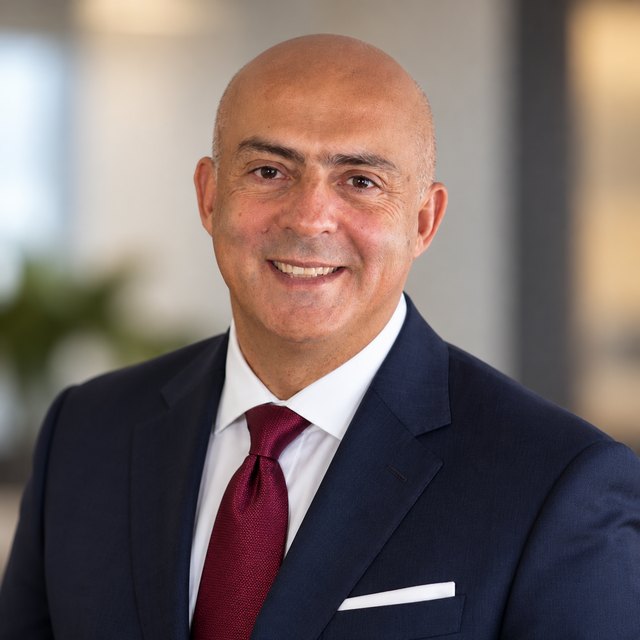
Jose Salloum is a Financial Security Advisor (conseiller en sécurité financière) certified by the Autorité des marchés financiers in Quebec, a Life and Accident & Sickness Insurance Agent licensed by the Financial Services Regulatory Authority of Ontario, and a Life Insurance Agent licensed by the Insurance Council of British Columbia. Licensed since 2001.
He has practised Infinite Banking since 2015 and founded Canadian Wealth Creation Centre Inc. in 2016. From 2020 to 2024 he was an IBC (Infinite Banking Concepts™) Authorized Practitioner of the Nelson Nash Institute, a private certification rather than a regulatory licence.
IBC Financial is the educational website of Canadian Wealth Creation Centre Inc., open to all Canadians. Services come only from Canadian Wealth Creation Centre Inc. Its representatives hold a licence in each province served: Quebec, Ontario, Alberta, British Columbia, Manitoba and New Brunswick. Jose Salloum's own licences cover Quebec, Ontario and British Columbia. This page is general education and not advice on any individual file.
Last reviewed 2026-10-23. By Jose Salloum, Financial Security Advisor in Quebec. In Ontario, Life and Accident & Sickness Insurance Agent. In British Columbia, Life Insurance Agent.