
What should a new dentist in Canada do first about student debt, insurance and financing?
Start with a spending plan based on actual associate income, an accessible emergency reserve and a clear plan for high-interest debt. Consider disability insurance while you are young and healthy, and term life insurance if someone relies on your income or a lender requires coverage. A participating whole life policy may later help you build a financing system, but it needs steady funding over years. Do not commit to premiums your early-career cash flow cannot carry, and never borrow to pay them.
What should a new dentist do first after graduation?
Put your obligations, spending and cash flow on paper before choosing a long-term insurance premium.
Graduation does not turn student debt into a predictable monthly expense. You may have government student loans, a professional line of credit, or both. Their repayment terms can differ. At the same time, starting practice can bring licensing costs, professional dues, liability coverage, continuing education expenses and the ordinary costs of moving or establishing a household. The amounts depend on your province and circumstances, so use your own documents rather than somebody else’s graduate budget.
Begin with a list of each debt: who holds it, what interest applies, when payments begin, whether the terms can change and whether a guarantor is involved. Do the same for professional obligations and household bills. If you have not yet begun associate work, label projected income as an estimate. Once you have been paid, replace the estimate with actual deposits.
An associate agreement often pays a percentage linked to work produced or collected. That does not make every month equally busy or every deposit equally predictable. Ask how the agreement defines the work used to calculate your pay, when you are paid, what expenses you must cover and what happens when appointments are cancelled. Your tax position also matters. Do not treat every dollar arriving in your account as available to spend.
The National Dental Examining Board of Canada explains that national certification and provincial licensure are distinct steps. Confirm the requirements with the dental regulator in the province where you will practise, for example the Royal College of Dental Surgeons of Ontario or the Ordre des dentistes du Québec. Build the associated fees into your plan, along with any period between finishing school and receiving dependable associate income.
The first aim is modest: know what must be paid, what can wait and how much room exists after necessities. A financing system begins with the ability to set money aside. It cannot be built from cash that is already needed for rent, taxes or debt payments. The wider sequence of decisions across a dental career, from this first year to ownership and retirement, is set out in financing a dental career.
How should a new dental associate plan for uneven income and student debt?
frequently the same person, not always
Three roles inside one contract
- One contractAll three can differ. Only the policyholder changes it, subject to any irrevocable beneficiary.
- The policyholderOwns the contract and holds its rights, subject to any assignment.
- The insuredThe person whose life is covered.
- The beneficiaryReceives the death benefit.
Plan around a cautious income month, keep cash accessible and give expensive debt a deliberate place in the budget.
Percentage-of-production or percentage-of-collections arrangements can make early income uneven. Patient flow, office schedules, payment timing and time away from work all affect what reaches your account. If you work at more than one practice, the payment dates and contract terms may differ. A large deposit after a busy period is not proof that the same amount will arrive every month.
Separate your spending plan into household essentials, professional obligations, required debt payments and flexible spending. If you are responsible for setting aside tax money, give it a separate place in the plan. Review your account activity regularly and revise the plan as associate work becomes more predictable. The purpose is not to restrict every purchase. It is to prevent a good month from creating commitments that a quieter month cannot support.
Next, build an emergency reserve in accessible cash. Its job is to cover an interruption without requiring you to draw further on a line of credit or disturb a long-term policy. Consider the time it could take to find another associate position, the expenses that would continue if you could not work and any waiting period under disability coverage. There is no universal reserve amount for a new dentist. Decide what yours must cover from your actual obligations.
Then examine the cost and terms of your debts. Continue required payments and make a plan to reduce high-interest balances. A professional line of credit may be useful during training, but available credit is not a substitute for savings. Using it to cover regular living costs after income begins is a signal to revisit the spending plan.
This order also leaves room for professional development. Continuing education, equipment you are responsible for and changes in where you practise can compete for cash. If you give every available dollar to a permanent premium, you may have to borrow for ordinary needs. Saving before spending is already the beginning of thinking like a lender: you examine what cash must remain available before agreeing to finance anything else.
Which insurance should a new dentist consider before permanent life insurance?
a notional account, not a bank balance
The Capital Dividend Account
- 01A notional tax account of a private Canadian corporation
- 02It records amounts the corporation received without tax
- 03A death benefit it receives, less the adjusted cost basis, may credit it
- 04Available balances may be paid out as capital dividends
- 05The credit depends entirely on the ownership structure
Consider protecting your ability to earn first, then address a death-benefit need if dependants or a lender make one relevant.
For an associate, the ability to practise is central to paying living expenses and student debt. Disability insurance deserves attention while you are young and healthy because eligibility and contract terms depend on underwriting. Do not choose it by premium alone. Ask what counts as disability for a practising dentist, how partial disability is treated, when benefits can begin, how long they may continue, what exclusions apply and how existing coverage from an association or workplace fits with an individual policy. The page on disability and the capital plan looks at these questions in more depth.
The Financial Consumer Agency of Canada, in its guide to disability insurance, explains why the definition of disability and the waiting period matter. Read the actual contract. A policy that responds when you cannot perform dentistry can be materially different from one that asks whether you can work in another occupation. Coverage may also have limits that deserve particular attention as your associate income changes.
Term life insurance serves a different purpose. If a partner, child or other person depends on your income, ask what money they would need if you died. A lender may also require life coverage as a condition of financing. If neither applies, do not assume you need a large death benefit simply because you are a dentist. Term coverage may address a temporary protection need without committing you to a permanent premium at the start of your career. The Financial Consumer Agency of Canada’s guide to life insurance provides a useful starting distinction between term and permanent coverage.
Some term policies offer a conversion privilege. Subject to the contract’s deadlines, eligible coverage and available products, it may allow a change to permanent coverage without new evidence of health. It does not make the later premium inexpensive or guarantee that a particular policy design will be available. Read the privilege before relying on it; the page on converting term or buying a new contract compares the two routes.
Insurance should solve a defined protection problem. Disability coverage addresses lost earning ability. Term life coverage can address a defined death-benefit need. Neither requires you to start a financing policy before your cash flow is ready.
Why think about a financing system while paying off dental school debt?
The financing idea can guide your habits now, even if a participating whole life policy is not yet suitable.
Nelson Nash set out The Infinite Banking Concept® in Becoming Your Own Banker® (2000). Its starting point is a concept about financing, not a claim that everyone should buy a particular policy immediately. Nash’s premise is that a family’s need for financing over a lifetime is greater than its need for life insurance protection. That distinction matters for a new dentist whose most pressing insurance need may be disability coverage, while financing decisions will continue throughout a career.
Every purchase is financed in one way or another. If you use an outside lender, you pay that lender interest. If you pay cash, you give up what that cash might otherwise have earned or supported, which is the opportunity cost of the purchase. This does not mean debt is preferable to cash, or that the foregone amount is known in advance. It means a purchase has a financing cost worth considering either way.
Think like a lender from your first associate year. Before an optional purchase, ask whether it leaves enough cash for obligations and surprises. If you use credit, know what must be repaid and from which future income. When money arrives, set aside what belongs to taxes, reserves and planned obligations before treating the remainder as spendable. When you pay down debt, consider keeping part of the resulting room available for future purchases rather than letting all of it become new spending.
Over years, a household with dependable surplus may build its own financing system. The aim is to finance more of the purchases in its life through that system, reduce interest paid to outside lenders and, eventually, reduce or end reliance on them for ordinary purchases. Canadian Wealth Creation Centre Inc., which provides the service and publishes the educational website IBC Financial, calls that long-term goal Infinite Financial Sovereignty®, a registered trademark of Jose Salloum. It is a goal, not a promised outcome.
A new dentist can practise the mindset with an ordinary cash reserve. The policy is a possible tool later. Financing is the purpose; buying life insurance before you can sustain it is not the purpose.
When might participating whole life insurance start to make sense for a dentist?
no legal limit, a practical one
How many contracts you may own
- 01There is no legal limit on the number in Canada
- 02Financial underwriting sets the practical limit
- 03Total coverage in force is assessed against income
- 04Insurers share this information with one another
Consider it when you have steady surplus cash flow, manageable debt and a long enough horizon for the policy’s costs and cash value to develop.
In Canada, the usual insurance tool for this approach is a participating whole life policy issued by a Canadian insurer. It is life insurance, not an investment. It provides life insurance protection and contractual guaranteed cash values. It may also receive policy dividends, but dividends are never guaranteed. A dividend illustration describes possibilities under stated assumptions, not money you can count on to meet a payment.
Permanent coverage has a cost, particularly in the early years. Cash value may be substantially less than the premiums paid at first, and the policy generally needs steady funding over years, which is why capitalization comes before use. That makes the choice different from keeping an emergency reserve accessible or reducing expensive debt. If you are considering a policy, request an illustration that distinguishes contractual guarantees from non-guaranteed dividends. Ask what happens if your income falls, if you stop optional payments or if you need cash sooner than expected.
For some associates, a possible future practice purchase or equipment cycle gives the financing idea a concrete purpose. Even then, the date matters. A purchase approaching soon calls for accessible cash and a realistic financing discussion, not an assumption that a newly issued policy will provide the required capital. A policy started with sustainable funding can be considered as one part of a longer plan, not as a substitute for acquisition savings or outside financing.
Starting small may fit better than agreeing to a large first premium. Depending on the contract, paid-up additions can allow extra contributions later that purchase additional permanent coverage and cash value, subject to policy rules and tax limits. They are not an unlimited deposit feature, and availability differs by contract. The sensible question is what base commitment you can carry through a lean associate year, not what you could pay after an unusually strong month.
Keep ownership in view as well. An associate buying personally and a future practice owner considering corporate ownership face different tax and legal questions. Do not move a policy into a company or have a company fund personal coverage without advice specific to the proposed arrangement. First establish whether the coverage and funding make sense for you at all.
Before signing an application, ask the insurer and the person presenting the policy to answer these questions in writing:
- Which values in the illustration are guaranteed by the contract, and which depend on future dividends?
- What is the base premium, which payments are optional, and what happens if an optional payment is skipped in a lean year?
- How do the cash values compare with the premiums paid in each of the early years?
- When could a policy loan first be requested, on what terms, and how is its interest set?
- Who will own the policy, who pays the premiums, and who is the beneficiary?
Can a dentist use a policy loan to finance equipment or a practice purchase?
a leveraged strategy, described as one
What an insured retirement plan depends on
- 01A participating contract funded heavily from the start
- 02The contract assigned to a lender as collateral
- 03A line of credit drawn during retirement
- 04The death benefit repays the lender at the end
- 05Everything depends on the lender continuing to lend
A policy loan may help finance a purchase after sufficient cash value exists, but it is an advance from the insurer with costs, conditions and tax consequences.
Under the policy’s terms, the insurer may advance money to the policyholder against the policy’s cash value, as the page on policy loans explains. It is not a withdrawal from a personal account. No separate credit application is ordinarily needed for a policy loan under the contract, but an advance is not unconditional or guaranteed: the available amount and process depend on the policy and insurer. Interest is owed to the insurer. The owner generally chooses when to make repayments, subject to the contract, while the policy continues to be administered under its own terms.
That flexibility requires discipline. If interest is not paid, it can add to the outstanding balance. An unpaid loan reduces the death benefit payable. If the balance becomes too large relative to the policy’s value, the contract can lapse, potentially creating a tax problem as well as ending coverage. Compare those consequences with the terms of any outside financing before making a purchase decision.
Illustrative arithmetic only: Suppose an established policy has enough available value for an advance from the insurer, and the owner uses that advance toward equipment. If the owner later repays one quarter of the principal, three quarters of the principal remain outstanding (one whole less one quarter), plus any unpaid interest. The example shows repayment arithmetic, not a policy illustration. It does not establish that any particular advance would be available, what interest would cost or how a real policy’s values would change.
Canadian tax treatment is particularly important. Under section 148 of the Income Tax Act, a policy loan is a disposition; the portion above the policy’s adjusted cost basis is taxable income, as explained in when a policy loan becomes taxable. The adjusted cost basis is a tax calculation, not necessarily the premiums you remember paying. A repayment of an amount previously taxed may be deductible within the limits of paragraph 60(s) of the Income Tax Act. Growth inside the contract remains sheltered only while it qualifies as an exempt policy under section 306 of the Income Tax Regulations.
Before using a loan for equipment or a practice, ask the insurer for current values and ask a qualified tax professional to review the proposed transaction. A policy loan is one financing option, not an automatic answer to every purchase.
What are the drawbacks of starting this plan too early?
The main drawback is committing scarce early-career cash to a long-term contract before your debts, protection needs and reserves are stable.
A participating whole life policy can require meaningful premiums for years. Its early costs mean that surrendering it soon after purchase can leave you with considerably less cash value than the premiums paid. If your associate income weakens, you may face difficult choices about funding the policy at the same time as rent, licensing obligations and debt payments. Optional funding features do not remove the need to understand the base commitment.
Do not borrow to pay premiums, whether on a professional line of credit or any other credit. That creates an outside debt immediately while the policy’s early cash value is still developing. It also makes your plan depend on both your future income and continued access to credit. Likewise, do not treat projected dividends as the cash that will make a premium affordable. Dividends are possible, not guaranteed.
A policy is not an emergency reserve. Access through a loan depends on policy value and terms, interest accrues and borrowing can weaken the protection you intended to keep. A reserve held in accessible cash does a different job. Nor should a policy become the reason to postpone high-interest debt payments when those balances are consuming the room you need to get established.
There are insurer and contract risks to understand too. Guaranteed cash values are guarantees under the insurance contract, not a government guarantee. Assuris protects eligible Canadian policyholders if a member life and health insurer fails, within its limits, and it calculates that protection after policy loans; it is not a government guarantee. It is not a substitute for reviewing the policy or assuming every future amount is protected. The page on risks and failure modes sets out these risks in more detail.
Finally, a practice purchase brings its own need for reserves. A purchase price is not the only call on cash: transition costs, working capital and personal expenses continue after closing. Do not buy a practice on the assumption that every available dollar can go toward acquisition financing. Keep room to operate. The order matters more than starting any one product early.
Who is this approach not suited to yet, and what should come before a practice purchase?
Wait on a financing policy if it would compete with essential protection, accessible reserves, debt repayment or the cash needed to operate a practice.
This approach may not suit a student with no dependable income, an associate whose pay has not settled, or a dentist relying on a line of credit for routine expenses. It may not suit someone carrying high-interest debt without a repayment plan, someone who cannot yet obtain adequate disability coverage, or a household without a reserve for an interruption. If you might need the proposed premium money for a near-term practice deposit, preserving access to that money may matter more than starting a permanent contract.
A decision to buy a practice needs a separate financing plan. Review the proposed purchase with the appropriate legal and accounting professionals. Understand what you are acquiring, what cash you must contribute, the likely operating needs after closing and the obligations attached to outside financing. Allow for a period in which collections, staffing or expenses differ from what you expected. Do not assume an existing policy loan can fund the full purchase, and do not empty your household reserve to make the transaction work on paper.
The practical sequence is to establish reliable associate cash flow, meet licensing and professional obligations, protect earning ability with disability coverage, address any death-benefit need with term coverage, build accessible reserves and reduce expensive debt. Revisit permanent coverage when a premium can be paid from stable surplus without weakening those foundations, and without borrowing. If a modest policy fits then, examine its guaranteed values, non-guaranteed dividends, optional additions and loan terms against the purchases you may want to finance later.
For the wider career sequence, go back to financing a dental career. For the distinct cash and financing questions involved in ownership, see buying a dental practice, and for the far end of the career, the dentist retirement plan. These are related decisions, not the same decision.
The author is paid commissions by insurers when a policy is bought. That is one reason to test any proposed premium against your own spending plan, debt terms and reserves rather than treating a product illustration as a career plan. Infinite Financial Sovereignty® remains a long-term goal, not a condition you must reach or a result anyone can promise.
A thirty-minute discovery meeting
A first conversation establishes whether this fits. No illustration is prepared and nothing is arranged.
Often the answer is no, and you will hear it during the call rather than in a proposal afterwards.
This form reaches Canadian Wealth Creation Centre Inc. Any meeting, any advice and any insurance product is provided by Canadian Wealth Creation Centre Inc., through its representatives who are licensed in the client's province. IBC Financial is the company's educational website: it distributes no product and no financial service, and it gives no individualised advice.
Common questions
Should a new dentist pay off student loans before buying life insurance?
Does a dental associate need disability insurance in Canada?
Can I use my professional line of credit to pay whole life premiums?
Is a policy loan in Canada tax-free?
Can term life insurance be converted to whole life later?
Should I buy a dental practice before building an emergency reserve?
Sources
- Income Tax Act s.148, Justice Laws Canada, verified 2026-09-28
- Income Tax Act paragraph 60(s), Justice Laws Canada, verified 2026-09-28
- Income Tax Regulations, Regulation 306, Justice Laws Canada, verified 2026-09-28
- Financial Consumer Agency of Canada, guides to disability insurance and life insurance, verified 2026-09-28
- National Dental Examining Board of Canada, certification and provincial licensure, verified 2026-09-28
- Assuris, Whole Life protection, net of policy loans, verified 2026-09-28
- Nelson Nash, Becoming Your Own Banker®, 2000, verified 2026-09-28
About the author
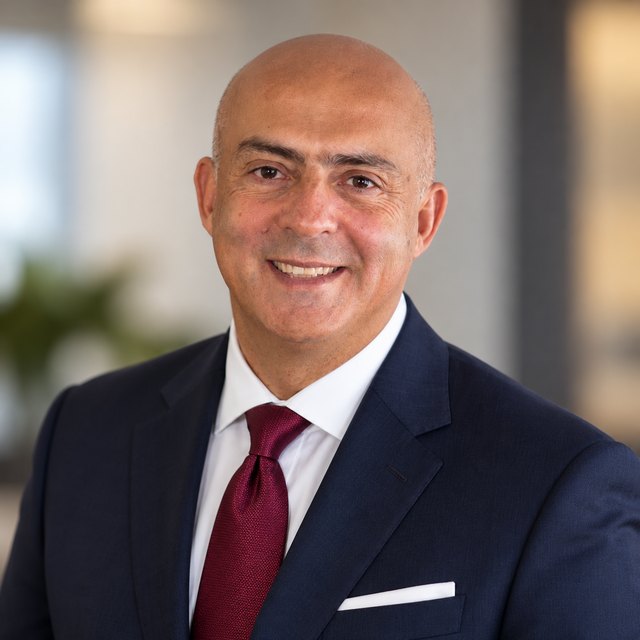
Jose Salloum is a Financial Security Advisor (conseiller en sécurité financière) certified by the Autorité des marchés financiers in Quebec, a Life and Accident & Sickness Insurance Agent licensed by the Financial Services Regulatory Authority of Ontario, and a Life Insurance Agent licensed by the Insurance Council of British Columbia. Licensed since 2001.
He has practised Infinite Banking since 2015 and founded Canadian Wealth Creation Centre Inc. in 2016. From 2020 to 2024 he was an IBC (Infinite Banking Concepts™) Authorized Practitioner of the Nelson Nash Institute, a private certification rather than a regulatory licence.
IBC Financial is the educational website of Canadian Wealth Creation Centre Inc., open to all Canadians. Services come only from Canadian Wealth Creation Centre Inc., in Quebec, Ontario, Alberta, British Columbia, Manitoba and New Brunswick. This page is general education and not advice on any individual file.
Last reviewed 2026-09-28. By Jose Salloum, Financial Security Advisor.